Pakistan providing ‘whatever support needed’ to defend Saudi Arabia: Army

Read the original at The Hindu ↗
Cite

Pakistan providing ‘whatever support needed’ to defend Saudi Arabia: Army. (2026, October 19). The Hindu. https://www.thehindu.com/news/international/pakistan-providing-whatever-support-needed-to-defend-saudi-arabia-army/article71603002.ece

Dated from the outlet's own feed. Check the original for its byline.

The Hindu · collected 2026-10-19 · by PTI

Quick Summary

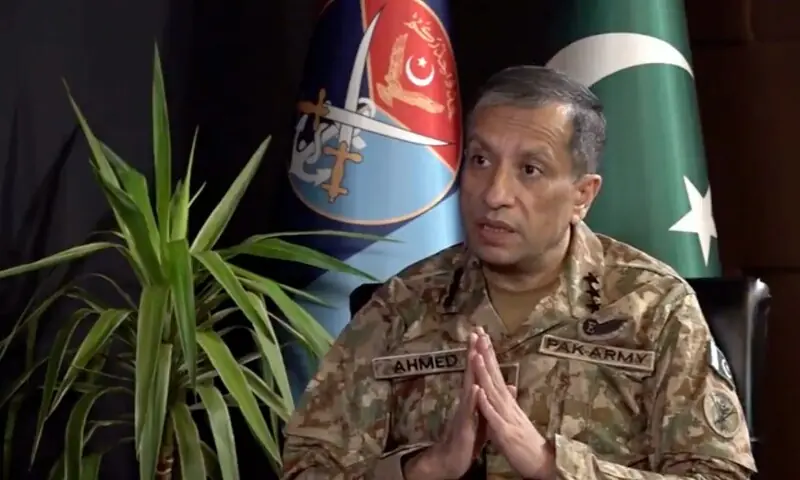
A senior Pakistan Army general stated that Pakistan is providing all necessary support to defend Saudi Arabia against attacks from Yemen's Houthis, emphasizing the importance of protecting Saudi sovereignty and holy sites. Lt. Gen. Ahmed Sharif Chaudhry made these comments during an interview with Independent Arabia on October 18, 2026, while declining to specify the nature or extent of Pakistan’s assistance. He stressed that any attack on one member country—Pakistan, Saudi Arabia, or Turkey—would invoke a collective defense response under their August-signed defense agreement.
Written locally by qwen2.5:14b on 2026-10-19, using this article's own text rather than the other coverage of the same event (that is the story summary below).

AI analysis runs on qwen2.5:14b, locally

Story summary

As of October 19, 2026, Pakistan is providing "whatever support needed" to defend Saudi Arabia against attacks by Yemen's Houthi rebels. Lieutenant General Ahmed Sharif Chaudhry, Director General of Pakistan's Inter-Services Public Relations (ISPR), stated during an interview with Independent Arabia that protecting Saudi Arabia’s sovereignty, territorial integrity, and the security of its holy sites is non-negotiable for Pakistan. The support includes unspecified military aid under a strategic mutual defence agreement signed between Pakistan, Saudi Arabia, and Turkey in August 2026. Chaudhry emphasized that this alliance aims at collective deterrence based on Article 51 of the United Nations Charter, which permits self-defence measures.

Written for “Pakistan Supports Saudi Defence” on 2026-10-19, grounded in this article and the 1 other(s) covering the same event.
Why this leaning score
This article does not take a side on a contested political question, so it has no leaning score. That is an answer rather than a gap: a match report or a rescue can be warmly or critically written without being left or right, and scoring it anyway is how approval of a subject gets recorded as a political position.
No political leaning scored for article 91239 · logged 2026-10-19

Story

📰 Pakistan Supports Saudi Defence
Politics · 2 article(s) covering the same event. See how they differ ↓

Compared with similar articles

This article reads unscored and hedges 6% of its claims. Each row says how that neighbour differs.
Dawn · 0.95 cosine similarity
⚖️ Leans right 🔴 5% hedged 1 of 22 📰 publisher trust 72
“Both articles report on the same statement by Lt. Gen. Ahmed Sharif Chaudhry regarding Pakistan's support for Saudi Arabia against Houthi rebels, made during an interview and aired on the same day.”
Dawn
⚖️ Leans right 🔴 3% hedged 1 of 31 📰 publisher trust 72
“The articles describe different countries' commitments to defend Saudi Arabia from Houthi attacks, indicating separate declarations by Egypt and Pakistan.”
Al Jazeera
⚖️ leaning not scored 🔴 9% hedged 2 of 23 📰 publisher trust 60
“The articles describe different statements of support from different countries (GCC and Pakistan) in response to Houthi attacks on Saudi Arabia, not the same specific incident.”
Dawn
⚖️ leaning not scored 🔴 9% hedged 2 of 23 📰 publisher trust 72
“The articles cover similar statements of support but involve different officials from distinct institutions (Prime Minister's Office and Pakistan Army) at potentially separate times.”
The Hindu
⚖️ leaning not scored 🔴 0% hedged 0 of 24 📰 publisher trust 95
“The articles describe supportive military statements from different countries (Egypt in Article A, and Pakistan in Article B) towards Saudi Arabia during Houthi attacks, but they are not describing the same specific incident or time frame.”
The Straits Times
⚖️ leaning not scored 🔴 0% hedged 0 of 26 📰 publisher trust 60
“The articles describe different nations' responses to the ongoing conflict, with Article A focusing on Saudi Arabia's and Egypt's reactions, while Article B discusses Pakistan's support for Saudi Arabia.”
Semafor
⚖️ Leans strongly right 🔴 0% hedged 0 of 5 📰 publisher trust 60
“The articles report on different statements of support from Egypt and Pakistan towards Saudi Arabia, not the same specific incident.”
How this article was measured signals, leaning charts, publisher record, byline, topics and claims

Signals How these are calculated →

Claims extracted
17
sentences that state something as happening or true
Uncertain
6%
1 of 17 hedged ("reportedly", "may", "according to")
Leaning
not political
takes no side on a contested political question
Publisher signals
95/100
The Hindu's corrections and hedging, across everything collected from it. Not a measure of accuracy.
Outlets on this story
2
Politics
Same framing elsewhere
1
articles that frame the event the way this one does
Analyzed 2026-10-19 · how these are computed

How this is being covered How these are calculated →

Article leaning vs. publisher reliability
Source leaning vs. consistency

Publisher

The Hindu · 333 article(s) · 1 correction(s) detected
Running correction rate · 1 correction(s)

Who wrote this

No reporter is named on this article, beyond the feed's “ PTI”.

Topics

Houthis Iran Pakistan Saudi Arabia Saudi Arabia’s

Subjects

Pakistan GPE · 8× Chaudhry PERSON · 7× Saudi Arabia GPE · 4× Houthis NORP · 3× Iran GPE · 2× Saudi Arabia’s GPE · 2× Ahmed Sharif Chaudhry PERSON · 1× Pakistan Army ORG · 1× Saudi Arabia's GPE · 1× Yemen GPE · 1×

Narrative

Calling for unity among Muslim countries, he said there was no benefit in further escalating regional conflicts and stressed the need for a negotiated settlement. “If we are unable to come to a negotiated outcome and we turn into a military conflict, then this instrument of collective deterrence of the Makkah alliance will definitely come into play, as it is coming into play,” he said.
framing: assertive · carried by 1 article(s) · first seen 2026-10-19
🔮 “So whatever support is needed to do that is being provided and will be provided,” Lt. Gen. Chaudhry said in an interview with a digital Arabic-language newspaper, Independent Arabia, on Sunday (October 18, 2026), without disclosing the nature or extent of the assistance.

Claims (17 extracted, 1 hedged)

A senior Pakistan Army general has said that his country was providing “whatever support is needed” to protect Saudi Arabia's sovereignty, territorial integrity and holy sites, amid escalating attacks by Yemen’s Houthis on the Gulf country. asserted
support → say → country
Also read | Pakistan says ‘substantial’ forces, resources already in Saudi Arabia under defence deal Pakistan military's spokesperson Lt. Gen. Ahmed Sharif Chaudhry said that Saudi Arabia’s sovereignty, territorial integrity, and the security of the Two Holy Mosques are “paramount” and “non-negotiable” for Pakistan. asserted
sovereignty → read → Pakistan
“So whatever support is needed to do that is being provided and will be provided,” Lt. Gen. Chaudhry said in an interview with a digital Arabic-language newspaper, Independent Arabia, on Sunday (October 18, 2026), without disclosing the nature or extent of the assistance. asserted
Chaudhry → need → assistance
Pakistan, Saudi Arabia and Turkiye signed a joint defence agreement in August under which an attack against one of the countries will be treated as an attack against all of them. asserted
attack → sign → them
Mr. Chaudhry said Pakistan’s reaction to the Houthi attacks was one of “anger”, stressing that there could be no “ifs and buts” over the security of Saudi Arabia and the holy sites. uncertain
reaction → say → Arabia
On questions of whether Pakistan’s support to the Gulf Kingdom would remain strictly defensive if the attacks continued, he said all three members of the alliance were clear that it had “no offensive intent” and was “purely defensive”. asserted
it → remain → intent
Citing Article 51 of the UN Charter, he said the collective deterrence mechanism sent a clear message that any direct or indirect attack against one of the three countries would invite a collective response. asserted
attack → cite → response
“If that deterrence doesn’t work, then that deterrence has to be re-established by all means that are available to the three countries,” the military spokesperson said. asserted
spokesperson → work → countries
On whether Islamabad had issued any warning to Iran, which supports the Houthis, Mr. Chaudhry said Pakistan was engaging with all parties, including the Islamic Republic, to exercise restraint and reduce tensions. “All interactions and all conversations with the parties are based on dialling down the escalation,” he said. asserted
he → issue → escalation
Mr. Chaudhry said expanding the conflict to the Houthis or other areas would not help resolve the crisis and would only benefit those interested in creating instability in the region. asserted
expanding → say → region
At the same time, he said Pakistan was sending “very strong signals” that collective deterrence was already in play and would take all necessary steps to safeguard Saudi Arabia’s security. asserted
deterrence → say → security
On reports suggesting that the alliance was aimed at deterring Iran or Israel, Mr. Chaudhry said the pact was not “country-specific” and had no offensive intent. asserted
pact → suggest → intent
He said the alliance was intended to ensure peace, stability and security in the region, adding that any actor threatening those objectives would come within the ambit of its collective deterrence mechanism. asserted
actor → say → mechanism
Mr. Chaudhry also said Saudi Arabia had established a multinational maritime defence coalition amid threats to navigation in the Bab el-Mandeb Strait and the Strait of Hormuz, with a Pakistani naval officer serving as its deputy commander. asserted
officer → say → commander
Calling for unity among Muslim countries, he said there was no benefit in further escalating regional conflicts and stressed the need for a negotiated settlement. “If we are unable to come to a negotiated outcome and we turn into a military conflict, then this instrument of collective deterrence of the Makkah alliance will definitely come into play, as it is coming into play,” he said. asserted
he → call → play
On the possibility of expanding the alliance, Chaudhry said its doors remained open to countries that supported the principle of collective deterrence and shared its objectives of regional security and stability. asserted
that → expand → security
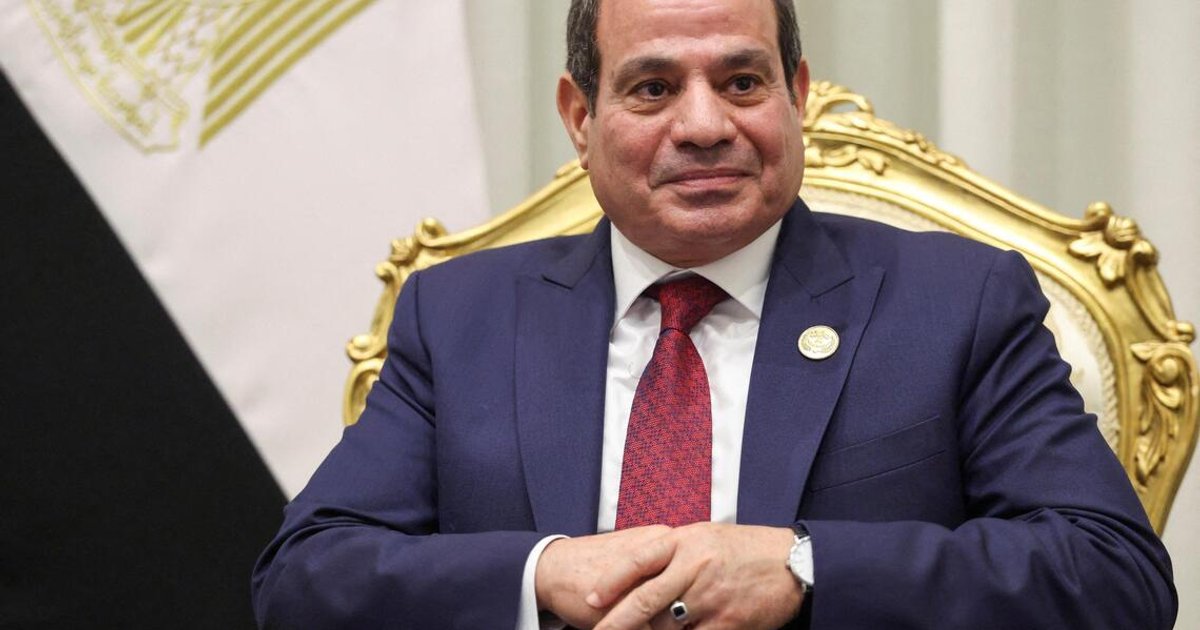
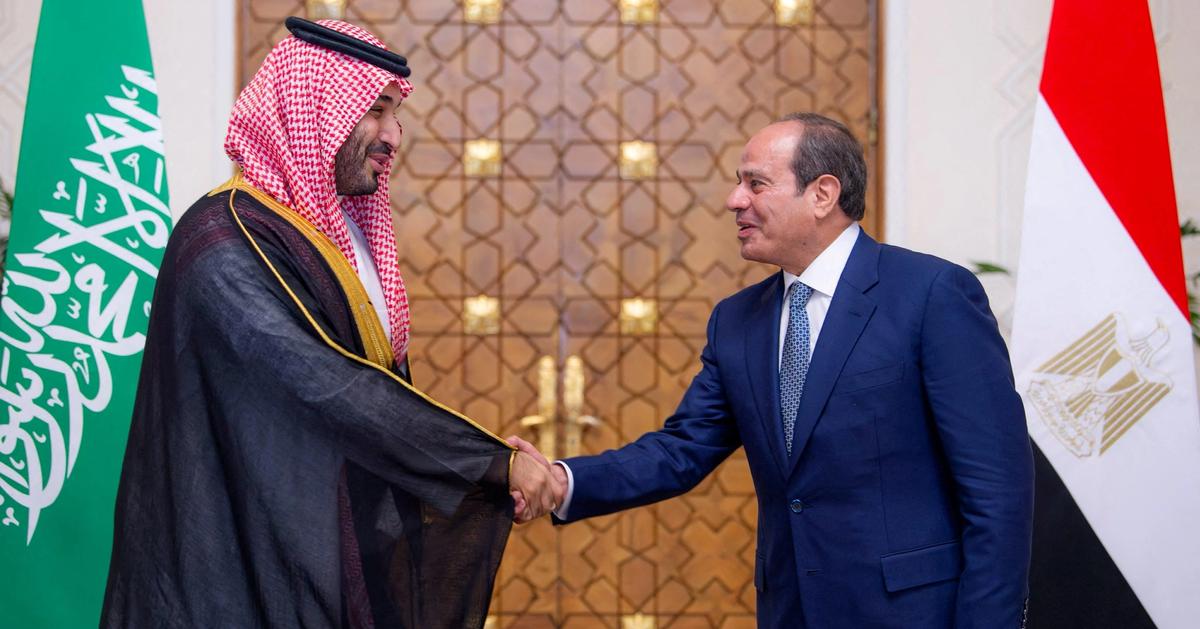
Asked about reports of Egypt and Syria showing interest in joining, he said any decision would rest with the political, strategic and military leadership of the three member countries. asserted
decision → ask → countries

💬Give feedback
🕘History 🎫Support