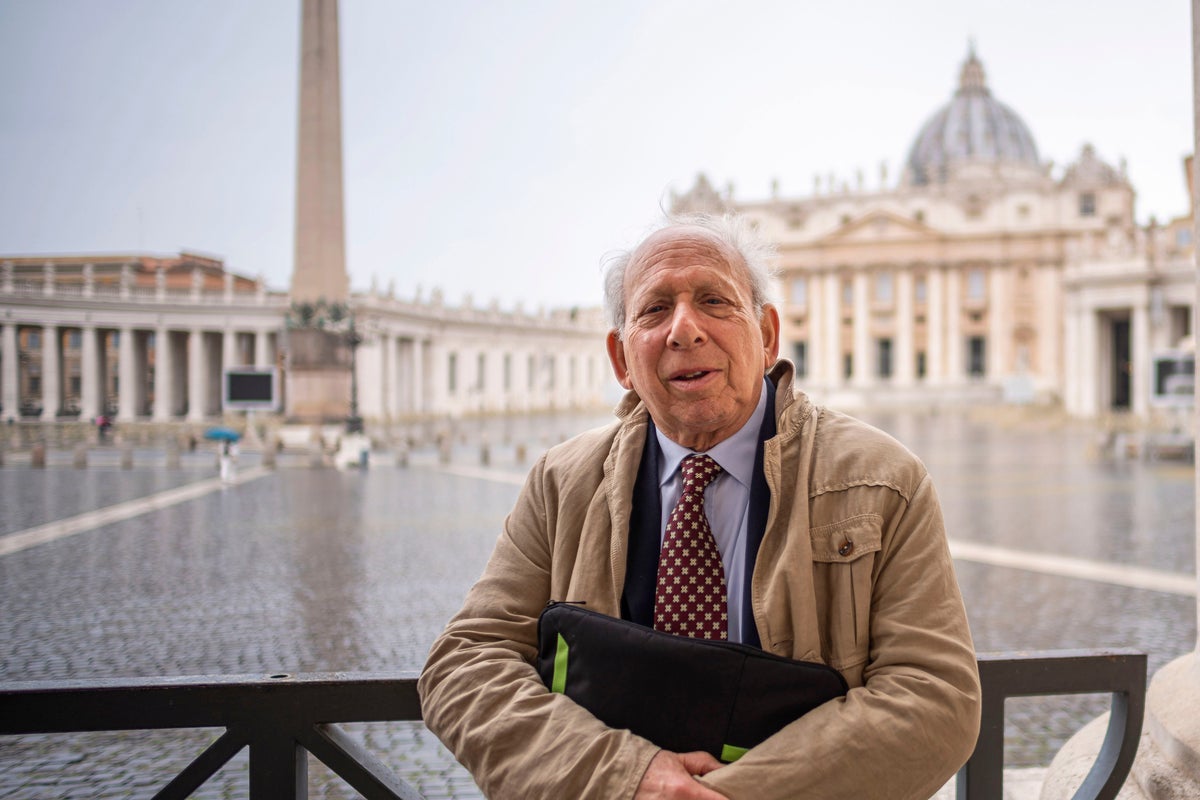
Victor L. Simpson, the longtime Rome bureau chief for The Associated Press whose four decades as a foreign correspondent spanned five popes, wars and violence that touched him personally, has died.
asserted
that → span → him
Simpson died of cancer Sunday at his home in Rome, his children said Monday.
asserted
children → die → Rome
During a 46-year AP career, Simpson covered many of the defining stories of the late 20th and early 21st centuries, from the 1967 Newark, New Jersey, race riots and war in the Middle East to the papacy of Pope John Paul II, whom he accompanied on dozens of trips.
asserted
he → cover → trips
A native New Yorker, Simpson joined the AP in Newark in 1967, where he wrote an award-winning series on organized crime.
asserted
he → join → crime
He transferred to the General Desk in 1968, editing top domestic stories, and then to the Foreign Desk in 1970.
asserted
He → transfer → 1970
He was assigned to Rome as news editor in 1972, where he promptly met his future wife, Daniela Petroff, who became a distinguished AP fashion and Vatican correspondent.
asserted
who → assign → wife
She died in February at age 80.
asserted
She → die → age
He became Rome bureau chief in 2005.
asserted
He → become → 2005
Simpson previously worked for the Hackensack (New Jersey) Record.
asserted
Simpson → work → Record
“Victor had an extraordinary life and career, and built a lasting legacy at the AP," said AP Executive Editor Julie Pace.
asserted
Pace → have → AP
"Years after his retirement, he still comes up regularly in stories and conversations in AP bureaus around the world — a testament to the impact he had on generations of AP journalists.
asserted
he → come → journalists
I know that legacy will endure for many years to come.”
asserted
legacy → know → years
Simpson loved to regale listeners about his journalistic feats, which included a private dinner conversation on the papal plane with John Paul and an interview with Svetlana Alliluyeva, the daughter of Soviet dictator Josef Stalin.
asserted
which → love → Stalin
He secured the scoop by showing up at Alliluyeva's door in Princeton, New Jersey, where she lived after defecting from the USSR.
asserted
she → secure → USSR
“He put a lasting mark on AP, from his days as a feisty young staffer in our Newark bureau, through years as an energetic mainstay on our central news desk in New York, and then during a storied career in Rome,” said retired AP President and CEO Louis D. Boccardi, who called him “one of a kind.
asserted
who → put → kind
His life was marked by tragedy
Simpson’s life was marked by two devastating personal tragedies: the shooting death of his father during a robbery in 1964, and the killing of his 11-year-old daughter, Natasha, by Palestinian militants who attacked Rome’s airport on Dec. 27, 1985.
asserted
who → mark → Dec.
Simpson was preparing to fly to the United States with his family when the militants stormed the airport, throwing grenades and firing automatic weapons.
asserted
militants → prepare → weapons
Natasha was among more than a dozen people killed.
asserted
Natasha → kill → people
Simpson and the couple's 9-year-old son, Michael, were both wounded.
asserted
Simpson → wound → ?
“The murder of his daughter Natasha while the family was on the way to New York for home leave in 1985 was a tragedy that affected us all deeply,” Boccardi recalled.
asserted
Boccardi → affect → us
Simpson’s optimism and devotion to family and work sustained him through the tragedies.
Two years later, Simpson and Petroff welcomed another daughter, Debbie.
asserted
Simpson → sustain → daughter
The Polish pope telephoned the family to congratulate them on her birth.
asserted
pope → telephone → birth
Simpson’s father, Leonard P. Simpson, a well-known New York lawyer, was shot and killed in the elevator of the family's apartment building.
asserted
father → know → building
“The murder was considered yet more proof of New York’s degradation,” Simpson wrote in his 2024 memoir “Life of a Reporter.”
asserted
Simpson → consider → Reporter
He described how an “exuberant” Jimmy Breslin interviewed the family for a story about the difficulties of the middle class in the crime-ridden era.
asserted
Breslin → describe → era
The experience taught him an important lesson in journalism about being considerate and sensitive with the victims of tragedy.
asserted
experience → teach → tragedy
His children, Michael and Debbie, said in announcing his death that the pain he carried over Natasha's killing “has finally evaporated, leaving only love behind.”
He was the unofficial dean of the Rome press corps
He was born on May 11, 1942, to Leonard Simpson and Selma Randell, an elementary school teacher.
uncertain
He → say → Simpson
Raised in a Jewish family, Simpson said religion wasn’t a centerpiece but “tolerance was considered a precious value.”
asserted
tolerance → raise → family
He attended Brooklyn Tech and The Franklin School, now the Dwight School, and earned a degree in political science and economics in 1963 from Hobart College.
asserted
He → attend → College
He briefly served in the U.S. Army after graduation.
asserted
He → serve → graduation
Simpson kept his extended family close, making overseas trips for weddings and bar and bat mitzvahs.
asserted
Simpson → keep → weddings
“It meant a huge amount to me,” said his niece, Catherine Simpson Bueker.
asserted
niece → mean → me
Decades covering the Holy See made him one of the longest-serving Vatican correspondents of his generation, including 92 trips with John Paul and Pope Benedict XVI.
asserted
him → cover → Paul
Simpson had a special bond with John Paul II
It was on one of those flights in 1986 that Simpson was invited to dine with John Paul on the final leg following a two-week tour of Asia and the Pacific.
asserted
Simpson → have → Asia
Simpson, in a rumpled safari jacket detested by his fashion-writer wife, apologized to the pontiff for wearing “my working clothes.”
asserted
Simpson → detest → clothes
The pope put him at ease, gripping his white robes and saying, “These are my working clothes.”
asserted
These → put → robes
One of his biggest exclusives came on a 1988 flight to Uruguay when he asked John Paul about the Solidarity strikes challenging the communist government in his native Poland.
asserted
he → come → Poland
John Paul responded with full papal support for the strikes.
asserted
Paul → respond → strikes
“Here we are touching the heart of the problem,” the pope said.
asserted
pope → touch → problem
“It is not easy to bring democracy to a system that is by definition dictatorial and totalitarian.”
asserted
that → bring → definition
…and 16 more, not listed.