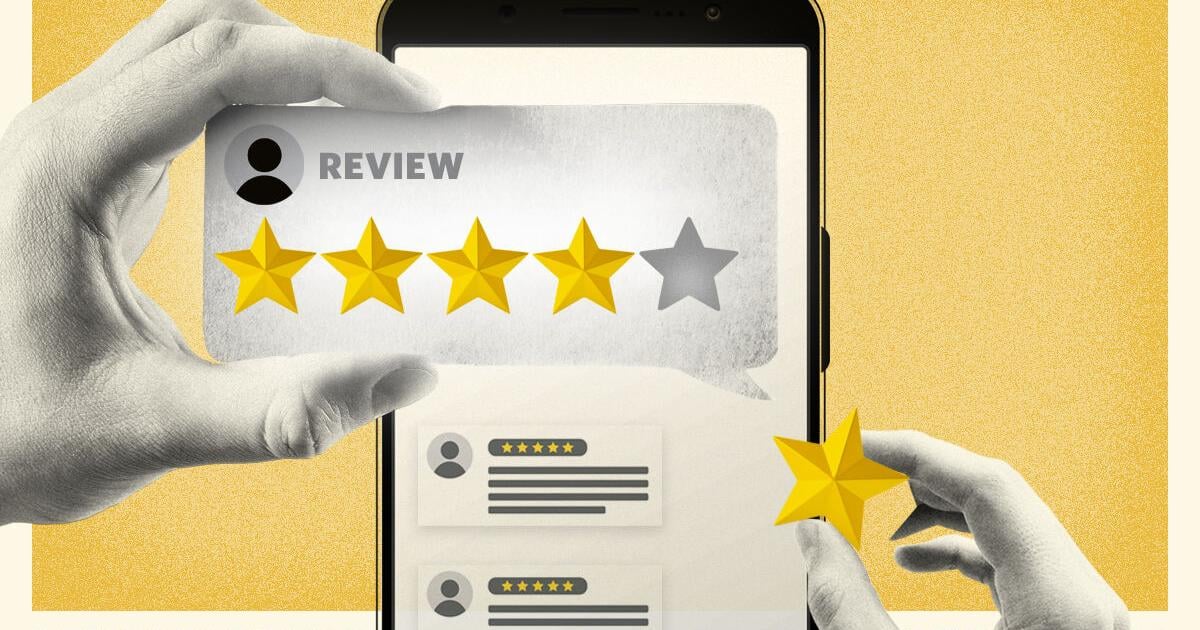
When Ashleigh Corvers was looking to replace her old windows last May, she went online to shop around for quotes.
uncertain
she → look → quotes
She spotted a Vaughan business called Total Home Windows & Doors with dozens of five-star ratings on Google, each review praising the company’s staff as professional and friendly.
asserted
review → spot → staff
While the experience went smoothly and she’s pleased with the work, she later learned that the business had been linked to fake Google reviews, a finding by Fake Review Watch, a YouTube channel founded by former federal criminal investigator Kay Dean, who tracks companies whose listings appear padded with phoney reviews.
asserted
listings → go → reviews
In one video, Dean flagged Total Home Windows & Doors, citing what she described as a pattern of suspicious five-star ratings appearing on the company’s Google business profile.
asserted
she → flag → profile
“Now I wish I did more research,” says Corvers, a compensation and benefits analyst who lives in Port Hope, Ont.
asserted
who → wish → Hope
“Now that I look back on it, seeing all those positive reviews — not one negative review — it seems fishy.”
asserted
it → look → reviews
Total Home Windows & Doors owner Vitaly Shapiro told the Star he doesn’t know why the reviews appeared under his company’s Google listing.
asserted
reviews → tell → listing
“We never instructed anyone to post these things,” he says.
asserted
he → instruct → things
He acknowledges that the company hired a lead-generation agency from outside Canada to find potential clients, and suspects it may have posted these reviews to drum up business.
uncertain
it → acknowledge → business
“I can’t say for sure they did, we don’t know,” Shapiro says.
asserted
Shapiro → say → ?
As consumers increasingly turn to online reviews to inform their spending decisions, fake high ratings have evolved into a global threat — one that cost online consumers $770.4 billion (U.S.) in 2025, according to Capital One Shopping.
uncertain
that → turn → Shopping
Misleading claims can steer consumers into paying a premium for substandard or unsafe goods, and spending their money with businesses they would otherwise avoid.
uncertain
they → steer → businesses
It’s a trend experts say is accelerating; by 2030, fake reviews are expected to cost online consumers $1.07 trillion.
asserted
reviews → ’ → trillion
So how can you tell the real ones from the fake ones?
asserted
you → tell → ones
The ‘new word-of-mouth’
When Canada’s Competition Bureau receives complaints about potentially deceptive marketing practices, it conducts “a thorough and complete examination of the facts before reaching any conclusion as to whether the law has been contravened,” it said in an emailed statement.
asserted
it → receive → statement
In 2023, the bureau ordered mobile app maker AmpMe to pay a partial penalty of $310,000 (Canadian) for purchasing positive third-party reviews.
asserted
bureau → order → reviews
In 2021, it ordered FlightHub “to remove all online reviews that were posted by or on behalf of the company but appeared to be from genuine customers,” the statement said.
asserted
statement → order → customers
Businesses are flooding their online presences with fake positive reviews for a reason.
asserted
Businesses → flood → reason
Online reviews are increasingly driving consumer decisions, says DJ Kennedy, CEO of TechWyse Internet Marketing, a digital marketing agency in Toronto.
asserted
Kennedy → drive → Toronto
“People use reviews every day to help decide who they want to buy from, hire, visit or trust,” he says, “Reviews are the new word-of-mouth, but online.”
asserted
Reviews → use → mouth
How to spot a fake review
Be wary of online reviews short on detail, Kennedy says.
asserted
Kennedy → spot → detail
“A legitimate review usually tells you something about the actual experience, such as what they bought, who they dealt with, what happened, and what stood out,” he says.
asserted
he → tell → who
“Specificity makes a review feel much more real and much more useful.”
asserted
Specificity → make → review
Reviews without photos should also raise eyebrows, says Dean, who runs her channel from her San Francisco home — but it’s not a foolproof rule.
asserted
it → raise → home
“I’ve seen many reviews with photos stolen from Google Images,” she told the Star.
asserted
she → see → Star
Corvers says that, looking back, “there was a strange flow to some of the sentences, and many grammar and spelling mistakes.”
asserted
Corvers → say → sentences
When the Star asked how it responds to complaints about fake reviews — such as those flagged by Dean — a Google spokesperson said that “our policies clearly state that reviews must be based on real experiences and information, and we do not allow reviews or ratings that have been paid for.
asserted
that → ask → reviews
We have removed these fake reviews and suspended reviews.”
asserted
We → remove → reviews
Know the red flags
One of the more straightforward ways to determine if a reviewer on Google is real or not is to check their Google profile, Kennedy says.
asserted
Kennedy → know → profile
“Looking at their past reviews gives you a much better feel for whether they are a real person with a history of genuine experiences or whether the account looks suspicious,” he says.
asserted
he → look → experiences
When reviewers have profiles with only two or three reviews, “that kind of low activity is suspicious,” Dean says.
asserted
Dean → have → activity
Consumers should also check if the profile is locked, meaning the user’s previous reviews are hidden.
asserted
reviews → check → ?
“If you see a business with reviews from locked Google profiles, that should be a red flag,” she says.
asserted
she → see → profiles
Why bad reviews matter
asserted
reviews → matter → ?
A Google business profile’s overall rating is simply an average of all its reviews, and a high score such as 4.8 stars out of 5 can be deceiving, Dean says.
asserted
Dean → say → 5
A high rating doesn’t necessarily mean fake reviews are involved, but the absence of negative ones warrants a closer look.
asserted
absence → mean → look
“If a business doesn’t have any negative reviews, that’s another red flag,” she says.
asserted
she → have → reviews
“Does every single customer experience only result in a four- or five-star experience?”
asserted
experience → result → experience
Some businesses respond to a negative review by flooding their page with positive ones, a tactic Dean has spotted repeatedly.
asserted
Dean → respond → tactic
“When you see a negative review followed by a string of positive reviews,” she says, “that could be a case where a business may be trying to bury negative reviews with bought positive reviews.”
uncertain
business → see → reviews
…and 4 more, not listed.
 The Aporia