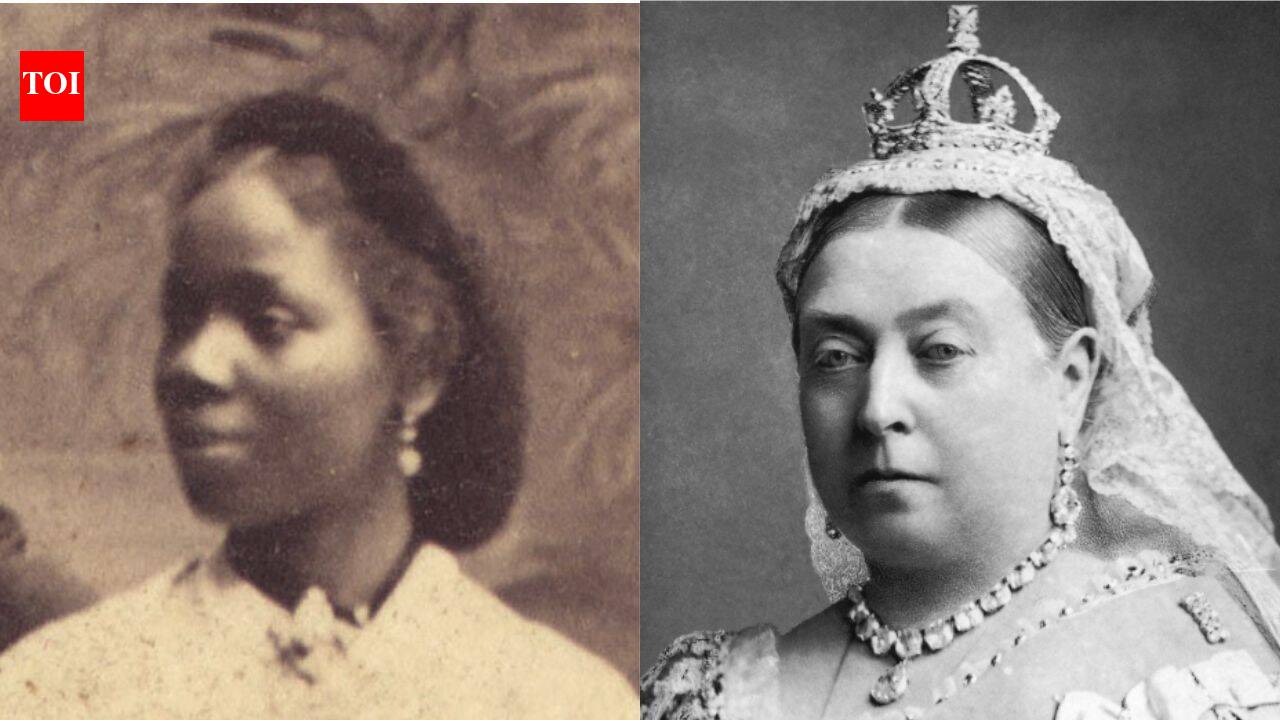
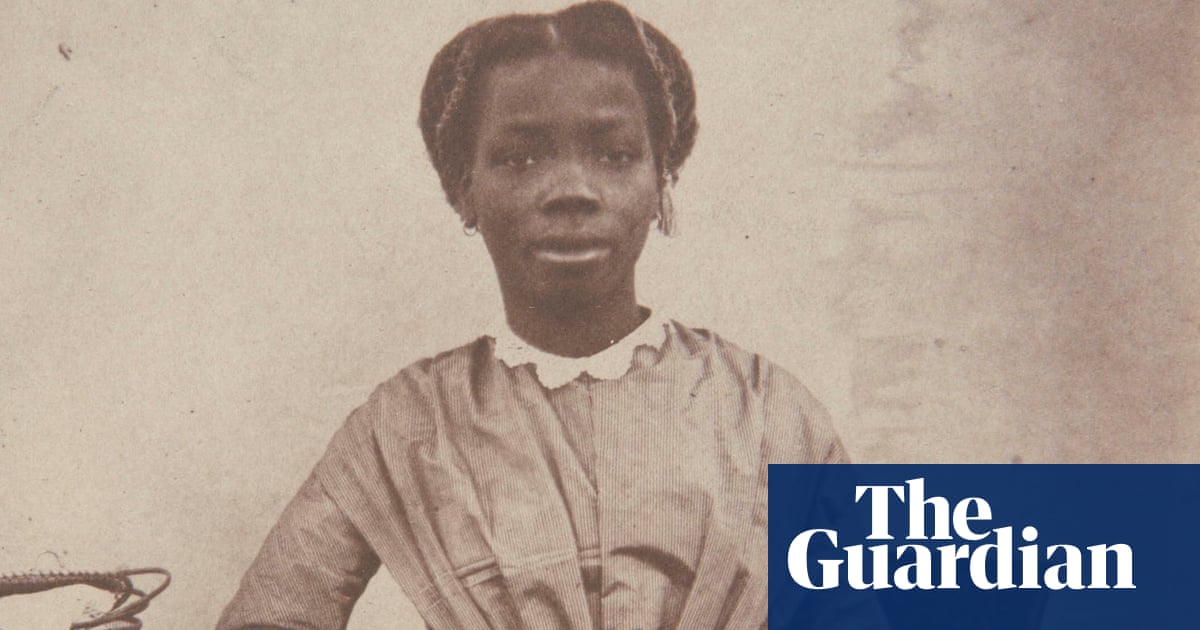
At 7, she was 'gifted' to Queen Victoria; 176 years later, her descendant revisits her life

Read the original at Times of India ↗
Cite

TOI World Desk. (2026, October 19). At 7, she was 'gifted' to Queen Victoria; 176 years later, her descendant revisits her life. Times of India. https://timesofindia.indiatimes.com/world/uk/in-1850-a-7-year-old-african-girl-was-presented-to-queen-victoria-as-a-gift-176-years-later-her-great-great-grandson-is-revisiting-her-remarkable-life-through-a-newly-published-biography/articleshow/135042231.cms

Dated from the outlet's own feed. Check the original for its byline.

Times of India · collected 2026-10-19 · by TOI World Desk
Content note This article describes abuse of a child.

Quick Summary

Professor Henry Lovejoy’s new biography "Becoming Sarah Forbes Bonetta: A Yoruba Woman in Queen Victoria’s Court" examines the life of an African girl named Aina who was captured by Dahomeyan forces and given to Queen Victoria as a "gift" in 1850 at age seven. The book delves into the restricted circumstances under which she lived, despite receiving education and royal patronage, suggesting that Bonetta was essentially indentured until her 19th birthday. Her great-great-grandson Bayo Randle reflects on how these historical events shaped his family's narrative, questioning the notion of a person being gifted between individuals while acknowledging its impact on their lineage.
Written locally by qwen2.5:14b on 2026-10-19, using this article's own text rather than the other coverage of the same event (that is the story summary below).

AI analysis runs on qwen2.5:14b, locally

Story summary

In 1850, seven-year-old Sarah Forbes Bonetta was presented to Queen Victoria in Britain as a 'diplomatic gift,' marking the beginning of a life intertwined with the British royal family. Now, 176 years later, her great-great-grandson, Bayo Randle, a 37-year-old British-Nigerian barrister living in London, has reflected on his ancestor's story during an interview with The Guardian. Professor Henry Lovejoy of the University of Colorado Boulder recently published a biography titled "Becoming Sarah Forbes Bonetta: A Yoruba Woman in Queen Victoria’s Court," which delves into Bonetta's life beyond her royal connections, highlighting the violence and separation she endured as well as the restrictive conditions imposed on her. Lovejoy also examines how more than 700,000 Africans freed from enslavement were subjected to arrangements requiring them to work for years to cover the supposed cost of their freedom, arguing that Bonetta occupied a privileged position within this broader system despite the challenges she faced.

Written for “Gifted Child Of Queen Victoria” on 2026-10-19, grounded in this article and the 0 other(s) covering the same event.
Why this leaning score
The model judged this article politically coded and scored it -0.65, but 1 quote(s) could not be found in the article and the other 3 are attributed speech rather than the article's own narration, so the score is not published.
Written under an earlier scoring contract, which gave a paragraph rather than checkable quotes. Re-analysing this article replaces it.
Leaning score withheld for article 90332: no verified evidence · logged 2026-10-19

Story

📰 Gifted Child Of Queen Victoria
Other · 1 article(s) covering the same event.

Compared with similar articles

This article reads unscored and hedges 12% of its claims. Each row says how that neighbour differs.
The Guardian · 0.94 cosine similarity
⚖️ leaning not scored 🔴 9% hedged 3 of 33 📰 publisher trust 66
“While both articles discuss the publication of a biography about Sarah Forbes Bonetta and reflections on her life by a descendant, they do not describe the exact same specific incident occurring at the same time.”
How this article was measured signals, leaning charts, publisher record, byline, topics and claims

Signals How these are calculated →

Claims extracted
56
sentences that state something as happening or true
Uncertain
12%
7 of 56 hedged ("reportedly", "may", "according to")
Leaning
withheld
no quote in the article backed the model's score
Publisher signals
59/100
Times of India's corrections and hedging, across everything collected from it. Not a measure of accuracy.
Outlets on this story
1
Other
Same framing elsewhere
1
articles that frame the event the way this one does
Analyzed 2026-10-19 · how these are computed

How this is being covered How these are calculated →

Article leaning vs. publisher reliability
Source leaning vs. consistency

Publisher

Times of India · 2846 article(s) · 2 correction(s) detected
Running correction rate · 2 correction(s)

Who wrote this

TOI World Desk
1049 article(s) here · 1 carrying a prediction
🔮 During the interview, Randle questioned the idea that a person could be given away as a diplomatic present, while acknowledging that the event had changed the course of his family's history.
🔮 Buckwald’s actions were carried out before professional first responders reached the scene, making his willingness to help particularly significant, informs the report too.
🔮 In this case, the question was whether the 1940 sale could be considered legitimate given the persecution of Jewish people under Nazi occupation.
🔮 While previously one could spot a cafe or grocery store at short intervals in America, it has now been replaced with a data centre at every turn.
🔮 Purohit, who grew up in Mumbai and trained as a pastry chef in India, had hoped their plant-based cafe would become a welcoming neighbourhood destination.
🔮 It ruled that the claim could proceed despite the state's immunity argument.
🔮 The 14th Seacrest Studios location nationwide, it will offer interactive programming, music, games and interviews, and will curate Spanish-language content for other hospitals in the network.
🔮 With authorities on his back and no option in the future, Mark Smith has been forced into hiding alongside his wife Petra due to fears he will be deported as a result of what he says is a government Brexit residency error, as per a report by The Guardian.
🔮 It required years of vacancy, preservation advocacy, historic recognition and investment before it could become housing again.
🔮 A preliminary hearing will help determine whether there is enough evidence for the case to proceed, and any final determination of guilt would come through the court process.
Wire or desk byline, not an individual reporter.
Also by TOI World Desk
Nothing else under this byline is closely related to this article, so these are simply their most recent.
All 1049 articles by TOI World Desk →

Topics

African Britain British England Victorian

Subjects

Bonetta PERSON · 9× Victoria GPE · 6× British NORP · 5× Forbes PERSON · 4× African NORP · 3× England GPE · 3× Ghezo PERSON · 3× Britain GPE · 2× Randle PERSON · 2× Sarah Forbes Bonetta PERSON · 2×

Narrative

Lovejoy has also examined how more than 700,000 Africans freed from enslavement were subjected to arrangements requiring them to work for years to cover the supposed cost of their freedom and argues that Bonetta occupied a privileged position within this broader system.
framing: assertive · carried by 1 article(s) · first seen 2026-10-19
🔮 During the interview, Randle questioned the idea that a person could be given away as a diplomatic present, while acknowledging that the event had changed the course of his family's history.

Claims (56 extracted, 7 hedged)

A seven-year-old African girl who was presented to Queen Victoria as a 'gift' in 1850 went on to become one of the best-known African women in Victorian Britain. asserted
who → present → Britain
But behind her royal connections was a childhood marked by violence, separation from her family, and decisions made largely by others. asserted
childhood → mark → others
Now, 176 years later, a newly published biography examines the life of Sarah Forbes Bonetta, while her great-great-grandson, Bayo Randle, reflects on what her experiences meant for his family. asserted
experiences → publish → family
The biography, Becoming Sarah Forbes Bonetta: A Yoruba Woman in Queen Victoria’s Court, has been written by Professor Henry Lovejoy of the University of Colorado Boulder. asserted
biography → become → Colorado
It looks beyond Bonetta's association with the British royal family to examine the circumstances in which she was brought to England, the restrictions placed on her, and the life she eventually built. asserted
she → look → her
Randle, a 37-year-old British-Nigerian barrister living in London, discussed his ancestor's story in an interview with The Guardian. asserted
Randle → live → Guardian
During the interview, Randle questioned the idea that a person could be given away as a diplomatic present, while acknowledging that the event had changed the course of his family's history. uncertain
event → question → history
“I don’t think a human being, who has agency, could be ‘gifted’ from one to another, but had she not been gifted to Queen Victoria, would I be here today?” he asked. uncertain
he → think → Victoria
A royal upbringing that came with restrictions For much of her life, Bonetta was known for her unusual position in British society. asserted
Bonetta → come → society
Queen Victoria paid for her education, maintained contact with her, and later approved her marriage. asserted
Victoria → pay → marriage
She also became godmother to Bonetta's eldest daughter. asserted
She → become → daughter
However, the new biography questions whether this privileged upbringing meant that Bonetta was free to make her own choices. asserted
Bonetta → question → choices
According to Lovejoy's research, British naval captain Frederick Forbes, who brought the girl to England, had requested that she become “the property of the crown”. uncertain
she → accord → crown
The historian argues that Bonetta was “effectively indentured to Queen Victoria until age 19”. asserted
Bonetta → argue → age
This finding places her experience in a different light. asserted
finding → place → light
According to the research, although she received an education and enjoyed connections unavailable to many others, her position was shaped by a system that continued to restrict African people's freedom even after the abolition of slavery. uncertain
that → accord → slavery
Lovejoy has also examined how more than 700,000 Africans freed from enslavement were subjected to arrangements requiring them to work for years to cover the supposed cost of their freedom and argues that Bonetta occupied a privileged position within this broader system. asserted
Bonetta → examine → system
According to the historian, her achievements were used to support British claims about the benefits of colonial rule in Africa. uncertain
achievements → accord → Africa
How Bonetta became part of the royal household Long before she met Queen Victoria, Bonetta was a child named Aina, born in 1843 in Oke-Odan, in present-day southwest Nigeria. asserted
Bonetta → become → Nigeria
In 1848, forces belonging to King Ghezo of Dahomey attacked her town. asserted
forces → belong → town
Her family was killed, and she was captured at approximately five years old. asserted
she → kill → ?
She remained at the king's court for the next two years. asserted
She → remain → years
Her circumstances changed when Frederick Forbes, a captain in the Royal Navy's West Africa Squadron, travelled to Dahomey in 1850. asserted
Forbes → change → 1850
He had been sent to persuade King Ghezo to agree to measures against the slave trade. asserted
He → send → trade
The diplomatic mission did not achieve its intended result, but Forbes returned with the young girl. asserted
Forbes → achieve → girl
According to English Heritage, it remains unclear whether Ghezo offered her freely or Forbes negotiated for her release. uncertain
Forbes → accord → release
Before taking her to Britain, Forbes arranged for her baptism and gave her the name Sarah Forbes Bonetta, using his surname and the name of his ship. asserted
Forbes → take → ship
She met Queen Victoria at Windsor Castle on November 9, 1850. asserted
She → meet → November
The queen subsequently arranged for her care and education. asserted
queen → arrange → care
Bonetta spent time with the Forbes family, attended a missionary school in Sierra Leone and later lived with families in England. asserted
Bonetta → spend → England
Her abilities in languages and music attracted attention, and she became a familiar name in British newspapers. asserted
she → attract → newspapers
Bonetta's marriage and the life she built in Africa Despite her close association with the royal family, Bonetta did not spend most of her adult life in England. asserted
Bonetta → build → England
At 19, she married James Pinson Labulo Davies, a wealthy merchant and philanthropist from Sierra Leone. asserted
she → marry → Leone
Their wedding took place on August 14, 1862, with Queen Victoria's approval. asserted
wedding → take → approval
But Bonetta had expressed doubts about marrying Davies. asserted
Bonetta → express → Davies
In correspondence with Mrs Schoen, whose family had cared for her in England, she questioned whether financial independence was a sufficient reason to accept a marriage. asserted
independence → care → marriage
The couple subsequently moved to Africa, living in Sierra Leone and Lagos. asserted
couple → move → Leone
They had three children, including their eldest daughter, Victoria, born in 1863 and named after the queen. asserted
They → have → queen
Bonetta became known for her accomplishments as a linguist, musician, travel writer and educator. Her life in Lagos was an important part of her story, although it has often received less attention than her childhood connection to the British monarchy. asserted
it → know → monarchy
Her later years were affected by tuberculosis. asserted
years → affect → tuberculosis
…and 16 more, not listed.

💬Give feedback
🕘History 🎫Support