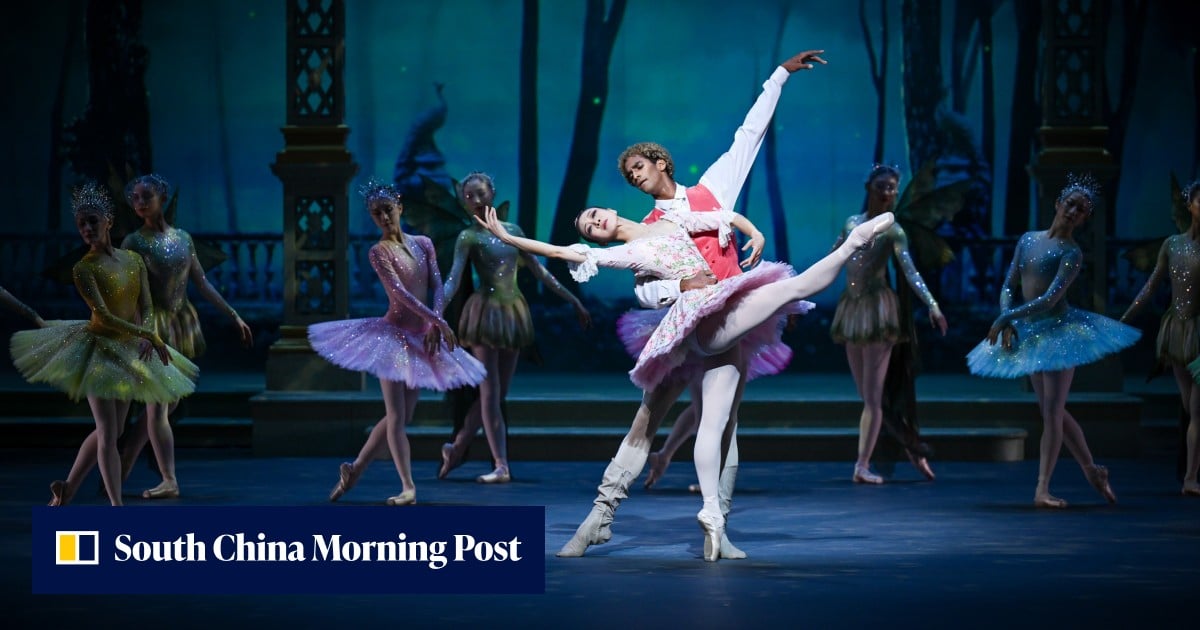
Art or box office? How Hong Kong plans to measure the value of a play, ballet or symphony

Read the original at South China Morning Post ↗
Cite

Li, A. (2026, October 19). Art or box office? How Hong Kong plans to measure the value of a play, ballet or symphony. South China Morning Post. https://www.scmp.com/news/hong-kong/society/article/3371380/art-or-box-office-how-hong-kong-plans-measure-value-play-ballet-or-symphony?utm_source=rss_feed

Dated from the outlet's own feed. Check the original for its byline.

South China Morning Post · collected 2026-10-19 · by Ambrose Li

Quick Summary

Hong Kong plans to revise its funding model for performing arts groups to base subsidies on merit and commercial returns rather than permanent allocations. This change aims to benefit newer companies while established ones face calls to reduce their reliance on public funds. However, some directors of major performing arts groups argue that the economic downturn has made securing private funds difficult and advocate for a long-term approach in arts development. The article explores how policymakers will define merit and commercial success in an industry where artistic quality does not always correlate with financial performance.
Written locally by qwen2.5:14b on 2026-10-19, using this article's own text rather than the other coverage of the same event (that is the story summary below).

AI analysis runs on qwen2.5:14b, locally

Story summary

As of 2026-10-19, Hong Kong's government plans to revamp its funding model for the performing arts sector by shifting from permanent subsidies to a merit-based system focused on commercial returns. This change aims to provide more public funds to newer groups while established companies are urged to reduce their reliance on such support. According to industry experts consulted by The South China Morning Post, this shift could impact both emerging and well-established arts organizations in Hong Kong, as the economic downturn has made it harder for these entities to secure private funding. Some directors of designated major performing arts groups argue that long-term goals may take years to achieve and call for realistic targets and a more sustainable approach. The proposed changes have sparked debate about how to effectively measure artistic merit when financial success does not always correlate with creative quality.

Written for “Hong Kong Arts Valuation Plan” on 2026-10-19, grounded in this article and the 0 other(s) covering the same event.
Why this leaning score
The model judged this article politically coded and scored it +0.15, but all 2 of its quote(s) are attributed speech - words the article quotes from someone, not the article's own narration, so the score is not published.
Written under an earlier scoring contract, which gave a paragraph rather than checkable quotes. Re-analysing this article replaces it.
Leaning score withheld for article 90286: attributed speech only · logged 2026-10-19

Story

📰 Hong Kong Arts Valuation Plan
Entertainment · 1 article(s) covering the same event.

Compared with similar articles

Nothing to compare against. No article is close enough to this one for the pipeline to have linked or judged the pair.
How this article was measured signals, leaning charts, publisher record, byline, topics and claims

Signals How these are calculated →

Claims extracted
4
sentences that state something as happening or true
Uncertain
50%
2 of 4 hedged ("reportedly", "may", "according to")
Leaning
withheld
no quote in the article backed the model's score
Publisher signals
64/100
South China Morning Post's corrections and hedging, across everything collected from it. Not a measure of accuracy.
Outlets on this story
1
Entertainment
Same framing elsewhere
1
articles that frame the event the way this one does
Analyzed 2026-10-19 · how these are computed

How this is being covered How these are calculated →

Article leaning vs. publisher reliability
Source leaning vs. consistency

Publisher

South China Morning Post · 2577 article(s) · 6 correction(s) detected
Running correction rate · 6 correction(s)

Who wrote this

Ambrose Li
9 article(s) here · 1 carrying a prediction
🔮 How Hong Kong plans to measure the value of a play, ballet or symphony Newer groups could get more access to public funds under proposed changes, but established companies urge realistic targets and a long-term view Established performing arts groups in Hong Kong should reduce their reliance on public subsidies to make room for emerging companies, industry experts have said, after the city leader announced in his latest policy address that the government would revamp its current funding model in favour of a non-permanent system based on merit and commercial returns.
🔮 Security chief Chris Tang expects daily trips to exceed 100,000 over three-day Chung Yeung holiday, with extra staff deployed to keep passengers moving Hong Kong’s newly revamped Huanggang Port is expected to handle more than 100,000 passenger trips a day over the three-day Chung Yeung Festival holiday, but its departure hall remained quiet on Saturday morning. Secretary for Security Chris Tang Ping-keung said the port had operated smoothly since opening on Monday, handling about 80,000 passenger trips a day, with the figure exceeding 92,000 on Friday.
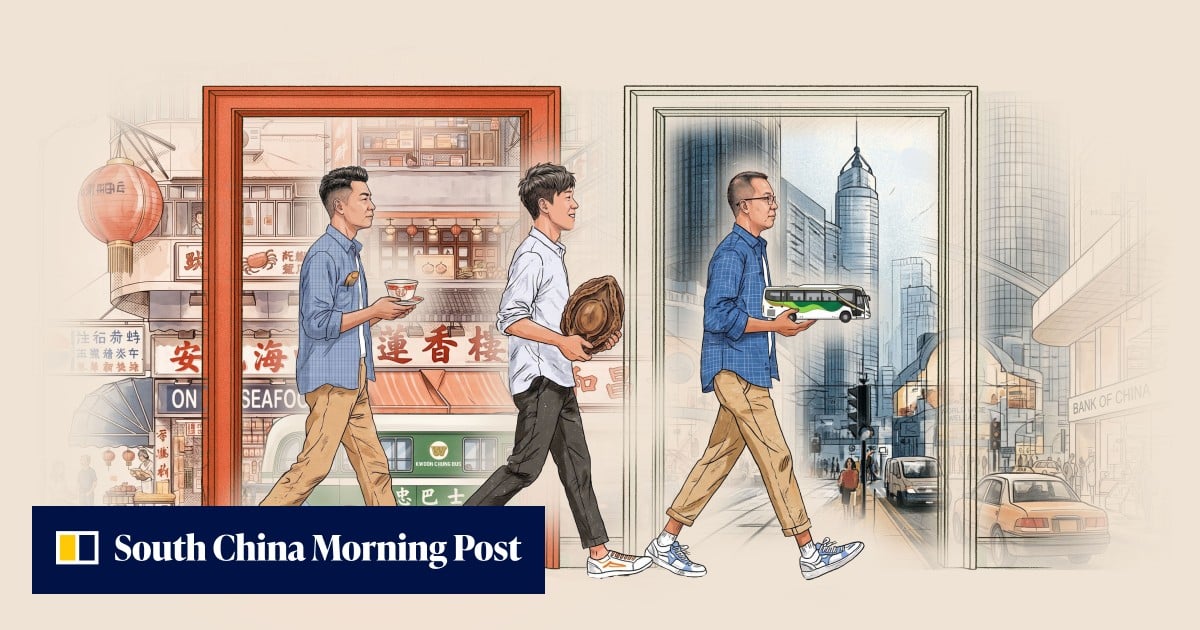
🔮 How Hong Kong’s old businesses are adapting to new times Change does not follow a single formula and may involve creating new experiences, rebuilding unglamorous systems and adopting AI Late into the night, Hong Kong football fans in their twenties, thirties and forties sat in Lin Heung Lau restaurant on Wellington Street watching World Cup matches over dim sum rather than pints at a sports bar.
2026-09-27 · speculative framing · How Hong Kong’s old businesses are adapting to new times
🔮 Group says move to Dancehouse at WestK Performing Arts Centre allows for more than 40 per cent increase in performance weeks annually The move to the “Dancehouse” at the soon-to-be-finished WestK Performing Arts Centre will follow the ballet company’s departure from its base of 16 years at the government-run Cultural Centre in Tsim Sha Tsui.
🔮 Hong Kong to launch free AI courses with tech giants Google, Microsoft for SMEs Productivity Council collaborating with tech giants to roll out free training, boosting business adoption under HK$50 million initiative Free courses coordinated by the Hong Kong government will leverage the expertise of tech giants such as Google and Microsoft to help boost the adoption of AI by businesses for content creation, data analysis and workflow efficiency.
Also by Ambrose Li
How Hong Kong’s old businesses are adapting to new times
2026-09-27 · South China Morning Post
Nothing else under this byline is closely related to this article, so these are simply their most recent.
All 9 articles by Ambrose Li →

Topics

Hong Kong Hong Kong’s The South China Morning Post

Subjects

Hong Kong GPE · 2× Hong Kong’s GPE · 1× The South China Morning Post ORG · 1×

Narrative

The South China Morning Post spoke to performing arts groups, cultural critics and a lawmaker amid the debate over how to better spend public funds to develop Hong Kong’s performing arts sector and how to determine which groups are deserving of support.
framing: mixed · carried by 1 article(s) · first seen 2026-10-19
🔮 How Hong Kong plans to measure the value of a play, ballet or symphony Newer groups could get more access to public funds under proposed changes, but established companies urge realistic targets and a long-term view Established performing arts groups in Hong Kong should reduce their reliance on public subsidies to make room for emerging companies, industry experts have said, after the city leader announced in his latest policy address that the government would revamp its current funding model in favour of a non-permanent system based on merit and commercial returns.

Claims (4 extracted, 2 hedged)

How Hong Kong plans to measure the value of a play, ballet or symphony Newer groups could get more access to public funds under proposed changes, but established companies urge realistic targets and a long-term view Established performing arts groups in Hong Kong should reduce their reliance on public subsidies to make room for emerging companies, industry experts have said, after the city leader announced in his latest policy address that the government would revamp its current funding model in favour of a non-permanent system based on merit and commercial returns. uncertain
government → plan → merit
But a few directors of the city’s nine designated major performing arts groups in music, dance and theatre said the economic downturn had made private funds harder to secure and urged the government to take a long-term view, noting that arts development goals could take years to achieve. uncertain
goals → designate → years
The new funding model will require policymakers to lay down targets for companies, prompting questions about how to assess merit in an industry where artistic quality does not always translate to commercial success. asserted
quality → require → success
The South China Morning Post spoke to performing arts groups, cultural critics and a lawmaker amid the debate over how to better spend public funds to develop Hong Kong’s performing arts sector and how to determine which groups are deserving of support. asserted
groups → speak → support
💬Give feedback
🕘History 🎫Support