In a 19-second clipposted to X, Gadi Eisenkot, a candidate for prime minister, stands with his arms outstretched and a huge smile on his face.
asserted
arms → stand → face
In slow motion, he runs through a meadow toward a person who resembles his son, wearing a shirt with the words "Israeli Unity."
asserted
who → run → words
But Eisenkot sails past him and instead embraces Mansour Abbas, a prominent Arab politician who leads the Ra'am party, running in the elections.
asserted
who → sail → elections
The video was posted on Prime Minister Benjamin Netanyahu's account.
asserted
video → post → account
Opinion pollsshow Netanyahu and Eisenkot, who also happens to be a former chief of staff of the Israel Defense Forces, in a tight race.
asserted
who → happen → race
The AI-generated video appears to be designed to play on anti-Arab sentiment — a big part of Netanyahu's campaign.
asserted
video → generate → campaign
The clip was viewed more than 1 million times and stirred outrage.
asserted
clip → view → outrage
Eisenkot's son was killed in 2023 during the Israel-Hamas war.
asserted
son → kill → war
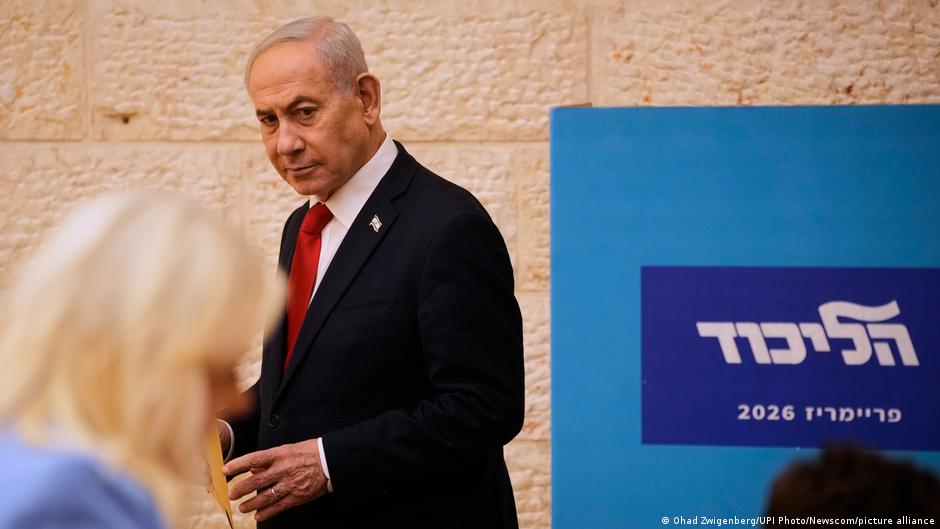
According to Ze Be AI, a research project of the Open University of Israel, monitoring AI content in the 2026 legislative election campaign, this clip is just one of more than 1,800 posts with AI-generated content that Netanyahu's Likud party had released throughout the election campaign by mid-October.
uncertain
party → accord → October
That represents about a quarter of the Likud party social media materials analyzed by Ze Be AI.
asserted
That → represent → AI
On October 27, Israelis will vote in an election that could oust Netanyahu from power or cement his grip on the country for the coming years.
uncertain
that → vote → years
Political scientists are already calling it Israel's first AI election.
asserted
scientists → call → election
Parties have been deploying AI across every aspect of campaigning — from creating outrageous videos aimed at stirring controversy to robocalling voters and unleashing bots online.
asserted
Parties → deploy → bots
"There is a scenario where, in a strategic point shortly before the election, AI could or would be used in ways that would steer controversy that could tilt the election results," said Anat Ben-David, a media researcher leading the Ze Be AI project at the Open University of Israel.
uncertain
David → be → Israel
AI videos go mainstream
Ben-David and her research team have been tracking all of the content posted on social media by politicians since the end of July.
asserted
David → go → July
By mid-October, they had collected more than 44,000 posts across Facebook, Instagram, X and TikTok and found that over 14% of the material used AI in some way.
asserted
% → collect → way
A hybrid approach was most common, with AI being deployed for a part or segments of an ad: in images, music, subtitles, logos or full-fledged deepfakes.
asserted
AI → deploy → images
Some fringe parties use the greatest ratio of AI in their content.
asserted
parties → use → content
But Likud is the winner by far when it comes to sheer numbers of AI use in content analyzed by the team.
asserted
it → come → team
Netanyahu's party is followed his left-wing rivals, the Democrats, and then Eisenkot's party, Yashar — though at far lower numbers.
asserted
party → follow → numbers
Israel's Central Elections Committee issued a new rule in July mandating that all AI-generated or -manipulated content in election campaigning be labeled.
asserted
content → issue → campaigning
"There's no AI Act, no Digital Services Act, and the privacy law is very outdated," Ben-David said.
asserted
David → be → ?
"Then you see new [AI] uses that would be impossible to see in Europe.
asserted
that → see → Europe
Some of those uses have come from Israel's most prominent politicians.
asserted
Some → come → politicians
Yair Golan, head of the Democrats, has been trying to capitalize on popular internet trends.
asserted
Golan → try → trends
One videolabeled as AI content features him sitting under a ceiling fan — with each rotation of the blade, his outfit changes: from an army uniform to a T-shirt with the popular slogan "bring them home now" (referring to Israeli hostages in Gaza) to a suit and tie.
asserted
outfit → videolabele → suit
In one photorealistic AI video, posted by Finance Minister Bezalel Smotrich in September, Israel's attorney general and Supreme Court justices are apprehended at an anti-government protest.
asserted
general → post → protest
Attorney General Gali Baharav-Miara has frequently clashed with the ruling coalition.
asserted
Miara → clash → coalition
And National Security Minister Itamar Ben-Gvir shared an AI-generated video of Palestinians being wheeled on a conveyor belt into what looks like a concentration camp.
asserted
what → share → camp
That post drew widespread condemnation, with Germany's Foreign Ministry calling it"completely unacceptable" and "abhorrent."
asserted
Ministry → draw → it"completely
The election authority has shown some willingness to intervene.
asserted
authority → show → willingness
In July, its chairman ordered Smotrich to take down an unlabeled AI video it called misleading.
asserted
it → order → video
A new generation of robocall
It's not just deepfakes and ads: AI is also being used to reach voters directly.
asserted
AI → use → voters
Some voters are getting a new kind of AI-powered robocall — far more conversational than the robotic automated calls of the past.
asserted
voters → get → past
Nitsan Yasur, a disinformation researcher at the Israel InternetAssociation, shared a recording with DW of a four-minute phone call.
asserted
Yasur → share → call
In it, a voice introduces itself as a pollster named Danielle with an Israeli polling institute and asks for his voting preferences.
asserted
voice → introduce → preferences
When Yasur asks if the voice is human, it admits, "there is no human agent on the line," before continuing to ask, "would you like to continue with the short survey?"
asserted
you → ask → survey
The bot fields several of Yasur's questions, while always steering back to who he would vote for.
asserted
he → field → who
But when Yasur asks five times who commissioned the survey, it doesn't reveal the information.
asserted
it → ask → information
So it remains unclear whether this was part of an election campaign or a poll.
uncertain
this → remain → campaign
…and 19 more, not listed.
 The Aporia