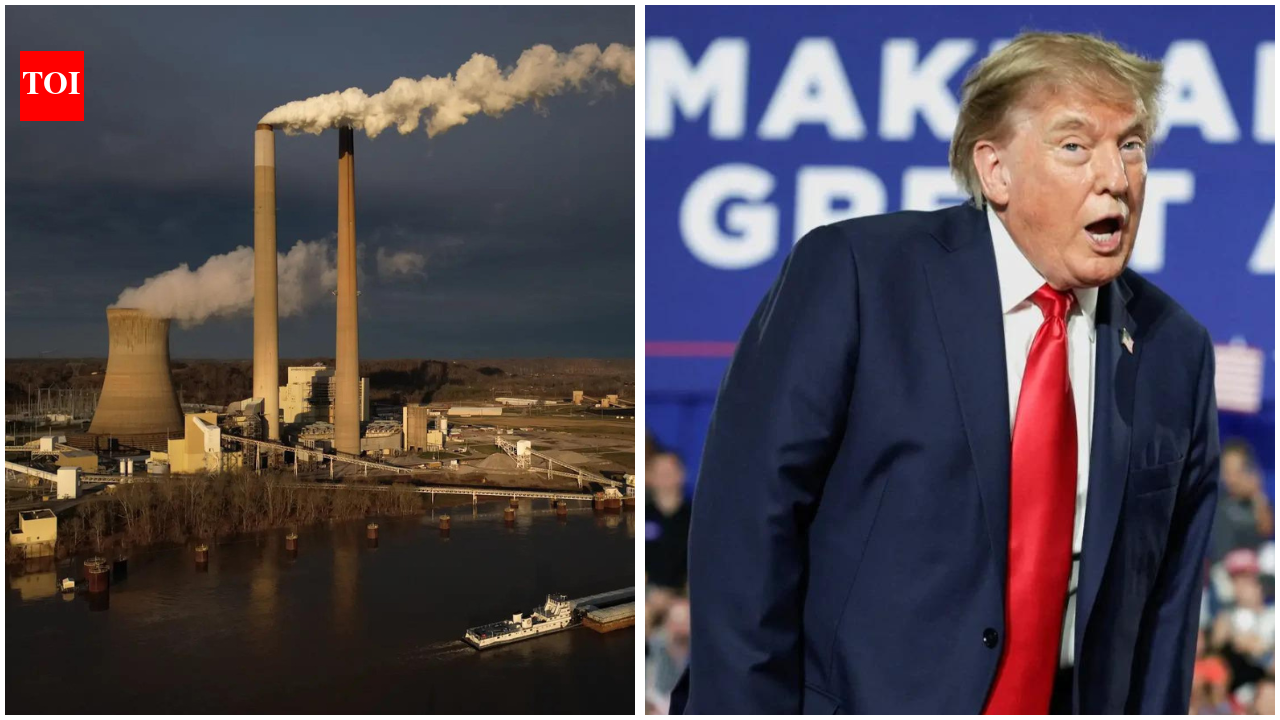
The Environmental Protection Agency (EPA) under the Trump administration plans to announce on Monday that it will cease regulating greenhouse gas emissions from coal- and gas-fired power plants, effectively ending rules set by previous administrations. This move, detailed by The New York Times, would not only revoke existing regulations but also argue that the EPA lacks legal authority to regulate these gases under the Clean Air Act, potentially preventing future administrations from implementing similar policies. Electricity generation is the second-largest source of carbon dioxide emissions in the U.S., and the rules being rescinded were projected to deliver $120 billion in public health benefits by 2047 by reducing pollution-related illnesses and deaths.
Written by the local model on 2026-09-14,
using this article's own text rather than the other coverage of the
same event (that is the story summary below).
Story summary
The Environmental Protection Agency (EPA) is set to announce a rule change that will remove limits on greenhouse gas emissions from coal and natural gas power plants, as early as Monday. This move marks a significant shift away from previous Democratic administrations' efforts to address climate change and reduce industrial pollution in low-income and predominantly Black or Hispanic communities. EPA Administrator Lee Zeldin argues the change would eliminate billions of dollars in costs for the energy industry and "unleash" American energy production, but environmental groups like the Environmental Defense Fund warn it will have severe health and safety repercussions across the country.
The proposed rule could prevent future administrations from regulating greenhouse gas emissions from power plants under the Clean Air Act. According to experts, if this argument stands in court, it would dismantle the legal basis for any future regulation of these significant polluters. Power generation is the second-largest source of carbon dioxide and other planet-warming gases in the United States, contributing 31% of all carbon emissions from burning fossil fuels.
The EPA's action is part of a broader push by the current administration to prioritize energy production over environmental protection, with the announcement set for a G20 ministerial meeting on "energy abundance" in Houston. Industry groups like America’s Power have welcomed the proposed repeal, arguing it will protect grid reliability and consumer costs amid rising electricity demand from sectors such as data centers, AI, and advanced manufacturing.
Written for “EPA Scraps Carbon Limits” on 2026-09-14,
grounded in this article and the 3 other(s) covering the same event.
The Environmental Protection Agency is expected to announce Monday that the United States will stop limiting the greenhouse gases released by coal- and gas-fired power plants, completing the Trump administration's dismantling of the climate policies of the two previous Democratic presidents.
asserted
States → expect → presidents
The New York Times first reported the plan, citing two people familiar with the proposal who spoke on condition of anonymity because it had not been made public.
asserted
it → report → anonymity
The repeal itself is only half of what the agency intends to do.
asserted
agency → intend → what
According to the Times, the EPA will argue that greenhouse gases from power plants do not endanger human health or the environment, and that it therefore has no authority to regulate them under the Clean Air Act at all.
uncertain
it → accord → Act
If that argument survives in court, it would not simply end the current rules.
asserted
it → survive → rules
It would remove the legal basis on which any future administration could write new ones.
uncertain
administration → remove → ones
"They are swinging for the fences to try to prevent any administration from regulating one of the largest sources of emission for the United States," Carrie Jenks, executive director of the Environmental and Energy Law Program at Harvard Law School, told the paper.
asserted
Jenks → swing → paper
EPA Administrator Lee Zeldin is expected to make the announcement in Houston at a meeting of Group of 20 energy ministers, an event the administration has branded the Energy Abundance Ministerial.
asserted
administration → expect → ministers
Energy Secretary Chris Wright and Interior Secretary Doug Burgum are also expected to appear.
asserted
Wright → expect → ?
Electricity generation is the second-largest source of carbon dioxide and other planet-warming gases in the United States, behind transportationThe American power sector would rank as the fifth-largest climate polluter in the world, behind China, the United States as a whole, India and Russia, if it were a country.
asserted
it → warm → whole
The rules being rescinded were finalised by the Biden administration in 2024 and applied to coal plants already operating and to gas plants that had yet to be built.
asserted
that → rescind → plants
Compliance would have required coal plants to capture their carbon emissions and store them underground, or gas plants to burn cleaner fuels such as hydrogen.
asserted
plants → require → hydrogen
The coal industry argued the technology was unworkable at the cost, and warned that plants would close rather than retrofit.
asserted
plants → argue → cost
The Biden administration projected that the rule would deliver $120 billion in public health benefits by 2047, largely by cutting soot and other pollutants alongside carbon.
asserted
rule → project → carbon
It estimated that in 2035 alone the standards would prevent as many as 1,200 premature deaths, 870 hospital and emergency room visits, 360,000 asthma attacks, 48,000 missed school days and 57,000 lost workdays.
asserted
standards → estimate → deaths
Those figures will not appear in the agency's accounting of what repeal costs.
asserted
repeal → appear → what
Under Trump, the EPA has stopped estimating the public health benefits of reducing pollution in the cost-benefit analyses required for clean-air rules, and now calculates only what compliance costs businesses.
asserted
compliance → stop → businesses
"This is another nail in the coffin for this administration's commitment to protecting people and tackling the climate crisis," Manish Bapna, president of the Natural Resources Defense Council, told the Times.
asserted
Bapna → protect → Times
The agency, he said, "is ending its legal and moral responsibility to end climate pollution."
asserted
he → say → pollution
Power plants would remain subject to limits on mercury, arsenic and other contaminants, though the EPA has already loosened how much mercury they may emit.
uncertain
they → remain → mercury
Monday's action is the latest in a year of aggressive moves by the Trump administration to reverse decades of environmental protections and make it far more difficult for future presidents to do anything that could undermine the fossil fuel industry.
uncertain
that → reverse → industry
The EPA has already eliminated greenhouse gas standards for car tailpipes and eased restrictions on the planet-warming chemicals used in air conditioners and refrigerators.
asserted
EPA → eliminate → conditioners
Most significantly, it moved against the Obama-era endangerment finding — the scientific determination that greenhouse gases threaten public health, and the foundation of the agency's authority to regulate them at all.
asserted
gases → move → them
Trump has for years called climate change a "hoax” and has suggested the entire movement to combat climate change is part of a China-orchestrated operation to undermine the U.S. economy.
uncertain
movement → call → economy
During his second term, his administration has framed the rollbacks as a response to electricity demand, particularly from the data centers built to run artificial intelligence systems, and has sought to make fossil fuels cheaper and faster to burn.
asserted
fuels → frame → systems
Despite Trump’s push to revive fossil fuels and cripple renewables, the energy market hasn’t followed his preferences.
asserted
market → revive → preferences
While coal generated more than half of American electricity in 1990k, it has fallen to roughly 17 percent last year.
asserted
it → generate → percent
Since 2010, 330 coal plants have retired and another 60 have announced closures by 2031, according to the Sierra Club.
uncertain
60 → retire → Club
New coal plants are more expensive to build and run than gas or renewables.
asserted
plants → build → gas
Utilities are building gas instead — more than two dozen new gas plants came online in the United States last year, according to the energy data firm Cleanview.
uncertain
plants → build → firm