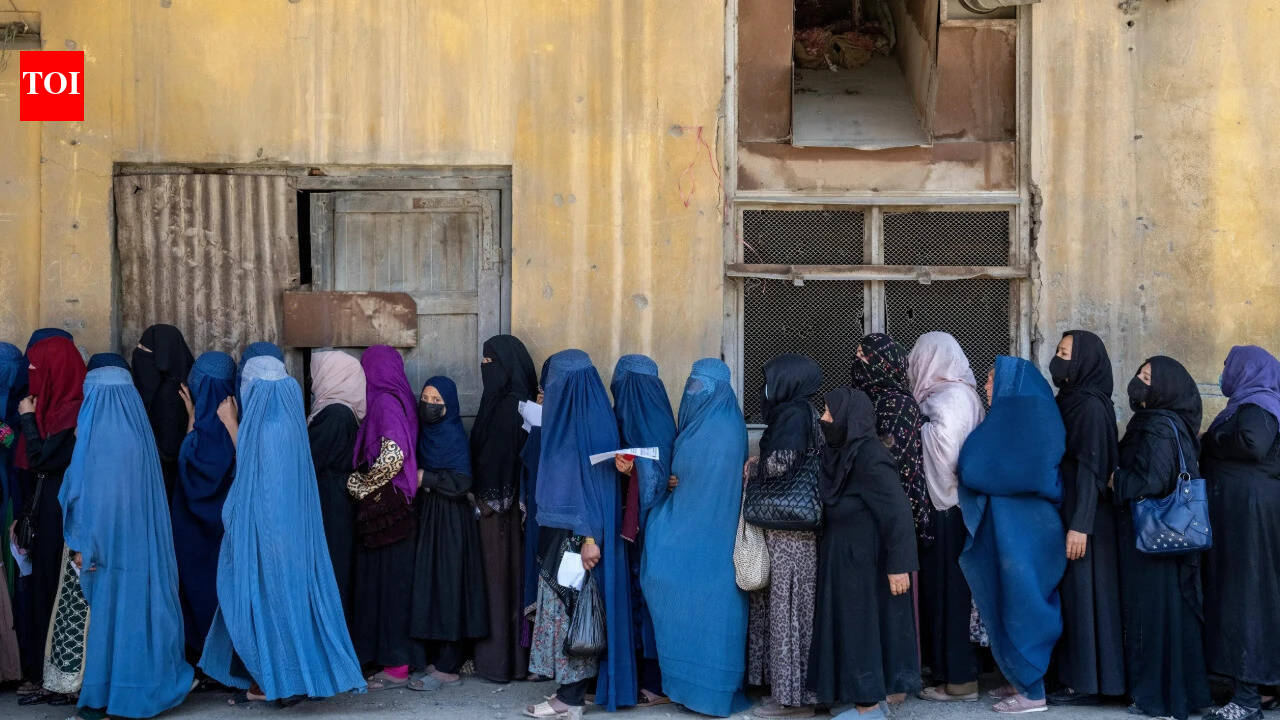
Five years of Taliban rule have left Afghanistan with so much loss and so little hope.
asserted
years → leave → loss
Women have been pushed out of sight and eventually mind.
asserted
Women → push → sight
Millions more face the threat of hunger as winter sets in.
asserted
winter → face → hunger
For a country that has already endured so much, hope is beginning to diminish.
asserted
hope → endure → much
Since returning to power in August 2021, the Taliban has tightened its grip on everyday life, with women and girls bearing the brunt of its restrictions.
asserted
women → return → restrictions
Education, employment and freedom of movement have become increasingly difficult to access, while food insecurity, economic hardship, displacement and declining humanitarian assistance have deepened the crisis.
asserted
insecurity → become → crisis
“Today, the plight of many in Afghanistan is going from bad to worse,” UN Human Rights chief Volker Türk said, warning that the country's worsening situation was receiving inadequate international attention.
“
asserted
situation → go → attention
Yet, it seems the world has forgotten and abandoned the people of Afghanistan to a plight deepening by the day.
asserted
world → seem → day
So, five years after the Taliban takeover, how has life changed for Afghans?
asserted
life → change → Afghans
Here are the numbers that tell the story.
asserted
that → tell → story
Deepening crisis for Afghan women
Living with over 100 decrees: How Afghan women are walking on eggshells
For women living under the Taliban’s rule, everyday chores such as going to work, visiting a market, studying or seeking medical care have become a Herculean task.
asserted
chores → live → care
According to UN Women, more than 100 decrees targeting women and girls have been issued since the Taliban returned to power.
uncertain
Taliban → accord → power
It began with education.
asserted
It → begin → education
Girls were barred from secondary education beyond Grade 6, followed by the exclusion of women from universities.
asserted
Girls → bar → universities
Then by July 2023, beauty salons, among the remaining sources of income and female-only social spaces, were ordered to shut.
asserted
salons → remain → income
Women were also barred from parks, gyms and public bathhouses.
asserted
Women → bar → parks
Almost a year later, Taliban formalised its Law on the Propagation of Virtue and Prevention of Vice, imposing further controls on women's appearance and behaviour.
asserted
Taliban → formalise → appearance
Women were required to cover their bodies and faces in public and prohibited from raising their voices in public, including to sing or recite.
asserted
Women → require → public
Restrictions on employment, travel and dress, along with requirements to travel with a male guardian, further curtailed their freedom.
asserted
Restrictions → travel → freedom
And it's not just public life that the Taliban controls.
asserted
Taliban → control → that
In January 2026, the Taliban adopted a new Criminal Procedure Code for Courts that further highlighted the restrictions women face.
asserted
women → adopt → restrictions
Under Article 32, a husband who abuses his wife can face just 15 days in prison, and only if the abuse results in a broken bone, an open wound or a visible bruise.
asserted
abuse → abuse → bone
The code also allows husbands to impose discretionary punishments for “disobedience”, ranging from scolding to corporal punishment.
asserted
husbands → allow → punishment
Contrastingly, those who organise animal fights can face up to five months in prison.
asserted
who → organise → prison
The restrictions have effectively shrunk women's everyday lives.
asserted
restrictions → shrink → lives
According to a UN assessment, more than half of the women surveyed left home only once or twice a month.
uncertain
half → accord → home
Nearly three-quarters felt unsafe leaving without a male guardian, while more than half avoided public spaces, including markets and healthcare facilities.
asserted
half → feel → markets
Shrinking lives of Afghan women
Class dismissed: Afghanistan’s girls locked out of learning
Afghanistan remains the only country in the world where girls and women are prohibited from accessing secondary and higher education under the current restrictions.
asserted
girls → shrink → restrictions
According to UNICEF, more than 2.6 million girls had been denied secondary education since the Taliban takeover.
uncertain
girls → accord → takeover
Women had already been excluded from universities since December 2022, putting an end to an educational journey for millions.
asserted
Women → exclude → millions
The consequences extend far beyond classrooms.
asserted
consequences → extend → classrooms
Girls prevented from completing their education lose opportunities to pursue higher qualifications and skilled employment.
asserted
Girls → prevent → qualifications
Afghanistan, meanwhile, risks losing future teachers, doctors, nurses and other professionals needed to rebuild its institutions.
asserted
Afghanistan → risk → institutions
The wider education system is also struggling.
asserted
system → struggle → ?
In January 2026, UNESCO and UNICEF reported that 93% of children completing primary school were still working towards basic reading proficiency.
asserted
% → report → proficiency
Between 2018 and 2024, the gross enrolment rate for boys fell from 120 to 104, while the rate for girls rose from 82 to 87.
asserted
rate → fall → 87
The overall rate declined from 101 to 95.
asserted
rate → decline → 95
Gross enrolment rates can exceed 100 because they include pupils outside the official age group and do not directly measure attendance or completion.
asserted
they → exceed → attendance
The increase in girls' primary enrolment therefore does not mean restrictions on older girls have eased.
asserted
restrictions → mean → girls
Education under Taliban
The number of female teachers has also fallen, from 98,196 in 2019 to 66,208 in 2024, a decline of approximately 32.5%.
asserted
number → fall → %
…and 66 more, not listed.
 The Aporia