- Published
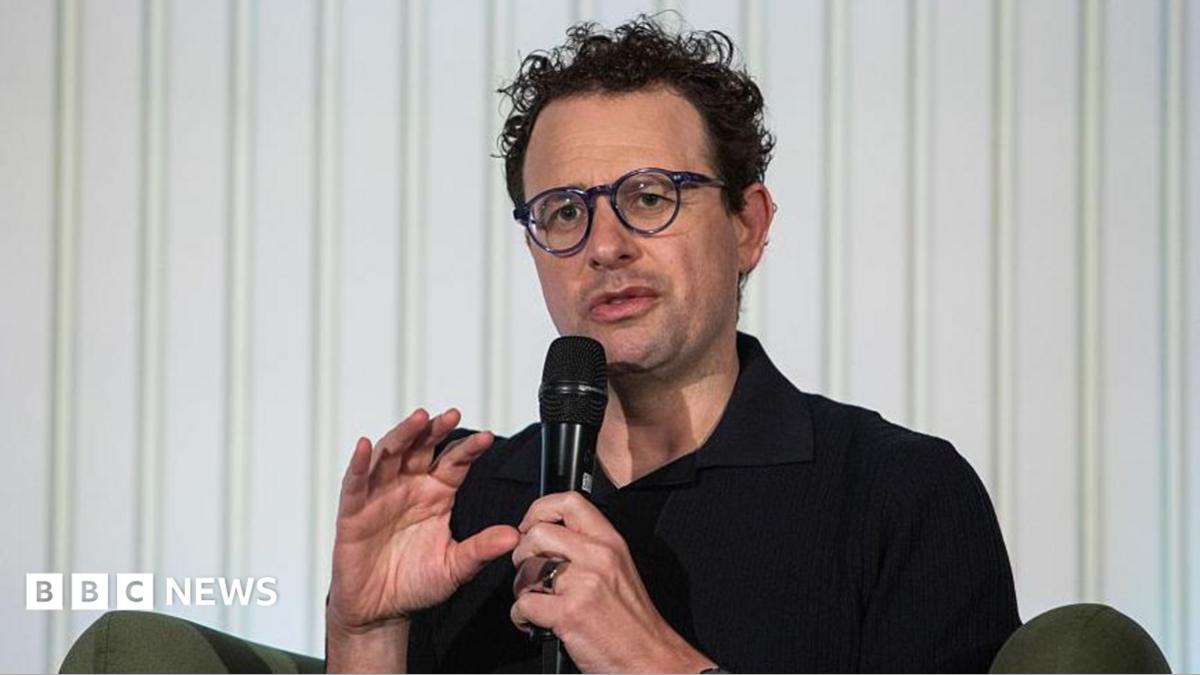
"We don't have robots that are nearly as good at understanding the physical world as a rat," says Yann LeCun, one of the leading figures in the world of artificial intelligence.
asserted
LeCun → have → intelligence
He worked at Facebook-owner, Meta, for a decade, where he was chief AI scientist, but left in 2025 and founded Advanced Machine Intelligence Labs (AMI Labs).
asserted
he → work → Labs
His goal is to move AI beyond current systems like ChatGPT, Claude and Gemini.
asserted
goal → move → ChatGPT
They have their uses, he says, but will never be able to tackle complicated situations in the real world, like getting a robot to do household chores.
asserted
robot → have → chores
"They're not a path towards human level or human-like intelligence, or even animal-like intelligence, because they cannot deal with real world data, they just are not built for that," he tells me on the sidelines of VivaTech, France's leading technology conference.
asserted
he → deal → VivaTech
So, Paris-based AMI Labs is busy developing a new type of artificial intelligence not based on the tech behind ChatGPT and its rivals.
asserted
Labs → base → ChatGPT
Investors think it has potential.
asserted
it → think → potential
Earlier this year AMI Labs announced that it had raised more than $1bn (£760m), with investors including US computer chip giant Nvidia and the fund that manages the private wealth of Amazon-founder Jeff Bezos.
asserted
that → announce → Bezos
That so-called seed funding round - the earliest round of start-up fundraising - was one of the biggest of its kind in Europe.
asserted
round → call → Europe
Large Language Models (LLMs) like ChatGPT are extremely good at some things like coding, mathematical problems and generating text, LeCun says.
But he argues that these are well defined and predictable problems.
asserted
these → generate → text
"They [LLMs] basically just accumulate knowledge...
asserted
They → accumulate → knowledge
They can regurgitate something, you train them to regurgitate, but they're not particularly smart.
asserted
they → regurgitate → them
They don't have an underlying understanding," he says.
asserted
he → have → understanding
In the real world there is a bewildering array of outcomes to any action, which requires a more flexible type of artificial intelligence.
asserted
which → be → intelligence
LeCun holds a pen upright on its tip.
asserted
LeCun → hold → tip
What happens when you let go, he asks?
asserted
he → happen → ?
Even a toddler would know that the pen would topple over.
asserted
pen → know → ?
But no human would bother to guess in which direction the pen might fall, there's no way to tell.
uncertain
pen → bother → ?
But an LLM might try to generate a single prediction about the pen's next move based on statistical patterns from its training data.
uncertain
LLM → try → data
The prediction would almost certainly be wrong, because the system is not reasoning about the physical reality of the situation - it is generating what appears to be statistically plausible.
asserted
what → reason → situation
LeCun says the system his company is developing, called Joint Embedding Predictive Architecture (JEPA), is set up to deal with problems like that.
asserted
company → say → that
It creates abstractions of the real world that allow it to assess the outcomes of actions.
asserted
it → create → actions
Creating these abstractions involves difficult maths, but essentially they filter out useless information, just leaving the AI with useful pictures of the world.
asserted
they → create → world
In the case of the pen, the AI would know that there's no point in trying to predict which way the pen would fall.
asserted
pen → know → pen
Building a more flexible artificial intelligence is a priority for the robotics industry.
asserted
Building → build → industry
Billions of dollars have been invested in building humanoid robots and their feats get more impressive every year.
asserted
feats → invest → robots
But training them to safely perform household tasks like ironing or stacking the dishwasher is proving difficult and costly.
And, according to LeCun, current AI models are unlikely to ever be any good in that environment.
uncertain
models → train → environment
"LLMs are largely hopeless for robotics," he says.
"The claims that somehow by just scaling up LLMs, we're going to reach super human intelligence, that is simply not going to happen."
uncertain
that → say → intelligence
Many in the AI industry agree with LeCun.
asserted
Many → agree → LeCun
He is professor of Applied Artificial Intelligence at Oxford University and directs its Applied AI Lab.
asserted
He → direct → Lab
"My view is that the next decade will really be about systems that can explain...
asserted
that → explain → systems
You need models that can answer questions like: What matters?
asserted
What → need → questions
What causes what? What would happen if I did something else - like if I took a different action?
asserted
I → cause → action
Posner and his team of around 10 researchers have been working for four years on an alternative form of AI, which falls into a loose category called World Models.
asserted
which → work → category
While World Models have conceptually been around for decades, one inspiration for this work was an influential paper published in 2018 by David Ha and Jurgen Schmidhuber, external.
asserted
inspiration → publish → Ha
Their insight was that, given advances in machine learning and compute power, an AI can learn how to do something purely from a learnt, "mental" simulation of what the world looks like.
asserted
world → give → what
Since 2018 that idea has catalysed a significant amount of research into world models, including the Dreamer World Model, external from Google.
asserted
idea → catalyse → Google
Last year a Dreamer variant worked out how to collect diamonds, external in the video game Minecraft, by imagining future scenarios to help it with decision making.
asserted
variant → work → making
Posner hopes the AI system his team are working on will be another step forward.
asserted
team → hop → ?
He calls it a "mechanistic world model", which will structure knowledge in a way the AI can use efficiently.
asserted
AI → call → way
…and 11 more, not listed.
 The Aporia