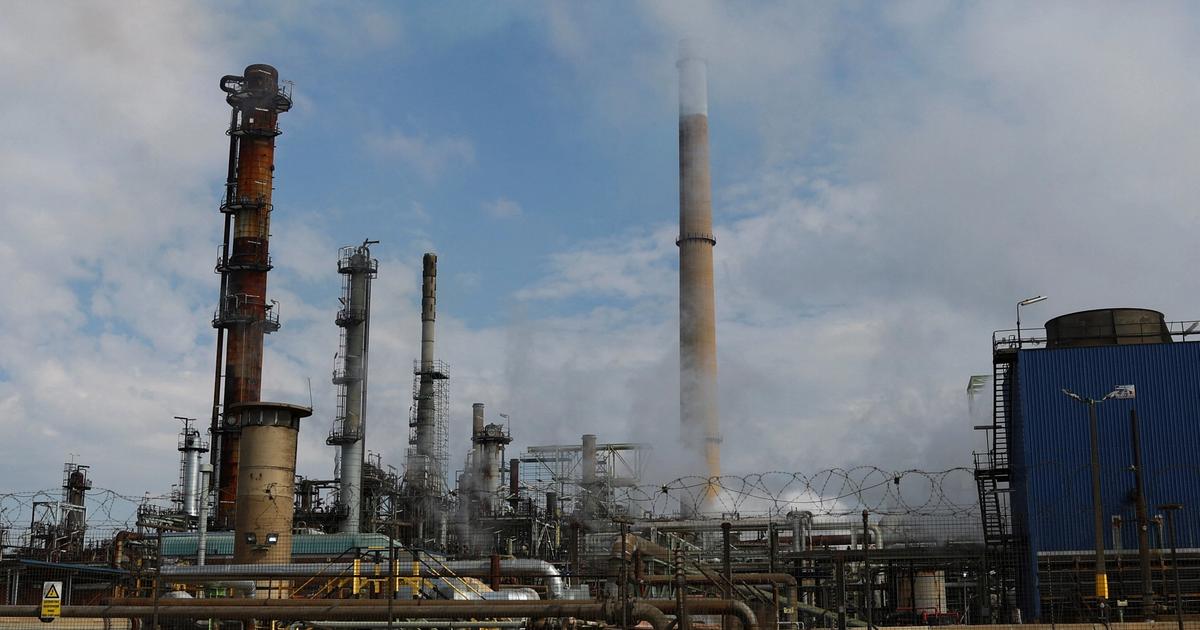
South Africa's central bank reported that closing several oil refineries has cost the country $4.7 billion more in imported fuel than if those facilities had remained operational. Over the past decade, South Africa’s refining capacity has decreased by half, leading to a situation where over 50% of its refined fuel is now imported. In response to global price shocks and recent tensions with Iran, South Africa plans to increase its oil refining capacity significantly, joining other African nations seeking greater energy independence.
Written by the local model on 2026-09-14,
using this article's own text rather than the other coverage of the
same event (that is the story summary below).
Story summary
The South African Reserve Bank reported that South Africa's oil importation bill could have been $4.7 billion lower if it had not closed several refineries over the past decade. Refining capacity in the country has halved, with imported refined fuel now meeting more than half of domestic demand. In response to concerns about energy security and rising global prices due to the conflict involving Iran, South Africa recently announced plans to at least triple its oil refining capacity. Across Africa, nations are reassessing their reliance on imported energy, which currently accounts for around 70% of the continent’s refined fuel needs. For instance, Nigerian tycoon Aliko Dangote is planning to build a refinery in Kenya similar to his mega-refinery in Lagos, Nigeria.
Written for “South Africa Oil Refinery Losses” on 2026-09-14,
grounded in this article and the 0 other(s) covering the same event.
Why this leaning score
This article does not take a side on a contested political
question, so it has no leaning score. That is an
answer rather than a gap: a match report or a rescue can be warmly
or critically written without being left or right, and scoring it
anyway is how approval of a subject gets recorded as a political
position.
No political leaning scored for article 8979 · logged 2026-09-14
South Africa’s oil importation bill could have been $4.7 billion lower if it had not closed a number of refineries, the country’s central bank said.
uncertain
bank → close → refineries
Refining capacity in Africa’s largest economy has halved over the past decade and imported refined fuel now supplies more than half of domestic demand, the South African Reserve Bank said in a note published last week.
asserted
Bank → refine → note
The country recently announced plans to at least triple its oil refining capacity amid growing concerns around its exposure to global price shocks.
asserted
country → announce → shocks
Disruption caused by the Iran war has pushed up oil prices and exposed Africa’s reliance on energy imports which account for around 70% of the continent’s refined fuel needs.
asserted
which → cause → needs
The conflict has prompted several nations to look at ways to reassess their energy sovereignty.
asserted
conflict → prompt → sovereignty
Nigerian tycoon Aliko Dangote plans to build a refinery in Kenya modeled on his Lagos mega-refinery.
asserted
Dangote → plan → refinery