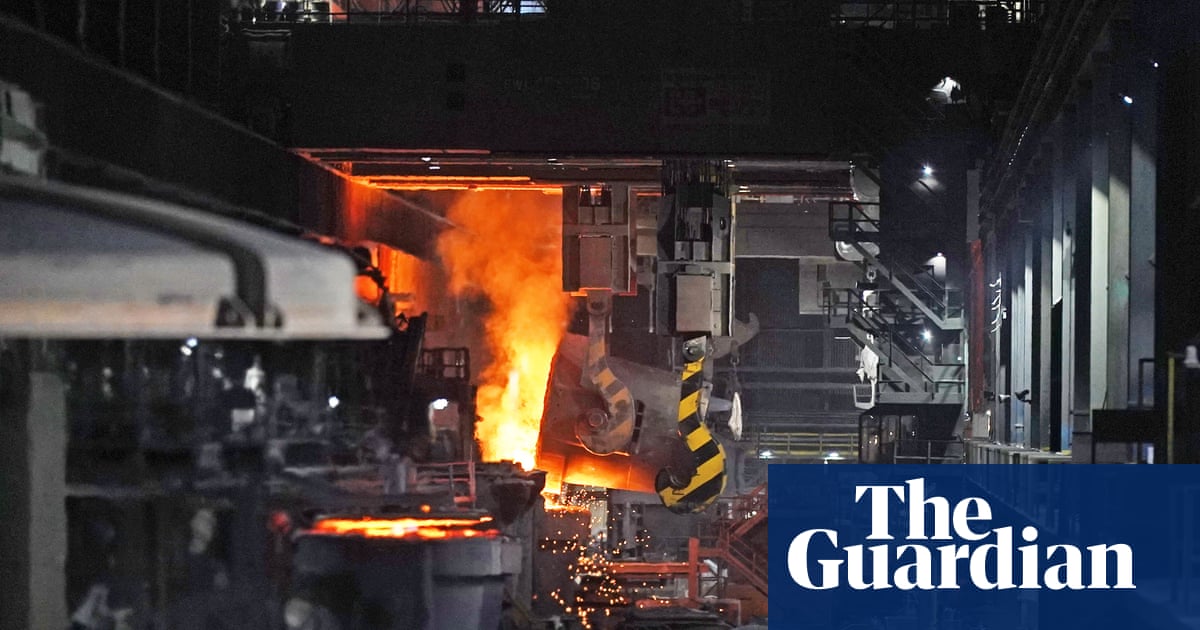
Electricity costs put UK steelmakers in worst position in three years against EU rivals

Read the original at The Guardian ↗
Cite

Jolly, J. (2026, October 18). Electricity costs put UK steelmakers in worst position in three years against EU rivals. The Guardian. https://www.theguardian.com/business/2026/oct/19/electricity-costs-uk-steelmakers-worst-position-three-years-eu-rivals

Dated from the outlet's own feed. Check the original for its byline.

The Guardian · collected 2026-10-18 · by Jasper Jolly

Quick Summary

British steelmakers are facing higher electricity costs compared to their European counterparts due to surging global gas prices triggered by tensions with Iran. The price premium over French competitors has risen to nearly £30 per megawatt hour, the highest level in three years. This disparity is attributed to the UK’s reliance on gas for power generation and its impact on cleaner steelmaking processes, placing a significant financial burden on British manufacturers who rely heavily on exports to Europe.
Written locally by qwen2.5:14b on 2026-10-18, using this article's own text rather than the other coverage of the same event (that is the story summary below).

AI analysis runs on qwen2.5:14b, locally

Story summary

British steelmakers now face electricity costs that are nearly £30 higher per megawatt hour (MWh) compared to their French counterparts, marking the highest premium in three years. This disparity is driven by rising global gas prices following the US-Israeli war on Iran and its impact on the Strait of Hormuz. The UK’s dependence on gas for power generation makes it particularly vulnerable, as the wholesale gas price significantly influences electricity costs even from cleaner sources like wind or solar. In contrast, France relies more on nuclear reactors to determine electricity prices. A report by the lobby group UK Steel highlights that this cost disadvantage is a major barrier to British industry's competitiveness and efforts to reindustrialize. The UK government has responded with plans to reduce electricity bills for over 10,000 manufacturing businesses by up to 25%, aiming to cut costs for energy-intensive industries by around £1 billion annually.

Written for “UK Steel Industry Costs Rising” on 2026-10-19, grounded in this article and the 0 other(s) covering the same event.
Why this leaning score
The article's own words the score was based on. Each is quoted verbatim and was checked against the article text before being stored, so you can find it in the original.
Reading Leans left (beta estimate) Confidence high 1 quote(s) discarded as not found in the article
Leaning: leans left for article 89583 (high confidence, 2 verified quotes) · logged 2026-10-18

Story

📰 UK Steel Industry Costs Rising
Economy/Business · 1 article(s) covering the same event.

Compared with similar articles

Nothing to compare against. No article is close enough to this one for the pipeline to have linked or judged the pair.
How this article was measured signals, leaning charts, publisher record, byline, topics and claims

Signals How these are calculated →

Claims extracted
24
sentences that state something as happening or true
Uncertain
4%
1 of 24 hedged ("reportedly", "may", "according to")
Leaning
Leans left
of the writing, not the subject · beta estimate
Publisher signals
67/100
The Guardian's corrections and hedging, across everything collected from it. Not a measure of accuracy.
Outlets on this story
1
Economy/Business
Same framing elsewhere
1
articles that frame the event the way this one does
Analyzed 2026-10-18 · how these are computed

How this is being covered How these are calculated →

Article leaning vs. publisher reliability
Source leaning vs. consistency

Publisher

The Guardian · 2041 article(s) · 5 correction(s) detected
Running correction rate · 5 correction(s)

Who wrote this

Jasper Jolly
1 article(s) here · 1 carrying a prediction
🔮 The main option to bring the price down further, however, would be to set up more cheap renewables – a challenge in the short term – or to directly subsidise prices.
The only article under this byline in the corpus.

Topics

British European France Iran UK Steel

Subjects

British NORP · 6× European NORP · 3× France GPE · 3× Germany GPE · 2× Iran GPE · 2× UK Steel ORG · 2× Andy Burnham PERSON · 1× Donald Trump’s PERSON · 1× French NORP · 1× Russia GPE · 1×

Narrative

A government spokesperson said: “We are tackling industry’s number one concern head-on by reducing electricity bills by up to 25% for over 10,000 manufacturing businesses, and cutting costs for hundreds of our most electricity-intensive businesses by around £1bn per year – delivering on the prime minister’s pledge to reindustrialise Britain.”
framing: assertive · carried by 1 article(s) · first seen 2026-10-18
🔮 The main option to bring the price down further, however, would be to set up more cheap renewables – a challenge in the short term – or to directly subsidise prices.

Claims (24 extracted, 1 hedged)

British steelmakers have been pushed further behind European rivals on electricity costs after the US-Israeli war on Iran caused a surge in global gas prices. asserted
war → push → prices
The premium paid by the British industry over its French counterpart has risen to almost £30 a megawatt hour (MWh), its highest level in three years, according to analysis by the lobby group UK Steel. uncertain
premium → pay → group
Energy prices have long been one of the main factors businesses cite when asked what is holding back British industry. asserted
what → cite → industry
For Andy Burnham they represent perhaps the biggest obstacle to his goal of “reindustrialising” the UK. asserted
they → represent → UK
Analysts blame the UK’s high electricity prices on its reliance on gas for power generation, which is crucial for cleaner steelmaking with electric arc furnaces. asserted
which → blame → furnaces
The way the market is set up means that the wholesale gas price determines the price of electricity even from other sources that cost much less to produce, such as wind or solar power, and Iran’s closure of the strait of Hormuz in response to Donald Trump’s bombing campaign has caused global gas prices to soar. asserted
prices → set → campaign
Electricity prices in France are mainly determined by its nuclear reactors, while in Germany heavily polluting coal still plays a large role in generation. asserted
coal → determine → generation
Comparisons with European rivals are particularly important for the UK because the EU is often the main market for British manufactured products, including about 75% of exported steel, worth about £3bn. asserted
EU → manufacture → steel
The gap with France had fallen in the previous three years to reach £18 a MWh last year, although it remains below the £153 reached in 2022 when Russia’s invasion of Ukraine caused a crisis in the global gas market. asserted
invasion → fall → market
The gap with Germany this year fell slightly to about £12. asserted
gap → fall → 12
Under Keir Starmer most of the costs added by government policy to heavy industrial businesses’ electricity costs were removed last year. asserted
most → add → costs
The main option to bring the price down further, however, would be to set up more cheap renewables – a challenge in the short term – or to directly subsidise prices. asserted
option → bring → prices
The director general of UK Steel, Peter Brennan, said direct subsidies were the only option to help steelmakers. asserted
subsidies → say → steelmakers
The lobby group has proposed a cap on prices that it estimates would cost about £51m a year. asserted
it → propose → m
The government would pay the difference when prices go above that level, while the industry would pay the government if prices go below. asserted
prices → pay → government
“British steelmakers are being asked to compete with one hand tied behind their backs,” Brennan said. asserted
Brennan → ask → backs
“Despite welcome government action, our electricity prices remain vastly higher than those of our European and global competitors, and the gap with France is getting worse. asserted
gap → remain → France
“The government has rightly made reindustrialisation a national priority. asserted
reindustrialisation → make → ?
But we cannot rebuild British manufacturing while forcing our steelmakers to pay substantially more for electricity than their competitors.” asserted
we → rebuild → competitors
Separately, the government announced measures on Monday to support more than 100,000 workforce opportunities in the eight key growth sectors in its industrial strategy. asserted
government → announce → strategy
The “jobs plans” are intended to help young people find work, with a focus on professional and business services, the defence sector and construction. asserted
people → intend → services
Similar plans for financial services, clean energy and life sciences have already been announced. asserted
plans → announce → services
Plans for advanced manufacturing and the creative industries are expected to follow shortly. asserted
Plans → expect → manufacturing
A government spokesperson said: “We are tackling industry’s number one concern head-on by reducing electricity bills by up to 25% for over 10,000 manufacturing businesses, and cutting costs for hundreds of our most electricity-intensive businesses by around £1bn per year – delivering on the prime minister’s pledge to reindustrialise Britain.” asserted
We → say → Britain

💬Give feedback
🕘History 🎫Support