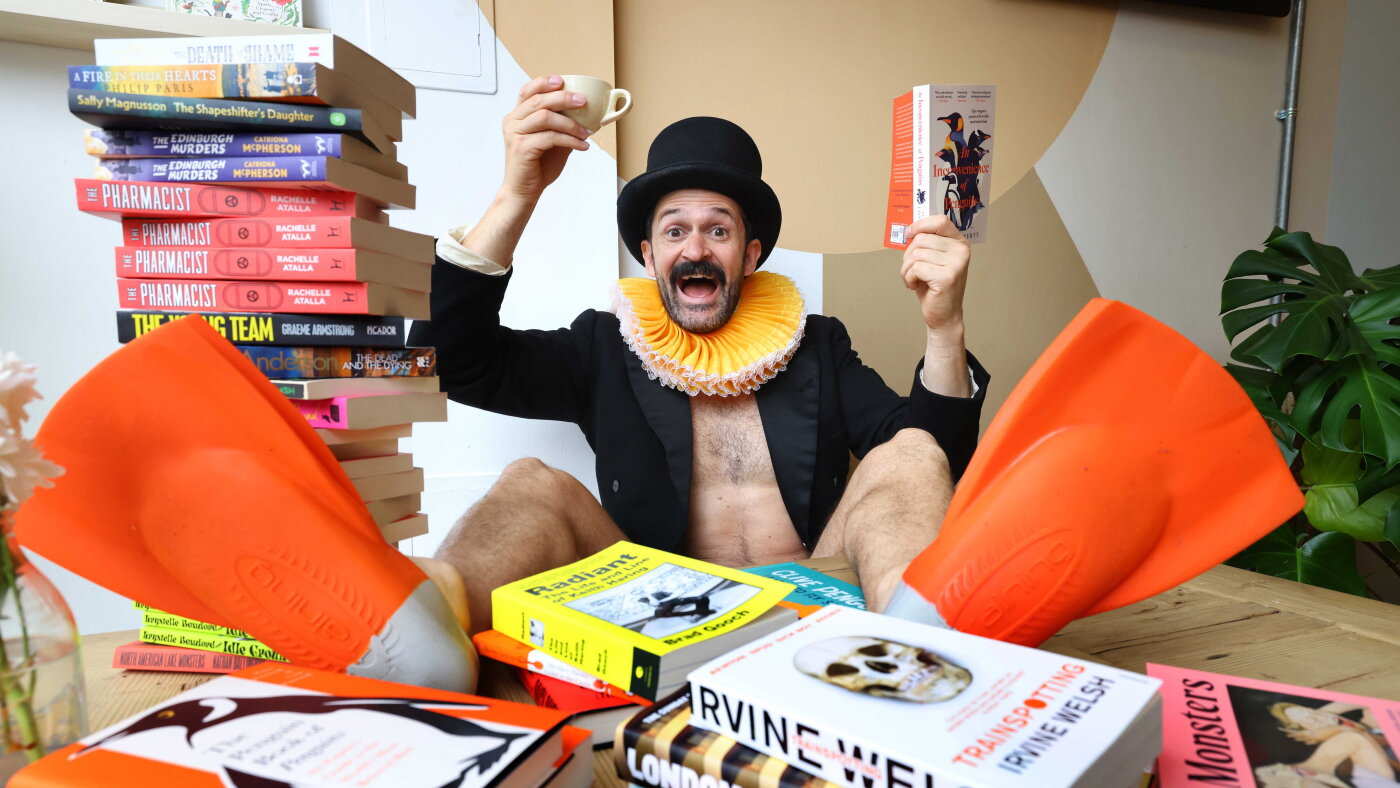
An improvised hour titled David Elms Describes a Room (despite the dry name, it's actually quite entertaining).
asserted
it → title → name
At the Edinburgh Fringe, which wrapped up its 79th edition late last month, almost anything can be a show.
asserted
anything → wrap → edition
This year's festival featured more than 4,200 productions, an overwhelming marketplace of comedy, theater, cabaret — and plenty that resist easy categorization.
asserted
that → feature → categorization
It is also an important hunting ground for producers searching for the next unlikely thing that might travel beyond Edinburgh.
uncertain
that → search → Edinburgh
Few have a better track record for spotting it early than Francesca Moody.
asserted
Few → have → Moody
The 38-year-old London producer helped bring both Fleabag and Baby Reindeer to the Fringe, years before either became a global television phenomenon.
asserted
either → bring → Fringe
Their success has given Moody a reputation for spotting hits early.
asserted
success → give → hits
But ask her how she decides what to produce, and she doesn't want to talk much about strategy or numbers.
asserted
she → ask → strategy
"I think ultimately it's all about my personal taste, because I'm a producer who is really led by their gut," Moody told NPR on a recent afternoon from a makeshift office in Edinburgh, where the Fringe was in full swing.
asserted
Fringe → think → swing
Trying to reverse engineer a commercial success, she said, can ruin the exact thing she's looking for.
asserted
she → try → thing
"As soon as I deviate from that and I pick something because I think it's going to be super commercial and go straight to the West End, or because it's going to be adapted into the next TV series, it just won't be as good."
asserted
it → deviate → series
That "fizzy feeling"
To understand what Moody means by "gut," it helps to go back to Fleabag – in the days before there was much of a Fleabag to speak of.
asserted
it → understand → Fleabag
When Moody first got involved with the project in late 2012, the writer and actress Phoebe Waller-Bridge had written roughly a page.
asserted
writer → involve → page
"We really didn't know what it was yet at all," Moody said.
asserted
Moody → know → ?
Waller-Bridge had been invited to put together a short monologue as part of a storytelling night at a London theater.
asserted
Bridge → invite → theater
At the time, Moody, who was already producing another play with Waller-Bridge, asked if she could read what she had written down.
uncertain
she → produce → what
She immediately became hooked.
asserted
She → become → ?
"You know when you get that fizzy feeling when you read something that you think is really exciting, and it doesn't really matter that it's not all there yet?"
asserted
it → know → something
That fizzy feeling was enough for Moody to secure a venue at the Fringe.
asserted
Moody → secure → Fringe
What followed was a dizzying, anxiety-soaked six-month period in which Moody, still only 26, learned two important lessons: First, trust is invaluable to the producer-artist relationship.
asserted
trust → follow → relationship
A week before rehearsals, Moody stopped by Waller-Bridge's house to see how she was getting on with the script.
asserted
she → stop → script
Save for a scatter of Post-It notes laid out across the floor, the play was still not written.
asserted
play → lay → floor
Moody, who by then had gained a reputation amongst colleagues for her keep-calm-and-carry-on demeanor, reassured Waller-Bridge, then locked her in a room and told her to keep writing.
asserted
who → gain → her
A colleague later found Moody hyperventilating in a closet.
asserted
Moody → find → closet
"I was wondering what would happen if this play didn't get made," she said.
asserted
she → wonder → ?
It did, though the final ending — at one point there were at least three alternate conclusions — was written on the train up to the festival.
asserted
ending → be → festival
The show was still rough around the edges when it arrived in Edinburgh.
asserted
it → arrive → Edinburgh
Reviews were mixed — "Waller-Bridge hasn't produced a flawless piece of writing," the critic Lyn Gardner wrote in The Guardian (though she did acknowledge for all its flaws, it was "hugely distinctive").
asserted
it → mix → flaws
But Moody says that lack of polish was part of the point.
asserted
lack → say → point
"The Fringe is this place for messy, complicated, unfinished, scrappy stuff because it's those bits that you'll find the magic in," Moody says.
asserted
Moody → find → magic
A different kind of stage
Moody's own relationship with the Fringe started as a compromise.
asserted
relationship → start → compromise
After telling her parents she wanted to become an actor, they gently suggested she try an internship on the organizational side of things — a slightly less precarious path.
uncertain
she → tell → things
She landed an internship at the Fringe, handing out flyers and moving sets around.
asserted
She → land → sets
She says she hasn't missed a year at the Fringe since.
asserted
she → say → Fringe
Years later, just out of drama school, she bumped into a friend one day at the Fringe who said he was getting into producing, and asked if she wanted to help with a project.
asserted
she → bump → project
She accepted.
asserted
She → accept → ?
While the project didn't materialize into a big break, something clicked.
asserted
something → materialize → break
"I suddenly realized everything that I loved about acting, producing was actually serving that in a better way," she said.
asserted
she → realize → way
"I felt like I had way more autonomy."
asserted
I → feel → autonomy
Producing still kept her at the center of the creative process, but gave her a say in what got made — and how.
At 23, she put on her first show at the Fringe, a play called The Ducks, written by playwright Michael McLean.
asserted
she → keep → McLean
…and 36 more, not listed.