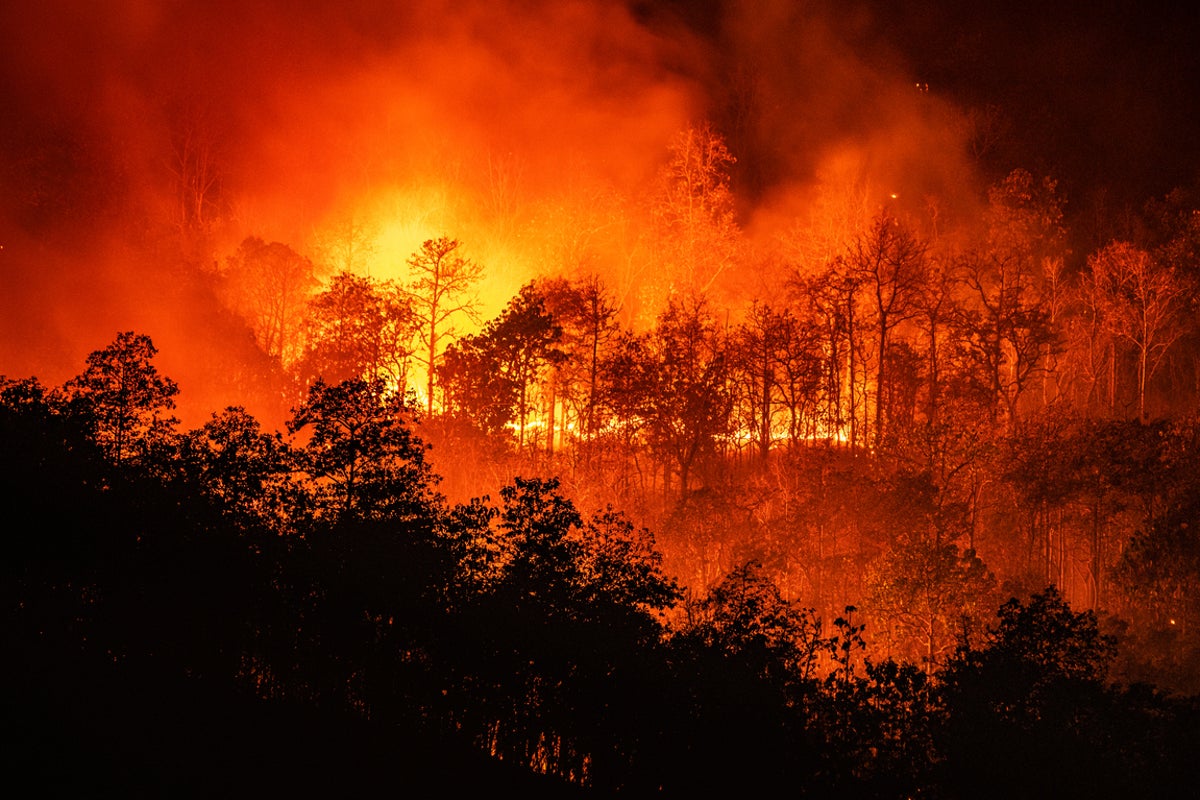
Fires are surging across Africa’s tropical forests – raising fears that the Congo’s forests could suffer the same fate as the Amazon and Indonesia, where deforestation and fires are driving up carbon emissions.
uncertain
deforestation → surge → emissions
The findings are based on newly-compiled data from Greenpeace’s Global Mapping Hub, which uses modelling based on satellite-detected fire hotspots to identify where fire activity is increasing or decreasing across tropical forest regions in Africa over the period 2001-25.
asserted
activity → base → period
The data suggests that there are many more areas experiencing significant rising fire activity than areas experiencing declining activity.
uncertain
data → suggest → activity
The findings come as a potentially record-breaking El Niño raises concerns about extreme weather risks into 2027 – while foreign aid cuts from the US and other countries have threatened funding for scientific and climate research as well as fire-fighting programmes.
asserted
cuts → come → programmes
“Forest loss remains stubbornly consistent in parts of the Congo Basin, and fire is an increasingly important driver,” says Dr Jean Bakouma, country manager for the World Resources Institute (WRI) in the Republic of Congo.
asserted
Bakouma → remain → Congo
“When primary forests and peatlands in the region burn, the carbon they store can be released, and put the region at risk of turning from a carbon sink into a carbon source,” Bakouma continues.
asserted
Bakouma → burn → source
“Increased fire activity can also degrade forest health and reduce the forest resources that communities across the Congo Basin rely on.
asserted
communities → degrade → Basin
”
At the heart of the analysis is the Congo Rainforest Basin, which is the world’s best preserved major rainforest and largest remaining net carbon sink in the tropics, removing an average of 160 million tonnes of carbon dioxide-equivalent between 2015 and 2024 – roughly equivalent to the emissions of Nigeria.
asserted
which → preserve → Nigeria
Long-standing development challenges in many parts of the region - as well as progressive forestry policies in countries like Gabon - have helped to ensure that forests have been preserved longer than elsewhere in the world, though Cameroon (in 2025) and the Democratic Republic of the Congo (in 2024) have both seen forest loss reach record highs over the past couple of years.
asserted
loss → stand → years
Africa’s other great tropical basin, the Guinean Forest, which once upon a time stretched across swathes of West Africa, is the scene of a dramatically different story.
asserted
which → stretch → story
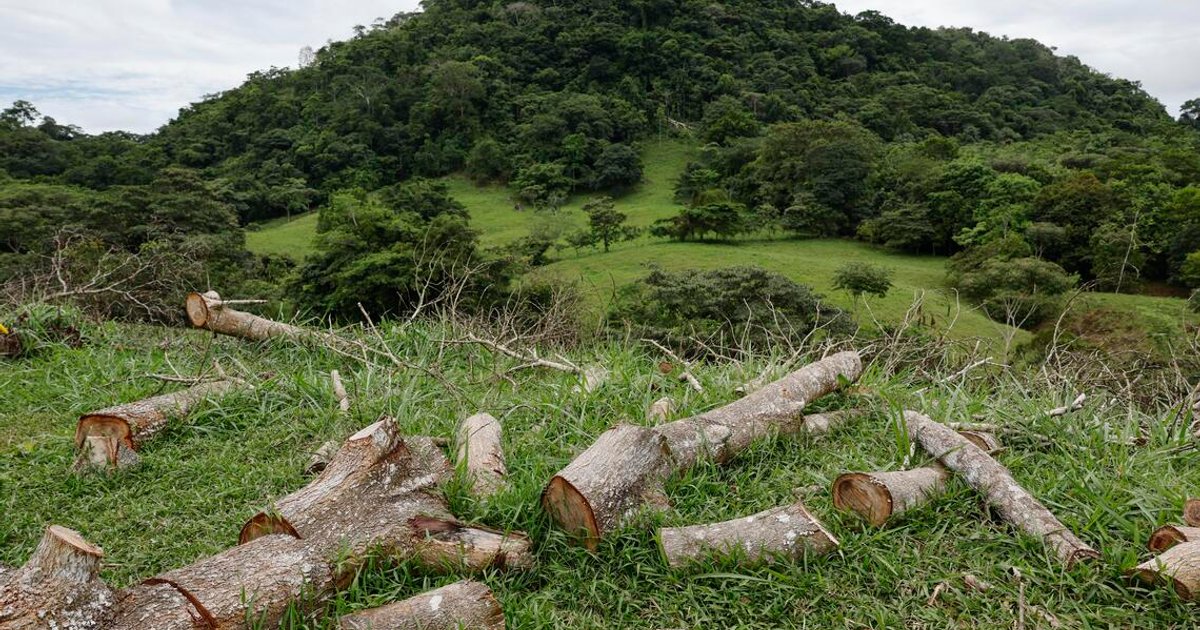
Threats including logging, agriculture, mining, and climate change have resulted in these forests losing around 90 per cent of their original forest cover.
asserted
forests → include → cover
While their histories may differ, the new analysis shows that forested areas in both of these parts of the continent are witnessing a hugely concerning rise in fires.
uncertain
areas → differ → fires
The findings show how the combined impacts of human activity and climate change threaten these vital ecosystems, while also posing a threat to human lives.
asserted
impacts → show → lives
The Democratic Republic of the Congo (DRC), which contains around 60 per cent of the Congo Basin’s forests, is seeing fires increase across large swathes of the country.
asserted
fires → contain → country
Analysis of fire hotspots detected between 2001 and 2025 found a significant rise in fires in around one-third of the country when it is divided into 100 sq km sections.
asserted
it → detect → sections
While some of these hotspots fall outside forested areas, many are within them.
asserted
many → fall → them
A similar pattern of increasing fires can also be seen across other countries in the Congo Basin, while Liberia and Guinea – countries that contain some of the last remaining substantial stretches of the Upper Guinean rainforest – show a similar pattern of more cells experiencing more fires than experiencing fewer.
asserted
that → increase → fewer
“Governments must take urgent action to halt and reverse deforestation and ecosystem destruction and to limit the burning of fossil fuels,” says Sherelee Odayar, from Greenpeace Africa.
asserted
Odayar → take → Africa
“They are home to millions of species of plants and animals, and Indigenous Peoples that have protected and depended on these ecosystems for generations.
asserted
that → protect → generations
They also play a critical role in regulating the global climate.”
asserted
They → play → climate
The findings here build on a growing body of literature, including the high-profile State of Wildfires Report, which are raising the alarm around fire risks in Africa’s tropical forest nations (while also noting that wildfire prevalence is actually declining across much of the rest of the continent).
asserted
prevalence → build → continent
Other studies warn that more people across the continent are being exposed to fire hazards as expanding cities encroach on wildlands, increasing the risk of fires spreading into urban areas.
asserted
fires → warn → areas
While becoming more resilient to fires is becoming an ever more pressing need, last year The Independent reported how in fact foreign aid programmes that support fire-fighting efforts in African countries have been slashed.
asserted
that → become → countries
This is largely due to President Trump’s effective closure of the US Agency for International Development (USAID), which previously supported fire programmes across Africa, according to experts interviewed.
uncertain
which → support → experts
Growing humanitarian concern
Separate analysis from The Independent shows how the increasing prevalence of fires should be seen as a health and livelihoods risk, in addition to being an environmental concern.
asserted
prevalence → grow → addition
Data extracted and analysed from the Global Disaster Alert and Coordination System (GDACS) - a UN- and EU-backed platform that monitors disasters with potential humanitarian impacts - suggests that hundreds of thousands of people across the Congo Basin countries are exposed to fires each year.
uncertain
thousands → extract → fires
The GDACS database is able to estimate people impacted by comparing satellite imagery of fires with population distribution maps.
asserted
database → estimate → maps
“The immediate threat to human life is likely to be highly localised, but smoke exposure, damage to crops and livelihoods, and longer-term climate impacts could affect many more people,” says Elsa Ordway, co-director of the Congo Basin Institute at UCLA.
uncertain
Ordway → affect → UCLA
“Crucially, current satellite systems probably miss many small and understory fires, so the visible problem may understate the real one.
uncertain
problem → miss → one
Local media occasionally picks up stories of lives put at risk and settlements destroyed in forested territories.
asserted
media → pick → territories
Congolese radio station Radio Okapi, for example, reported in August that a bush fire had destroyed a village in Kasongo territory, leaving families homeless and without livelihoods, according to the territory’s administrator, who appealed for emergency aid.
uncertain
who → report → aid
The alert came about a week after the fire.
asserted
alert → come → fire
Earlier this summer the station also carried civil-society warnings about bush fires in Kasaï-Central and South Kivu.
asserted
station → carry → Central
But such reports are irregular, and village-level damage tends to become known to the media only when local officials or local civil society groups raise the alarm.
asserted
officials → tend → alarm
This is a traditional farming practice that has been carried out for generations - but intensifying drought and heat as the climate warms increase the risk of fires burning out of control.
asserted
climate → carry → control
“Natural fires appear to be relatively rare in the Congo Basin, and most fires are linked to human activity, such as clearing land for agriculture or renewing pasture during the dry season
asserted
fires → appear → season
,” says WRI’s Jean Bakouma.
asserted
Bakouma → say → ?
“Deforestation and climate change are creating hotter, drier conditions that mean fires are more likely to spread.”
asserted
fires → create → conditions
He adds that the last strong El Niño climate event, in 2015-2016, resulted in increases in fire-driven forest losses in the Central African Republic, the Republic of the Congo and the Democratic Republic of the Congo, raising concerns that the same might happen again with this year’s “super” El Niño.
uncertain
same → add → Niño
Simon Lewis, professor of global change science at UCL, suggests that the Congo Rainforest has for a long time been seen as “immune from fire” compared to other parts of the world - but all of this is at risk of changing as the planet warms.
uncertain
planet → suggest → risk
…and 10 more, not listed.
 The Aporia