Look at a map of the world and Alaska seems out of place.
asserted
Alaska → look → place
It belongs to the United States, yet sits apart from the rest of the country, separated by Canada and facing Russia across the narrow Bering Strait.
asserted
It → belong → Strait
How did this vast territory become a part of America?
asserted
territory → become → America
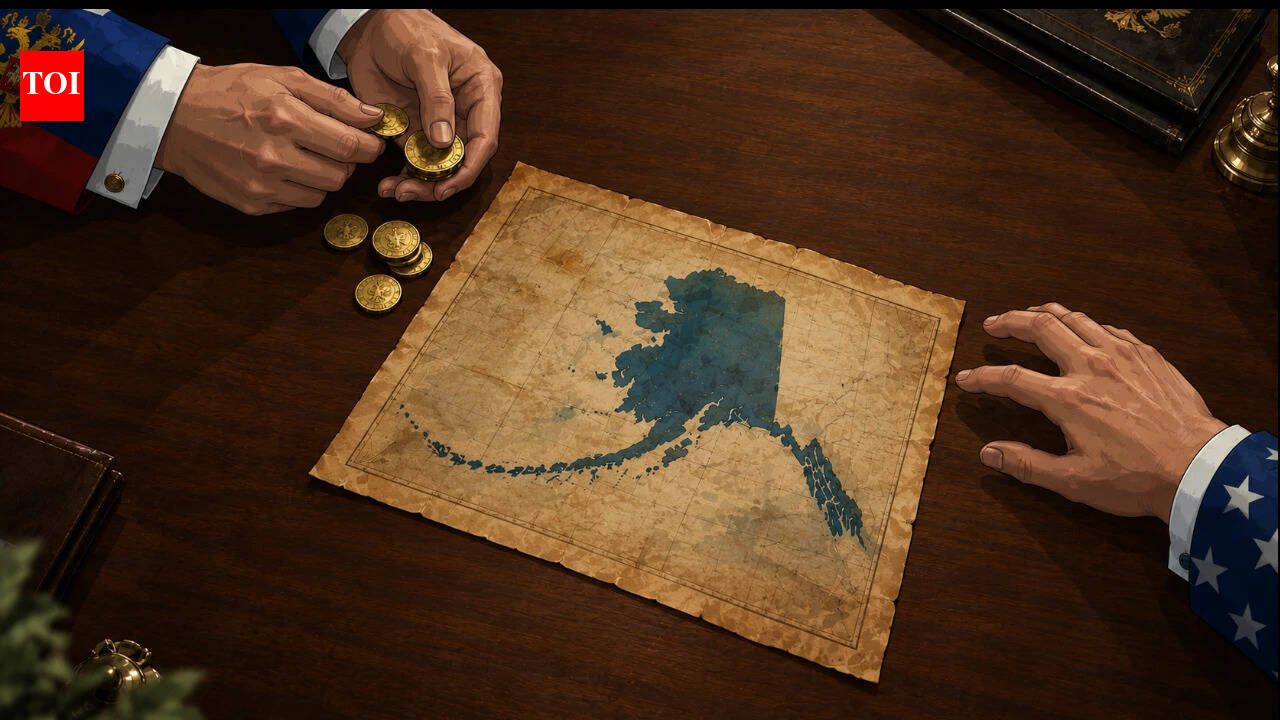
In 1867, the Russian Empire sold Alaska to the United States for $7.2 million in gold.
asserted
Empire → sell → gold
Covering nearly 600,000 square miles, the territory cost the Americans less than two cents an acre.
asserted
territory → cover → cents
In hindsight, it looks like one of the greatest real-estate bargains in history.
asserted
it → look → history
For Russia, Alaska was a remote and expensive colony that had become increasingly difficult to defend.
asserted
that → become → Russia
For the United States, it was an opportunity to expand its territory and influence in the North Pacific.
asserted
it → expand → Pacific
Neither side could have foreseen how dramatically Alaska's economic and military importance would grow.
uncertain
importance → foresee → ?
More than a century and a half later, the sale remains a striking example of how a decision shaped by the strategic calculations of one era can transform the balance of power in another.
asserted
decision → remain → another
A colony that never paid its way
Russia's story in Alaska began with exploration.
asserted
story → pay → exploration
In 1741, expeditions led by Vitus Bering and Aleksei Chirikov reached the territory, paving the way for fur traders to venture across the North Pacific.
asserted
traders → lead → Pacific
Their principal prize was the sea otter, whose valuable pelts fuelled a lucrative trade.
asserted
pelts → fuel → trade
The business came at a heavy cost to Alaska's Indigenous peoples.
asserted
business → come → peoples
According to the US National Park Service, Russian traders, known as
promyshlenniki, often coerced Aleut and Alutiiq people into hunting sea otters and supplying provisions.
uncertain
traders → accord → provisions
In 1799, Tsar Paul I consolidated Russian trading operations under the Russian-American Company, granting it a monopoly over trade in Russian North America and responsibility for administering the colony.
asserted
I → consolidate → colony
Intensive hunting soon depleted sea-otter populations around the early settlements, forcing the company to seek resources elsewhere.
asserted
hunting → deplete → resources
The declining fur trade, however, was only part of the problem.
asserted
trade → decline → problem
Alaska lay thousands of miles from Russia's political and industrial centres.
asserted
Alaska → lie → centres
Transporting food, supplies and people across such distances was expensive and difficult.
asserted
Transporting → transport → distances
The US National Archives notes that the Russian-American Company depended on substantial subsidies from an imperial treasury already under strain.
asserted
Company → note → strain
According to the US Department of State, the permanent Russian settler population never exceeded 400, with imperial authority concentrated in coastal settlements and trading posts.
uncertain
authority → accord → settlements
Maintaining Alaska was costly.
asserted
Maintaining → maintain → Alaska
Defending it against a determined foreign power could prove costlier still.
uncertain
Defending → defend → power
The fear of losing it for nothing
The decisive argument for selling Alaska was strategic.
asserted
argument → lose → Alaska
The Crimean War of 1853–1856 exposed the limits of Russian military and naval power.
asserted
War → expose → power
Britain, one of Russia's principal adversaries in the conflict, controlled neighbouring British North America, much of which would later become Canada.
asserted
much → control → which
Russian officials feared that another war with Britain could leave Alaska vulnerable to seizure.
uncertain
war → fear → seizure
If that happened, Russia might lose the colony without receiving a penny in compensation.
uncertain
Russia → happen → compensation
The idea of selling the territory had been gaining support for years.
asserted
idea → sell → years
In 1857, Grand Duke Konstantin Nikolayevich, the younger brother of Tsar Alexander II, argued that Russia should dispose of its North American possessions before the United States acquired them anyway.
asserted
States → argue → them
The Library of Congress identifies him as a leading advocate of the sale within the imperial court.
asserted
Library → identify → court
Russia offered Alaska to the United States in 1859, according to the US State Department, but the American Civil War put negotiations on hold.
uncertain
War → offer → hold
Once the war ended, talks resumed, with Russia increasingly inclined to part with its distant colony.
asserted
Russia → end → colony
The empire also had other priorities.
asserted
empire → have → priorities
It was consolidating its position in mainland Asia, including the Amur region and the Pacific coast.
asserted
It → consolidate → region
These territories were more closely connected to Siberia and offered greater opportunities for settlement, economic development and military expansion.
asserted
territories → connect → settlement
In December 1866, Alexander II and his senior officials decided to proceed with the sale.
asserted
II → decide → sale
The transaction promised immediate revenue, relieved Russia of the expense of defending an exposed possession and reduced the danger of Alaska falling into British hands.
asserted
Alaska → promise → hands
Transferring it to the United States would also strengthen an emerging Pacific power whose interests could help counterbalance Britain.
uncertain
interests → transfer → Britain
…and 71 more, not listed.
 The Aporia