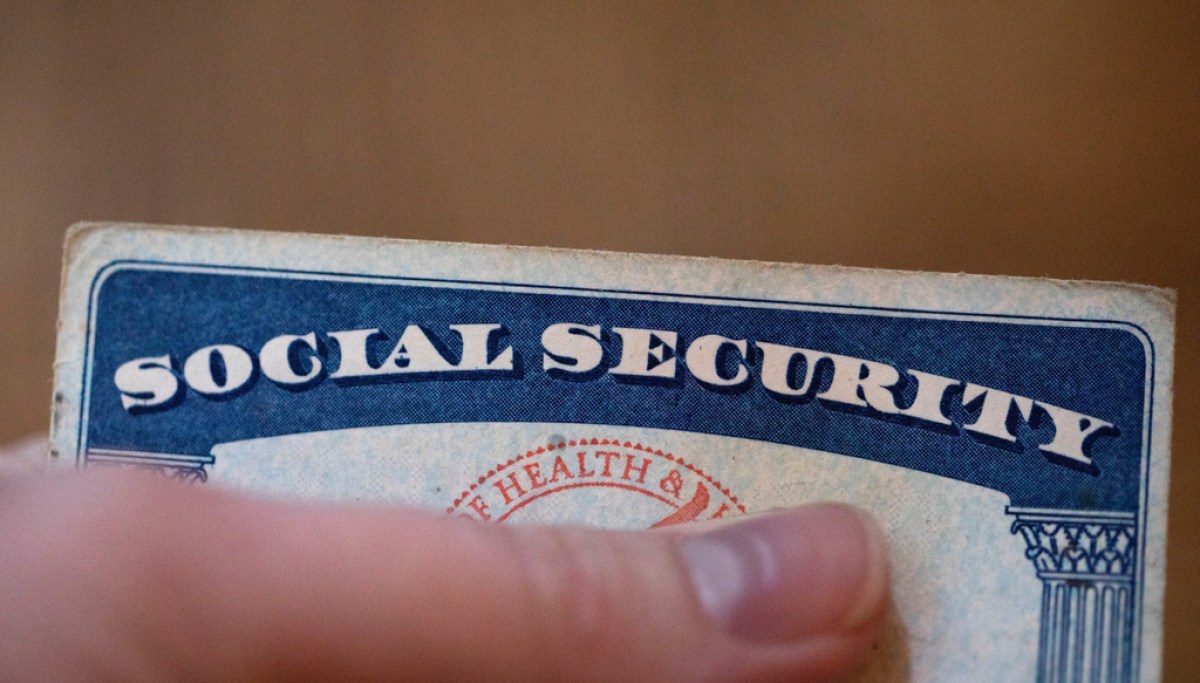
Social Security, the bedrock of our nation’s retirement system, is projected to become insolvent in just six years, with benefit cuts of 22% if Congress doesn’t act.
asserted
Congress → project → %
Social Security is barreling toward insolvency due to the fundamental imbalance between its incoming revenues and outgoing benefits.
asserted
Security → barrel → revenues
As our population ages and benefits cost more, the program’s payroll tax revenue isn’t keeping up, and as a result, the trust fund’s reserves are quickly dwindling.
asserted
reserves → age → result
If a similar cut were imposed today, we estimate benefits would be cut by $500 per retiree per month, more than what the average retired household spends on groceries each month.
asserted
household → impose → groceries
For a nation grappling with a cost-of-living crisis, insolvency would be devastating.
asserted
insolvency → grapple → crisis
Lawmakers have thus far failed to do anything about this, despite receiving extraordinarily advanced warning.
asserted
Lawmakers → fail → warning
For 40 years, Congress has alternated between nothing — implicitly endorsing the across-the-board cuts — and making things worse.
asserted
things → alternate → cuts
(Social Security’s Chief Actuary revealed that recent legislation has actually accelerated insolvency.)
asserted
legislation → reveal → insolvency
With Americans concerned about looming benefit cuts, Congress’s gears have started to turn very slowly.
asserted
gears → concern → cuts
Reps. Tom Cole (R-OK) and Tom Suozzi (D-NY) introduced the Bipartisan Social Security Commission Act, modeled on the 1983 Greenspan Commission, requiring nine of 13 members to agree on a plan that Congress votes up or down.
asserted
Congress → introduce → that
And eight Senators from both parties — led by Sens. Dick Durbin (D-IL) and Bill Cassidy (R-LA) — introduced the PROMISE Act, which would have the Social Security Advisory Board gather public input and write solvency legislation for Congress to vote on.
asserted
Congress → lead → legislation
Both bills draw on an important precedent for Social Security reform: a bipartisan commission to develop solutions, facilitate conversations across the political aisle, and reach a compromise to secure the program for generations.
asserted
bills → draw → generations
While lawmakers know the menu of options available, none have been willing to stick their necks out on their own to save the program, for fear of attack from the other side.
asserted
none → know → side
These bills would address this by creating the environment needed for both parties to reach a yes.
asserted
parties → address → yes
It’s an approach that is time-tested — every major reform bill since Social Security’s creation has come about through a commission or similar body that proposes changes, and that Congress debates, amends, and eventually passes.
asserted
Congress → ’ → changes
Why haven’t these bills passed already?
asserted
bills → pass → ?
In July, AARP opposed both bills.
asserted
AARP → oppose → bills
It wants solvency addressed only within the lobbyist-haunted halls of Congress, which it asserts will allow for more open debate.
asserted
it → want → debate
Yet when asked in an open Senate Finance Committee hearing, AARP’s witness couldn’t specify anything that the organization supports.
asserted
organization → ask → that
Both in public and behind closed doors, AARP has long opposed bipartisan rescue plans for Social Security.
asserted
AARP → oppose → Security
It failed to provide constructive suggestions to the Greenspan Commission’s bipartisan work in 1983 and was considered by those on the left a “nuisance.”
asserted
It → fail → left
AARP also fears that commissions could fail, which is ironic given their hand in obstructing them.
uncertain
which → fear → them
Perhaps their real concern is that a Social Security commission could succeed, as prior ones have since 1935.
uncertain
ones → succeed → 1935
It is harder to fundraise if seniors are confident that their benefits are secure until the 22nd century.
asserted
benefits → fundraise → century
Congress now has credible, bipartisan vehicles to restore solvency, which is more opportunity than they have had since the 1980s.
asserted
they → have → 1980s
Will lawmakers let perpetual naysayers cause 70 million Americans to suffer a completely avoidable benefit cut in six years?
asserted
Americans → let → years
 The Aporia