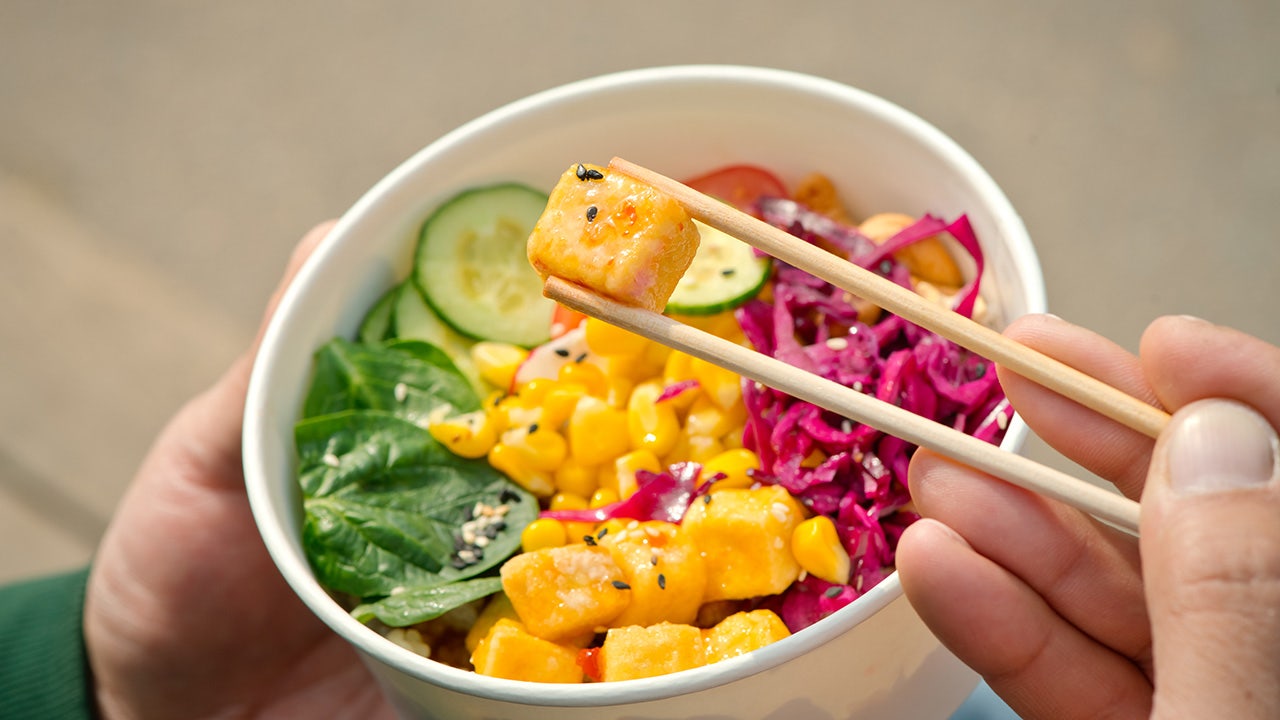
A new analysis of 20 protein sources found that the top scorer wasn’t steak, salmon or eggs — it was an everyday food many shoppers may be overlooking.
uncertain
shoppers → find → sources
The BPI Score, introduced in a July paper published in the journal Frontiers in Sustainable Food Systems, gave tofu the top mark: 36 out of 40 points.
asserted
Score → introduce → mark
Beans, chia seeds and quinoa rounded out the top four, while mozzarella, lamb, beef and cheddar were among the lowest-ranked foods.
asserted
mozzarella → round → foods
The BPI Score, created by University of Cambridge researcher Chris Macdonald and the Better Protein Institute (BPI), rates 20 protein sources on a 40-point scale that combines nutrition, affordability and availability with environmental impact.
asserted
that → create → impact
Its "People Score" factors in sodium, saturated fat, cholesterol, whether a food contains all nine essential amino acids, affordability and availability.
asserted
food → contain → acids
Its "Planet Score" considers greenhouse gas emissions, water pollution, land use and freshwater use.
asserted
Score → consider → emissions
Tofu earned the highest scores in both categories.
asserted
Tofu → earn → categories
The paper estimated that producing 100 grams of protein from tofu was associated with 0.61 kilograms of greenhouse gas emissions, compared with 64.19 kilograms for beef.
asserted
producing → estimate → beef
It also found tofu required about 2 square meters of land for that amount of protein, compared with about 211 square meters for beef.
asserted
tofu → find → beef
Experts note that the ranking is an initial scoring system developed by one researcher, not a controlled trial or dietary guideline, and it relies on U.K. grocery data.
asserted
it → note → data
The score also compares the amount of each food needed to provide 100 grams of protein, not equal-sized portions.
asserted
score → compare → protein
"While acknowledging the limitations of this first iteration, the score provides a robust foundation for a more nuanced conversation," Macdonald wrote in the paper.
asserted
Macdonald → acknowledge → paper
Corry Matthews, a California-based fitness and nutrition expert and founder of Strength & Grace Fitness, said consumers should consider protein quality, serving size and whether they can realistically get enough of a food to meet their needs.
asserted
they → base → needs
"For example, three ounces of cooked chicken breast provides roughly 26 grams of protein," Matthews told Fox News Digital.
asserted
Matthews → provide → Digital
"A half cup of firm tofu may provide around 10 to 15 grams, depending on the product.
uncertain
cup → provide → product
Two tablespoons of chia seeds provide only about 4 to 5 grams."
asserted
tablespoons → provide → grams
She continued, "That doesn't make chia seeds a bad food ... but I wouldn't rely on them as my primary protein source if my goal were to get 25 to 30 grams of protein at a meal."
asserted
goal → continue → meal
Animal proteins such as eggs, dairy, fish, and lean meats generally provide complete protein and can be concentrated sources of essential amino acids, she noted.
asserted
she → provide → acids
Tofu, a soy food, is also a complete protein but those relying plant-based proteins may need to be more intentional about serving sizes and total intake, Matthews said.
uncertain
Matthews → rely → sizes
Ashley Koff, an Oregon-based registered dietitian and founder of The Better Nutrition Program, also said individual needs matter.
asserted
needs → base → Program
"Many people do not digest tofu well at all," Koff said, adding that people should choose protein sources they enjoy and can access.
asserted
they → digest → sources
Don't let a ranking do all your nutritional thinking for you
asserted
ranking → do → you
," Matthews added.
asserted
Matthews → add → ?
"Understand what the ranking measures, then choose foods that support your actual goals."
asserted
that → understand → goals
 The Aporia