When Florida governor Ron DeSantis signed a law erasing the words “climate change” from state statutes in May 2024 – colloquially known as the “don’t say climate change” law – Democrats were outraged.
uncertain
Democrats → sign → law
Just six months later, many liberal politicians began to go quiet on the issue themselves.
asserted
politicians → begin → issue
After Donald Trump won the 2024 election, mentions of the climate crisis started to disappear from Democrats’ rhetoric.
asserted
mentions → win → rhetoric
As the 2026 midterms approach, that retreat is still shaping how some candidates talk about climate on the campaign trail.
asserted
candidates → approach → trail
The trend, known as “climate-hushing”, may reflect the limitations of Joe Biden’s climate policies, said Daniel Aldana Cohen, assistant sociology professor at the University of California, Berkeley, who studies climate politics and inequality.
uncertain
who → know → politics
Green jobs and housing investments fell short of the climate movement’s desires, consumer incentives disproportionately benefited wealthier households, and Democrats struggled to effectively communicate their accomplishments.
asserted
Democrats → fall → accomplishments
The president has since rolled back many Biden-era clean energy incentives and regulations.
asserted
president → roll → incentives
The climate crisis, however, is still rearing its head around the country, fueling the heatwaves, wildfires and floods plaguing communities around the US.
asserted
crisis → rear → US
It also lurks behind issues animating voters, from datacenter expansion to rising home insurance rates.
asserted
It → lurk → rates
And while some pundits have concluded from their polling and research that Americans don’t want to hear about global warming, other surveys directly contradict those findings.
asserted
surveys → conclude → findings
“Maybe people don’t rank climate as their main or top issue … but nobody really experiences everyday life like walking around the world rank-ordering the things that they care about,” said Aldana Cohen, who is also founding co-director of the thinktank Climate and Community Institute that calls for “green economic populism”.
asserted
that → rank → populism
“What’s important is to learn how to embed the climate issue organically amidst the other issues that people care most about.
asserted
people → ’ → that
Some progressive and populist candidates in the US midterms are pushing back against climate-hushing, linking the issue to economic concerns and everyday struggles.
asserted
candidates → push → concerns
Others aren’t speaking about it directly, but pushing for policies that could curb emissions.
uncertain
that → speak → emissions
Such efforts could help build a mass base for climate policies, said Aldana Cohen.
uncertain
Cohen → help → policies
“If we want to decarbonize fast enough and adapt to the impacts that are already here, we’re going to need a robust majority that backs those policies,” he said.
asserted
he → want → policies
“Elite consensus alone will not suffice … we’re going to need like large numbers of people really enthusiastic about climate policies.
asserted
we → suffice → policies
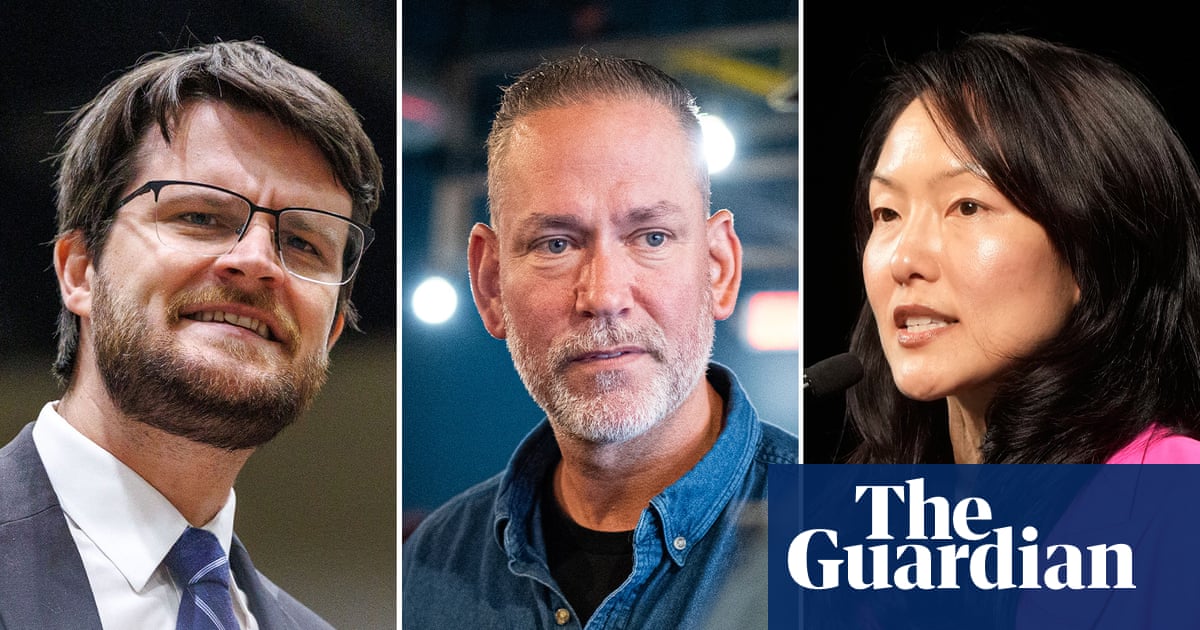
The Guardian spoke with three midterm candidates about how three issues with major environmental implications are shaping their campaigns.
asserted
issues → speak → campaigns
Jane Kim, state director of the Working Families Party and a former San Francisco county supervisor, is running to become California’s next insurance commissioner.
asserted
Kim → run → Party
The little-noticed but highly influential position oversees the state’s home, auto and business insurance markets.
asserted
position → notice → markets
The frontrunner in the race, she received 27% of votes in the June primary.
asserted
she → receive → primary
Among her key proposals is a single-payer system for disaster insurance, which she began developing as climate-fueled wildfires ravaged the state.
asserted
wildfires → begin → state
California wildfires have catalyzed homeowners’ insurance crisis.
asserted
wildfires → catalyze → crisis
Companies have stopped writing new policies and non-renewed thousands of homeowners in high-risk areas, making coverage increasingly difficult to find.
asserted
coverage → stop → areas
Homeowners can turn to the California Fair Plan, the insurer of last resort, but it provides limited fire coverage rather than the broader protection of a typical homeowners policy.
asserted
it → turn → policy
Kim argues that climate-fueled disasters are making catastrophic risk too large and socially consequential to leave to the private sector.
“The biggest change in the insurance industry in the past four years is the increase of climate disasters,” she said.
asserted
she → argue → disasters
“We used to have a billion-dollar storm every three to four months, and it seems like we now have one every three weeks, so the price of risk has truly gone up.”
asserted
price → use → risk
The scheme would create a public, government-run insurance program to cover wildfire damage for all homes, modeled on government-backed programs in New Zealand, France and Spain.
asserted
scheme → create → Zealand
Homes would be automatically enrolled regardless of their condition, and owners would pay premiums based on property values, risk, and other factors.
asserted
owners → enrol → values
Some aspects of the plan would require legislative approval.
asserted
aspects → require → approval
Since the nonprofit program would not have to generate shareholder profits, Kim said investment returns could build a pool of money for future claims.
uncertain
returns → have → claims
It could also be designed to mitigate climate risk rather than simply avoid it, she added.
uncertain
she → design → it
“In New Zealand, they actually use a portion of premiums for fire-proofing and flood-proofing, because they guarantee home disaster insurance to everyone,” she said.
asserted
she → use → everyone
Private insurers are also major institutional investors in oil and gas, which are fueling the climate crisis, said Kim – an issue she would uplift in office, though it is outside the direct purview of the role.
asserted
it → fuel → role
Critics of the single-payer disaster scheme argue that shifting financial risk to the state could further destabilize California’s insurance market and leave taxpayers bearing a greater burden, and fear pricing risk either too high or too low could both cause major challenges.
uncertain
pricing → argue → challenges
Kim argues consumers are already paying too much for insurance.
asserted
consumers → argue → insurance
She says revenues could be raised from a variety of places, including potentially by forcing state insurers to pay an “exit fee”.
uncertain
revenues → say → fee
She also says she does not aim to eliminate the private insurance market, but to bring in government where it falls short.
asserted
it → say → government
“The current insurance system is a failure,” she said.
asserted
she → say → ?
“Voters know that.”
asserted
Voters → know → that
…and 61 more, not listed.