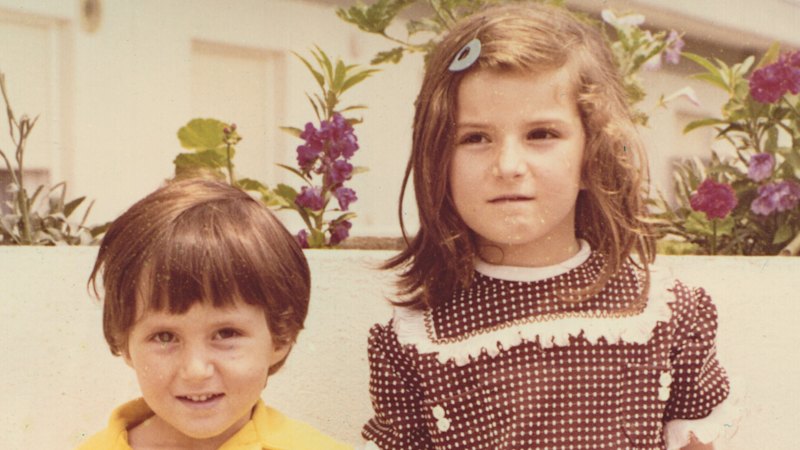
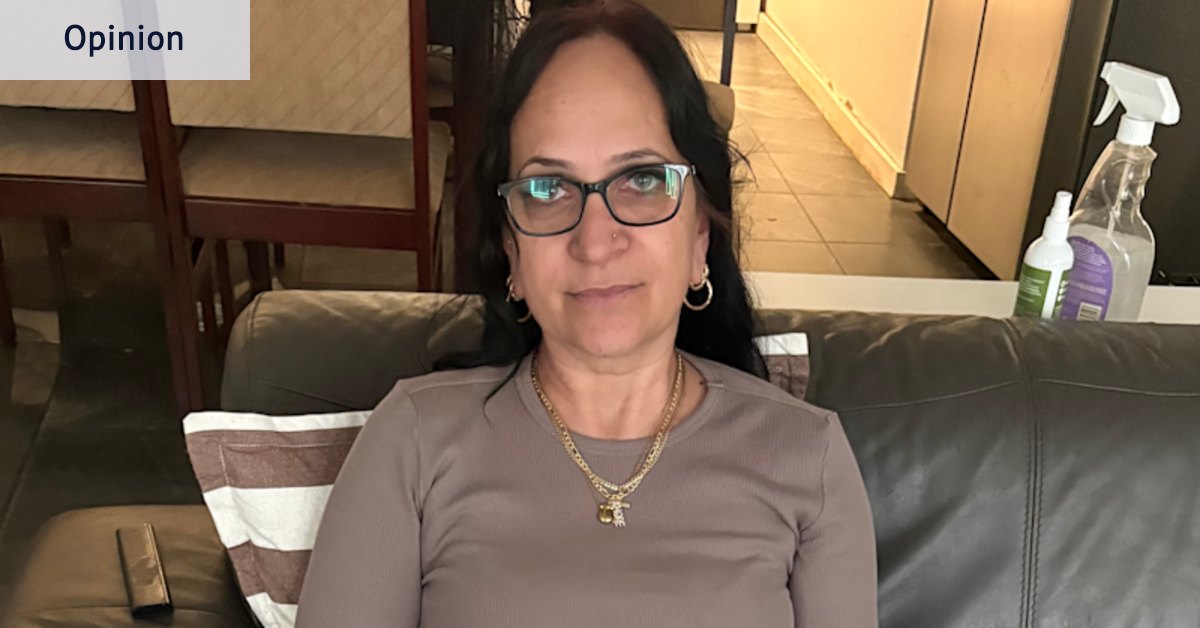
As a child, Jenny dreamed of Australia. When she arrived at 12, it wasn’t a smooth start

Read the original at The Sydney Morning Herald ↗
Cite

Bloomfield, J. (2026, October 17). As a child, Jenny dreamed of Australia. When she arrived at 12, it wasn’t a smooth start. The Sydney Morning Herald. https://www.smh.com.au/lifestyle/life-and-relationships/as-a-child-jenny-dreamed-of-australia-when-she-arrived-at-12-it-wasn-t-a-smooth-start-20261018-p61248.html?ref=rss&utm_medium=rss&utm_source=rss_feed

Dated from the outlet's own feed. Check the original for its byline.

The Sydney Morning Herald · collected 2026-10-17 · by Jenny Bloomfield

Quick Summary

Jenny moved to Australia from Greece at age 12, dreaming of opportunities and family reunions. However, she faced initial challenges adjusting to her new school where there was no uniform and students addressed teachers by their first names. Despite being academically strong in Greece, Jenny struggled with the language barrier and cultural differences, feeling isolated among her classmates. She found solace and perspective through friendships with other newcomers like Thao, a Vietnamese refugee, which helped her navigate her identity in Australia.
Written locally by qwen2.5:14b on 2026-10-17, using this article's own text rather than the other coverage of the same event (that is the story summary below).

AI analysis runs on qwen2.5:14b, locally

Story summary

Jenny Bloomfield arrived in Australia at 12 years old after dreaming about moving there since childhood. Her uncle had migrated under the assisted passage scheme in the early 1960s, followed by her grandmother and aunt, making Melbourne a focal point for family stories growing up. Despite being an excellent student in Greece where she led school parades, Jenny encountered significant challenges upon arrival. The Australian education system was different with no uniforms, unfamiliar subjects, and a casual address culture towards teachers that made her feel out of place. Her formal attire contrasted sharply with classmates' casual wear, highlighting the cultural gap she faced.

Written for “Jenny's Australian Journey” on 2026-10-17, grounded in this article and the 0 other(s) covering the same event.
Why this leaning score
This article does not take a side on a contested political question, so it has no leaning score. That is an answer rather than a gap: a match report or a rescue can be warmly or critically written without being left or right, and scoring it anyway is how approval of a subject gets recorded as a political position.
No political leaning scored for article 87494 · logged 2026-10-17

Story

📰 Jenny's Australian Journey
Education · 1 article(s) covering the same event.

Compared with similar articles

This article reads unscored and hedges 9% of its claims. Each row says how that neighbour differs.
The Sydney Morning Herald
⚖️ Leans left 🔴 4% hedged 2 of 57 📰 publisher trust 61
“The articles describe different individuals' experiences moving to Australia under distinct circumstances and timelines.”
How this article was measured signals, leaning charts, publisher record, byline, topics and claims

Signals How these are calculated →

Claims extracted
58
sentences that state something as happening or true
Uncertain
9%
5 of 58 hedged ("reportedly", "may", "according to")
Leaning
not political
takes no side on a contested political question
Publisher signals
61/100
The Sydney Morning Herald's corrections and hedging, across everything collected from it. Not a measure of accuracy.
Outlets on this story
1
Education
Same framing elsewhere
1
articles that frame the event the way this one does
Analyzed 2026-10-17 · how these are computed

How this is being covered How these are calculated →

Article leaning vs. publisher reliability
Source leaning vs. consistency

Publisher

The Sydney Morning Herald · 3994 article(s) · 10 correction(s) detected
Running correction rate · 10 correction(s)

Who wrote this

Jenny Bloomfield
1 article(s) here · 1 carrying a prediction
🔮 As a preschooler, I begged to be enrolled in English classes before I could even read or write.
The only article under this byline in the corpus.

Topics

Australia Australian Greece Greek Melbourne

Subjects

Australia GPE · 7× Australian NORP · 4× Greek NORP · 4× Aussie NORP · 1× Greece GPE · 1× Melbourne GPE · 1× Polyxeni PERSON · 1× Sicily GPE · 1× Thao PERSON · 1× Vietnamese NORP · 1×

Narrative

Drawing on my understanding of both countries, I worked to build trust, support Greece through the crisis and deepen a relationship grounded in shared values, wartime bonds and the Greek Australian community.
framing: assertive · carried by 1 article(s) · first seen 2026-10-17
🔮 As a preschooler, I begged to be enrolled in English classes before I could even read or write.
2026-10-17 · The Sydney Morning Herald
As a child, Jenny dreamed of Australia. When she arrived at 12, it wasn’t a smooth start · assertive framing

Claims (58 extracted, 5 hedged)

I was 12 when my parents told me we were moving to Australia. asserted
we → tell → Australia
It felt like a dream finally coming true. asserted
It → feel → dream
My mother’s brother had migrated under the assisted passage scheme in the early 1960s; her mother and sister followed. asserted
mother → migrate → 1960s
Melbourne was all I heard about as a child: the wide spaces, the opportunities, the family reunions without us. asserted
I → hear → us
As a preschooler, I begged to be enrolled in English classes before I could even read or write. uncertain
I → beg → classes
But arriving here at 12 was not the seamless beginning I had imagined. asserted
I → arrive → 12
I had even carried the flag and led my school in the 28 October Ohi Day parade – the first girl ever chosen. asserted
I → carry → girl
There, I knew who I was. asserted
I → know → ?
My new school had no uniform, the subjects were different, there were no grades and students called teachers by their first names. asserted
students → have → names
My textbook English was worlds away from the way Aussie teenagers spoke. asserted
teenagers → speak → way
I stood out in my stiff, formal clothes while my classmates wore trackies and runners. asserted
classmates → stand → trackies
I had come to the country of my dreams, only to find myself a stranger in it. asserted
myself → come → it
Even Greek school, where I thought I would belong, was complicated. asserted
I → think → ?
My Greek was far better than that of my Australian-born classmates, and they called me a “tape recorder” – not out of cruelty, but because I sounded like the homeland they had never known. asserted
they → bear → homeland
School, once my greatest joy, became something I dreaded. asserted
I → become → ?
Dog-paddling in the Aegean had not prepared me for an Australian swimming carnival. asserted
paddling → prepare → carnival
Nor had a childhood under the Greek sun prepared me for “Slip, Slop, Slap” asserted
childhood → prepare → me
After one painful sunburn, my aunt covered me in yoghurt and cucumber slices. asserted
aunt → cover → yoghurt
From then on, being sun-smart became part of my Australian education. asserted
being → become → education
We were learning that identity could be negotiated in small, everyday choices. uncertain
identity → learn → choices
So did Special English classes in a portable building beside the school oval. asserted
classes → do → oval
I asked to join them even though my teacher protested, “But you’re an A student!” asserted
you → ask → them
There I met other newcomers: sisters from Sicily whose home had been destroyed by an earthquake, and a Vietnamese refugee named Thao. asserted
home → meet → earthquake
She and I ate lunch under a tree. asserted
She → eat → tree
We had few shared words, yet somehow we communicated. asserted
we → have → words
Her family had fled war and endured a refugee camp before finding safety in Australia. asserted
family → flee → Australia
Hearing her story placed my own difficulties in perspective. asserted
Hearing → hear → perspective
At home, my brothers and I gradually began speaking English to one another. asserted
brothers → begin → one
We anglicised our names. asserted
We → anglicise → names
I went from Polyxeni to Jenny – a name that was familiar, easy to pronounce and, to my 12-year-old self, unmistakably Australian. asserted
that → go → self
We were learning that identity could be negotiated in small, everyday choices: the language spoken with friends, the clothes worn to school, the name answered to in the playground. uncertain
name → learn → playground
My parents worked relentlessly. asserted
parents → work → ?
My father painted houses, worked in a bakery and a chemist, cooked dinner, then left for a night shift at an aluminium factory. asserted
father → paint → factory
My mother worked as a machinist, sold cookware, catered at events and cared for four children and her elderly mother. asserted
mother → work → children
Their lives in Australia bore little resemblance to the lives they had left behind, but they accepted every sacrifice as an investment in their children’s future. asserted
they → bear → future
Slowly, Australia entered our home. asserted
Australia → enter → home
We watched A Country Practice, Neighbours and Hey Hey It’s Saturday. asserted
It → watch → Practice
We cheered for Australia at the Commonwealth Games, barracked for the Bombers, and spent summers absorbed in cricket. asserted
We → cheer → cricket
Greek radio still filled the kitchen, while SBS brought Greek films into the lounge room. asserted
SBS → fill → room
We were not replacing one life with another. asserted
We → replace → another
…and 18 more, not listed.

💬Give feedback
🕘History 🎫Support