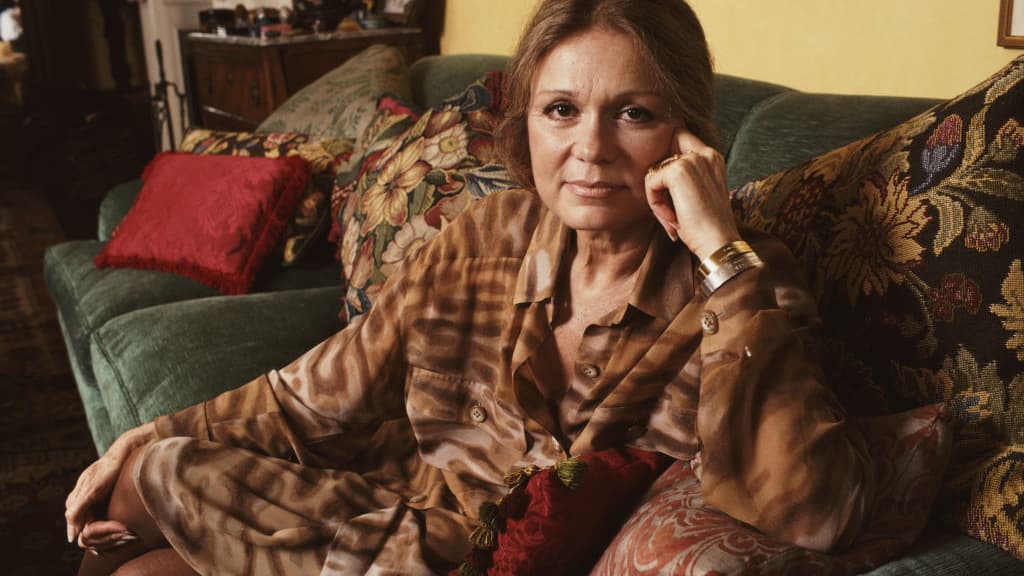
I was a 33-year-old organizer when I first met Gloria Steinem in 2007.
asserted
I → meet → 2007
Despite being a women’s studies major in college, I had not fully grasped Gloria’s role in supporting grassroots women's organizations.
asserted
I → grasp → organizations
She had created the Ms. Foundation for Women to do just that, to fund and amplify women’s organizing, like the work I was doing with domestic workers in New York.
asserted
I → create → York
Meeting her at their annual fundraising gala, I was moved by how kind, warm, and genuinely excited she was to learn about and support our efforts.
asserted
she → meet → efforts
“Do you know about Carolyn Reed?” she asked me.
asserted
she → know → me
Reed founded the Household Technicians of America in 1971.
asserted
Reed → found → 1971
Her organizing, along with the work of Dorothy Bolden and the National Domestic Workers Union in the South, catalyzed the inclusion of domestic workers in federal minimum wage laws after 40 years of exclusion from Roosevelt’s New Deal.
asserted
organizing → catalyze → Deal
I had never heard of Carolyn Reed or Dorothy Bolden.
asserted
I → hear → Reed
None of my women’s history classes had taught me about these two Black women who helped pave the way before me.
asserted
who → teach → me
But Gloria knew Ms. Reed well; she frequently enlisted Gloria in domestic workers’ efforts to gain respect and recognition as professionals.
asserted
she → know → professionals
At the time, together with organizers from around the country, I was planning what would become the founding meeting of the National Domestic Workers Alliance.
asserted
what → plan → Alliance
Gloria’s prompt helped us find our roots in the legacy of Black domestic workers organizing and leadership throughout the country, whose bravery has made our economy better for women generation after generation, a legacy our organization was founded to carry forward.
asserted
organization → help → generation
She recognized value and power where others didn’t.
asserted
others → recognize → value
She corrected the omissions that kept us from finding one another.
asserted
that → correct → one
A year after we met, I reached out to Gloria to let her know that we were at an important point in our efforts to pass the Domestic Workers Bill of Rights in New York State, the first comprehensive state-level legislation to extend labor rights to domestic workers, including new protections such as paid leave.
asserted
we → meet → leave
We were planning a 24-hour vigil in front of the governor’s office.
asserted
We → plan → office
We communicated by email; she formatted her emails like letters, with all the accompanying formalities and indentations.
asserted
she → communicate → formalities
“Dear Ai-jen,
Ok, I’ll see you there.
asserted
I → see → you
Dozens of domestic workers had taken time away from work and sacrificed their wages to hold vigil.
asserted
Dozens → take → vigil
When Gloria arrived, she joined our circle on the sidewalk across from the governor’s office, listened to everyone’s stories, and when it was her turn to speak on our little red and white battery-operated bullhorn, she spoke of Carolyn Reed, how she was applauding our campaign from heaven, and would be walking alongside us on our march to victory.
asserted
she → arrive → victory
But Gloria’s specific form of mentorship included listening and sharing what she learned from other women, curated by her strategic mind and communicated with her unparalleled way with words.
asserted
she → include → words
She did not give advice; she shared stories.
asserted
she → give → stories
She never saw herself as a mentor, as much as she felt mentored by others, always learning from the women she met, especially younger women.
asserted
she → see → women
Gloria identified as an organizer more than an activist, because organizers re-organize relations of power to be more equal, and put power in the hands of everyday people.
asserted
organizers → identify → people
When I told her we were experimenting with neighborhood-based organizing circles to reach more domestic workers, she told me that previous movements of women gathered in circles of 13—small enough that everyone felt seen and heard, but large enough to feel the power of the collective.
asserted
everyone → tell → collective
Like any good organizer, Gloria appreciated the chance to roll up her sleeves: she wrote letters to governors to help us get across the finish line in our legislative campaigns and called mayors to ensure that domestic workers would not be excluded from paid sick days legislation.
asserted
workers → appreciate → legislation
If she was invited to speak at a press conference related to labor legislation, she would check with me to see how the bill impacted domestic workers.
asserted
bill → invite → workers
Several years into our friendship, I found her essay “Revaluing Economics” in Moving Beyond Words.
asserted
I → find → Words
Published in 1994—years before the National Domestic Workers Alliance was even the germ of an idea—she wrote about care as an essential resource that our economic model has never adequately valued, in no small part because of its association with women.
asserted
model → publish → women
She argued that if we are to not only survive but thrive in the future, we must fundamentally protect and revalue care.
asserted
we → argue → care
The last 15 years of my work have been deeply shaped by these ideas.
asserted
years → shape → ideas
More recently, I spent much of my time with Gloria through an intergenerational, multi-racial circle of women who affectionately call ourselves the “G Squad”—composed of a writer, two artists, a pro-democracy organizer, me, and Gloria.
asserted
who → spend → writer
We gathered over the years to celebrate Gloria’s birthday, to strategize big moments in the women’s movement, or vet a new love interest in the mix.
asserted
We → gather → mix
We learned about Gloria’s life and adventures from one another, and we learned about other women through Gloria.
asserted
we → learn → Gloria
Much has been shared about the talking circles Gloria hosted in her home, but Gloria was part of dozens of ongoing circles of relationships with women like ours around the world.
asserted
Gloria → share → world
I wondered how she had the time for so many, including us.
asserted
she → wonder → us
She was one of the first people to send me a note when she learned I would be joining the Board of Trustees of the Ford Foundation.
asserted
I → send → Foundation
“I can't tell you how happy it makes me to know that your understanding and way of organizing will be there—you who don't hold a finger to the wind, but become the wind,” Gloria wrote.
asserted
Gloria → tell → wind
“It also makes me feel a little better about the way too early loss of Wilma.”
asserted
me → make → Wilma
She was referring to her close friend and former principal chief of the Cherokee Nation, Wilma Mankiller, who died of cancer with Gloria at her side.
asserted
who → refer → side
…and 9 more, not listed.