Scientists find nine new sponge species in glimpse of Alaska’s deep-sea diversity

The Guardian · collected 2026-09-14 · by Maya Yang
Read the original at The Guardian ↗

Summary

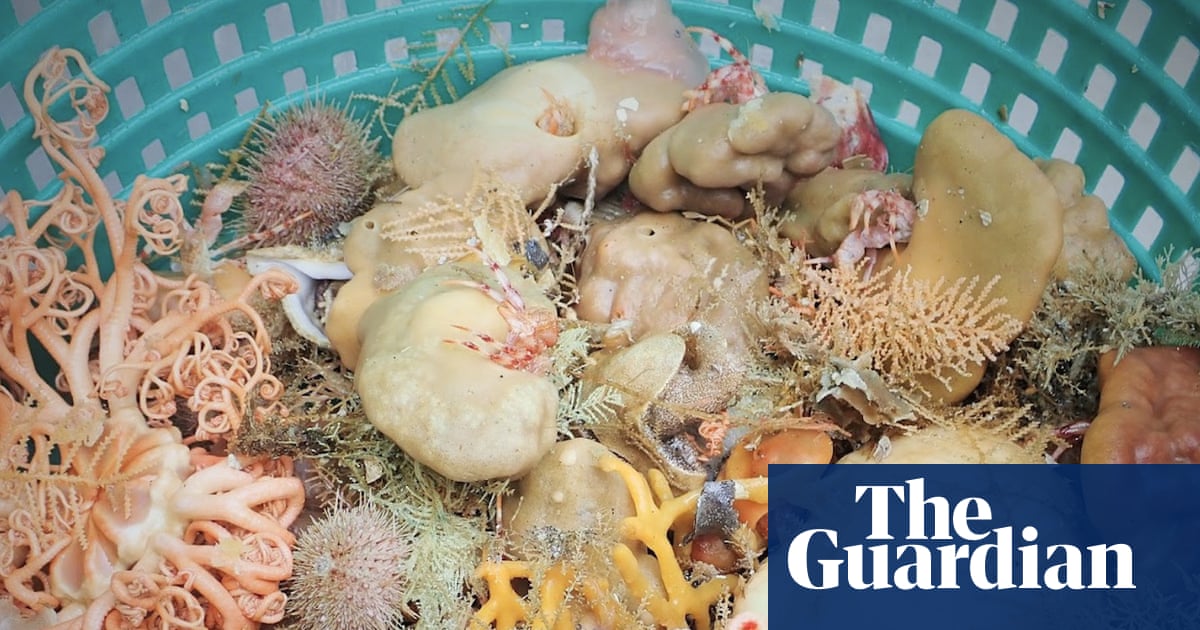
Scientists from NOAA discovered nine new sponge species off the coasts of Alaska in the Gulf of Alaska and Aleutian Islands, increasing the total known sponge species in Alaska to 232. The findings were revealed during NOAA Fisheries' annual bottom-trawl surveys aimed at monitoring groundfish and shellfish stocks. Researchers used DNA analysis to identify these unique organisms, which are crucial for marine biodiversity as they filter seawater and create habitats on the seafloor.
Written by the local model on 2026-09-14, using this article's own text rather than the other coverage of the same event (that is the story summary below).

Signals How these are calculated →

Claims extracted
28
claim-shaped sentences
Uncertain
7%
2 of 28 hedged
Leaning
Leans left
of the writing, not the subject
Correction & hedging signals
59.6
corrections and hedging in what we collected; not a measure of accuracy
Outlets on this story
1
Science
Narrative spread
1
articles carrying this framing
Analyzed 2026-09-14 · how these are computed

AI analysis (generated at analysis time, not now)

Story summary

Scientists from The National Oceanic and Atmospheric Administration (NOAA) discovered nine new deep-sea sponge species off the coast of Alaska, bringing the total number of known sponge species in the region to 232. The findings were announced on Thursday after analyzing samples collected as far back as 2012 during NOAA Fisheries' annual bottom-trawl surveys that monitor fish and shellfish populations. These sponges are crucial for marine biodiversity, filtering seawater and providing habitat structures on the seafloor. Despite their ecological importance, Alaska’s deep-sea sponge communities face threats from proposed expansions in deep-sea mining for minerals like nickel and copper by former President Donald Trump's administration, as well as bottom trawling activities in the region. The Gulf of Alaska and the Aleutian Islands were the areas where these new species were identified.

Written for “New Sponge Species Found Alaska” on 2026-09-14, grounded in this article and the 0 other(s) covering the same event.
Why this leaning score
The article's own words the score was based on. Each is quoted verbatim and was checked against the article text before being stored, so you can find it in the original.
Score -0.35 Confidence high
Leaning score -0.35 for article 8704 (high confidence, 1 verified quote) · logged 2026-09-14

Story

📰 New Sponge Species Found Alaska
Science · 1 article(s) covering the same event. This is the one the site leads with.

How this is being covered How these are calculated →

Article leaning vs. publisher reliability
Source leaning vs. consistency

Compared with similar articles

Nothing to compare against. No article is close enough to this one for the pipeline to have linked or judged the pair.

Publisher

The Guardian · 231 article(s) · 1 correction(s) detected
Running correction rate · 1 correction(s)
2026-09-07
Former Louisiana mayor completes 90-day jail term for raping 16-year-old boy

Who wrote this

Maya Yang
10 article(s) here · 1 carrying a prediction
🔮 “Sponge DNA can be tricky because they filter-feed, and within their tissues we may find foreign DNA and biochemicals that inhibit testing.
🔮 Federal investigators are expected to focus on several areas, including operations and human performance, flight crew experience, as well as 21 Air’s policies and contractual relationship with Amazon.
🔮 “No more selling Bombardier in the United States!” Trump posted in all caps on his Truth Social platform, though he did not specify how he would achieve a sales halt.
🔮 US energy secretary Chris Wright said on Sunday morning that the US may not be able to reach a nuclear agreement with Iran that would prevent the country from having nuclear weapons.
🔮 The mayor Daniella Levine Cava of Miami-Dade county said at a news conference on Sunday that in addition to the five people who were killed, five others were injured.
🔮 As the public now waits for what will happen next, the Guardian's breaking news reporter Maya Yang looks at some of what happened in court during 'America's saddest murder trial'
🔮 Cavanaugh further testified that Lindsay Clancy said she had heard a male voice several times, which “according to Lindsay, told her that if she did not follow the command, neither she nor her children would be safe”.
🔮 The judge in the trial of Lindsay Clancy, the Massachusetts mother accused of killing her three young children, has declared a mistrial after the jury could not reach a unanimous verdict and remained deadlocked after a week of deliberations.
🔮 Alexandria Ocasio-Cortez has rejoined the Democratic Socialists of America after not renewing her membership for seven years, amid speculation that she might run for president in 2028.
🔮 The Pentagon’s watchdog said in May that it plans to look into whether the US military followed an established targeting framework when carrying out the strikes.
Also by Maya Yang
Nothing else under this byline is closely related to this article, so these are simply their most recent.
All 10 articles by Maya Yang →

Topics

Alaska Noaa Noaa Fisheries’ The National Oceanic and Atmospheric Administration the Aleutian Islands

Subjects

Alaska GPE · 8× Noaa ORG · 3× Alaskan NORP · 2× Alaska Fisheries Science Center ORG · 1× Meredith Everett PERSON · 1× Noaa Fisheries’ ORG · 1× Northwest Fisheries Science Center ORG · 1× Sean Rooney PERSON · 1× The National Oceanic and Atmospheric Administration ORG · 1× the Aleutian Islands GPE · 1×

Narrative

Yet despite their ecological importance, Alaska’s deep-sea sponge communities face growing threats from Donald Trump’s proposals to expand deep-sea mining for critical minerals such as nickel and copper – used in military and technological applications – as well as bottom trawling in the region.
framing: assertive · carried by 1 article(s) · first seen 2026-09-14
🔮 “Sponge DNA can be tricky because they filter-feed, and within their tissues we may find foreign DNA and biochemicals that inhibit testing.

Claims (28 extracted, 2 hedged)

Scientists have discovered nine new deep-sea sponge species off Alaska, offering new insights into the region’s largely unexplored marine biodiversity. asserted
Scientists → discover → biodiversity
The National Oceanic and Atmospheric Administration (Noaa) announced the discovery on Thursday, saying the species were found in the Gulf of Alaska and the Aleutian Islands. asserted
species → announce → Alaska
The findings bring the total number of known sponge species in Alaska to 232. asserted
findings → bring → 232
The specimens were collected during Noaa Fisheries’ annual bottom-trawl surveys, which monitor groundfish and shellfish stocks. asserted
which → collect → stocks
Researchers analyzed samples collected as far back as 2012, describing the new species in two recent scientific papers. asserted
Researchers → analyze → papers
Often described as living water pumps, sponges are among Earth’s earliest multicellular animals, dating back more than 600m years. asserted
sponges → describe → years
They filter seawater and help create habitats on the seafloor, despite having no brain or complex organs. asserted
They → filter → brain
“Sponges are ecologically important,” said Sean Rooney, a Noaa fisheries biologist and co-author of the studies at the agency’s Alaska Fisheries Science Center. asserted
Rooney → say → Center
“They aren’t plants, but like trees in a forest, they provide complex structure along the seafloor that creates habitat and refuge for commercially important fish and crabs,” he added. asserted
he → provide → fish
“Each time we find a new species, it opens up new doors … asserted
it → find → doors
Deep water is hard to access, especially rocky places we can’t reach with bottom-trawl surveys. asserted
we → access → surveys
There are now more than 232 identified species of sponges in Alaska, and probably hundreds more that we don’t know about yet. asserted
we → be → that
The future in this field is exciting,” he continued. asserted
he → continue → field
Unlike most marine animals, which can be identified by visible traits such as fins and body shapes, sponges can be much harder to distinguish. asserted
sponges → identify → fins
Because they lack complex organs and other distinctive external features, scientists often rely on their microscopic skeletons and genetic material to identify them. asserted
scientists → lack → them
“DNA barcodes provide a quick genetic reference,” said Meredith Everett, a biologist at Noaa’s Northwest Fisheries Science Center. asserted
Everett → provide → Center
“Sponge DNA can be tricky because they filter-feed, and within their tissues we may find foreign DNA and biochemicals that inhibit testing. uncertain
that → feed → testing
But despite the challenges, we successfully developed several new barcodes for Alaskan species,” she added. asserted
she → develop → species
Dense sponge communities are considered essential fish habitat by Noaa because they provide shelter that supports fish survival, growth and population recovery. asserted
that → consider → survival
Sponges also produce chemicals to defend themselves against predators and competing organisms. asserted
Sponges → produce → predators
Some of these compounds have shown promise for potential use in cancer treatments. asserted
Some → show → treatments
Yet despite their ecological importance, Alaska’s deep-sea sponge communities face growing threats from Donald Trump’s proposals to expand deep-sea mining for critical minerals such as nickel and copper – used in military and technological applications – as well as bottom trawling in the region. asserted
communities → face → region
Environmental groups have opposed the proposals, warning that the activities could damage fragile seafloor ecosystems as the climate crisis intensifies. uncertain
crisis → oppose → ecosystems
Cooper Freeman, Alaska director of the Center for Biological Diversity, said: “Alaska’s sponge gardens do so much for a healthy ocean, including providing shelter and serving as vitally important nurseries for all kinds of fish and crabs. asserted
gardens → say → fish
Bottom trawl fishing is so damaging and unsustainable because it indiscriminately destroys the habitats that support future generations. asserted
that → destroy → generations
Adding seafloor mining to the picture adds insult to injury, scraping up and devastating life on the bottom of the ocean. asserted
Adding → add → ocean
“Instead of stewarding Alaska’s precious sponge gardens so they can support Alaskan coastal communities and wildlife, the Trump administration is pushing extractive marine activities on these irreplaceable seascapes for nothing but short-term profit,” Freeman added. asserted
Freeman → stewarde → profit
In addition to Alaska, the Trump administration has proposed exploring deep-sea mining across millions of hectares of fragile Pacific ecosystems, including areas around the Northern Mariana Islands and Guam – a plan that has drawn backlash from the US territories. asserted
that → propose → territories
💬 Give feedback
🕘 History 🎫 Support