After riding a series of escalators to the fifth floor of New York’s Museum of Modern Art, I stepped into a gallery where, on display, were a dozen paintings and lithographs by late-nineteenth and early twentieth-century artists, including Pablo Picasso, Paul Cézanne, and Georges Seurat.
asserted
paintings → rid → Picasso
But most visitors were gathered around one explosively colorful painting in swirling shades of light and dark blue, bottle green, and pale gold.
asserted
visitors → gather → blue
These were the early days of my research about a little-known woman who is key to shedding light on three inevitable questions when it comes to Vincent van Gogh.
asserted
it → know → Gogh
Why did he cut off his ear?
asserted
he → cut → ear
Why did he commit suicide?
asserted
he → commit → suicide
And how, after dying in obscurity, did he eventually become regarded as one of the world’s greatest artists?
asserted
he → die → artists
Gauging Van Gogh
Watching and talking to people as they engaged with this particular masterpiece seemed an apropos way to gauge the interest of Van Gogh lovers.
asserted
they → gauge → lovers
I, for one, could remember, as a child, first seeing The Starry Night reprinted in one of my parents’ art history books.
uncertain
Night → remember → books
No one was standing over my shoulder telling me to pay it special attention, but I was mesmerized.
asserted
I → stand → attention
The painting became imprinted on my young imagination, and I never forgot it.
asserted
I → imprint → it
As I observed the gallery, I quickly learned my reaction is hardly unique.
asserted
reaction → observe → gallery
A man from Southern California named Paul Duelo was laughing.
asserted
man → name → California
“I know this painting, and I don’t know anything about art,” he said with a chuckle, nodding at the crowd standing around The Starry Night.
asserted
he → know → Night
A woman from Seattle stood gazing quietly with her arms folded.
asserted
arms → stand → Seattle
Sheri Larison first saw a picture of The Starry Night more than 30 years ago in her high school art class.
asserted
Larison → see → class
A reproduction of the iconic painting hung in her office.
asserted
reproduction → hang → office
This was her very first time seeing the original.
asserted
This → see → original
“It’s overwhelming,” Larison whispered, with tears in her eyes.
asserted
Larison → ’ → eyes
“It evokes something.
asserted
It → evoke → something
It’s magical.”
asserted
It → ’ → ?
“His mental health was declining,” she said, and that was true, although perhaps also misleading.
asserted
that → decline → ?
Van Gogh painted The Starry Night in June of 1889 during a year he spent in a mental asylum in the south of France.
asserted
he → paint → France
It does not represent an actual place but a compilation of elements—a village, starry sky, moon, dark hills, and a cypress tree—all things that Vincent had seen at one time and brought together in this composition.
asserted
Vincent → represent → composition
The sight of stars, he said, always made him dream.
asserted
him → say → stars
Hanging just to the left of The Starry Night was a Paul Gauguin’s painting, The Moon and the Earth.
asserted
painting → hang → Night
The juxtaposition provoked a curious thought.
asserted
juxtaposition → provoke → thought
Gauguin and Van Gogh lived and worked together in Vincent’s yellow house in Arles in the south of France for several weeks.
asserted
Gauguin → live → weeks
What would the hot-tempered, competitive Gauguin have thought seeing so many people gathered around Vincent’s painting at this moment while his was comparatively ignored?
asserted
his → think → moment
And what would Vincent have made of all the attention given to The Starry Night?
asserted
Vincent → make → Night
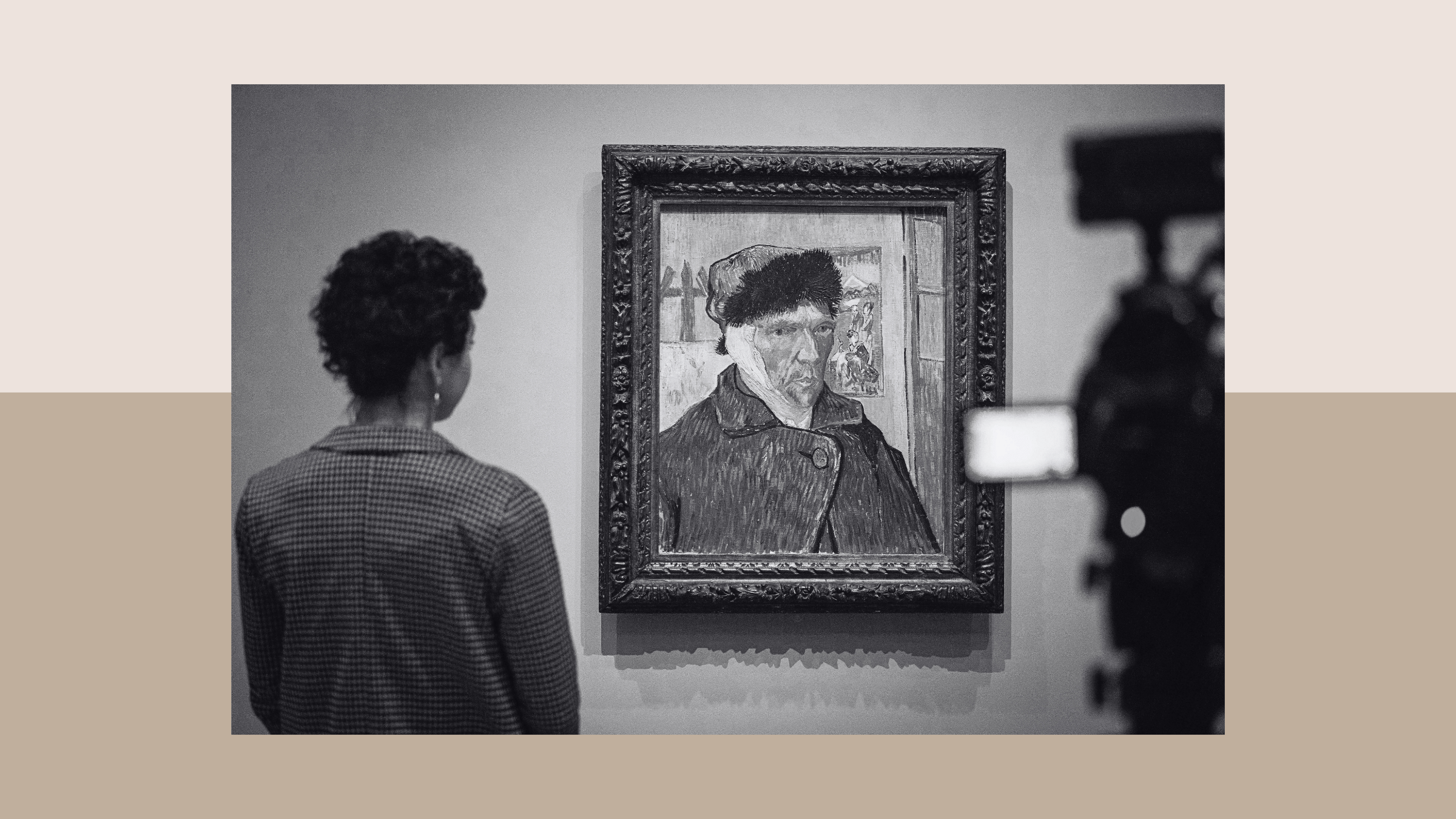
It is generally believed that it was an argument with Gauguin, who was threatening to quit Arles (in effect abandoning Van Gogh), which spun the mentally unstable Vincent into such a state of despair and frustration that he mutilated himself by slicing off his left ear.
asserted
he → believe → ear
The fine art of family matters
But, as I was learning, family matters also very likely played a part in the most notorious instance of self-harm in art history.
asserted
matters → learn → history
It’s a tragic story of dependence and the limits of love.
asserted
It → ’ → love
And it’s where Jo van Gogh-Bonger comes in.
asserted
Bonger → ’ → ?
Biographical details about her—revealed in her diaries and letters—have only recently been made public by the Van Gogh Museum in Amsterdam.
asserted
details → reveal → Amsterdam
They paint a picture of a determined woman to whom the world of art owes a tremendous debt.
asserted
world → paint → debt
Theo supported Vincent with a monthly allowance, and in exchange Vincent gave Theo his paintings to try to market and sell.
asserted
Vincent → support → paintings
The financial arrangement, as it would in most families, put an emotional strain on both brothers.
asserted
it → put → brothers
Theo was not rich, and Vincent constantly complained about being broke, with not even enough money for food, and often practically begged his brother for more money.
asserted
Vincent → complain → money
Over the course of 10 years, Vincent created more than 800 paintings and 700 drawings, desperately hoping for financial independence and commercial success.
asserted
Vincent → create → independence
But in Vincent’s lifetime, Theo is known to have sold just one painting: Red Vineyard at Arles.
asserted
Theo → know → Arles
…and 34 more, not listed.
 The Aporia