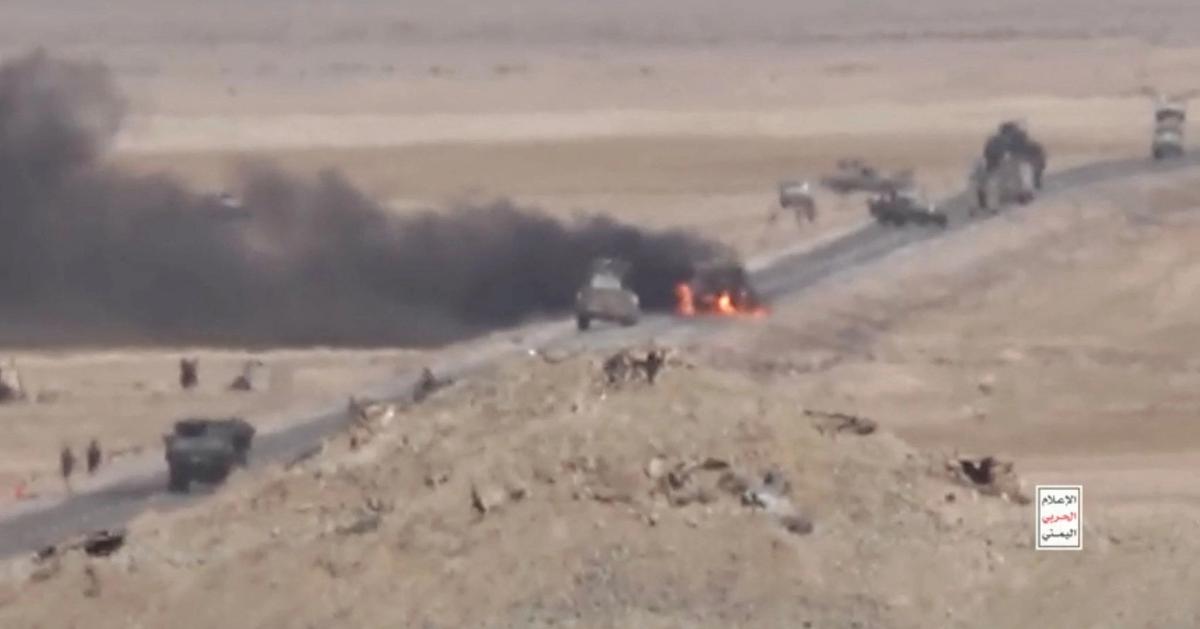
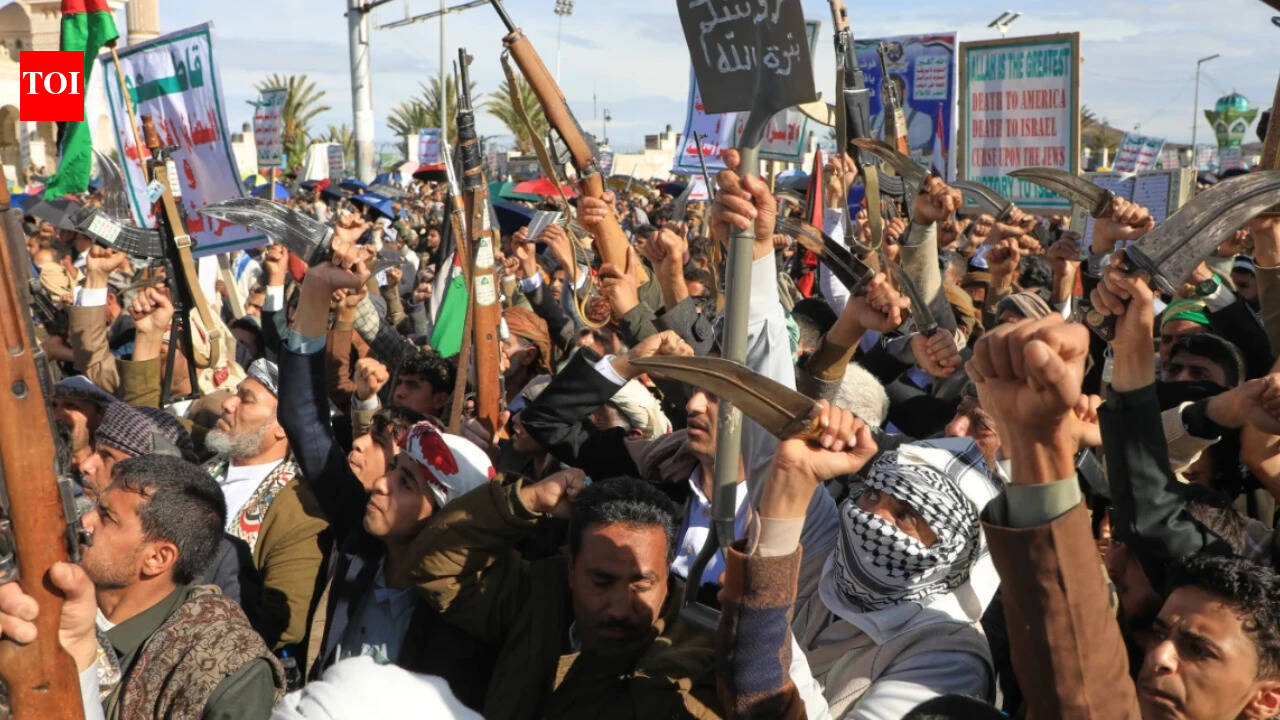
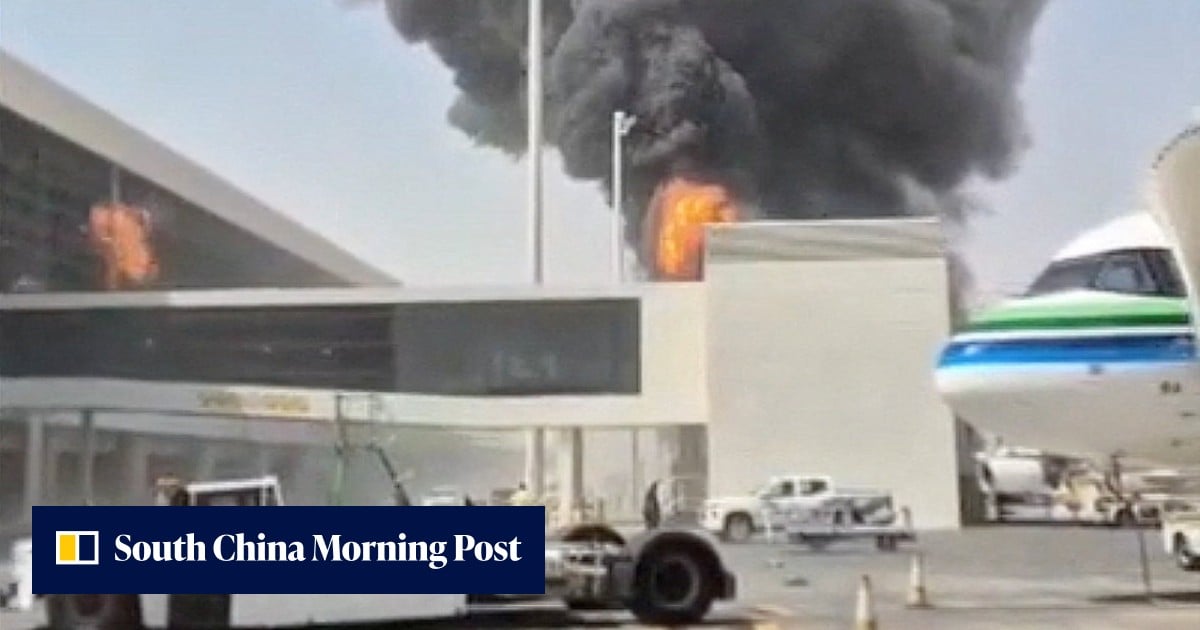
Yemen’s Iran-backed Houthi rebels have put their growing military capabilities on display in recent weeks, repeatedly striking Saudi Arabia’s main international airport hundreds of miles (kilometers) away and seizing territory inside Yemen near a key shipping chokepoint.
asserted
rebels → back → chokepoint
At various times over the last decade, Saudi Arabia, the United Arab Emirates, the United States, Britain and Israel have carried out punishing air raids on the rebels — only to see them grow even stronger.
asserted
them → carry → rebels
The Saudis have struggled to counter the latest attacks, even with far superior U.S.-supplied arms.
asserted
Saudis → struggle → arms
A senior Saudi diplomat told reporters this week that Iran was encouraging the escalation and that over the summer the Houthis had spurned an offer to negotiate.
asserted
Houthis → tell → offer
The Houthis operate in a large and mountainous territory where they can disperse fighters and military infrastructure while threatening major oil facilities and key trade routes.
asserted
they → operate → facilities
Iran and its allies in Lebanon and Iraq provide expertise, training and sophisticated weapons, according to U.N. and other experts.
uncertain
Iran → provide → U.N.
A recent report found that the Houthis have tried to source parts from Chinese suppliers that are used to make precision-guided ballistic missiles with a range of roughly 1,200 miles (2,000 kilometers).
asserted
that → find → miles
The rebels are increasingly well-armed
The Houthis already have a wide array of ballistic missiles, cruise missiles and drones — many resembling Iranian models — that can reach all the Gulf states as well as Israel.
asserted
that → arm → states
They have also used sophisticated anti-ship missiles and naval drones to strike vessels in the Red Sea, threatening a critical trade route.
asserted
They → use → route
Iran denies arming the Houthis, which would violate a U.N. embargo.
asserted
which → deny → embargo
China has not directly responded to the latest report but says it has a “prudent and responsible” approach to military exports.
asserted
it → respond → exports
Smuggled Iranian weapons and parts have been seized from numerous Yemen-bound shipments, and a report by U.N. experts in 2024 documented extensive military ties between the Houthis, Iran and its other allies.
asserted
report → smuggle → Houthis
That report estimated that the Houthis had recruited up to 350,000 fighters by 2024, up from just 30,000 in 2015, when Saudi Arabia intervened in Yemen’s civil war against the Houthis and imposed a naval blockade.
asserted
Arabia → estimate → blockade
The Houthis can use relatively inexpensive drones and missiles to target oil and other infrastructure just across the border in Saudi Arabia, as well as tankers off the coast.
asserted
Houthis → use → coast
And while Iran is believed to supply cutting-edge components like guidance systems, the Houthis can manufacture much of their weaponry domestically, and at a much lower cost than the state-of-the-art interceptors used by the Saudis.
asserted
Houthis → believe → Saudis
There are suggestions they may even be using artificial intelligence to try to build better missiles.
uncertain
they → be → missiles
Saudi Arabia has struggled to respond
Saudi Arabia boasts an array of U.S.-supplied weapons, including sophisticated aircraft as well as advanced missile defenses used against Iran at the height of the war last spring.
asserted
Arabia → struggle → war
But with supplies of high-end interceptors under pressure, it’s unclear how long it can ward off attacks — not only from the Houthis, but from Iran-backed militias in Iraq blamed for an attack that briefly shut down an east-west pipeline crucial for oil exports.
uncertain
that → ’ → exports
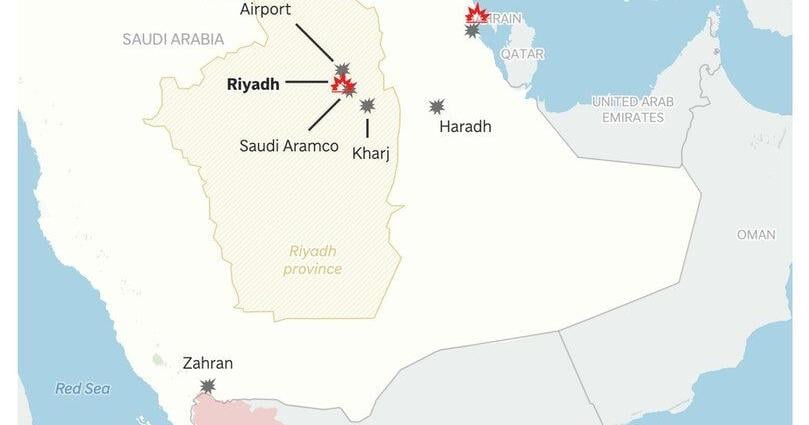
In recent days, the Houthis have repeatedly struck King Khalid International Airport in the capital, Riyadh, leading to a wave of flight cancellations.
asserted
Houthis → strike → cancellations
They have also hit the headquarters of the national oil company, Aramco.
asserted
They → hit → company
At least 19 people have been killed, school classes have been canceled, and the disruption threatens the kingdom’s ambitious plans to transform itself into a global hub for business, tourism and sports.
asserted
disruption → kill → business
Vulnerable assets are scattered across Saudi Arabia’s sparsely populated territory, which is roughly three times the size of Texas.
asserted
which → scatter → Texas
Its border with Yemen stretches more than 1,300 kilometers (800 miles) through rugged desert areas.
asserted
border → stretch → areas
Airstrikes have had limited effect
The Houthis, a Shiite religious and political movement rooted in northern Yemen, are attacking Saudi Arabia because it supports Yemen’s internationally recognized government in the civil war.
asserted
it → have → war
The Sunni kingdom, which has long feared the emergence of a well-armed ally of Shiite Iran on its border, joined the war in 2015 after the rebels seized much of northern Yemen, including the capital, Sanaa.
asserted
rebels → fear → capital
Over the next seven years, Saudi Arabia carried out waves of airstrikes against the Houthis, often killing civilians.
asserted
Arabia → carry → civilians
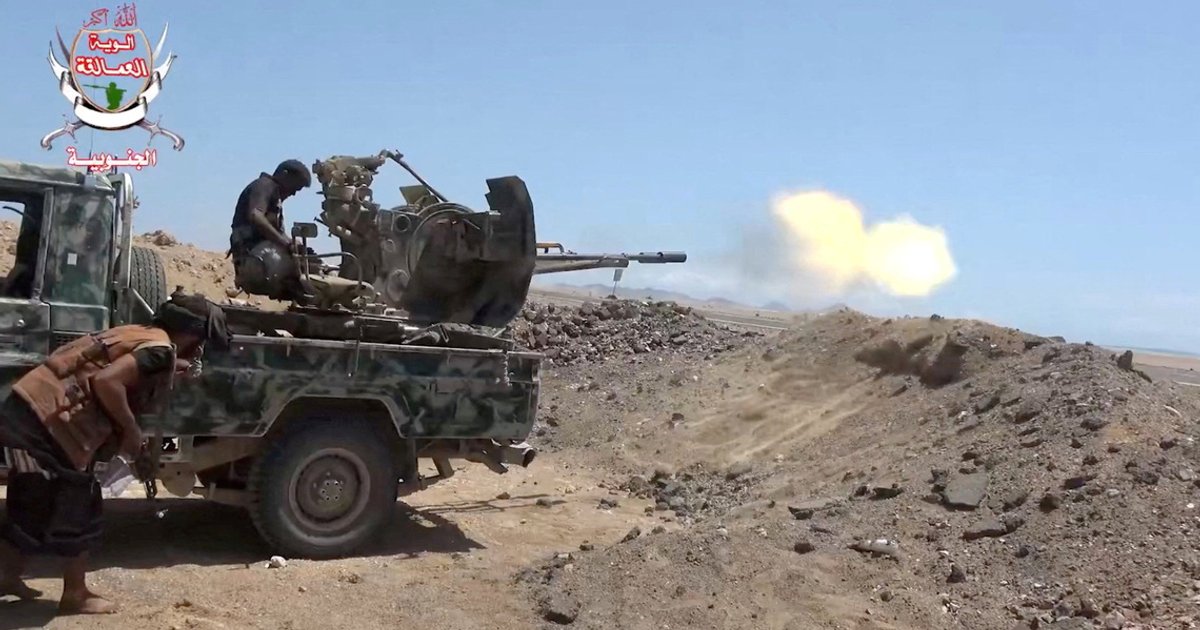
An array of Yemeni government forces and southern separatists struggled to push the Houthis back, and the battle lines moved little before a 2022 ceasefire.
asserted
lines → struggle → ceasefire
The following year, after the outbreak of the war in Gaza, the Houthis began attacking Red Sea shipping in what they said was a blockade of Israel.
asserted
they → begin → Israel
The U.S. and the U.K. launched waves of strikes against the Houthis beginning in January 2024.
asserted
U.S. → launch → January
U.S. President Donald Trump ordered an intensified air campaign early last year, with some 2,000 munitions dropped on over 1,000 targets, a U.S. military official told The Associated Press at the time.
asserted
official → order → time
After weeks of U.S. strikes, the Houthis agreed to stop attacking American ships.
asserted
Houthis → agree → ships
But they continued to target Israel, which responded with its own strikes later in 2025, killing the Houthi prime minister along with other senior officials and repeatedly hitting a key port.
asserted
which → continue → port
The Houthis largely kept to the sidelines in the first several months of the Iran war, but in July, they resumed attacks on Saudi Arabia and declared a blockade on Saudi shipping.
asserted
they → keep → shipping
Any lasting defeat would require ground troops
As recent conflicts have shown, air power is rarely effective without ground troops who can move in and seize territory after strikes.
asserted
who → last → strikes
In the case of Yemen, the ground fighters inside the country who are taking on the Houthis are deeply divided and fought each other as recently as January.
asserted
who → take → January
They include fighters loyal to the Saudi-backed government and southern separatists supported by the United Arab Emirates — a sometimes rival to the Saudis that withdrew from Yemen in 2019.
asserted
that → include → 2019
The U.S., still preoccupied with Iran, appears keen to stay out.
asserted
U.S. → preoccupy → Iran
The Saudis signed a mutual defense pact with nuclear-armed Pakistan and NATO member Turkey in August, but it’s unclear what kind of assistance they are prepared to provide.
uncertain
they → sign → assistance
The Houthis are demanding that Saudi Arabia lift its blockade, which would be an admission of defeat in the long-running war and pave the way for even more extensive Iranian aid to the rebels.
asserted
which → demand → rebels
 The Aporia