Steve Smith’s wizardry can be developed. These cricket experts reveal how

Read the original at The Sydney Morning Herald ↗
Cite

Wright, N. (2026, October 16). Steve Smith’s wizardry can be developed. These cricket experts reveal how. The Sydney Morning Herald. https://www.smh.com.au/sport/cricket/steve-smith-s-wizardry-can-be-developed-these-cricket-experts-reveal-how-20261017-p615dv.html?ref=rss&utm_medium=rss&utm_source=rss_feed

Dated from the outlet's own feed. Check the original for its byline.

The Sydney Morning Herald · collected 2026-10-16 · by Nick Wright

Quick Summary

Cricket experts analyze how Steve Smith's exceptional fielding skills contributed to Australia's victory over South Africa in the first Test match. With four slip catches, Smith surpassed Joe Root for the most in Test history (224). Queensland Bulls coach Justin Sternes reveals that Smith’s technique involves closely observing batsmen and anticipating their shots early, rather than reacting to the ball. Additionally, Smith maintains proper athletic positioning to move quickly into catching positions, demonstrating his unique ability to predict and execute catches with precision.
Written locally by qwen2.5:14b on 2026-10-16, using this article's own text rather than the other coverage of the same event (that is the story summary below).

AI analysis runs on qwen2.5:14b, locally

Story summary

As Steve Smith continues to impress in the cricket world, experts reveal how his exceptional fielding skills can be developed. During the first Test against South Africa in Durban, Smith's anticipation played a crucial role in securing Australia’s victory by 214 runs. His four slips catches in the Proteas' opening innings took him past England’s Joe Root for the most Test slip catches in history with 224. Queensland Bulls coach Justin Sternes attributes Smith's success to his ability to read early cues from the batsman, such as the angle of the bat and whether they are on the front or back foot, which allows him to anticipate shots before they happen.

Written for “Steve Smith's Cricket Development” on 2026-10-16, grounded in this article and the 0 other(s) covering the same event.

Story

📰 Steve Smith's Cricket Development
Sports · 1 article(s) covering the same event.

Compared with similar articles

This article reads unscored and hedges 3% of its claims. Each row says how that neighbour differs.
Smith's freakish display in Durban different event · 90%
The Sydney Morning Herald
⚖️ leaning not scored 🔴 no claims extracted 📰 publisher trust 61
“Article A describes a specific display by Steve Smith during a match in Durban, while Article B discusses expert analysis and commentary on how his fielding skills can be learned and developed.”
The Sydney Morning Herald
⚖️ leaning not scored 🔴 12% hedged 4 of 34 📰 publisher trust 61
“Article A describes the actual match and celebration after Australia's victory over South Africa, while Article B focuses on expert analysis of Steve Smith's performance in that same match.”
The Sydney Morning Herald
⚖️ leaning not scored 🔴 3% hedged 1 of 33 📰 publisher trust 61
“The articles discuss different aspects of cricket and do not describe the same specific incident.”
ABC News (AU)
⚖️ leaning not scored 🔴 0% hedged 0 of 6 📰 publisher trust 70
“Article A reports on various cricket match scores and outcomes across different dates and locations, while Article B focuses on Steve Smith's fielding skills and expert analysis of his performance in a single Test match against South Africa.”
How this article was measured signals, leaning charts, publisher record, byline, topics and claims

Signals How these are calculated →

Claims extracted
36
sentences that state something as happening or true
Uncertain
3%
1 of 36 hedged ("reportedly", "may", "according to")
Leaning
not political
takes no side on a contested political question
Publisher signals
61/100
The Sydney Morning Herald's corrections and hedging, across everything collected from it. Not a measure of accuracy.
Outlets on this story
1
Sports
Same framing elsewhere
1
articles that frame the event the way this one does
Analyzed 2026-10-16 · how these are computed

How this is being covered How these are calculated →

Article leaning vs. publisher reliability
Source leaning vs. consistency

Publisher

The Sydney Morning Herald · 3905 article(s) · 10 correction(s) detected
Running correction rate · 10 correction(s)

Who wrote this

Nick Wright
25 article(s) here · 1 carrying a prediction
🔮 Smith surprised even himself, with Lyon quipping “there is probably no one more impressed than what Steve is”. “As soon as he saw that batter start to adopt a posture to suggest it was going to be a reverse sweep, it looked like he predicted that, anticipated that and started to move – he’s learned that,” Queensland University of Technology skill acquisition expert Adam Gorman told this masthead.
🔮 But in a titanic battle with New Zealand counterpart and Queensland Maroons teammate Kalyn Ponga, Walsh repaid that trust, and ensured his battle to become Australia’s premier No.1 would be enthralling.
🔮 Weibgen, who led the nation to Under-19s World Cup glory in 2024, told this masthead he would not look too far ahead, despite selectors showing a willingness to throw younger men into the fray – headlined by Ollie Peake, who has played more one-day cricket for Australia than his state Victoria (eight of 15 total games).
🔮 As Beth Mooney prepares to join illustrious company, she hinted that the allure of a home Olympics could prolong her career and those of her fellow veterans, as cricket vies to defend its looming Games berth for Brisbane 2032.
🔮 The cancer would return in 2023, and while she made a shock return in 2025 via the Southern District Spartans’ NBL1 North side – a moment Terei said brought “the whole family there” – her health quickly deteriorated.
🔮 From that point, the Roar would win just once from their remaining 14 clashes.
2026-10-11 · assertive framing · Meet the Europe-trained recruits on a revival mission
🔮 As Dudley Dotoi gets ready for the World Cup, a legend of the sport says the event will prove he belongs in the NRL.
🔮 Cordingley said Pritchard was tracking well to be fully fit by round one of the Super Rugby Pacific season – where he will potentially vie for the fullback jumper in light of Jock Campbell’s reported move to Japan.
🔮 Australian cricket icon Ellyse Perry concedes there will come a time soon when she needs to think about life beyond the pitch, but she has refused to put a definitive timeline on when she will draw the curtain on her decorated career.
🔮 She instead tried her hand at rugby sevens, before Queensland Maroons superstar Tarryn Aiken – who will line up against Ferguson for the Roosters in Sunday’s grand final – got in her ear.
Also by Nick Wright
Nothing else under this byline is closely related to this article, so these are simply their most recent.
All 25 articles by Nick Wright →

Topics

Australia Durban England Proteas South Africa

Subjects

Smith PERSON · 6× Sternes PERSON · 5× Lyon PERSON · 2× South Africa GPE · 2× Australia GPE · 1× Durban GPE · 1× Josh Hazlewood’s PERSON · 1× Matthew Renshaw’s PERSON · 1× Proteas ORG · 1× Steve Smith PERSON · 1×

Narrative

Smith surprised even himself, with Lyon quipping “there is probably no one more impressed than what Steve is”. “As soon as he saw that batter start to adopt a posture to suggest it was going to be a reverse sweep, it looked like he predicted that, anticipated that and started to move – he’s learned that,” Queensland University of Technology skill acquisition expert Adam Gorman told this masthead.
framing: assertive · carried by 1 article(s) · first seen 2026-10-16
🔮 Smith surprised even himself, with Lyon quipping “there is probably no one more impressed than what Steve is”. “As soon as he saw that batter start to adopt a posture to suggest it was going to be a reverse sweep, it looked like he predicted that, anticipated that and started to move – he’s learned that,” Queensland University of Technology skill acquisition expert Adam Gorman told this masthead.
2026-10-16 · The Sydney Morning Herald
Steve Smith’s wizardry can be developed. These cricket experts reveal how · assertive framing

Claims (36 extracted, 1 hedged)

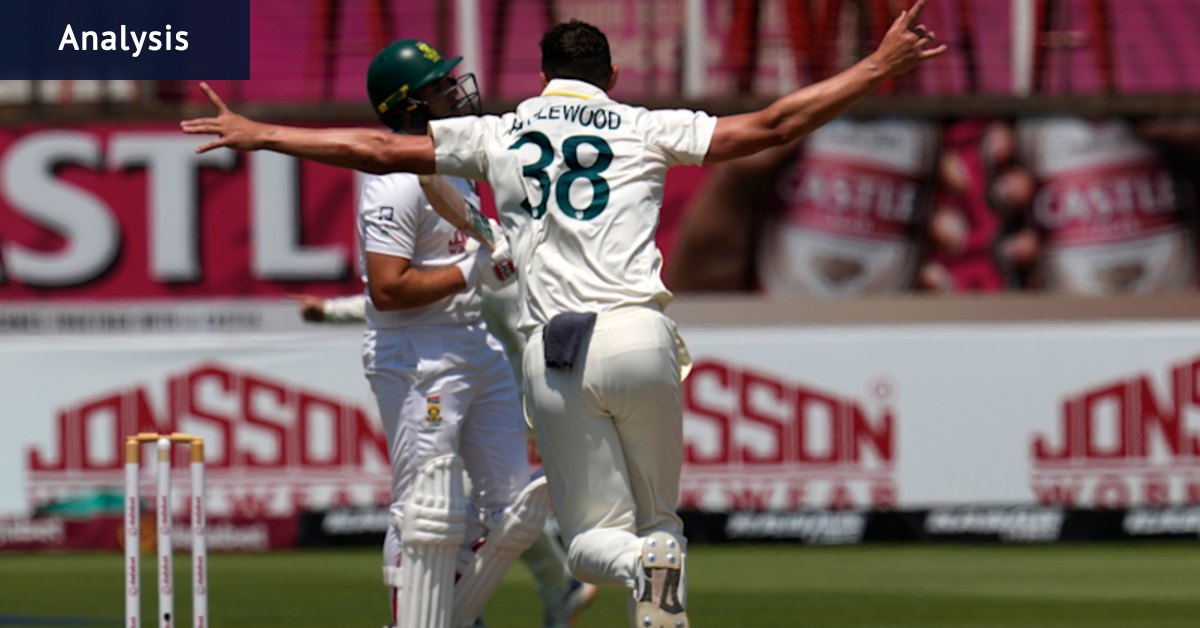
As Steve Smith continues to leave the cricketing world in bewilderment, two experts have revealed how the freakish fielding talents that wrestled the first Test against South Africa into Australia’s favour can be learned. asserted
that → continue → favour
While Matthew Renshaw’s breakout performance and Josh Hazlewood’s fourth-innings haul of 6/49 spearheaded the tourists to a 214-run victory in Durban, Smith’s anticipation ensured momentum was rarely taken from them. asserted
momentum → spearhead → them
His four slips catches in the Proteas’ opening innings took him past England’s Joe Root for the most in Test history (224). asserted
catches → take → history
Smith’s secret, as told to this masthead by Queensland Bulls coach Justin Sternes, is his adherence to fielding philosophies many cricketers do not abide by. asserted
cricketers → tell → philosophies
“One is watching the batsman, and getting cues off the batsman early, so you can get an idea of the type of shot batsmen are looking to play – the angle of the bat, the contact point, whether they’re on the front foot or back foot,” Sternes said. asserted
Sternes → watch → foot
“If you’re watching the batsman, you can pick up early cues, which allows you to anticipate. asserted
you → watch → cues
Some fielders don’t watch the batsman close enough, and they wait until they see the ball and react to the ball, and these are the fielders who aren’t as effective as your elite guys. asserted
who → watch → guys
The other part, according to Sternes, who conducts private coaching and leads the Nudgee College and Sandgate-Redcliffe First XIs, was “teaching them the right athletic movement, making sure they’re in an athletic position so that when they do get those cues, they can move into position quickly”. uncertain
they → accord → position
“Fielders who are very upright, caught on one leg, they’re not going to move fast enough to get into position.” asserted
they → catch → position
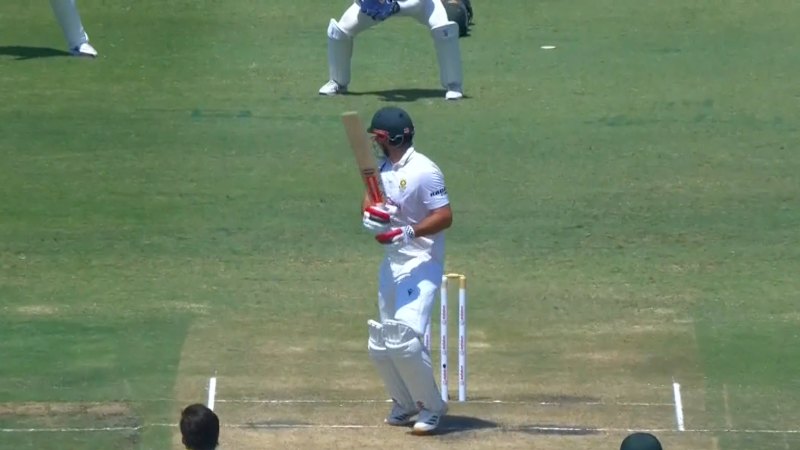
Smith’s day-three brilliance highlighted his inherent X-factor. For his first catch, he moved early for Temba Bavuma’s reverse sweep off Nathan Lyon, then he followed with a diving effort high to his left off Pat Cummins to dismiss David Bedingham. asserted
he → highlight → Bedingham
His third was labelled “out of this world”: reading Kyle Verreynne’s reverse sweep, and pulling off a one-handed diving take after South Africa had accelerated to score 35 runs in 31 balls. asserted
Africa → label → balls
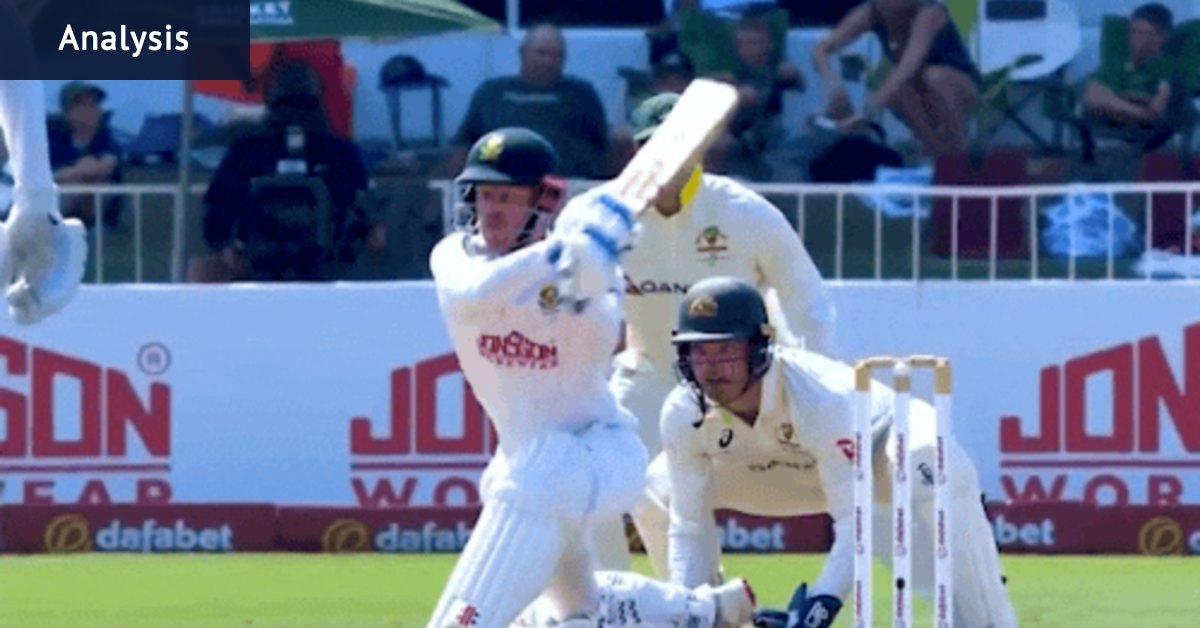
Smith surprised even himself, with Lyon quipping “there is probably no one more impressed than what Steve is”. “As soon as he saw that batter start to adopt a posture to suggest it was going to be a reverse sweep, it looked like he predicted that, anticipated that and started to move – he’s learned that,” Queensland University of Technology skill acquisition expert Adam Gorman told this masthead. asserted
Gorman → surprise → masthead
“We often think about it as he’s just predicted or anticipated based on what that batter is doing at that moment and using solely the movement of the batter. asserted
batter → think → batter
“But the more skilled players will use a lot more than that. asserted
players → use → that
He’ll use the context of the game. asserted
He → use → game
“The state of the game, the movements of the batter, the tendencies of the batter, the deliveries Lyon has bowled previously – all of that information gets used to different extents to help him anticipate what’s going to happen, and [athletes] learn that.” asserted
athletes → bowl → that
Sternes said some fielders “don’t want to be engaged every single ball”, and that separated the likes of Smith and Marnus Labuschagne, who went beyond reacting when the ball was hit. asserted
ball → say → Smith
“In the modern-day game there are different shots around because of T20 cricket, and the reverse sweep is one. asserted
sweep → be → cricket
The batsmen are trying to take advantage of where the fielders aren’t,” Sternes said. asserted
Sternes → try → advantage
“[Smith] figured out he’s got enough time to see them try and reverse their hands and go down on one knee. asserted
them → figure → knee
That gives him enough time to anticipate and move into a position where he can either take a catch, stop the runs or get the batsman thinking about it. asserted
batsman → give → it
“He’s starting to lead the way in that space.” asserted
He → start → space
Sternes emphasised fielding had become an important consideration at selection tables. asserted
fielding → emphasise → tables
“You have a big group of players you’re trying to pick from who are a very similar standard, and the first thing most coaches and selectors go to is who’s the best fielder?” he said. asserted
he → have → players
“You’ve either got to score a lot more runs to stand out, or you’re going to have to be in the top two fielders. asserted
you → get → fielders
If you’ve got weak fielders in your team, you’re not winning championships.” asserted
you → get → championships
Smith’s desire to be involved with every ball is nothing new – his early highlight reels feature outfield heroics stemming from hours of practice. asserted
reels → involve → practice
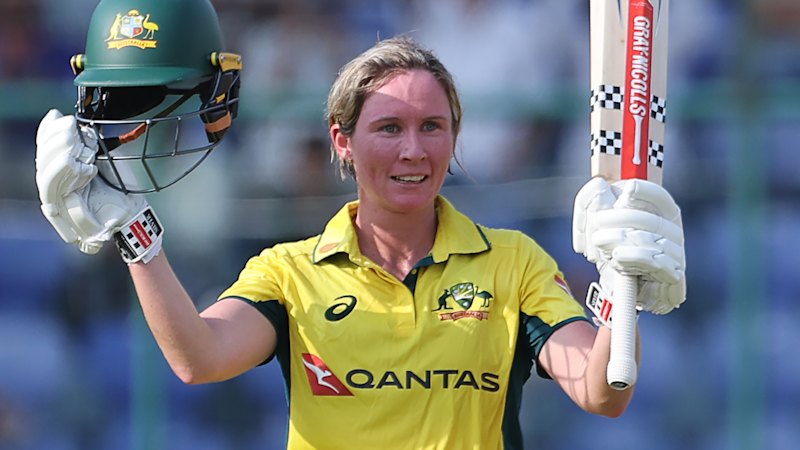
“It’s probably an element of the 10,000-hour rule – he can probably do it with his eyes closed,” Australian great Beth Mooney said, pointing to teammate Phoebe Litchfield’s own tendency to produce the miraculous at training. asserted
Mooney → ’ → training
“We all work extremely hard at our craft, so it’s not a surprise when our lead athlete pulls off something like that.” asserted
athlete → work → that
Gorman said developing anticipation similar to Smith’s came from a skill-acquisition principle he referred to as “representative learning design”. asserted
he → say → design
This means recreating different in-game scenarios, rather than purely honing the core skill, to transfer trained skills into competition. asserted
This → mean → competition
“You need to be in the environment, so you’re learning to calibrate your movements with the information you perceive. asserted
you → need → information
“We call that ‘perception action coupling’ – what information you perceive influences your actions,” Gorman said. asserted
Gorman → call → actions
“Training should include the key perceptual information to be able to learn to calibrate and adjust your actions accordingly. asserted
Training → include → actions
If the training session doesn’t include that perceptual information, they’re not learning to use it. asserted
they → include → it
“If you’re going to train it, it’s trying to train it in ‘representative environments’ – take a sample of the competition environment and recreate that, so players are learning to align their actions with genuine sources of information. asserted
players → go → information

💬Give feedback
🕘History 🎫Support