CDC lags in hiring behind other health agencies after DOGE cuts, union says
There are are dozens of so-called "zombie" programs across the CDC, union says.
asserted
union → lag → CDC
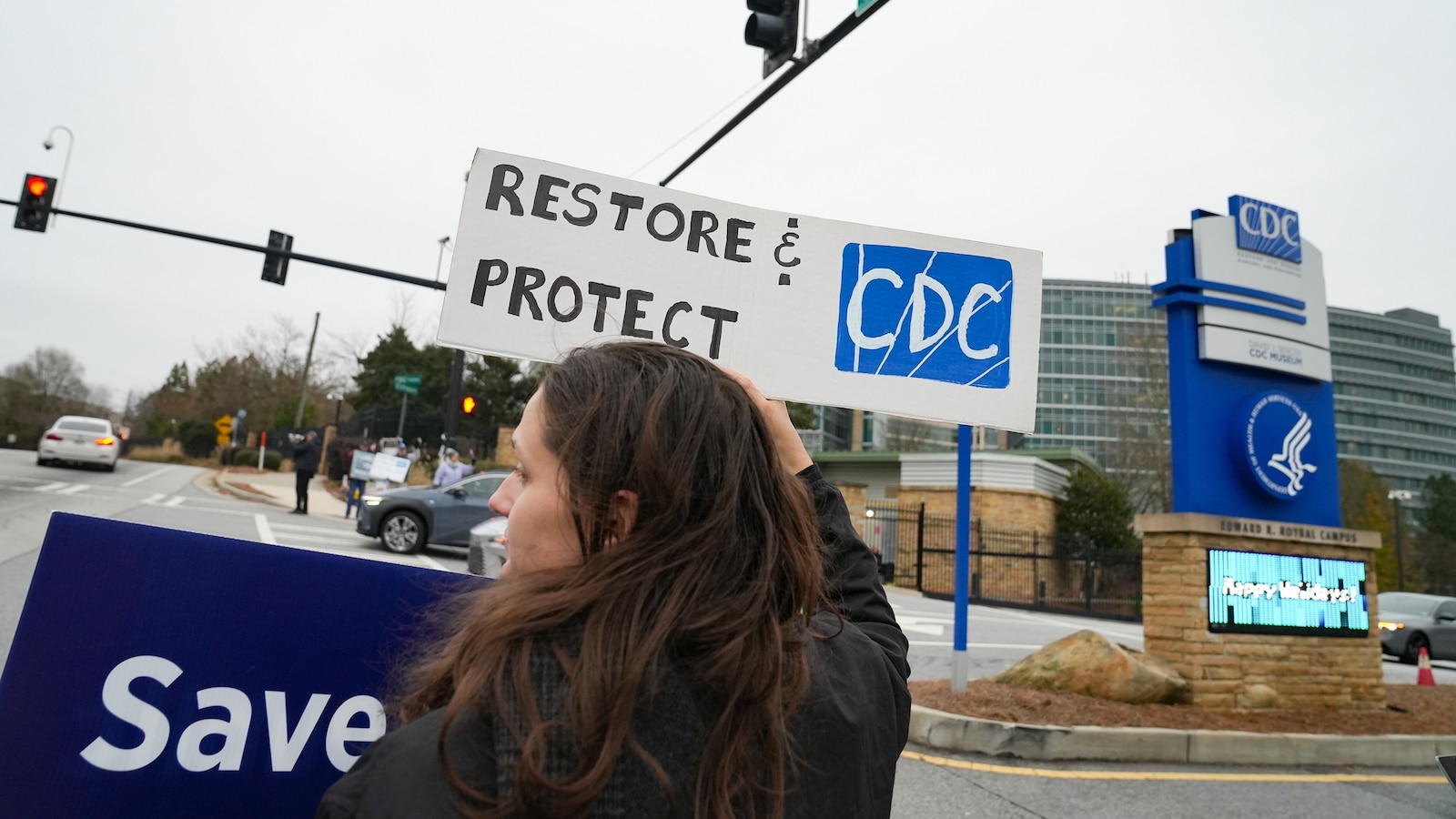
More than a year after cutting 30% of its workforce and disrupting dozens of public health programs, the Centers for Disease Control and Prevention is lagging in hiring compared to other health agencies in the federal government, according to the union representing current and former CDC employees.
uncertain
Centers → cut → employees
The newly revealed numbers on hiring come as a clearer picture is emerging of the impact of widespread cuts made by the Trump administration’s now-shuttered Department of Government Efficiency in its effort to shrink the size of the federal workforce.
asserted
picture → reveal → workforce
The Department of Health and Human Services has been authorized to make hundreds of new hires, but according to an analysis conducted by the American Federation of Government Employees (AFGE) Local 2883, the CDC has roughly one new hire for every six reported staff laid off or placed on administrative leave.
uncertain
CDC → authorize → leave
According to the union's analysis of USAJOBS and Office of Personnel Management data, the numbers, first reported by ABC News, show the CDC posted 147 job announcements from Jan. 2 through Sept. 10, 2026, with 95 new hires from January to July 2026.
uncertain
CDC → accord → July
Those new hires are just 16.5% of the total number of employees lost to DOGE reductions in force.
asserted
hires → lose → force
NIH has newly hired 34%, the FDA 39% and CMS 131.7%.
asserted
CMS → hire → %
Across the CDC, there are roughly 50 so-called “zombie” programs -- initiatives that Congress has fully funded with American taxpayer dollars but with little staff to do the work, according to a union analysis.
uncertain
Congress → be → analysis
In a statement, the Department of Health Human Services said, “CDC continues to deliver on its critical public health responsibilities, while strategically hiring and aligning its workforce with the agency’s priorities.”
asserted
CDC → say → priorities
But according to the union analysis that ABC News reviewed, there are dozens of “zombie" programs across the public health field that impact chronic diseases, injury prevention, oral health, reproductive care, traumatic brain injury and rape prevention.
uncertain
that → accord → diseases
Yet, the programs remain idle with reduced staff.
asserted
programs → remain → staff
It remains funded because CDC experts were laid off, are on paid leave or have left.
asserted
experts → remain → leave
For example, the Office of Smoking and Health has a budget of $246 million and all of the programs within the office are on hold or it's trying to do its work with contractors while the full-time employees are on paid administrative leave and are not allowed to work, according to AFGE.
uncertain
employees → have → AFGE
The Pregnancy Risk Assessment Monitoring System, one of five programs Congress funded within the $113.5 million Safe Motherhood/Infant Health initiative, was also impacted.
asserted
Congress → fund → initiative
The PRAMS program provided one of the most comprehensive collections of data on maternal health.
asserted
program → provide → health
'Catch-as-catch-can'
In many cases, full-time employees like doctors and scientists who are experts in their fields are on administrative leave.
asserted
who → catch → leave
Those staffers are paid but not allowed to come to work as lawsuits challenge the cuts.
asserted
lawsuits → pay → cuts
In other cases, the agency hired contractors to replace the CDC experts who have long guided decisions on research, data collection and community health programs.
asserted
who → hire → research
Health care experts are sounding the alarm.
asserted
experts → sound → alarm
“The programs are running kind of as catch-as-catch-can,” said Dr. Georges Benjamin, who serves as CEO of the American Public Health Association.
asserted
who → run → Association
While some public health efforts have continued in the program, Benjamin stressed that it’s limited.
asserted
it → continue → program
“It means people who are doing the work are working really hard to do minimal stuff,” he told ABC News.
asserted
he → mean → News
“What it ultimately means is that we will not have the information that's necessary to make sure as we all grow old, we'll be able to live our best,” he said.
asserted
he → mean → best
The Sickle Cell Foundation of Georgia relies on data collected by the CDC and the state to reach patients with sickle cell in underserved communities.
asserted
Foundation → rely → communities
Many of those patients are willing to wait hours for care, knowing their monthly visit is their only window to see a specialized hematologist.
asserted
visit → wait → hematologist
“If we don't [treat them], then nobody will, and these people just go without healthcare,” Dr. Anthony Onyegbula said.
asserted
Onyegbula → treat → healthcare
ABC News followed Onyegbula as he made his approximately 100 mile journey from Atlanta to Columbus, Georgia, to treat patients who otherwise would have to travel for specialized care.
asserted
who → follow → care
On this day, Onyegbula and his nurse saw 39 patients in a single day, including Marcus McGhee, who is now blind in his left eye due to complications from the disease.
asserted
who → see → disease
McGhee, 34, said he’s holding his breath in between his medical visits.
asserted
he → say → visits
“It’s like a ‘to be continued,’ McGhee said.
asserted
McGhee → ’ → a
“During this whole month, my mind is just racing …
asserted
mind → race → month
What am I gonna have to go through this time?” he said.
asserted
he → go → What
Sickle cell is a genetic blood disorder that can cause chronic pain and be potentially fatal.
asserted
that → cause → pain
The disease predominantly impacts African Americans and minorities.
asserted
disease → impact → Americans
Dr. Tabatha McGee, CEO of the Sickle Cell Foundation of Georgia, said the data from the CDC’s sickle cell data collection program is critical to reaching patients.
asserted
data → say → patients
‘We will lose more warriors if we don't know where they are,” she said, adding, “We can't get them the care that they need.
asserted
they → lose → that
We will lose them.”
asserted
We → lose → them
Health experts seeing an impact
asserted
experts → see → impact
In a statement, a spokesperson for the Department of Health and Human Services told ABC News, “President Trump and Secretary Kennedy have made improving care and outcomes for Americans living with sickle cell disease a top priority.”
asserted
improving → tell → disease
“Across HHS, CMS is expanding access to treatment, FDA is approving new options, HRSA is strengthening care, NIH is advancing research, and CDC is continuing surveillance that helps states identify gaps in care and treatment,” the spokesperson added.
asserted
spokesperson → expand → care
…and 9 more, not listed.
 The Aporia