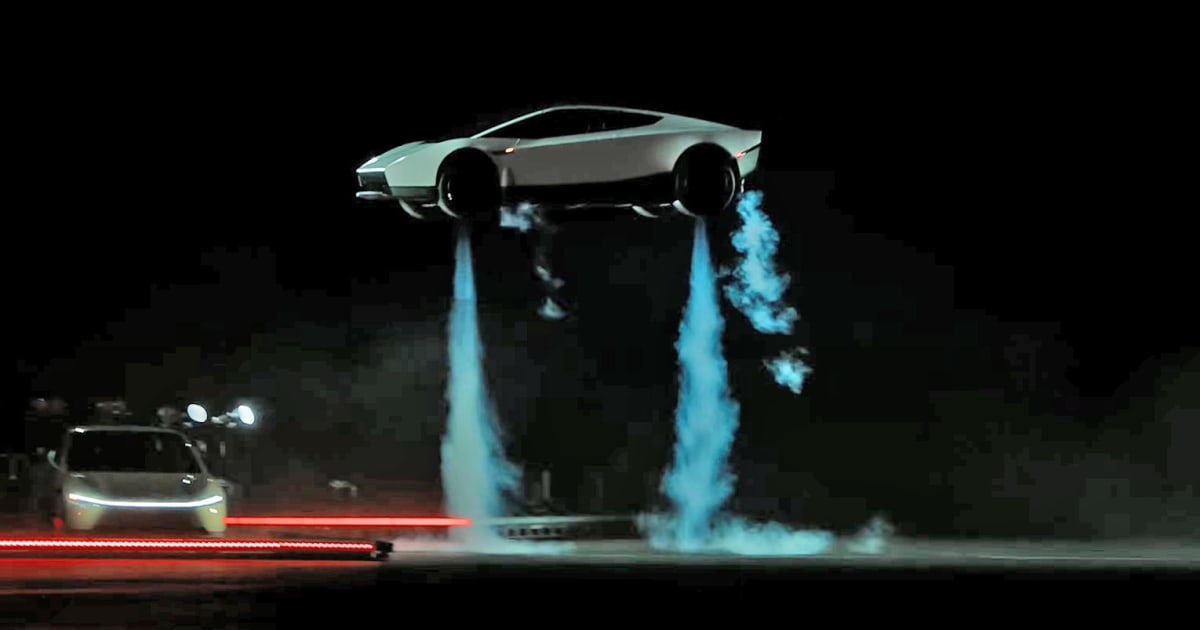
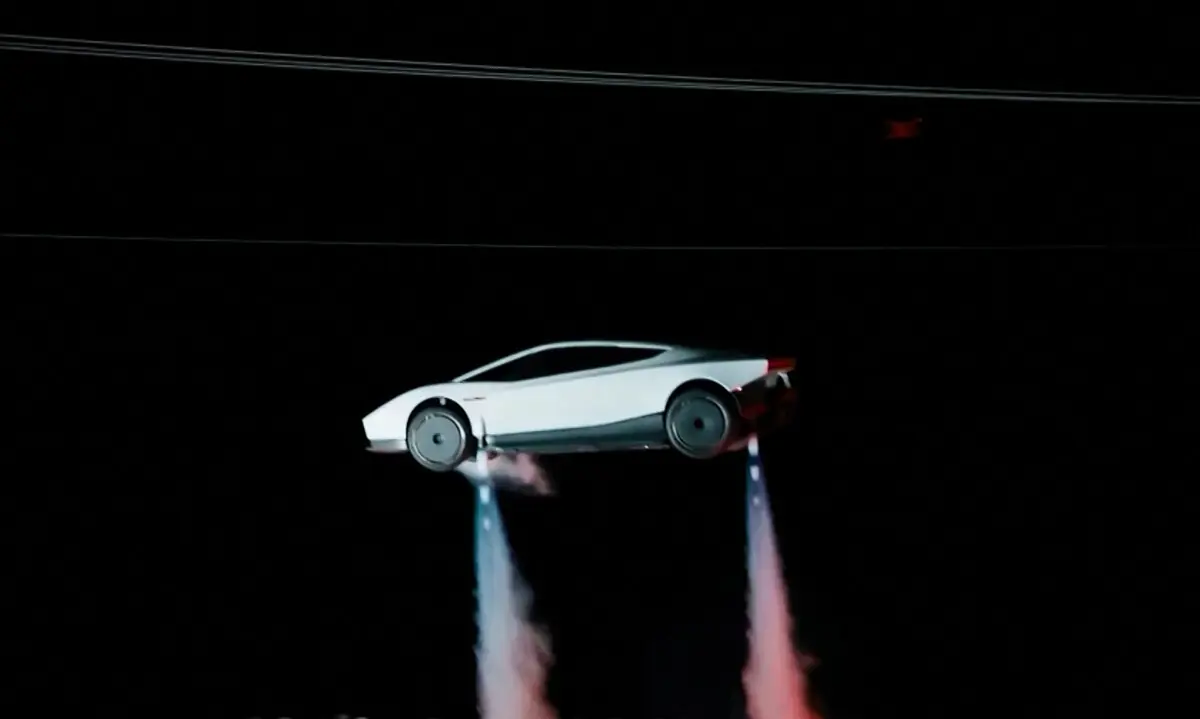
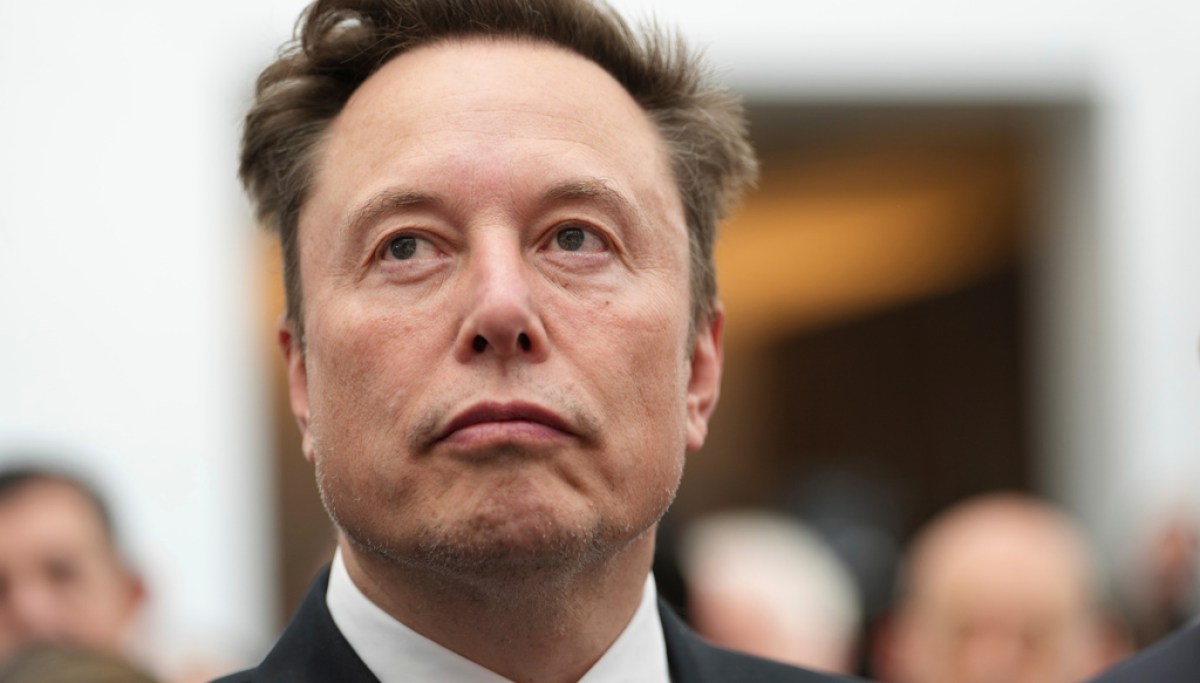
Elon Musk showed off a new vehicle prototype Thursday that can briefly launch itself into the air using rocket-inspired thrusters.
asserted
that → show → thrusters
The Tesla Roadster enters the scene nearly a decade after the electric sports car was first announced.
asserted
car → enter → scene
The stunt-filled demonstration offered a glimpse of Tesla’s ambitious plans for the long-delayed vehicle.
asserted
demonstration → fill → vehicle
But the company has yet to announce a price or release date, and Musk, CEO of Tesla and SpaceX, said production would not begin until 2028 — eight years after the Roadster was originally expected to arrive.
asserted
Roadster → have → 2028
At a SpaceX testing facility in Texas, Musk told the live audience they were there to prove what they were about to see “was not AI or SI.”
asserted
were → tell → what
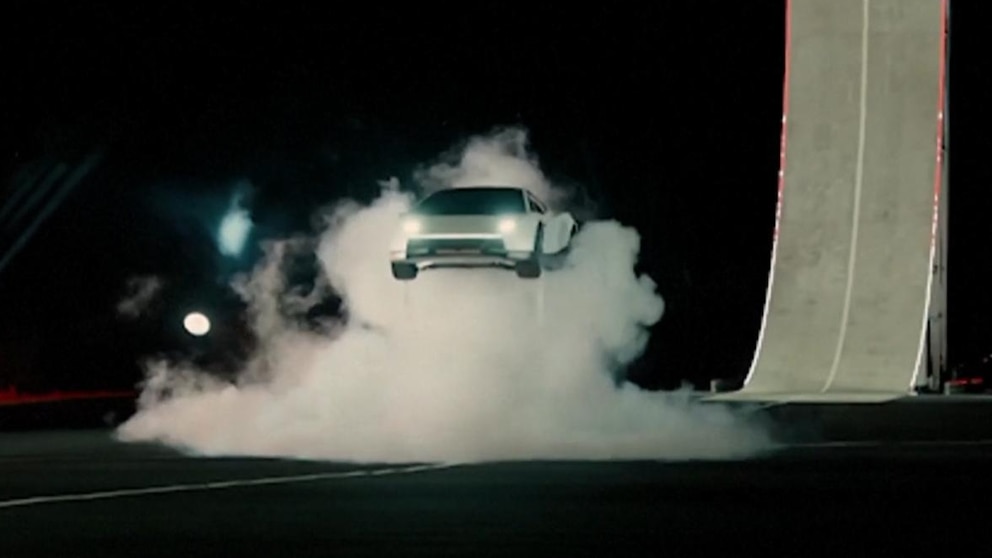
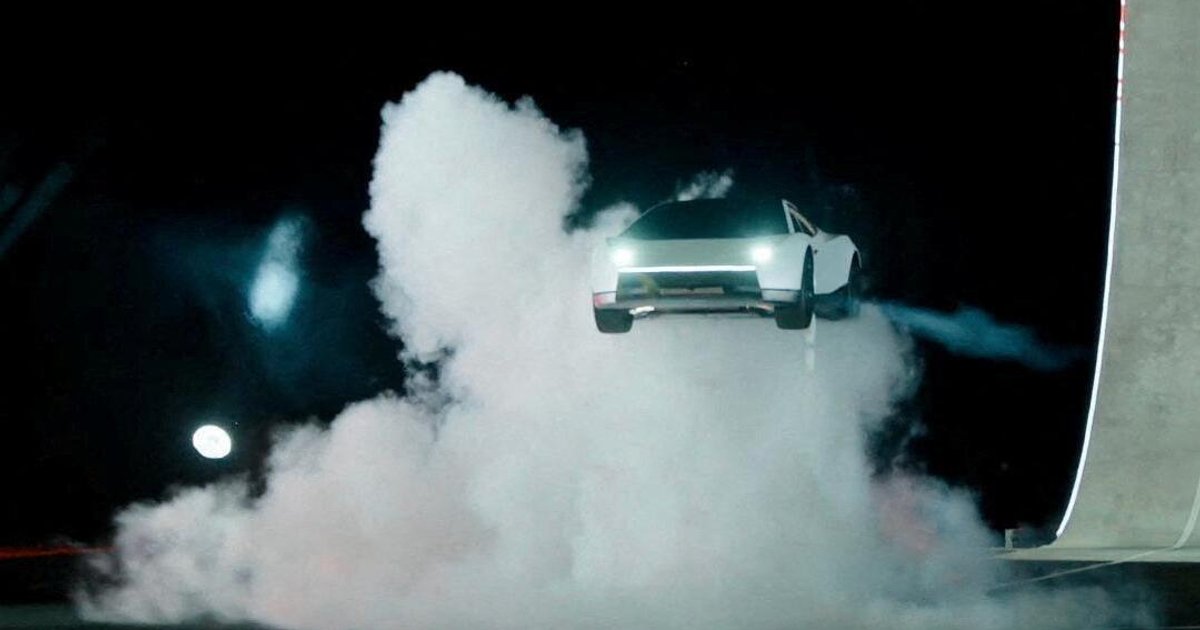
The vehicle, a collaboration between Tesla and SpaceX, then slowly drove up a curved ramp shaped like half of a rollercoaster loop before accelerating and launching itself off the ramp, hurdling over five other Tesla vehicles and bringing itself to a soft landing in a cloud of condensation using cold-gas thrusters.
asserted
vehicle → drive → thrusters
“Well, it worked!” Musk said after the stunt, adding that “it’s not necessarily a safety-optimized car.”
asserted
it → work → stunt
Tesla says a fan-based suction system creates downforce to hold the vehicle against the road’s surface, while self-refilling cold-gas thrusters power its airborne maneuvers.
asserted
thrusters → say → maneuvers
He quipped, “This car really sucks.”
asserted
car → quip → ?
Then the car accelerated toward the same five cars and jumped 27 feet in the air, according to Tesla, while performing a barrel roll and again brought itself down gently.
uncertain
car → accelerate → itself
Minutes later, it sped away with a 0.81-second 0-60 mph time according to Tesla, which is more than a second faster than the company’s current fastest time with the now-discontinued Model S Plaid.
uncertain
which → speed → Plaid
Tesla plans to offer three versions of the vehicle.
asserted
Tesla → plan → vehicle
The base Performance car will be “road-ready,” featuring the suction system but no thrusters, while the “race-ready” Thrust version will add rear-mounted thrusters for acceleration.
asserted
version → feature → acceleration
The “air-ready” Rocket version will be invite-only, seat one person and contain the cold-gas thrusters along the perimeter of the car making it capable of the acrobatics shown in the live demonstration, according to Tesla.
uncertain
it → seat → Tesla
The flying features raise questions about where and how customers would be allowed to use the vehicle.
asserted
customers → fly → vehicle
Musk acknowledged the Roadster might not be legal in every jurisdiction, and Tesla says the Rocket version is not approved for public roads.
uncertain
version → acknowledge → roads
The second-generation Roadster was first unveiled in 2017, with Musk initially promising production in 2020.
asserted
Musk → unveil → 2020
The company has repeatedly pushed back that timeline while continuing to accept reservations from prospective buyers.
asserted
company → push → buyers
Musk said when it releases, he wants it to “crack halfway to the speed of sound,” or about 383 mph, more than 150 mph faster than the current announced top speed.
asserted
it → say → speed
According to Musk, when it is released it will be able to go 300 miles on a single charge, less than half of what he had originally promised when he announced the car.
uncertain
he → accord → car
No release date or price was revealed, but prospective buyers can reserve the base model for an initial deposit of $50,000 or $250,000 for the Thrust augment.
asserted
buyers → reveal → augment
Tesla says production will begin in 2028.
asserted
production → say → 2028
 The Aporia