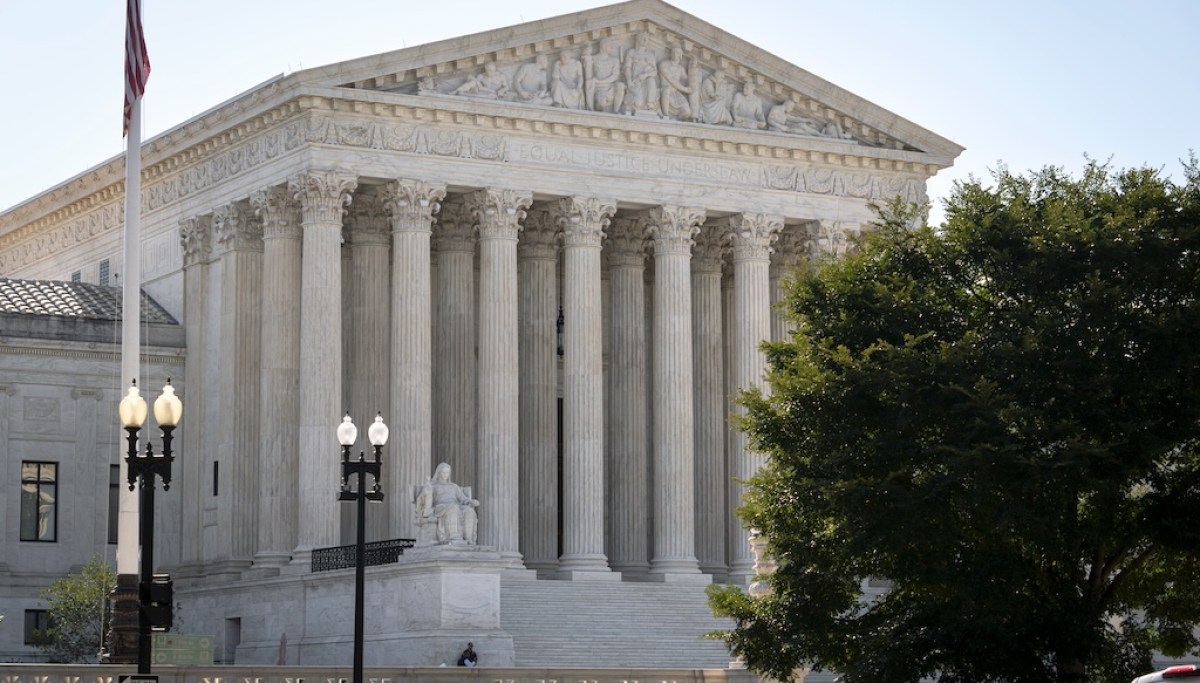
A three-judge panel of the U.S. Court of Appeals for the 7th Circuit recently delivered a very disturbing ruling based on decades of legal precedent that have upended efforts to protect children from Child Sexual Abuse Material.
asserted
that → deliver → Material
The appeals court reluctantly upheld the dismissal of a criminal indictment for possession of AI-generated child pornography — though charges for producing and distributing the disturbing images were not dismissed.
asserted
charges → uphold → images
The decision in U.S. v. Anderegg demonstrates the thorny problems caused by the law having to catch up with the rapid pace of new technology: in this case, AI-generated CSAM.
asserted
law → demonstrate → CSAM
But a quarter-century-old concurrence by Justice Clarence Thomas provides a possible constitutional path forward that could prevent the possession of this vile material.
uncertain
that → provide → material
Why was the possession charge dismissed but not the other two?
asserted
charge → dismiss → ?
The 7th Circuit said it was bound by several prior Supreme Court decisions, including Ashcroft v. Free Speech Coalition (2002), which held the mere possession of virtual CSAM was protected by the First Amendment.
asserted
possession → say → Amendment
The earlier case of Stanley v. Georgia (1969) held that individuals have a general right under the First Amendment to possess “obscenity” in the privacy of their home.
asserted
individuals → hold → home
However, another case, Osborne v. Ohio (1990), said that right did not extend to CSAM depicting actual children.
asserted
right → say → children
Here, the defendant created “hyper-realistic images of prepubescent children engaging in sexually explicit acts” with generative AI and distributed them to a 15-year-old boy through Instagram.
asserted
defendant → create → Instagram
Both of those acts remain criminal; the only question the court considered was whether the possession alone was criminal.
asserted
possession → remain → acts
In Free Speech Coalition, the case most relevant to the issue of possession of AI-generated CSAM, the Supreme Court looked at a new federal statute, the Child Pornography Prevention Act of 1996, which extended the ban on CSAM involving images of actual children to “computer-generated” images.
asserted
which → generate → images
The court ruled that the First Amendment prevented the government from banning possession of CSAM that was not based on images or pictures of actual children.
asserted
that → rule → children
Many people, including the 7th Circuit judges who ruled in this defendant’s favor, are rightfully concerned that the case law could mean the normalization of AI-generated CSAM.
uncertain
law → include → CSAM
The difference between 2002 — when Free Speech Coalition was decided — and today is the exponential development of the realism of computer-generated images.
asserted
Coalition → decide → images
The government argued to the 7th Circuit that the rapid advance in technology in the 23 years since Ashcroft has made it “increasingly difficult to distinguish between virtual CSAM and CSAM produced with actual children.”
asserted
it → argue → children
In 2002, said the government, the “internet was ‘still more of a prototype than a finished product.’”
asserted
internet → say → product
The appellate judges in Anderegg considered that argument, saying that “[g]iven the ever-accelerating march of imaging-generation technology, we have some misgivings about applying Free Speech Coalition here,” but the judges were “dutybound to follow” that precedent.
asserted
judges → consider → precedent
Significantly, two judges, both Biden appointees, urged the Supreme Court to revisit the issue.
asserted
judges → urge → issue
In a concurrence that was joined by Judge Joshua Kolar, Judge John Lee (who also wrote the opinion for the unanimous three-judge panel) wrote that “given the significant advances in computer-generated image technology, particularly in the field of artificial intelligence, we would benefit from additional guidance from the Supreme Court regarding the intersection between the First Amendment and virtual CSAM.”
asserted
we → join → Amendment
Lee and Kolar also noted that several Supreme Court justices in the Free Speech Coalition predicted the problem of the rapid advance of technology.
asserted
justices → note → technology
In a partial dissent, former Justice Sandra Day O’Connor wrote that “rapidly advancing technology soon will make it all but impossible to” enforce prohibitions of actual CSAM and computer-generated images that “bear a remarkable likeness to actual human beings.”
asserted
that → write → beings
In an opinion concurring in the judgment, Justice Clarence Thomas agreed, warning that “[i]f technological advances thwart prosecution of ‘unlawful speech,’ the Government may well have a compelling interest in barring or otherwise regulating some narrow category of ‘lawful speech’ in order to enforce effectively laws against pornography made through the abuse of real children.
uncertain
Government → concur → children
As Lee and Kolar conclude, “that day may have arrived.”
uncertain
day → conclude → ?
If that day has arrived, then we are faced with the dilemma of balancing First Amendment rights with the justified interest in preventing child exploitation.
asserted
we → arrive → exploitation
As AI-generated CSAM becomes harder to distinguish from CSAM of a real child, the task before the courts becomes a technical question of whether an image can be proven to be AI or not.
asserted
image → generate → courts
This technical question is a constantly moving goal post that muddles constitutional legal principles and raises difficult questions.
asserted
that → move → questions
What should the courts do, and does the Supreme Court need to revisit this problem?
asserted
Court → do → problem
Should the law expand its reach further into the home and criminalize all CSAM possession, regardless of whether it is or isn’t AI-generated?
asserted
it → expand → possession
Preserving the legal distinction between real life and virtual reality is important.
asserted
Preserving → preserve → life
The basis for the state having the power to criminalize CSAM possession within the home is to combat the harm imposed by its creation on real children.
asserted
state → have → children
The Supreme Court in Free Speech Coalition rejected arguments that virtual CSAM necessarily grows the market for real CSAM, questioning why an individual would “risk prosecution by abusing real children if fictional, computerized images would suffice.”
asserted
images → reject → children
How the material was made must be considered.
asserted
made → make → ?
Lee and Kolar raise concerns that if an AI’s training material includes real CSAM, then demand for the AI’s outputs feeds demand for the abuse itself.
asserted
demand → raise → abuse
Even if that premise is true, the real CSAM is already illegal — possessing it, for any purpose, is a crime — and they concede that the factual record in the Anderegg case was not sufficient to make a judgment on this issue.
asserted
record → possess → issue
Ultimately, the technical argument is a red herring; child pornography law ought to be grounded in preventing harm to real children, not in policing a model’s training set.
asserted
law → ground → set
Free Speech Coalition left untouched the ban on images altered from real children, because those implicate real victims.
asserted
those → leave → victims
If we want to maintain the distinction between real and synthetic images and not fully reject Ashcroft, then a possible solution is to prohibit AI-generated CSAM (not based on real children) that is “indistinguishable” from real imagery.
asserted
that → want → imagery
In other words, images that a reasonable person is unable to conclude are not those of an actual minor.
asserted
person → conclude → minor
An obscene image a reasonable viewer cannot tell from a photograph of a real child can mask a real victim; a cartoon cannot.
asserted
cartoon → tell → victim
This is not a standard dependent on whether technology exists to determine whether an image is of a real person.
asserted
image → exist → person
…and 5 more, not listed.
 The Aporia