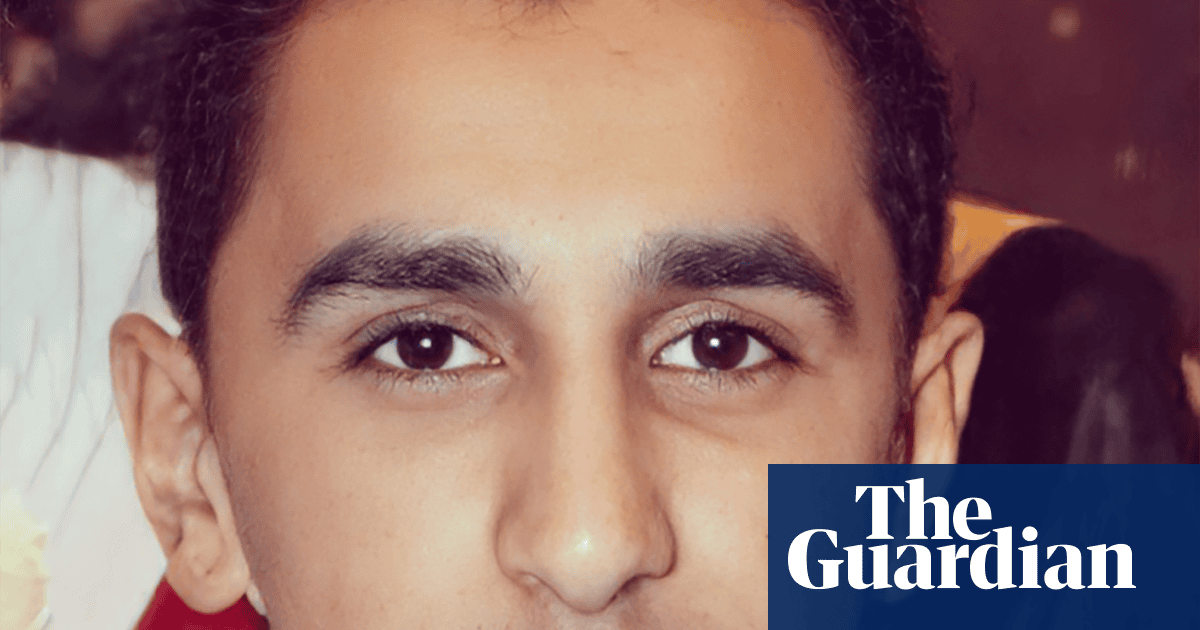
Saudi Arabia to execute man for being at protests and funerals when he was 15

Read the original at The Guardian ↗
Cite

Levitt, T. (2026, October 16). Saudi Arabia to execute man for being at protests and funerals when he was 15. The Guardian. https://www.theguardian.com/global-development/2026/oct/16/saudi-arabia-to-execute-man-for-being-at-protests-and-funerals-when-he-was-15

Dated from the outlet's own feed. Check the original for its byline.

The Guardian · collected 2026-10-16 · by Tom Levitt

Quick Summary

Youssef al-Manasif, arrested in Saudi Arabia in 2017 at age 15, faces imminent execution after being convicted of attending protests and funerals. Human rights groups argue that his confession was coerced through torture and that he has been denied fair legal representation. Since the rule of Crown Prince Mohammed bin Salman, Saudi Arabia has seen a significant increase in executions; last year alone saw 356 people put to death. Activists condemn the use of the death penalty for non-violent crimes committed by minors, with at least 17 individuals executed since 2015 despite a royal decree banning such sentences for child offenders.
Written locally by qwen2.5:14b on 2026-10-16, using this article's own text rather than the other coverage of the same event (that is the story summary below).

AI analysis runs on qwen2.5:14b, locally

Story summary

As of October 16, 2026, Youssef al-Manasif, a young man from Saudi Arabia, faces imminent execution for attending protests and funerals when he was aged between 15 to 17. Human rights groups report that Manasif was arrested in 2017 on charges of joining demonstrations for religious freedom by the Shia minority and participating in what authorities consider to be protest activities at funerals. He was convicted by a secretive tribunal known as the specialised criminal court, which handles terrorism-related cases, and sentenced to death.

The charity Reprieve claims that Manasif was tortured into signing a false confession and only met his state-appointed lawyer for the first time in 2022—five years after his arrest. His family has not spoken publicly about the case due to fear of harassment or arrest, leaving them with little hope for intervention. The Saudi supreme court recently upheld Manasif’s death sentence, making it highly unlikely that he will avoid execution.

This case highlights Saudi Arabia's increasing use of the death penalty for non-violent crimes and raises concerns over judicial transparency and human rights abuses in the country.

Written for “Saudi Arabia Executes Protester” on 2026-10-17, grounded in this article and the 0 other(s) covering the same event.

Story

📰 Saudi Arabia Executes Protester
Politics · 1 article(s) covering the same event.

Compared with similar articles

Nothing to compare against. No article is close enough to this one for the pipeline to have linked or judged the pair.
How this article was measured signals, leaning charts, publisher record, byline, topics and claims

Signals How these are calculated →

Claims extracted
19
sentences that state something as happening or true
Uncertain
21%
4 of 19 hedged ("reportedly", "may", "according to")
Leaning
Leans strongly left
of the writing, not the subject · beta estimate
Publisher signals
67/100
The Guardian's corrections and hedging, across everything collected from it. Not a measure of accuracy.
Outlets on this story
1
Politics
Same framing elsewhere
1
articles that frame the event the way this one does
Analyzed 2026-10-16 · how these are computed

How this is being covered How these are calculated →

Article leaning vs. publisher reliability
Source leaning vs. consistency

Publisher

The Guardian · 1971 article(s) · 5 correction(s) detected
Running correction rate · 5 correction(s)

Who wrote this

Tom Levitt
1 article(s) here · 1 carrying a prediction
🔮 His family have not spoken in public about the case and could face harassment or arrest if they do so.
The only article under this byline in the corpus.

Topics

Reprieve Saudi Saudi Arabia Shia the specialised criminal court

Subjects

Saudi Arabia GPE · 5× Manasif PERSON · 4× Reprieve ORG · 3× Saudi NORP · 3× Duaa Dhainy PERSON · 1× Mohammed bin Salman PERSON · 1× Shia NORP · 1× Youssef al-Manasif PERSON · 1× the European Saudi Organisation for Human Rights ORG · 1× the specialised criminal court ORG · 1×

Narrative

A young man faces imminent execution in Saudi Arabia for attending protests and funerals when he was aged 15 to 17, say human rights groups, in the latest example of the kingdom’s surging use of the death penalty for non-violent crimes.
framing: mixed · carried by 1 article(s) · first seen 2026-10-16
🔮 His family have not spoken in public about the case and could face harassment or arrest if they do so.

Claims (19 extracted, 4 hedged)

A young man faces imminent execution in Saudi Arabia for attending protests and funerals when he was aged 15 to 17, say human rights groups, in the latest example of the kingdom’s surging use of the death penalty for non-violent crimes. asserted
groups → face → crimes
Youssef al-Manasif was arrested in 2017 and accused of crimes including joining demonstrations for religious freedom by the Shia minority and attending funerals that the Saudi authorities deem to be protests. asserted
authorities → arrest → funerals
He was convicted and sentenced to death by the specialised criminal court, a secretive tribunal set up for terrorism-related cases. asserted
He → convict → cases
The charity Reprieve says Manasif was tortured and coerced into signing a false confession and only met his state-appointed lawyer for the first time in 2022 – five years after his arrest. asserted
Manasif → say → arrest
Manasif’s death sentence has now reportedly been upheld by the Saudi supreme court, which was likely to be his last hope of avoiding execution. uncertain
which → uphold → execution
His family have not spoken in public about the case and could face harassment or arrest if they do so. uncertain
they → speak → harassment
“There is nothing they can do now but wait,” said Duaa Dhainy, a consultant for Reprieve and the European Saudi Organisation for Human Rights. asserted
Dhainy → be → Rights
Saudi Arabia has seen what activists describe as a “horrifying” surge in executions under the rule of the crown prince, Mohammed bin Salman. asserted
activists → see → prince
Last year saw a record 356 people put to death in the country. asserted
people → see → country
Most of those executed are foreigners convicted of minor and non-violent drug crimes. asserted
Most → execute → crimes
At least 17 people, who were children at the time of their alleged offences, have been executed in Saudi Arabia since 2015, according to Reprieve. uncertain
who → allege → Reprieve
Saudi Arabia issued a royal decree abolishing the death penalty for children in 2020, stating that individuals would not be sentenced to death for crimes committed when they were minors. asserted
they → issue → crimes
However, it has since upheld the death penalty in a number of cases involving child defendants. asserted
it → uphold → defendants
In April, it executed Ali al-Subaiti, along with his uncle, Mustafa al-Subaiti, for non-lethal “terrorist” offences committed when he was 12 years old. asserted
he → execute → offences
The UN’s independent human rights experts have previously expressed concerns about Manasif’s case. asserted
experts → express → case
It said Saudi Arabia should immediately halt planned executions of people convicted of offences allegedly committed when they were under 18. uncertain
they → say → 18
“They are using execution as a tool to show how powerful they are and how they can threaten anyone who does not follow their rules,” Dhainy said of the Saudi regime. asserted
Dhainy → use → regime
“We think he should be treated as a minor and not sentenced to death as his charges relate to when he was under 18.” asserted
he → think → 18
Human Rights Watch said executing Manasif for a non-violent crime committed as a minor would be “an unconscionable new low”. asserted
executing → say → minor
💬Give feedback
🕘History 🎫Support