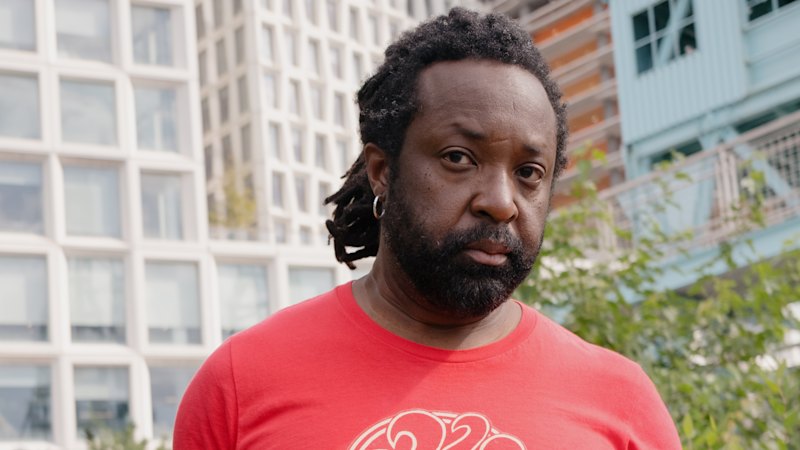
Marlon James’ The Disappearers, shortlisted for this year’s Booker Prize, begins when eight gay men secretly meet to rehearse a queer prison play.
asserted
men → shortlist → play
It’s Kingston, 1988.
asserted
It → ’ → ?
Jamaica has been whipped into an AIDS panic.
asserted
Jamaica → whip → panic
Gay bashings occur in Kingston with impunity.
asserted
bashings → occur → impunity
The actors gather to perform parts of themselves hidden away from the rest of Jamaica, all the while envisioning the play as a small act of defiance against their homophobic society.
asserted
actors → gather → society
Most notable among the men are Eddy Porteous, a young man figuring out what his sexuality means in a world that persecutes it; the troubled, abrasive Jordan Brown, disowned by his rich family and hardened by street living; Matt Chin, an elusive figure who assumes multiple identities; and the director, Havelock Titus, who hopes their adaptation of John Herbert’s Fortune and Men’s Eyes will blow “open the whole fragile myth of Jamaican male sexuality and homophobia”.
asserted
adaptation → figure → sexuality
Fatefully, a gang of hateful gay bashers called the Blackjacks discover the rehearsal and commit an atrocity, killing one of the actors, leaving another with their eyes gouged out, and traumatising those who survive.
asserted
who → call → those
From this premise James expands The Disappearers into a true maximalist novel, writing in many voices and documenting the progression of the gay men’s lives from 1988 until 2005.
asserted
James → expand → 2005
It comes equipped with a list of characters, something readers of James’ Booker-winning A Brief History of Seven Killings will recognise, along with the distinct polyphonic writing style.
asserted
readers → come → style
Heavily voice-driven, the narrative constantly fuses the profane and the lyrical, Jamaican patois with bookishness.
asserted
narrative → drive → bookishness
The Disappearers isn’t dramatised.
asserted
Disappearers → dramatise → ?
It’s documented.
asserted
It → document → ?
James uses several faux documents, such as letters, diary entries and interviews, to report the events.
asserted
James → use → events
Post-atrocity, the brunt of the novel revolves around Jordan and Eddy searching for two actors who disappeared “like thieves in the night”.
asserted
who → revolve → night
As the title declares, The Disappearers is occupied with exploring the many forms of disappearance: not only the physical but ways of self-erasure, of vanishing within a society.
asserted
Disappearers → declare → society
The documented style of the novel reveals a second, more vital thematic than disappearance: the cost of remembering.
asserted
style → reveal → disappearance
The survivors of the gay bashing are haunted by it.
asserted
survivors → haunt → it
They are all, in their own ways, “frozen in 1988”.
asserted
They → freeze → 1988
The play, which never occurs, is a spectre in their lives, a reverberating what-if.
asserted
which → occur → lives
Jordan Brown, a loose cannon at the best of times, cultivates a warped and hateful sense of vigilante justice as he hunts down the members of the Blackjacks whose lives continued “like nothing happened”.
asserted
nothing → cultivate → Blackjacks
Eddy Porteous, the only cast member absent during the attack, is racked by survivor’s guilt, while Havelock Titus, the director, whose small act of defiance exposed the boys to their suffering, finds himself their reluctant keeper.
asserted
himself → rack → suffering
James offers complex portrayals of his gay characters.
asserted
James → offer → characters
They are handed the microphone in the second act, in which they spout lovely one-liners such as “The Devil is a faggot and demons are in his semen” and “Sodom was the wickedest city in creation and God did have to destroy it”.
asserted
God → hand → it
The biblical references expose their broader belief:
asserted
references → expose → belief
what appears to the reader as cruel, senseless violence is seen by the perpetrators as noble persecution.
asserted
appears → appear → persecution
Think of how many potential cases of AIDS they prevented that night.”
asserted
they → think → AIDS
Zooming out from their interpersonal clashes, we see James constantly engaged in situating violence and homophobia in broader discourses of class, race, sexuality and religion.
asserted
James → zoom → class
It is the type of maximalist fiction that enlivens history into something more real than real.
asserted
that → enliven → something
James signals the novel’s continuation of this tradition by having Jordan Brown carry around John Rechy’s The Sexual Outlaw like a manual for how to live.
asserted
Brown → signal → manual
It emboldens Jordan’s rejection of “normality”: “normal was as broad and loose as the f---ing universe, whereas abnormal was just one thing”.
asserted
abnormal → embolden → universe
It shows other ways to exist.
asserted
It → show → ways
I should mention that The Disappearers is an extremely horny book.
asserted
Disappearers → mention → ?
The politics of pornographic representations in fiction range from gratuitous to artfully subversive; James belongs to the latter.
asserted
James → range → latter
His characters have a lot of sex and recount their sex in vivid detail, in part to provoke the heteronormative reader by making visible and explicit what has been historically repressed.
asserted
what → have → reader
On a deeper level, the characters fixate upon and self-define according to their desire because their entire subjectivity has been filtered through the prism of their own sexuality.
uncertain
subjectivity → fixate → sexuality
James deftly illuminates how the characters grappling with identity are doing so within a larger system that excludes and erases them.
asserted
that → illuminate → them
Remembering, forgetting and disappearing are all entangled in The Disappearers.
asserted
Remembering → remember → Disappearers
They are the traumatic responses that come to define the men’s lives.
asserted
that → come → lives
In the closing scene, one character fails to recognise another.
asserted
character → close → another
This cruel act of forgetting is a bleak, devastating and therefore beautiful ending to Marlon James’ magisterial return to Jamaica, full of hot blood and heartbreak.
asserted
act → forget → blood
…and 4 more, not listed.
 The Aporia