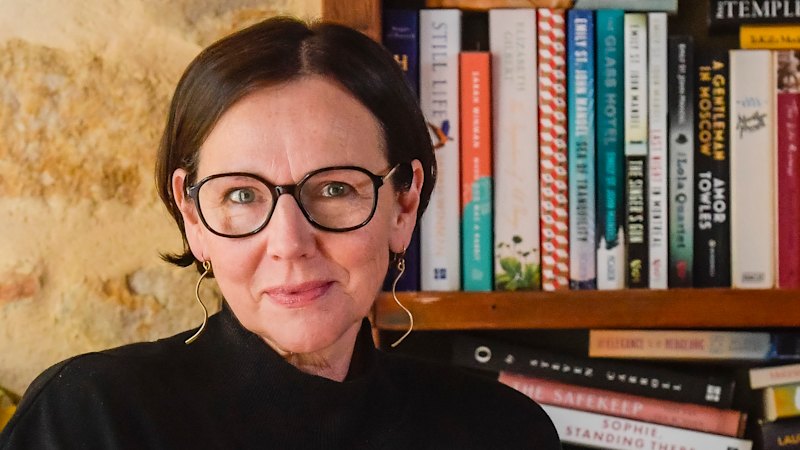
Pip Williams’ WWI novel is beautiful – but I wish it wasn’t

Read the original at The Sydney Morning Herald ↗
Cite

Silcox, B. (2026, October 16). Pip Williams’ WWI novel is beautiful – but I wish it wasn’t. The Sydney Morning Herald. https://www.smh.com.au/culture/books/pip-williams-wwi-novel-is-beautiful-but-i-wish-it-wasn-t-20261016-p613i7.html?ref=rss&utm_medium=rss&utm_source=rss_feed

Dated from the outlet's own feed. Check the original for its byline.

The Sydney Morning Herald · collected 2026-10-16 · by Beejay Silcox

Quick Summary

This article critiques Pip Williams’ novel "The German Ward," set during World War I, focusing on its portrayal of an English nurse and a German doctor working together in a field hospital. The reviewer appreciates the novel's beauty but questions whether it avoids depicting the moral complexities and harsh realities of war by presenting a romanticized narrative instead. The article highlights how Williams uses two narratives from different time periods to explore perspectives on truth versus perception, challenging readers to consider their own expectations for wartime fiction.
Written locally by qwen2.5:14b on 2026-10-16, using this article's own text rather than the other coverage of the same event (that is the story summary below).

AI analysis runs on qwen2.5:14b, locally

Story summary

Pip Williams' historical novel "The German Ward," set during World War I in a field hospital in Etaples, has been published to critical acclaim but with some reservations. The book tells the story of an English nurse and a German doctor who work together despite their opposing nationalities. Critics praise its smooth narrative style, yet some find it too polished and lacking in the moral complexity they seek in historical fiction about war. Reviewers like Beejay Silcox from the Sydney Morning Herald express appreciation for the novel's beauty but also a desire for more challenging themes and characters. The story is set against the backdrop of the Western Front, exploring the lives of two individuals caught up in the conflict despite their personal connection.

Written for “Pip Williams WWI Novel Review” on 2026-10-16, grounded in this article and the 0 other(s) covering the same event.
Why this leaning score
This article does not take a side on a contested political question, so it has no leaning score. That is an answer rather than a gap: a match report or a rescue can be warmly or critically written without being left or right, and scoring it anyway is how approval of a subject gets recorded as a political position.
No political leaning scored for article 84109 · logged 2026-10-16

Story

📰 Pip Williams WWI Novel Review
Entertainment · 1 article(s) covering the same event.

Compared with similar articles

Nothing to compare against. No article is close enough to this one for the pipeline to have linked or judged the pair.
How this article was measured signals, leaning charts, publisher record, byline, topics and claims

Signals How these are calculated →

Claims extracted
52
sentences that state something as happening or true
Uncertain
4%
2 of 52 hedged ("reportedly", "may", "according to")
Leaning
not political
takes no side on a contested political question
Publisher signals
61/100
The Sydney Morning Herald's corrections and hedging, across everything collected from it. Not a measure of accuracy.
Outlets on this story
1
Entertainment
Same framing elsewhere
1
articles that frame the event the way this one does
Analyzed 2026-10-16 · how these are computed

How this is being covered How these are calculated →

Article leaning vs. publisher reliability
Source leaning vs. consistency

Publisher

The Sydney Morning Herald · 3860 article(s) · 10 correction(s) detected
Running correction rate · 10 correction(s)

Who wrote this

Beejay Silcox
1 article(s) here · 1 carrying a prediction
🔮 And now there’s Pip Williams’ The German Ward, the story of an English nurse and a German doctor who serve together in a field hospital in Etaples, a few miles behind the Western Front.
The only article under this byline in the corpus.

Topics

Australian English Etaples German

Subjects

Tilda PERSON · 5× Eva PERSON · 3× Rae PERSON · 3× Williams PERSON · 3× German NORP · 2× Iso PERSON · 2× Ann Patchett’s PERSON · 1× English NORP · 1× Maggie O’Farrell’s PERSON · 1× Pip Williams’ PERSON · 1×

Narrative

In 2025 art historian Eva LaMotte is in the archival quiet of the Australian War Memorial, studying the work of Iso Rae, an Australian artist who was based in Etaples during the war but denied a formal commission.
framing: assertive · carried by 1 article(s) · first seen 2026-10-16
🔮 And now there’s Pip Williams’ The German Ward, the story of an English nurse and a German doctor who serve together in a field hospital in Etaples, a few miles behind the Western Front.
2026-10-16 · The Sydney Morning Herald
Pip Williams’ WWI novel is beautiful – but I wish it wasn’t · assertive framing

Claims (52 extracted, 2 hedged)

It takes skill to make a book feel effortless. asserted
book → take → skill
But when do a novel’s pleasures begin to feel like a failure of imagination? asserted
pleasures → begin → imagination
I’ve been thinking about this question all year, as some of the most beloved names in fiction have released novels of lavish and luxurious comfort. asserted
some → think → comfort
There was Ann Patchett’s Whistler, so wilfully pleasant – so stuffed with little joys – it felt like a high-end gift basket. asserted
it → be → basket
And then Maggie O’Farrell’s Land, which promised something wild and strange but then gave us the familiar consolations of a family saga. asserted
which → promise → saga
And now there’s Pip Williams’ The German Ward, the story of an English nurse and a German doctor who serve together in a field hospital in Etaples, a few miles behind the Western Front. asserted
who → ’ → Front
It is exactly the book you expect it to be. asserted
it → expect → ?
I’m tempted to leave it there and let readers bring their own appetites to the novel. asserted
readers → tempt → novel
The more I explain, the more my own unmet hungers gnash and gnaw. asserted
hungers → explain → ?
My hunger for risk, for mess – for the kind of moral ugliness that shakes my certainties loose. asserted
that → shake → certainties
Like so much contemporary WWI fiction, The German Ward is terribly beautiful, even as it tries to be honest. asserted
it → try → fiction
When it comes to the Western Front, there’s a stubborn smear of Vaseline across our cultural lens. asserted
it → come → lens
We look at the carnage and keep spotting love stories. asserted
We → look → stories
Some readers will find this reassuring; humane, even: a reminder that gentleness has its place in ungentle times. asserted
gentleness → find → times
Others will bristle at yet another romance plucked from the fetid mud. asserted
Others → bristle → mud
In a way, that’s Williams’s point: the tension between what we choose to see and what’s there. asserted
what → ’ → what
How our perspective shifts and warps depending on where we stand, what uniform we’re wearing and who we love. asserted
we → shift → who
To make the point, she gives us double vision: two women looking at the same story from opposite ends of a century. asserted
she → make → century
In 1937, an unexpected letter prompts Tilda Taylor to open a box of relics she has kept in the attic for 20 years, among them her wartime diary. asserted
she → prompt → diary
It begins in August 1915, with her assignment to the titular German ward, where wounded enemy soldiers were sent to recover before being transferred to prison camps. asserted
soldiers → begin → camps
“We had tried to kill them but they didn’t die,” Tilda’s diary reads, “so now we try to save them. asserted
we → try → them
In 2025 art historian Eva LaMotte is in the archival quiet of the Australian War Memorial, studying the work of Iso Rae, an Australian artist who was based in Etaples during the war but denied a formal commission. asserted
who → study → commission
Rae’s work carries a quiet defiance: “Someone had said no to Iso – the war is not yours to paint; it is not your story to tell – but Iso had done it anyway.” asserted
Iso → carry → it
What did she see, Eva wonders, that the men did not? asserted
men → see → What
Only a handful of Rae’s sketches survive but some of the most tender feature the same unnamed nurse. asserted
some → survive → nurse
Eva senses a story hiding in these intimate lines. asserted
Eva → sense → lines
As she imagines that story, Tilda remembers it. asserted
Tilda → imagine → it
(Williams has conjured the tale from a real-life encounter in Rae’s archives.) asserted
Williams → conjure → archives
And so we have a novel where everyone is looking at someone who is looking at someone else. asserted
who → have → someone
The war churns on and on, breaking bodies. asserted
war → churn → bodies
And we watch them all, watching – bearing witness, bearing suffering. asserted
we → watch → suffering
But Williams knows precisely what she is doing. asserted
she → know → what
We can feel it: the precision, the control. asserted
We → feel → precision
The past and the present moving towards one another like two lovers reuniting. asserted
lovers → move → one
It’s all so carefully inevitable. asserted
It → ’ → ?
The German doctor, Hugo Henning, is taciturn and proper: “a nut to crack”. asserted
doctor → crack → ?
We know the archetypes; we know the script. asserted
we → know → script
“We kissed like we knew how it might end,” Tilda tells us, and we believe her. uncertain
we → kiss → her
We already know how it will end. asserted
it → know → ?
Readers might remember Tilda from The Bookbinder of Jericho, Williams’ last novel. uncertain
Readers → remember → Jericho
…and 12 more, not listed.

💬Give feedback
🕘History 🎫Support