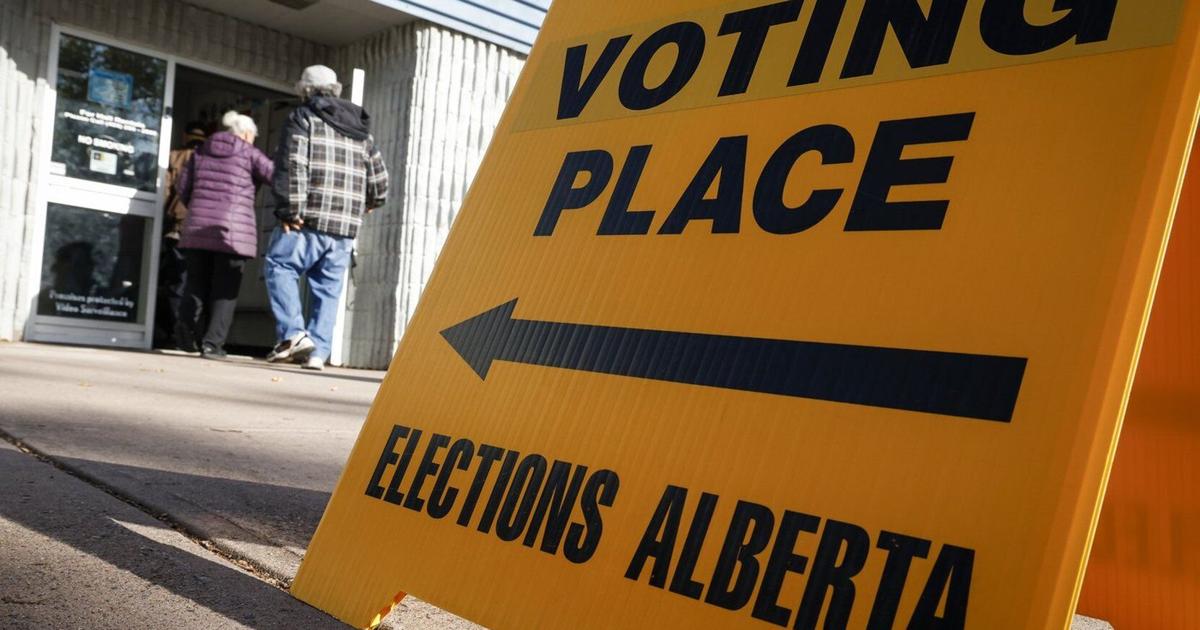
Getting out the Indigenous vote for the Alberta referendum

Read the original at The Globe and Mail ↗
Cite

Fiddler, W. (2026, October 16). Getting out the Indigenous vote for the Alberta referendum. The Globe and Mail. https://www.theglobeandmail.com/canada/article-getting-out-the-indigenous-vote-for-the-alberta-referendum/

Dated from the outlet's own feed. Check the original for its byline.

The Globe and Mail · collected 2026-10-16 · by Willow Fiddler

Quick Summary

First Nations communities in Northern Alberta face challenges with voter turnout for an upcoming referendum due to a shortage of Elections Alberta staff, resulting in limited access to advance polling stations. Chief Allan Adam of the Athabasca Chipewyan First Nation reported that 800 eligible voters from his community cannot vote early because of this issue. Grand Chief Trevor Mercredi from Treaty 8 Sovereign Nations highlighted that only five out of 22 First Nations have advance polling stations, and he accuses Elections Alberta of failing to meet its standards due to a lack of employees. Indigenous leaders plan to demand answers from Elections Alberta at a Friday news conference, emphasizing the importance of voting against what they see as an attack on their treaty rights.
Written locally by qwen2.5:14b on 2026-10-16, using this article's own text rather than the other coverage of the same event (that is the story summary below).

AI analysis runs on qwen2.5:14b, locally

Story summary

In response to an upcoming referendum in Alberta, Indigenous leaders are raising concerns about voter access, particularly for First Nations in northern parts of the province. Chief Allan Adam of the Athabasca Chipewyan First Nation noted that 800 eligible voters from his community did not have access to advanced polling stations due to a staff shortage at Elections Alberta. Initially scheduled to begin on Tuesday, these stations were only confirmed to be available by Saturday. Grand Chief Trevor Mercredi from the Treaty 8 Sovereign Nations highlighted that out of 18 out of 22 First Nations, only five communities had advance polling stations, with three having them initially and two added later. An Indigenous leaders' virtual news conference is planned for Friday to demand explanations from Elections Alberta regarding limited voting access amid high opposition among Indigenous groups towards the referendum.

Written for “Indigenous Vote Campaign Alberta Referendum” on 2026-10-16, grounded in this article and the 0 other(s) covering the same event.
Why this leaning score
The model judged this article politically coded and scored it -0.65, but all 4 of its quote(s) are attributed speech - words the article quotes from someone, not the article's own narration, so the score is not published.
Written under an earlier scoring contract, which gave a paragraph rather than checkable quotes. Re-analysing this article replaces it.
Leaning score withheld for article 83920: attributed speech only · logged 2026-10-16

Story

📰 Indigenous Vote Campaign Alberta Referendum
Politics · 1 article(s) covering the same event.

Compared with similar articles

This article reads unscored and hedges 6% of its claims. Each row says how that neighbour differs.
Global News
⚖️ leaning not scored 🔴 12% hedged 5 of 40 📰 publisher trust 64
“The articles discuss different aspects of the Alberta referendum: one focuses on political experts' opinions about the referendum's implications, while the other addresses logistical issues affecting Indigenous voters' access to advance polling.”
Global News
⚖️ leaning not scored 🔴 8% hedged 1 of 12 📰 publisher trust 64
“The articles discuss different aspects of the Alberta separation referendum: one is about the Prime Minister's address regarding the upcoming referendum, while the other focuses on Indigenous voter access issues for the same referendum.”
Toronto Star
⚖️ leaning not scored 🔴 0% hedged 0 of 2 📰 publisher trust 63
“The articles discuss different aspects of the Alberta referendum: one focuses on business leaders' silence, while the other addresses Indigenous voter turnout issues.”
The Globe and Mail
⚖️ leaning not scored 🔴 0% hedged 0 of 1 📰 publisher trust 52
“The articles discuss different aspects of the voting process for Alberta's referendum; Article A mentions advanced voting beginning on Tuesday, while Article B focuses on issues faced by Indigenous communities accessing advance polling stations later in the week.”
How this article was measured signals, leaning charts, publisher record, byline, topics and claims

Signals How these are calculated →

Claims extracted
31
sentences that state something as happening or true
Uncertain
6%
2 of 31 hedged ("reportedly", "may", "according to")
Leaning
withheld
no quote in the article backed the model's score
Publisher signals
52/100
The Globe and Mail's corrections and hedging, across everything collected from it. Not a measure of accuracy.
Outlets on this story
1
Politics
Same framing elsewhere
1
articles that frame the event the way this one does
Analyzed 2026-10-16 · how these are computed

How this is being covered How these are calculated →

Article leaning vs. publisher reliability
Source leaning vs. consistency

Publisher

The Globe and Mail · 753 article(s) · 27 correction(s) detected
Running correction rate · 27 correction(s)

Who wrote this

Willow Fiddler
4 article(s) here · 1 carrying a prediction
🔮 Some First Nations in Northern Alberta are concerned that their voter turnout could be a challenge in the referendum, an issue that’s been exacerbated by a lack of advance polling stations.
🔮 “This means treating that circle as a bridge between the criminal justice system and Indigenous models of justice, not an exercise in performative tokenism, which will only erode trust, set back reconciliation and exacerbate the challenges Indigenous people face with the criminal justice system,” the decision states.
🔮 The dispatcher told him they would send a car there and when the couple looked again, the men were gone.
🔮 Two Indigenous sisters who have maintained their innocence since they were convicted of murder more than 30 years ago will have their case reviewed after federal Justice Minister Sean Fraser ordered a new appeal.
Also by Willow Fiddler
Nothing else under this byline is closely related to this article, so these are simply their most recent.

Topics

Elections Alberta First Nations Globe Indigenous the Athabasca Chipewyan First Nation

Subjects

Elections Alberta ORG · 7× First Nations NORP · 4× Alberta GPE · 2× Crown ORG · 2× Globe ORG · 2× Indigenous NORP · 2× Mercredi PERSON · 2× Allan Adam PERSON · 1× Metis NORP · 1× the Athabasca Chipewyan First Nation ORG · 1×

Narrative

While campaign efforts include info graphics explaining what each of the 10 referendum questions mean and possible impacts, it’s the 10th question that has Indigenous people and communities thinking about what a separation referendum would mean for the treaty territories that cover most of the province.
framing: assertive · carried by 1 article(s) · first seen 2026-10-16
🔮 Some First Nations in Northern Alberta are concerned that their voter turnout could be a challenge in the referendum, an issue that’s been exacerbated by a lack of advance polling stations.
2026-10-16 · The Globe and Mail
Getting out the Indigenous vote for the Alberta referendum · assertive framing

Claims (31 extracted, 2 hedged)

Some First Nations in Northern Alberta are concerned that their voter turnout could be a challenge in the referendum, an issue that’s been exacerbated by a lack of advance polling stations. uncertain
that → exacerbate → stations
Chief Allan Adam of the Athabasca Chipewyan First Nation said 800 eligible voters from his community haven’t had access to the referendum’s advanced polling, which should have started on Tuesday, because of an Elections Alberta staff shortage. asserted
which → say → shortage
On Thursday, Elections Alberta told him that advanced polling would be available on Saturday. asserted
polling → tell → Saturday
“My people want to go out and vote, and there’s no place to vote right now. asserted
people → want → ?
So where’s our democracy when it comes to these things?” asserted
it → ’ → things
A Friday afternoon virtual news conference is planned in which Indigenous leaders will demand answers from Elections Alberta, including why First Nations and Metis in the province, who they say are the most opposed to the referendum, have the least access to voting. asserted
they → plan → voting
Grand Chief Trevor Mercredi from the Treaty 8 Sovereign Nations told The Globe and Mail that 18 out of 22 First Nations in the Northern Alberta treaty territory, are set up with polling stations. asserted
Nations → tell → stations
And that only five communities had advance polling stations, three of which are expected to be open for the entire five scheduled days. asserted
three → have → days
“It seems to me that Elections Alberta is failing to comply to their own standards due to lack of employees, and they’re actually asking our nations to facilitate that need. asserted
they → seem → need
And you know it’s not fair to our nations to have to move polling stations, to move them ahead, move them back. asserted
it → know → them
All this confusion that’s happening within our territory, on our nations is unacceptable. asserted
that → happen → nations
And Elections Alberta has to answer for that,” he said. asserted
he → have → that
Elections Alberta did not respond to The Globe’s request for comment. asserted
Alberta → respond → comment
However, The Globe obtained an e-mail sent on behalf of Elections Alberta to the affected First Nations, including Athabasca Chipewyan, late Thursday evening notifying them of the rescheduled advanced polling date for Saturday. asserted
Globe → obtain → Saturday
Mr. Mercredi calls the referendum an attack on his people and says voting against a separatist agenda will protect treaty rights that are being threatened in the referendum. asserted
that → call → referendum
“When we come together, we’re very strong asserted
we → come → ?
We have large numbers, and we could have impact on this referendum,” he said in a video message on social media. uncertain
he → have → media
While campaign efforts include info graphics explaining what each of the 10 referendum questions mean and possible impacts, it’s the 10th question that has Indigenous people and communities thinking about what a separation referendum would mean for the treaty territories that cover most of the province. asserted
that → include → province
Some are choosing not to vote because the treaties that cover most of the province were signed with the Crown in the late 1800s before Alberta became a province, tabling the proposition of secession as illegitimate. asserted
Alberta → choose → secession
“It is understandable why many of our people have traditionally chosen not to vote. asserted
many → choose → people
Provincial elections and referendums are not our systems of governance, and our treaties do not depend on a provincial ballot,” Mr. Mercredi said. asserted
Mercredi → depend → ballot
“Voting does not take away our rights. asserted
Voting → take → rights
First Nations are voting against separation to ensure treaty rights are protected,” he said. asserted
he → vote → separation
Doreen Cardinal-Somers is a Haudenosaunee and Cree treaty adviser living in Fort Chipewyan, part of Treaty 8 territory. asserted
Somers → live → territory
She won’t be participating in the referendum vote because she says the treaty relationship with the Crown is not up for debate. asserted
relationship → participate → debate
“The fact that this province has made it easy to put a question on a ballot that will, or they’re presupposing, will determine what the treaty relationship is going forward is so offensive to me on so many levels. asserted
relationship → make → levels
Like our treaties are not provincial policy; they are solemn agreements that were entered into before Alberta even existed, and I think that distinction is really important,” she said. asserted
she → enter → ?
Tania Cameron, who is running a “Rock the Vote” campaign for the Treaty 8 nations, said the point of voting is to make a political statement that a separation will never happen. asserted
separation → run → statement
“I think everyone is of the consensus that you can’t undo treaty by separating,” Ms. Cameron said. asserted
Cameron → think → treaty
She’d like to see 25 per cent more voters turnout in this election than the last federal election when 11,500 Indigenous people voted in Alberta. asserted
people → like → Alberta
Ms. Cameron said a successful “Rock the Vote” campaign would see a 75-per-cent voter turnout for a total of 14,400. asserted
campaign → say → 14,400

💬Give feedback
🕘History 🎫Support