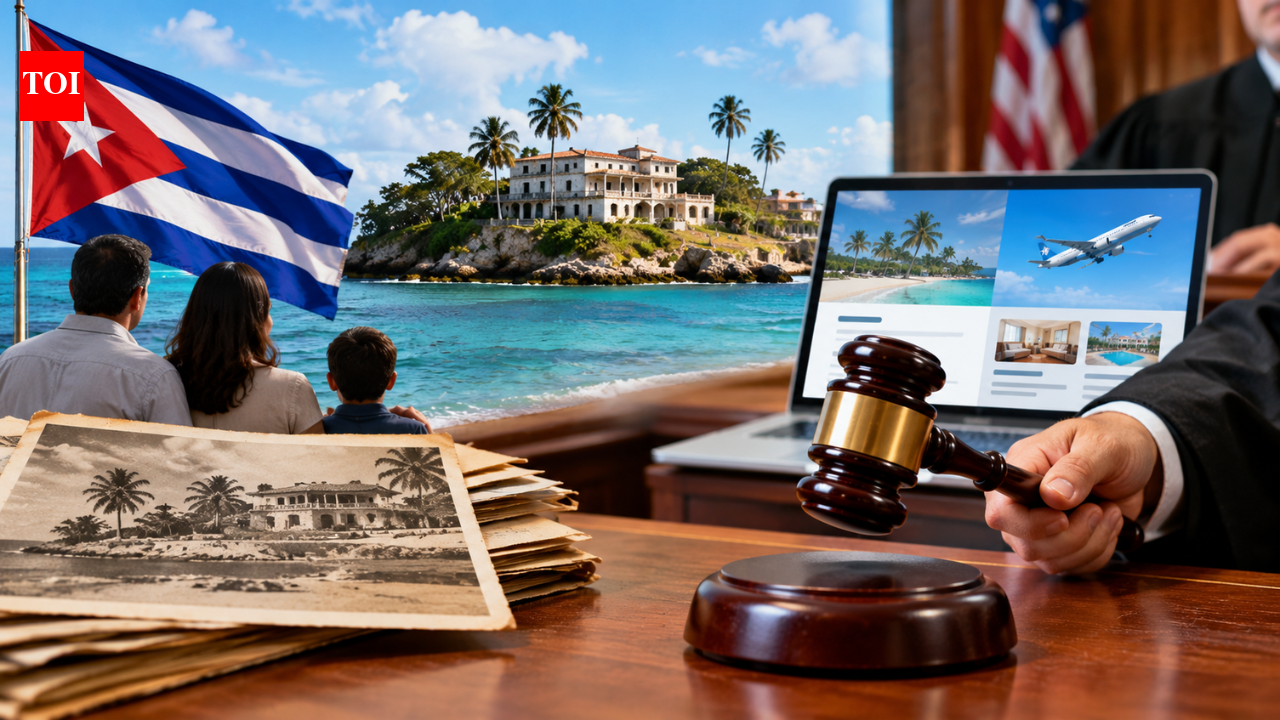
The dispute over a Cuban island seized after the 1959 revolution has reached an unusual point in American legal history.
asserted
dispute → seize → history
As reported by Transnational Litigation Blog (TLB), in April 2025, a jury in Florida found four corporate defendants associated with Expedia liable under a US law dealing with property confiscated by the Cuban government.
asserted
defendants → report → government
The award, reported at approximately $29.8 million per defendant, totaling $119.4 million, centred on a claim brought by Cuban-American businessman Mario Echevarría, whose family said it had lost its ownership rights to the island more than six decades earlier.
uncertain
it → report → island
A property dispute rooted in Cuba's revolutionary past
The Cuban Revolution brought sweeping changes to property ownership, with the government confiscating assets claimed by private owners.
asserted
government → root → owners
Some former owners and their descendants later pursued claims in US courts under Title III of the Helms-Burton Act, enacted in 1996.
uncertain
owners → pursue → 1996
The provision was activated for private lawsuits in 2019, allowing eligible claimants to seek damages over commercial activity involving property allegedly confiscated by Cuba.
uncertain
claimants → activate → Cuba
Echevarría maintained that his family had owned an island off Cuba's coast before the government took control of it.
asserted
government → maintain → it
The property later became associated with tourism, with hotels operating on land that he alleged had been confiscated.
asserted
he → associate → land
His case was not simply about whether the family had once owned the island.
asserted
family → own → island
It also asked whether companies facilitating hotel reservations could be held responsible for making money from property that had allegedly been taken unlawfully.
uncertain
that → ask → property
The US law that reopened old confiscation claims
Congress passed the Cuban Liberty and Democratic Solidarity Act in 1996 (Helms-Burton Act).
uncertain
Congress → reopen → Act
Its Title III provision created a route for eligible US nationals to seek compensation from people or companies that traffic in property confiscated by the Cuban government.
asserted
that → create → government
For years, however, presidents suspended the provision allowing private lawsuits.
asserted
presidents → suspend → lawsuits
That changed in 2019, when President Donald Trump ended the suspension, opening the door to claims that had previously been difficult or impossible to pursue under Title III.
uncertain
that → change → Title
Why Expedia and its associated companies faced trial
asserted
Expedia → associate → trial
Echevarría brought his case against four corporate defendants associated with Expedia.
asserted
Echevarría → bring → Expedia
Their involvement in online travel services placed them within the chain of commercial activity connected to the hotels, although their individual roles were not identical.
asserted
roles → place → hotels
Before trial, the defendants sought summary judgment on several grounds.
asserted
defendants → seek → grounds
They challenged Echevarría's claim to the property, disputed whether the land had been confiscated in a way that supported the lawsuit and argued that their booking services did not amount to trafficking.
uncertain
services → challenge → trafficking
They also contested the extent to which damages could account for the hotels and other improvements rather than the underlying land alone.
uncertain
damages → contest → hotels
A further issue concerned the distinction between Expedia Group, Inc., the parent company, and the operating businesses that provided travel services.
asserted
that → concern → services
The parent company argued that it should not automatically be held responsible for the actions of its subsidiaries.
asserted
it → argue → subsidiaries
, District Judge Federico Moreno concluded that important factual disputes remained unresolved.
asserted
disputes → conclude → ?
Questions about the family's ownership, the property's legal status under Cuban law and the relationship between the corporate entities could not simply be settled at that stage.
uncertain
Questions → settle → stage
The court also considered allegations that Expedia Group had signed lodging contracts with hotels and worked with Cuba's Ministry of Tourism to promote travel.
asserted
Group → consider → travel
Those activities raised questions about whether the parent company might have been directly involved in the relevant commercial arrangements, or whether the relationship between the businesses could support liability through an agency theory.
uncertain
relationship → raise → theory
What the $29.8 million verdict established
In April 2025, the jury found in Echevarría's favour against the four corporate defendants.
asserted
jury → establish → defendants
The verdict was widely described as the first successful jury verdict under Title III of the Helms-Burton Act, giving the case significance beyond the immediate dispute over the island.
asserted
verdict → describe → island
The result indicated that the jury accepted the plaintiff's case sufficiently to find the defendants liable under the statute.
asserted
defendants → indicate → statute
The pre-trial ruling had identified several disputed questions, including whether the companies knowingly benefited from activity involving confiscated property and whether their conduct continued after they became aware of the lawsuit.
asserted
they → identify → lawsuit
However, the verdict should not be taken to mean that every legal argument raised before trial was resolved in the same way.
asserted
argument → take → way
The earlier ruling identified alternative routes to liability and factual questions for the jury.
asserted
ruling → identify → jury
The reported award of approximately $29.8 million also illustrates the potential financial exposure associated with Title III claims.
uncertain
award → report → claims
The questions that remain after the jury's decision
A verdict does not necessarily bring every dispute to an end.
asserted
verdict → remain → end
The legal consequences of the ruling depend on the subsequent procedural history, including any post-trial motions, challenges to the judgment or appeal.
asserted
consequences → depend → judgment
The April 2025 decision established a significant result for Echevarría, but it should not be treated as proof that every possible avenue of challenge has been exhausted.
asserted
avenue → establish → challenge
The underlying ownership questions also help explain why these cases can be difficult to resolve.
asserted
cases → underlie → ?
The property was allegedly taken more than 60 years before the jury considered the dispute.
uncertain
jury → take → dispute
Establishing who owned it at the time, how ownership passed through inheritance and what legal effect the confiscation had requires evidence and an examination of Cuban law.
asserted
confiscation → establish → law
The evidence that led a judge to overturn the Expedia Cuba verdict
As reported by Miami Herald, the case took a decisive turn in September 2025, when a federal judge set aside the jury's verdict against Expedia-related companies.
asserted
judge → lead → companies
…and 7 more, not listed.
 The Aporia