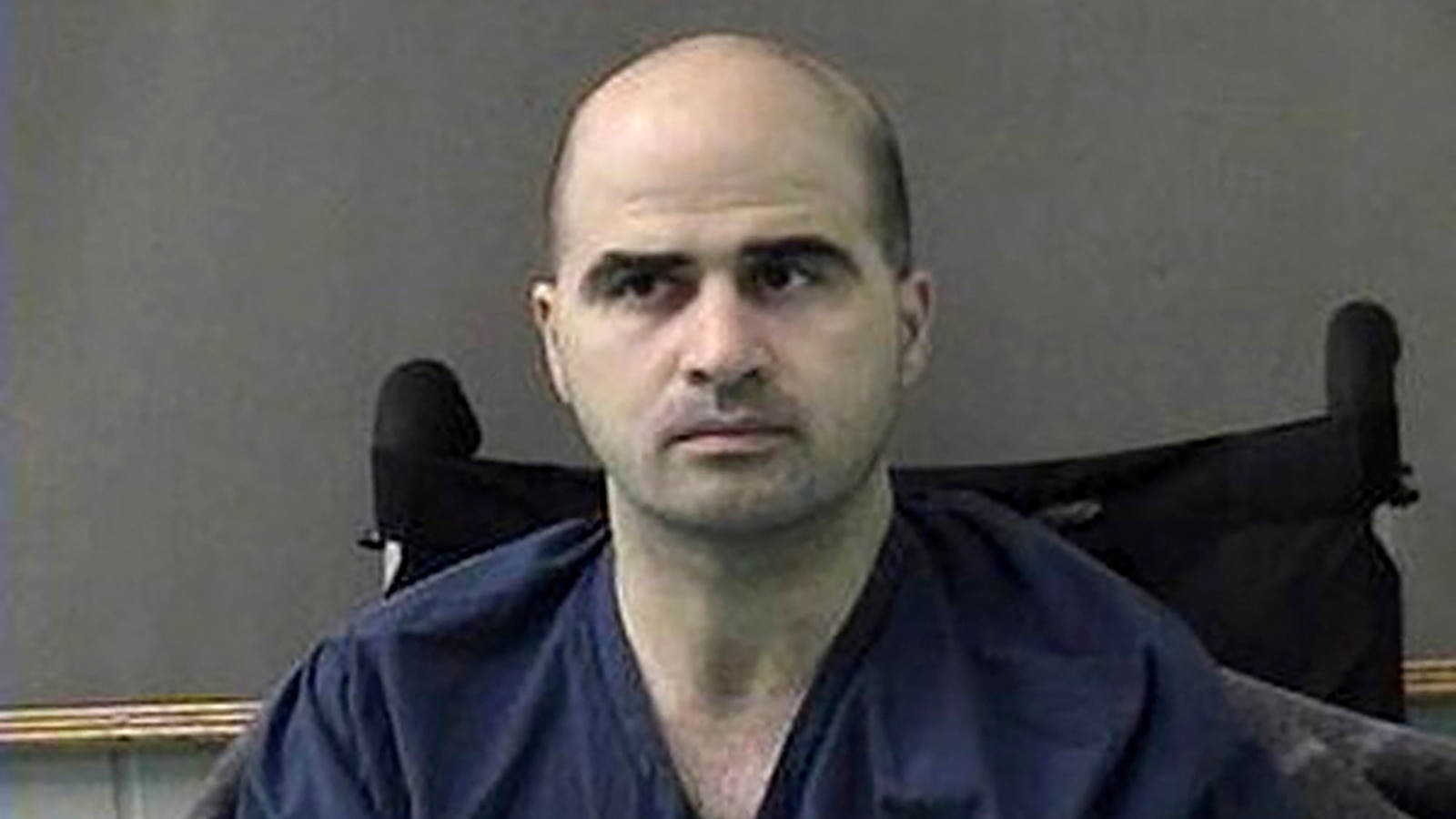
Earlier this month, Acting Secretary of the Army Adam R. Telle signed an order scheduling the execution of Nidal Hasan, a former Army major who was convicted of killing 13 people in a 2009 shooting at Fort Hood, Texas.
asserted
who → sign → Hood
Two days later, self-styled War Secretary Pete Hegseth made a startling announcement.
asserted
Hegseth → style → announcement
“We’ll make sure that people are able to watch it, that it’s public,” Hegseth told the conservative Real America’s Voice News network, as the interviewer raised his eyebrows.
asserted
interviewer → make → eyebrows
The Department of War’s official “Rapid Response” Twitter account promptly promoted the clip.
asserted
account → promote → clip
Hegseth’s plan apparently won’t come to fruition.
asserted
plan → come → fruition
Amid outcry about the barbarity and optics of streaming the planned execution by firing squad — scheduled for December 3 at Fort Hood — President Donald Trump on Thursday called off the broadcast.
asserted
Trump → stream → broadcast
“I think streaming the execution for all to see might have been a strong deterrent for the World to witness how America deals with Terrorists and SCUM like Hasan but, many very good and well meaning people would rather not watch him die, through streaming, or through any other visual device,” Trump posted on his social media website.
uncertain
Trump → think → website
Some news outlets, such as The New York Times, framed the planned killing as an aberration, claiming that “such a broadcast has little precedent, and releasing video of executions is most often associated with extremist militant groups like the Islamic State.”
asserted
releasing → frame → State
This narrative, however, overlooks a forgotten American cultural history in which filmed executions turned government killings into spectacle.
asserted
executions → overlook → spectacle
The practice of filming executions in America is effectively as old as cinema itself.
asserted
practice → film → cinema
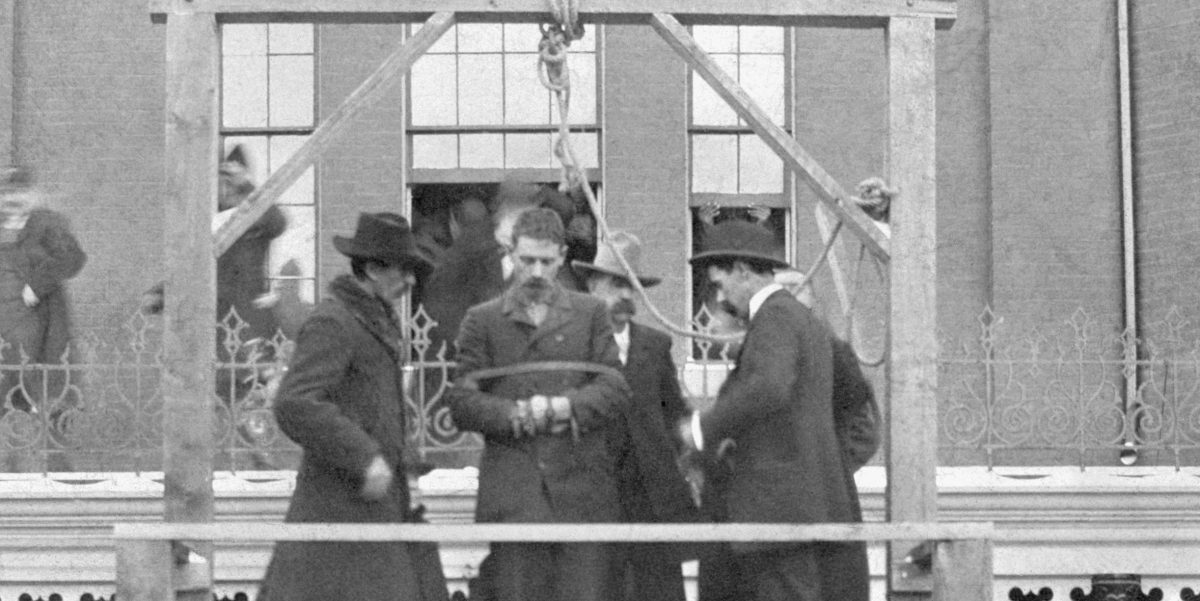
In 1897, a few years after the first motion pictures began to be exhibited in the United States, a Missouri farmhand named William Carr was convicted of murdering his daughter and sentenced to death by hanging.
asserted
farmhand → begin → hanging
Filmmaker Frederick Guth, of the American Phonographic Company, who had previously recorded an interview with Carr in prison, opted to film the execution as well — marking a grim milestone as history’s first filmed execution.
asserted
who → record → execution
The resulting motion picture, “The Hanging of William Carr” (1897), was first exhibited in Kansas City and St. Louis, then screened around the country.
asserted
picture → result → country
The following year saw the nationwide premiere of “An Execution by Hanging,” otherwise known as “Execution of Negro at County Jail, Jacksonville, Fla” (1898).
asserted
year → see → Jail
It showed the hanging of Edward Heinson, who was convicted and sentenced to death for criminal assault of a 14-year-old white girl.
asserted
who → show → girl
Illustrating racist views that have long shaped the American criminal legal system and the death penalty, the catalog of the film’s production company, American Mutoscope and Biograph, teased the film as depicting “a very ghastly, but very interesting subject.”
asserted
catalog → illustrate → subject
As these early films were distributed across the nation, they were met with interest and outcry.
asserted
they → distribute → interest
The journal Phonoscope at the time described the filming of Carr’s execution as “revolting,” while the Cleveland Leader cautioned that the film may have “brutalizing effects” on viewers.
uncertain
film → describe → viewers
Some newspapers even claimed that during the hanging of Carr, Guth had hired people to storm the gallows to create added pandemonium.
asserted
Guth → claim → pandemonium
Soon, the burgeoning cinema industry came to adopt a different practice for the growing number of films about executions.
asserted
industry → burgeon → executions
Filmmakers started blending reality with fiction, by combining clips recorded at actual execution locations with fictionalized reenactments of the killings themselves.
asserted
Filmmakers → start → killings
For instance, after Thomas Edison’s Edison Studios failed to gain permission from the authorities to film the actual execution by electrocution of President William McKinley’s assassin, filmmakers combined exterior location shots on the day of the killing with footage of a mannequin to depict the actual death in “Execution of Czolgosz with Panorama of Auburn Prison” (1901).
asserted
filmmakers → fail → Prison
Edison was no stranger to the format: He had previously produced numerous historical execution reenactments like “The Execution of Mary, Queen of Scots” (1895) and “The Execution of Joan of Arc” (1895).
asserted
He → produce → Arc
His studio also dabbled in zoosadistic entertainment, with films showcasing actual animal deaths, such as “Electrocuting an Elephant” (1903), which presented an elephant named Topsy being put to death for killing a spectator who had burnt her trunk with a cigar.
asserted
who → dabble → cigar
In 1905, American Mutoscope reused the title of its earlier film, “An Execution by Hanging,” this time depicting a reenactment of the hanging of Mary Rogers, who was convicted of killing her husband (alternate title “Execution of a Murderess”).
asserted
who → reuse → Murderess
Along with what were apparently genuine location shots, American Mutoscope incorporated reenactments of the moment of death.
asserted
Mutoscope → incorporate → death
The film was released as part of a trilogy, including “Reading the Death Sentence” and “Reprieve from the Scaffold,” with the third installment presenting an alternate fictional ending in which Rogers was not killed.
asserted
Rogers → release → which
Other films around the turn of the century used a similar technique to conflate reality and fiction, with film catalogs accentuating the lurid nature of these pictures.
asserted
catalogs → use → pictures
The description of “Beheading a Chinese Prisoner” (1900) in the Lubin production company catalog reads: “The executioner displays the head to the spectators to serve as a warning for evil doers.
asserted
executioner → behead → doers
Lubin had also earlier produced another execution reenactment, “Execution of the Spanish Spy” (1898).
asserted
Lubin → produce → Spy
Many films focused on executions carried out by mobs rather than the government.
asserted
films → focus → mobs
The motion picture camera, of course, wasn’t the only new technology at that time shifting the public’s perception of execution.
asserted
camera → shift → execution
When William Kemmler was killed in the first electric chair execution in New York in 1890, the American media heralded a “new era in capital punishment.”
asserted
media → kill → punishment
Witnessing the new death technology, even in reenactment form, would prove to be a fascination for filmgoers over the years.
asserted
Witnessing → witness → years
“Death in the Electric Chair at Sing Sing” (1902), the final installment in American Mutoscope’s five-part “A Career of Crime” series, is described in the company’s 1902 catalog as “an accurate and thrilling representation of an electric execution at Sing Sing.”
asserted
Death → describe → Sing
As the novelty of new execution methods wore off, their cinematic popularity likewise began to taper, though film promoters occasionally used the electric chair as a prop outside the cinema to attract moviegoers in the 1930s.
asserted
promoters → wear → 1930s
At the same time, as the practice of public hangings faded in the U.S. and executions moved indoors, authorities began restricting access to death chambers to select groups of family members, victims’ relations, official personnel, and chosen media.
asserted
authorities → fade → members
It’s a practice that continues to this day, preventing actual recordings of executions from reaching the public.
asserted
that → ’ → public
With the advent of grindhouse exploitation cinema in the 1970s and the home video boom of the 1980s, however, the American entertainment industry once again found a way to court audiences by depicting executions.
asserted
industry → find → executions
Taking up the mantle of films that blended real footage and reenacted execution scenes were movies like “The Electric Chair” (1976), whose theatrical promotional materials prominently featured the titular chair and touted that “scenes in this picture were filmed in an actual death house.
asserted
scenes → take → house
…and 47 more, not listed.
 The Aporia