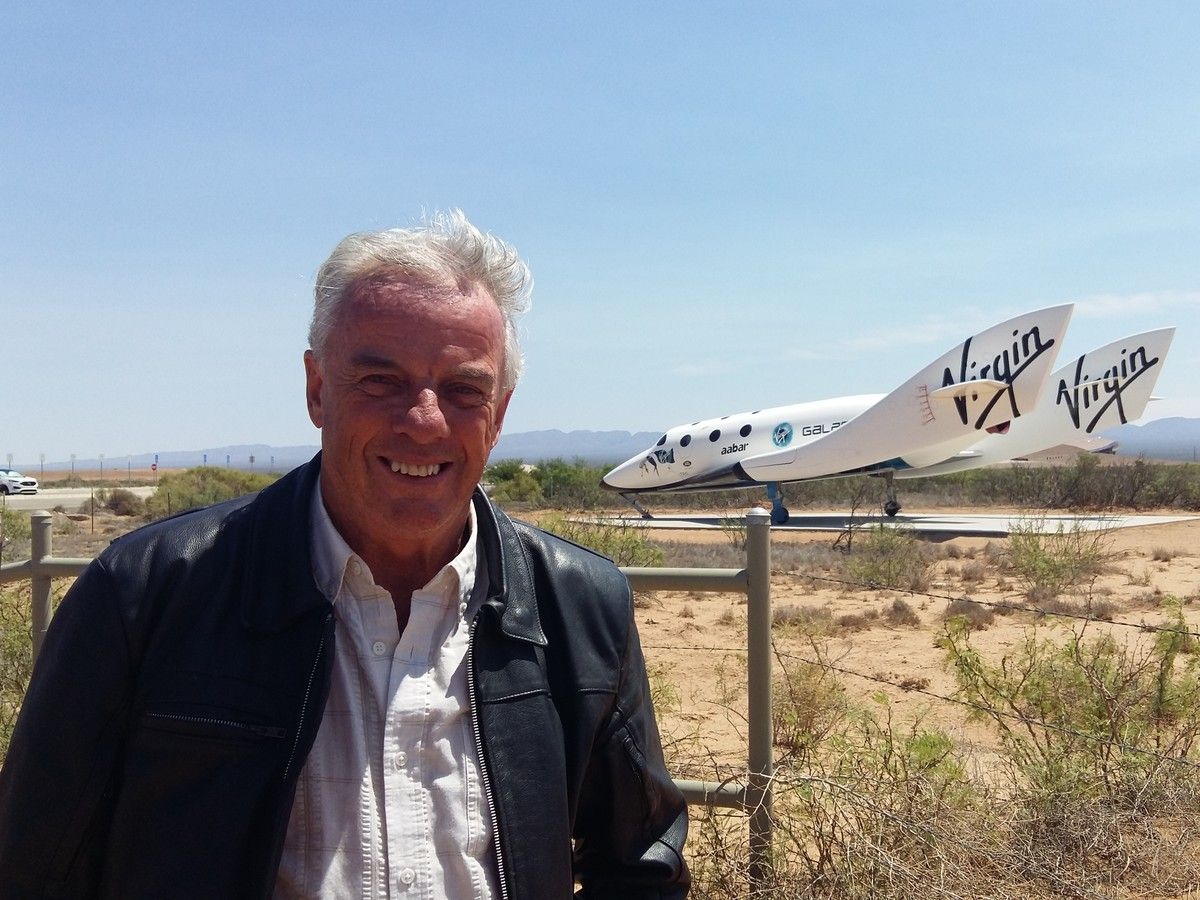
How Bob McDonald goes where no Canadian has gone before

Read the original at National Post ↗
Cite

Gilbert, C. (2026, October 15). How Bob McDonald goes where no Canadian has gone before. National Post. https://nationalpost.com/entertainment/how-bob-mcdonald-goes-where-no-canadian-has-gone-before

Dated from the outlet's own feed. Check the original for its byline.

National Post · collected 2026-10-15 · by Craig Gilbert

Quick Summary

Bob McDonald, a long-time CBC science correspondent, has been honored with an asteroid named Bobmcdonald in his honor, alongside numerous other awards such as honorary degrees and medals from prestigious organizations like NSERC and The Royal Society of Canada. Discovered on December 12, 2006 by David Balam using the Canada-France-Hawaii telescope, the asteroid is a key to understanding planetary formation and evolution. McDonald was also named an Officer in the Order of Canada in 2011 for his contributions to science communication, despite having no formal university education. He began his career at the Ontario Science Centre in the 1970s and has hosted CBC Radio's Quirks & Quarks since 1978, inspiring many Canadians with his passion for science.
Written locally by qwen2.5:14b on 2026-10-15, using this article's own text rather than the other coverage of the same event (that is the story summary below).

AI analysis runs on qwen2.5:14b, locally

Story summary

Bob McDonald, a longtime CBC science correspondent, has an asteroid named after him: 2006 XN67, now officially called Bobmcdonald. The asteroid was discovered by David Balam on December 12, 2006, using the Canada-France-Hawaii telescope in Hawaii. McDonald is widely recognized for his contributions to science education and has received numerous awards including honorary degrees and medals from NSERC and The Royal Society of Canada.

McDonald expressed his surprise at receiving this honor, stating it was a childhood dream come true, even if he never went into space himself. Bobmcdonald is part of the main belt asteroids between Mars and Jupiter, which are crucial to understanding planetary formation in our Solar System. This recognition underscores McDonald’s significant impact on Canadian science education and public engagement with scientific knowledge.

Written for “Bob McDonald's New Record” on 2026-10-15, grounded in this article and the 0 other(s) covering the same event.
Why this leaning score
This article does not take a side on a contested political question, so it has no leaning score. That is an answer rather than a gap: a match report or a rescue can be warmly or critically written without being left or right, and scoring it anyway is how approval of a subject gets recorded as a political position.
No political leaning scored for article 82818 · logged 2026-10-15

Story

📰 Bob McDonald's New Record
Science · 1 article(s) covering the same event.

Compared with similar articles

Nothing to compare against. No article is close enough to this one for the pipeline to have linked or judged the pair.
How this article was measured signals, leaning charts, publisher record, byline, topics and claims

Signals How these are calculated →

Claims extracted
20
sentences that state something as happening or true
Uncertain
20%
4 of 20 hedged ("reportedly", "may", "according to")
Leaning
not political
takes no side on a contested political question
Publisher signals
60/100
National Post's corrections and hedging, across everything collected from it. Not a measure of accuracy.
Outlets on this story
1
Science
Same framing elsewhere
1
articles that frame the event the way this one does
Analyzed 2026-10-15 · how these are computed

How this is being covered How these are calculated →

Article leaning vs. publisher reliability
Source leaning vs. consistency

Publisher

National Post · 910 article(s) · 2 correction(s) detected
Running correction rate · 2 correction(s)

Who wrote this

Craig Gilbert
4 article(s) here · 1 carrying a prediction
🔮 In his first episode, McDonald interviewed researchers about topics as disparate as the Hubble Space Telescope’s challenges, and whether dental equipment could spread AIDS.
2026-10-15 · assertive framing · How Bob McDonald goes where no Canadian has gone before
🔮 Buying through us may earn us a commission, which supports our work.
🔮 The platform teased a new Buy With GooglePay feature that will allow viewers to make purchases directly on their connected televisions with a pair of button pushes.
🔮 Buying through us may earn us a commission, which supports our work.
2026-08-24 · assertive framing · Hickory Sticks present a truly Canadian snacking choice
Also by Craig Gilbert
Nothing else under this byline is closely related to this article, so these are simply their most recent.

Topics

CBC CBC Radio Canadian Canadians Hawaii

Subjects

McDonald PERSON · 5× CBC ORG · 2× CBC Radio ORG · 2× Canadians NORP · 2× Hawaii GPE · 2× Bob McDonald PERSON · 1× Canadian NORP · 1× NSERC ORG · 1× The Royal Society of Canada ORG · 1× Victoria GPE · 1×

Narrative

Royal Astronomical Society of Canada metadata indicate the asteroid is designated 2006 XN67, a reference to its discovery on Dec. 12, 2006 by National Research Council observer David Balam using the Canada-France-Hawaii telescope in the observatory constellation high above the clouds on Maunakea on Hawaii’s Big Island.
framing: assertive · carried by 1 article(s) · first seen 2026-10-15
🔮 In his first episode, McDonald interviewed researchers about topics as disparate as the Hubble Space Telescope’s challenges, and whether dental equipment could spread AIDS.
2026-10-15 · National Post
How Bob McDonald goes where no Canadian has gone before · assertive framing

Claims (20 extracted, 4 hedged)

There’s nothing quirky about it, if there’s a man who deserves to wear the Order of Canada, it’s Bob McDonald. asserted
it → ’ → Canada
How else do you come to possess 13 honorary degrees, medals from NSERC and The Royal Society of Canada, and a Gemini? asserted
you → come → Canada
How, in the name of the Sudbury Neutrino Observatory, do you get an honest to goodness space-borne asteroid named after you? asserted
you → get → you
A good Victoria boy, McDonald was sailing around Vancouver Island when he got the news he was also somewhere between Mars and Jupiter, as the story goes. asserted
story → sail → Mars
“I almost fell overboard,” he told the national broadcaster in 2014. asserted
he → fall → 2014
“It’s huge for me. asserted
It → ’ → me
As a little kid, I dreamt about going into space, being out there. asserted
I → dream → space
That hasn’t quite happened yet, so having an object named after me is almost as good.” asserted
object → happen → me
As a main belt asteroid, Bobmcdonald is a “leftover planetary building block that never accreted enough material to become” a planet, according to Harvard University (which some pretty smart Canadians have attended). uncertain
Canadians → accrete → which
“They are therefore keys to understanding how the Solar System formed and evolved.” asserted
System → understand → ?
Royal Astronomical Society of Canada metadata indicate the asteroid is designated 2006 XN67, a reference to its discovery on Dec. 12, 2006 by National Research Council observer David Balam using the Canada-France-Hawaii telescope in the observatory constellation high above the clouds on Maunakea on Hawaii’s Big Island. asserted
asteroid → indicate → Island
McDonald was named an Officer in the Order of Canada in 2011. asserted
McDonald → name → 2011
The Governor General’s website notes he became one of the country’s most respected science journalists despite having no formal university education (a baker’s dozen honorary degrees don’t count — nor do McDonald’s brace of honorary college diplomas). asserted
brace → note → diplomas
Instead, McDonald made his name as a science communicator starting at the Ontario Science Centre in the 1970s, according to a piece the CBC published in 2022 on the occasion of his 30th anniversary with the also-award-winning CBC Radio science mainstay Quirks & Quarks. uncertain
CBC → make → mainstay
He was first invited to appear on CBC Radio during a climate-themed series on Ideas called Running Hot and Cold in 1978. asserted
He → invite → 1978
Quirks & Quarks was driven by breaking science news each week. asserted
Quirks → drive → news
In his first episode, McDonald interviewed researchers about topics as disparate as the Hubble Space Telescope’s challenges, and whether dental equipment could spread AIDS. uncertain
equipment → interview → AIDS
“After three decades of hosting Quirks, I still enjoy going to work every week,” he said in a column, also from 2022. asserted
he → host → 2022
“The subject matter is always new, interesting and it keeps me abreast of where we are in our understanding of the fundamental process that governs the universe, and therefore our lives. asserted
that → keep → universe
Not to mention, inspiring generations of Canadians to look up and imagine where they might make their own mark among the stars. uncertain
they → mention → stars

💬Give feedback
🕘History 🎫Support