Farmer's discovery in Egypt leads to pieces of statues for ancient king

Read the original at CBS News ↗
Cite

Shawkat, A. (2026, October 15). Farmer's discovery in Egypt leads to pieces of statues for ancient king. CBS News. https://www.cbsnews.com/news/egypt-farmer-stone-statues-ancient-king/

Dated from the outlet's own feed. Check the original for its byline.

CBS News · collected 2026-10-15 · by Ahmed Shawkat

Quick Summary

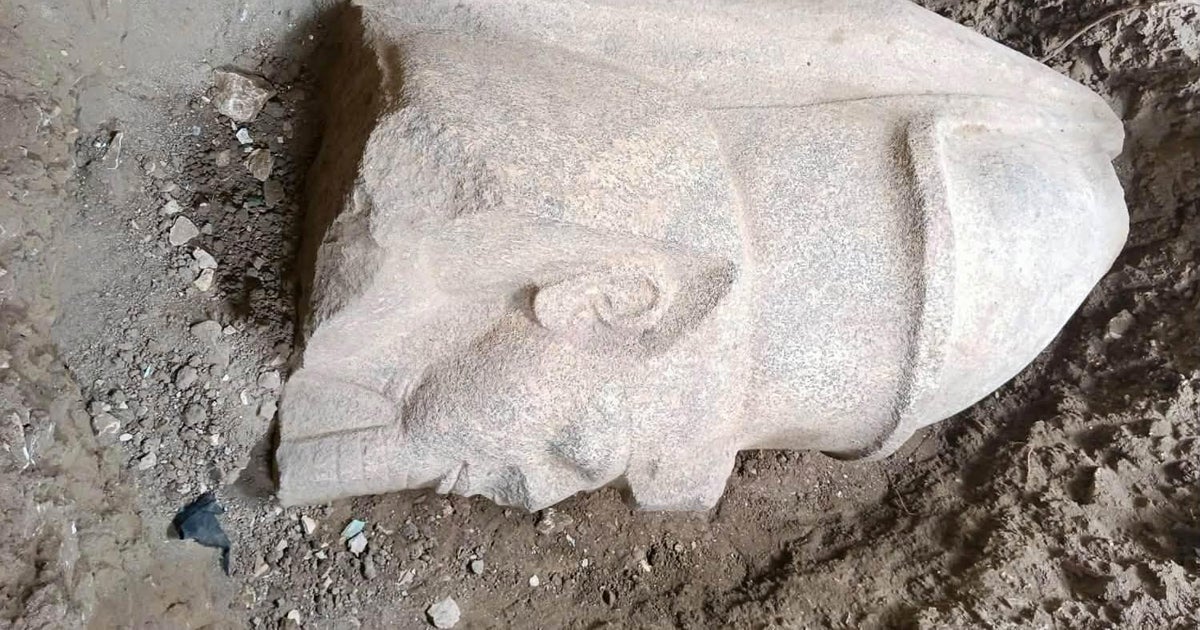
Khaled al-Shahat, an Egyptian farmer, found a pink granite block while working his land in Al Gharbia Governorate that led archaeologists to uncover pieces of statues belonging to Ramses II, who ruled from 1279 B.C. to 1213 B.C. The discovery includes a colossal head measuring about 5.25 feet high and another statue fragment approximately 7.87 feet long. Minister Sherif Fathy honored al-Shahat with certificates of appreciation and a trip to perform the Umrah pilgrimage in recognition of his honesty in reporting the find.
Written locally by qwen2.5:14b on 2026-10-15, using this article's own text rather than the other coverage of the same event (that is the story summary below).

AI analysis runs on qwen2.5:14b, locally

Story summary

Egyptian farmer Khaled al-Shahat discovered an ancient pink granite block on his land, leading archaeologists to unearth pieces of statues from Ramses II, who ruled Egypt from 1279 B.C. to 1213 B.C. The stone measures approximately 1.3 meters long (around 4.26 feet) and bears two royal titles: "Nesw-Bity" (King of Upper and Lower Egypt) and "Sa-Ra" (Son of Ra, the sun god). Near the block, a colossal head of Ramses II was found, measuring around 1.6 meters high and depicting him wearing the double crown symbolizing the unification of Upper and Lower Egypt. On Wednesday, Minister of Tourism and Antiquities Sherif Fathy visited al-Shahat's hometown in Al Gharbia Governorate to honor him for his discovery.

Written for “Ancient Statues Discovered In Egypt” on 2026-10-15, grounded in this article and the 0 other(s) covering the same event.

Story

📰 Ancient Statues Discovered In Egypt
World · 1 article(s) covering the same event.

Compared with similar articles

Nothing to compare against. No article is close enough to this one for the pipeline to have linked or judged the pair.
How this article was measured signals, leaning charts, publisher record, byline, topics and claims

Signals How these are calculated →

Claims extracted
16
sentences that state something as happening or true
Uncertain
12%
2 of 16 hedged ("reportedly", "may", "according to")
Leaning
not political
takes no side on a contested political question
Publisher signals
66/100
CBS News's corrections and hedging, across everything collected from it. Not a measure of accuracy.
Outlets on this story
1
World
Same framing elsewhere
1
articles that frame the event the way this one does
Analyzed 2026-10-15 · how these are computed

How this is being covered How these are calculated →

Article leaning vs. publisher reliability
Source leaning vs. consistency

Publisher

CBS News · 2942 article(s) · 6 correction(s) detected
Running correction rate · 6 correction(s)

Who wrote this

Ahmed Shawkat
3 article(s) here · 1 carrying a prediction
🔮 "They told me this might change the history of the area."
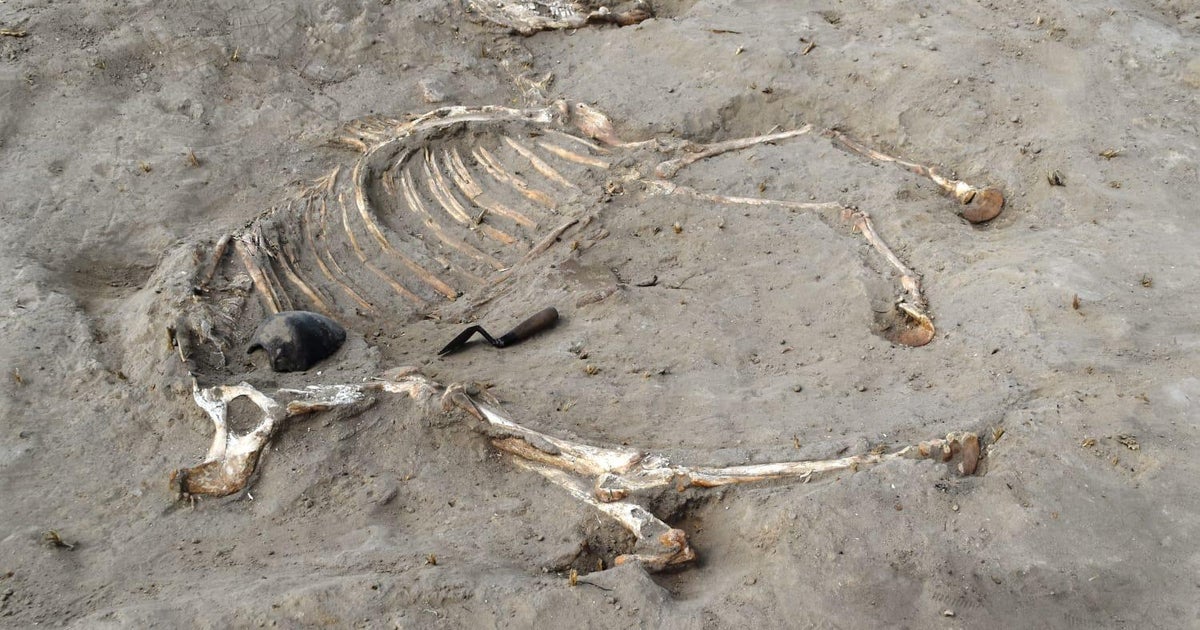
🔮 Mohamed Abdel-Badie, head of the Egyptian Antiquities Sector, said preliminary studies show it belonged to a medium-sized breed characterized by speed and agility, believed to have been used for military activities that could have included pulling war chariots in the New Kingdom.
Also by Ahmed Shawkat
Nothing else under this byline is closely related to this article, so these are simply their most recent.

Topics

CBS News Cairo Egypt Egyptian the Ministry of Tourism and Antiquities

Subjects

Ramses II PERSON · 3× al-Shahat PERSON · 3× CBS News ORG · 2× Egypt GPE · 2× Cairo GPE · 1× Egyptian NORP · 1× Khaled al-Shahat PERSON · 1× Sa-Ra PERSON · 1× Sherif Fathy PERSON · 1× the Ministry of Tourism and Antiquities ORG · 1×

Narrative

The stone turned out to be an ancient pink granite block measuring approximately 1.3 meters long (around 4.26 feet) and bearing two royal titles of Ramses II: "Nesw-Bity" (King of Upper and Lower Egypt) and "Sa-Ra" (Son of Ra, the sun god), the Ministry of Tourism and Antiquities said.
framing: assertive · carried by 1 article(s) · first seen 2026-10-15
🔮 "They told me this might change the history of the area."

Claims (16 extracted, 2 hedged)

Egyptian farmer Khaled al-Shahat was working on his land when he came across something he hadn't seen before. asserted
he → work → something
The unusual pink rock led archaeologists to unearth pieces of statues for , who ruled Egypt from 1279 B.C. to 1213 B.C."I was working on my land on Friday when I came across an unusual stone," al-Shahat told CBS News. " asserted
Shahat → lead → News
I informed the relevant authorities, and they came to examine it." asserted
they → inform → it
The stone turned out to be an ancient pink granite block measuring approximately 1.3 meters long (around 4.26 feet) and bearing two royal titles of Ramses II: "Nesw-Bity" (King of Upper and Lower Egypt) and "Sa-Ra" (Son of Ra, the sun god), the Ministry of Tourism and Antiquities said. asserted
Ministry → turn → Tourism
Archaeologists began excavations, and near the block they uncovered a colossal head of a statue of Ramses II, measuring approximately 1.6 meters high (around 5.25 feet). asserted
they → begin → high
The king is depicted wearing the double crown, a symbol of the unification of Upper and Lower Egypt around 3100 B.C. On Wednesday, Minister of Tourism and Antiquities Sherif Fathy visited al-Shahat's hometown in Al Gharbia Governorate in the Nile Delta to honor him. asserted
Fathy → depict → him
The minister presented al-Shahat and his wife with certificates of appreciation, and awarded them a trip to Saudi Arabia to perform the Umrah pilgrimage in recognition of his honesty and responsible conduct for not keeping the discovery to himself. " asserted
minister → present → himself
The minister insisted that the citizen be honored in his village, on his own land, and among his family and fellow villagers, in recognition of his honesty, awareness, and sense of responsibility," the ministry said in a statement. asserted
ministry → insist → statement
Archaeologists also unearthed the remains of the upper part of the statue's back pillar, bearing Ramses II's formal royal title, or Horus name: Hor Ka Nakht Mery Maat. asserted
Archaeologists → unearth → title
The size of the head suggests the complete statue was about 28 feet tall, according to archaeologists. uncertain
statue → suggest → archaeologists
"I was surprised and happy when they discovered more antiquities," al-Shahat told CBS News. asserted
Shahat → discover → News
"They told me this might change the history of the area." uncertain
this → tell → area
Most of a second royal statue, also believed to depict Ramses II, was uncovered. asserted
Most → believe → II
Measuring approximately 2.4 meters long (around 7.87 feet), it is missing its legs and base, as well as part of the upper section of its royal nemes headdress. asserted
it → measure → headdress
Its head has clearly visible, well-preserved facial features resembling those of the first statue, the ministry said. asserted
ministry → have → statue
Excavations and archaeological studies are continuing on al-Shahat's land to learn more about the statues, the area's history and its architectural development in ancient Egypt. asserted
Excavations → continue → Egypt

💬Give feedback
🕘History 🎫Support