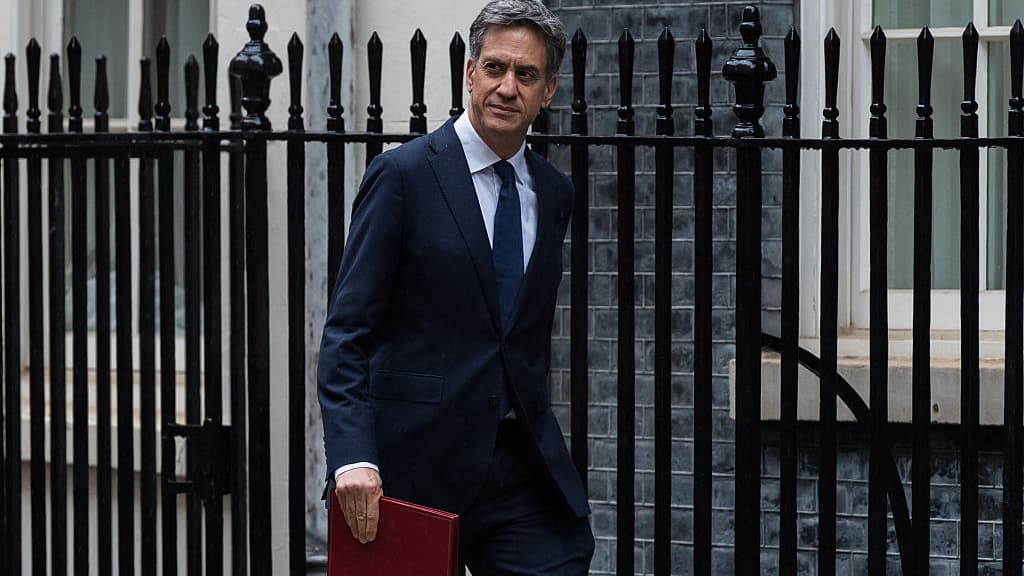
A Jew-free ‘Palestine’: The United Kingdom’s Israeli settlement boycott exposes a dark premise

Read the original at Washington Examiner ↗
Cite

Bekker, K. (2026, September 12). A Jew-free ‘Palestine’: The United Kingdom’s Israeli settlement boycott exposes a dark premise. Washington Examiner. https://www.washingtonexaminer.com/op-eds/4717978/uk-israeli-two-state-solution-ed-miliband/

Dated when The Aporia collected the article, usually within hours of publication. Check the original for its exact date and byline.

Washington Examiner · collected 2026-09-12 · by Karen Bekker

Quick Summary

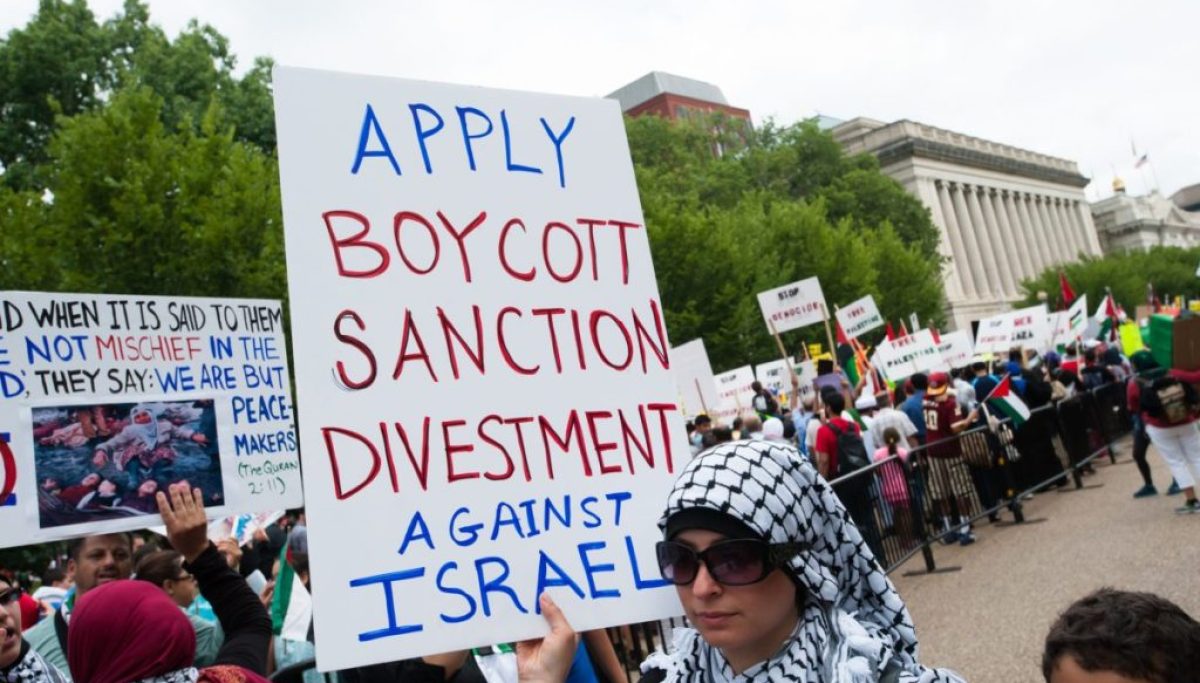
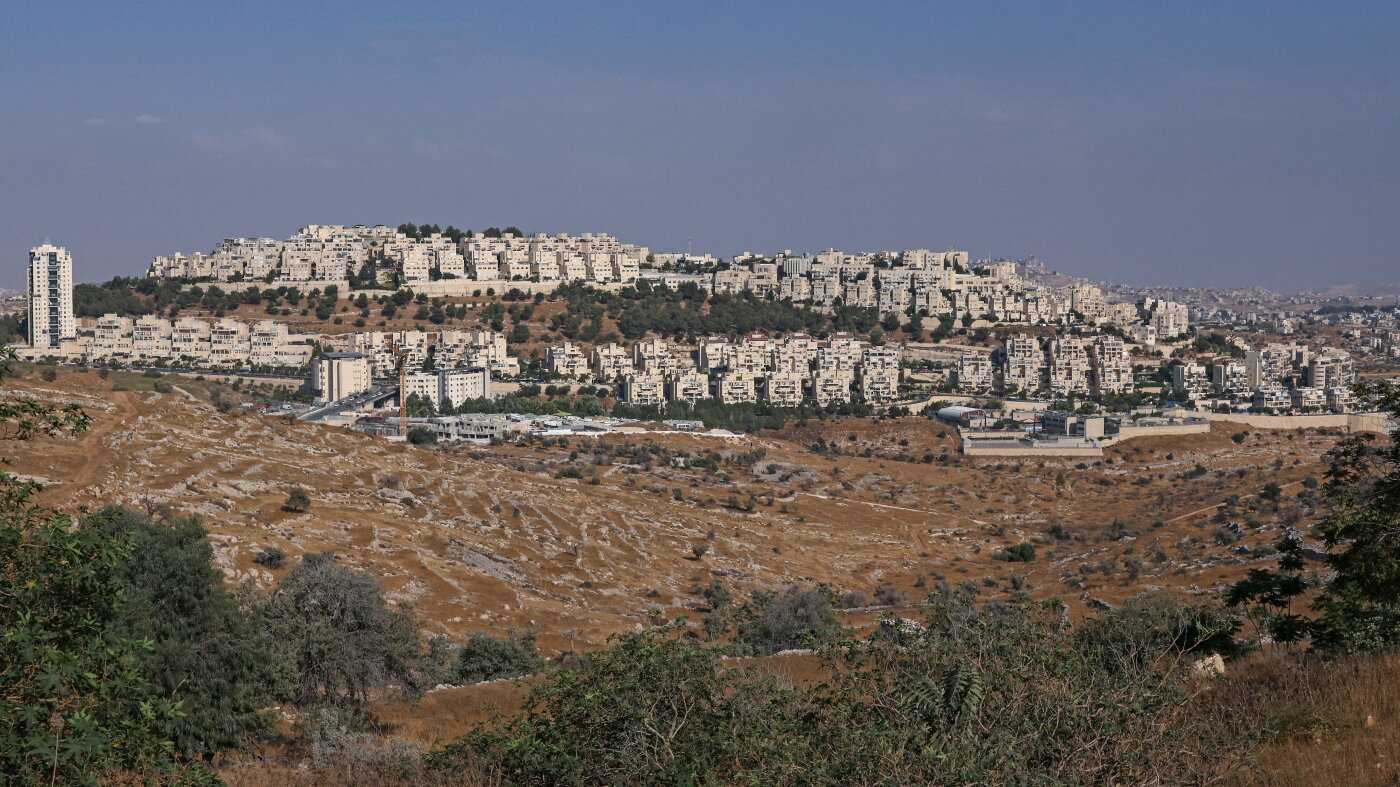
British Foreign Secretary Ed Miliband has led 12 countries including Canada and France in announcing a boycott of goods from Israeli communities beyond the Green Line, citing settlement expansion as a threat to a two-state solution. The article suggests this stance implies an assumption that Jews cannot live peacefully as minorities in a future Palestinian state, drawing historical parallels with the treatment of Jews under Islamic rule and contemporary actions by the Palestinian Authority against Jewish residents.
Written locally by qwen2.5:14b on 2026-09-12, using this article's own text rather than the other coverage of the same event (that is the story summary below).

AI analysis runs on qwen2.5:14b, locally

Story summary

Ed Miliband, UK Foreign Secretary, announced plans to impose sanctions on goods from Israeli settlements in the West Bank, marking a significant shift in Britain’s foreign policy towards Israel. This move, supported by France and Canada, aims to curb settlement expansion and support the "two-state solution," although it has drawn criticism from Israeli officials and US Ambassador Mike Huckabee.

The plan includes banning imports of products made in Israeli settlements, which are considered illegal under international law but disputed by Israel. Mike Huckabee, a Trump-appointed ambassador to Israel, accused Miliband of promoting “Jew hate” over the announcement, despite Miliband himself being Jewish.

Miliband defended the decision during a parliamentary session on September 8, stating that Britain could no longer remain passive and must act against injustices in Gaza and the West Bank. He emphasized that the UK believes Israeli settlement expansion is unlawful and involves ethnic cleansing of Palestinians. The ban targets approximately 700,000 Israelis living in settlements, estimated to constitute a small portion of bilateral trade valued at $8.12 billion.

Critics argue that these measures risk damaging diplomatic relations between Britain and Israel, while supporters see it as necessary for peace efforts. Israeli President Isaac Herzog warned the UK's decision would place them “on the wrong side of history,” highlighting potential repercussions on national security and intelligence cooperation.

Written for “UK Israel Settlement Sanctions Policy” on 2026-10-28, grounded in this article and the 24 other(s) covering the same event.

Story

📰 UK Israel Settlement Sanctions Policy
Politics · 25 article(s) covering the same event. Compare every outlet's account →

Compared with similar articles

This article reads unscored and hedges 11% of its claims. Each row says how that neighbour differs.
The Hindu
⚖️ leaning not scored 🔴 8% hedged 1 of 13 📰 publisher trust 60
“Both articles describe the U.K. government's decision to ban trade with Israeli settlements in the West Bank, announced shortly after Prime Minister Andy Burnham took office.”
South China Morning Post
⚖️ leaning not scored 🔴 17% hedged 1 of 6 📰 publisher trust 64
“Both articles describe the UK imposing a trade ban on goods from Israeli West Bank settlements, announced by Ed Miliband in coordination with other countries.”
NPR
⚖️ leaning not scored 🔴 5% hedged 1 of 19 📰 publisher trust 60
“Both articles report on the UK's announcement of banning goods from Israeli settlements in the occupied West Bank, with similar details about international reactions.”
Toronto Star
⚖️ Leans left 🔴 0% hedged 0 of 7 📰 publisher trust 64
“Both articles describe Canada joining other European nations in pledging to ban Israeli settlement goods, citing concerns about Palestinian rights and international law.”
National Post
⚖️ Leans strongly left 🔴 6% hedged 2 of 35 📰 publisher trust 60
“The articles discuss different topics related to antisemitism and Israeli policies but do not describe the same specific incident.”
Al Jazeera
⚖️ Leans strongly left 🔴 0% hedged 0 of 29 📰 publisher trust 60
“Both articles describe the UK government's announcement of banning imports from Israeli settlements in the occupied West Bank, reported by different outlets with varying contexts.”
TIME
⚖️ leaning not scored 🔴 11% hedged 6 of 57 📰 publisher trust 59
“Both articles describe the announcement by Ed Miliband, UK Foreign Secretary, of a coordinated effort with other nations to restrict trade with Israeli settlements in the occupied West Bank on the same date.”
Mother Jones
⚖️ leaning not scored 🔴 14% hedged 4 of 28 📰 publisher trust 95
“Both articles describe the UK-led sanctions against Israeli settlements in the West Bank on September 8, involving joint statements from multiple countries.”
Al Jazeera
⚖️ Leans strongly left 🔴 5% hedged 1 of 22 📰 publisher trust 60
“The articles discuss different actions and policies related to Israel-Palestine relations, with Article A focusing on a UK-led boycott of Israeli settlements, while Article B reports on an NGO warning about systematic efforts by the Israeli government to reduce Palestinian presence in the West Bank.”
Semafor
⚖️ leaning not scored 🔴 0% hedged 0 of 5 📰 publisher trust 60
“Both articles refer to a boycott of goods made in Israeli settlements by the UK and other countries, indicating they are describing the same specific announcement and its immediate international response.”
How this article was measured signals, leaning charts, publisher record, byline, topics and claims

Signals How these are calculated →

Claims extracted
36
sentences that state something as happening or true
Uncertain
11%
4 of 36 hedged ("reportedly", "may", "according to")
Leaning
withheld
no quote in the article backed the model's score
Publisher signals
70/100
Washington Examiner's corrections and hedging, across everything collected from it. Not a measure of accuracy.
Outlets on this story
25
Politics
Same framing elsewhere
1
articles that frame the event the way this one does
Analyzed 2026-09-12 · how these are computed

How this is being covered How these are calculated →

Article leaning vs. publisher reliability
Source leaning vs. consistency

Publisher

Washington Examiner · 3615 article(s) · 7 correction(s) detected
Running correction rate · 7 correction(s)

Who wrote this

Karen Bekker
1 article(s) here · 1 carrying a prediction
🔮 Ed Miliband, the new Labour British Foreign Secretary, has announced that the United Kingdom will boycott goods made in Israeli communities over the Green Line, which he calls “settlements.”
The only article under this byline in the corpus.

Topics

Israel Jewish Jews Muslim Palestinian

Subjects

Israel GPE · 6× Jewish NORP · 5× Jews NORP · 5× Palestinian NORP · 5× Gaza GPE · 3× Israeli NORP · 3× Muslim NORP · 3× Arabs NORP · 2× Ed Miliband PERSON · 2× Palestinians NORP · 2×

Narrative

This action is in response to, in part, “settlement expansion, including the unacceptable decision to publish tenders for the E1 settlement project,” on the outskirts of Jerusalem, and to protect the possibility of a two-state outcome between Israel and the Palestinians.
framing: assertive · carried by 1 article(s) · first seen 2026-09-12
🔮 Ed Miliband, the new Labour British Foreign Secretary, has announced that the United Kingdom will boycott goods made in Israeli communities over the Green Line, which he calls “settlements.”

Claims (36 extracted, 4 hedged)

Ed Miliband, the new Labour British Foreign Secretary, has announced that the United Kingdom will boycott goods made in Israeli communities over the Green Line, which he calls “settlements.” asserted
he → announce → which
In a joint statement with the foreign ministers of 11 other countries, including Canada, France, Ireland, and Spain, he explained his reasons. asserted
he → include → reasons
This action is in response to, in part, “settlement expansion, including the unacceptable decision to publish tenders for the E1 settlement project,” on the outskirts of Jerusalem, and to protect the possibility of a two-state outcome between Israel and the Palestinians. asserted
action → include → Israel
“Together,” the foreign ministers say, “we are resolute: the two-state solution must be protected … asserted
solution → say → ?
The Government of Israel must immediately halt the expansion of settlements.” What, though, does this really mean? asserted
this → halt → What
Reading between the lines, what are Miliband and his friends really saying about the prospects for peace in the region when they claim that Jewish settlements will prevent a Palestinian state? uncertain
settlements → read → state
About 2 million Arabs live as citizens in Israel, or about 20% of the population, with full civil rights and equality under the law except with respect to the draft. asserted
Arabs → live → draft
(Many Arabs enlist voluntarily.) asserted
Arabs → enlist → ?
About 300,000 Jews and about 4 million Muslims live as minorities in the U.K. asserted
Jews → live → U.K.
Obviously, many minorities live peacefully in the United States. asserted
minorities → live → States
So when Ed Miliband says that settlements are “undermining the possibility of a two-State solution,” what he means is that Jewish settlements can never become a part of a Palestinian state. asserted
settlements → say → state
His unspoken assumption is that Jews will never be able to live peacefully as a minority, protected under the law, in a future state of Palestine. asserted
Jews → live → Palestine
No one can predict the future, of course, but there is good reason to believe this is likely true. asserted
this → predict → course
Historically, Jews who lived as minorities in Muslim lands lived as second-class citizens known as dhimmis: “Dhimmis were excluded from public office and armed service, and were forbidden to bear arms. asserted
Dhimmis → live → arms
They were not allowed to ride horses or camels, to build synagogues or churches taller than mosques … to pray or mourn in loud voices-as that might offend the Muslims. … uncertain
that → allow → Muslims
The dhimmi was not allowed to give evidence in court against a Muslim, and his oath was unacceptable in an Islamic court. asserted
oath → allow → court
This left the dhimmi with little legal recourse when harmed by a Muslim.” asserted
This → leave → Muslim
Eventually, about 850,000 Jews were expelled from Egypt, Iraq, Morocco, Libya, and other Arab countries. asserted
Jews → expel → Egypt
Christians were treated as dhimmis as well. asserted
Christians → treat → dhimmis
Today, the “moderate” Palestinian Authority continues to send payments to terrorists who murder Jews, and PA schoolbooks promote antisemitic content. asserted
schoolbooks → continue → content
In areas controlled by the Palestinian Authority, it is illegal to sell land to a Jew. asserted
it → control → Jew
Those who assert, as so many both in the U.S. and the U.K. do, that Jewish settlements prevent a Palestinian state should be clear about the assumptions underlying that claim. uncertain
settlements → assert → claim
What they are really saying is that they don’t believe Palestinians will be willing to absorb and tolerate a Jewish minority. asserted
Palestinians → say → minority
Moreover, even when Israeli Prime Minister Ehud Barak offered to uproot some West Bank settlements at Camp David in 2000, that offer was rejected. asserted
offer → offer → 2000
Prime Minister Ehud Olmert, too, offered to remove settlements outside of the major blocks in a proposal rejected by Mahmoud Abbas. asserted
Olmert → offer → Abbas
Of course, to say that Gaza is a cautionary tale is an understatement. asserted
Gaza → say → ?
Israel evacuated Gaza in 2005, removing Jewish settlements and pulling out every Israeli civilian and soldier. asserted
Israel → evacuate → civilian
The people of Gaza had independence. asserted
people → have → independence
They elected Hamas, which seized permanent control and started one war after another with Israel, culminating in the Oct. 7, 2023, attack. asserted
which → elect → attack
Uprooting settlements, therefore, still is not enough to convince Palestinian leaders to accept a Palestinian state alongside Israel. asserted
Uprooting → uproot → Israel
After Oct. 7, it’s true that there is not much appetite in Israel or among its supporters to find out what can be achieved by ceding further land, as Israel ceded Gaza. asserted
Israel → ’ → Gaza
Those who do still support this idea, however, need to grapple with the unspoken assumption that underpins their claim that settlements will prevent a two-state solution and what that means for the prospects of two states side by side in peace. uncertain
that → support → peace
Instead of merely repeating by rote, as so many have, that settlements will prevent the establishment of a Palestinian state, the British Foreign Secretary and others need to ask, how and why is that the case? asserted
that → repeat → state
Why can’t those cities and towns become part of a future Palestine? asserted
cities → become → Palestine
Only once they understand the answer to these questions can they play any constructive role in bringing actual peace to the region. asserted
they → understand → region
Karen Bekker is a Senior Fellow at the Foundation for Truth About Israel, a new organization dedicated to combating false information about Israel and the Jewish people. asserted
Bekker → dedicate → Israel

💬Give feedback
🕘History 🎫Support