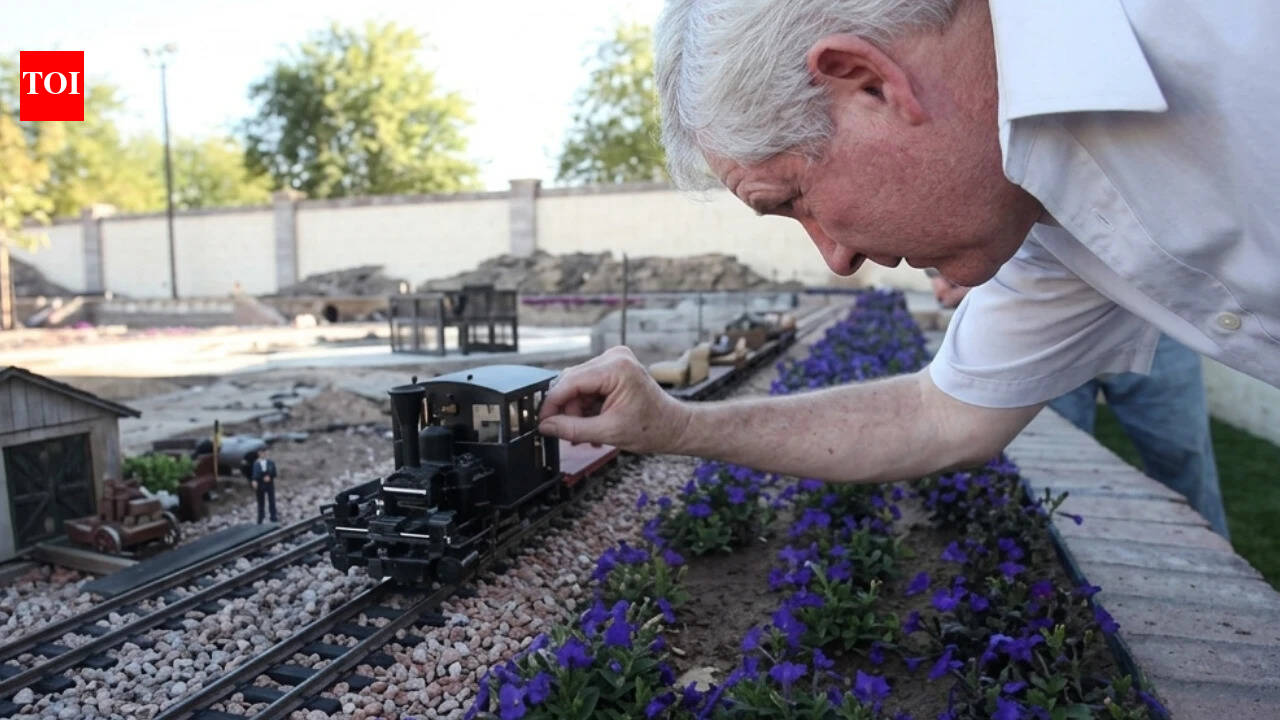
An Arizona businessman who made his name in homebuilding and design spent years and hundreds of thousands of dollars turning his backyard into one of the largest private garden railways in the United States.
asserted
who → make → States
Dennis Sirrine, began building the Palo Verde & Southwestern Railroad in January 2004.
asserted
Sirrine → build → January
The project eventually featured nearly 4,000 feet of railway track and a collection of hundreds of model train cars.
asserted
project → feature → cars
According to the PBS programme Tracks Ahead, Sirrine used his experience in construction to develop the large outdoor railway.
uncertain
Sirrine → accord → railway
The layout included winding tracks, artificial mountains, lakes and rivers, with sections raised several feet above the ground to make the trains easier to see.
asserted
trains → include → ground
During his years as a general contractor, he sometimes incorporated railway layouts into the houses he designed.
asserted
he → incorporate → houses
These involved installing wooden shelves near ceiling height, laying tracks on them and allowing model trains to travel through several rooms.
asserted
trains → involve → rooms
What began as an empty piece of land required extensive construction, repeated modifications and a complicated operating system.
asserted
began → begin → construction
Sirrine told PBS that some parts of the railway had to be built more than once before he was satisfied with the results.
asserted
he → tell → results
How an empty backyard became a railway
When construction began in January 2004, Sirrine's backyard was largely flat, with no existing railway infrastructure.
asserted
backyard → become → infrastructure
After studying garden railways elsewhere in the country, he decided that an elevated layout would provide a better viewing experience than tracks placed directly on the ground.
asserted
layout → study → ground
The railway was therefore constructed at heights ranging from 30 inches to six feet.
asserted
railway → construct → feet
According to Sirrine, approximately 1,000 cubic yards of soil were brought onto the property to raise different sections of the layout.
uncertain
yards → accord → layout
The raised tracks allowed visitors to watch the trains without having to bend down or kneel.
asserted
visitors → raise → trains
Sirrine also designed the surrounding landscape to resemble real railway routes, incorporating changes in elevation, curves, lakes and rivers.
asserted
landscape → design → elevation
His previous construction experience helped him undertake the project, but it did not prevent problems.
asserted
it → help → problems
Sirrine said he had worked in the construction industry for 17 years and understood the building process.
asserted
he → say → process
Even so, several sections did not turn out as planned.
asserted
sections → turn → ?
He estimated that nearly half the layout had to be removed and rebuilt because of construction problems or incorrect advice about particular methods.
asserted
layout → estimate → methods
Repeating completed work became one of the project's biggest challenges.
asserted
Repeating → repeat → challenges
Electrical problems led to a different operating system
Building the tracks was only part of the work.
asserted
Building → lead → work
Sirrine also had to develop a system that could operate different types of model locomotives across the extensive railway.
uncertain
that → have → railway
The original electrical arrangements involved approximately 1,000 feet of wire and 10,000 feet of conduit.
asserted
arrangements → involve → conduit
Looking back, Sirrine said he would have preferred battery-powered trains from the beginning.
asserted
he → look → beginning
The railway eventually used a combination of battery power and electricity supplied through the tracks.
asserted
railway → use → tracks
This arrangement also allowed visitors who owned electrically powered locomotives to operate their trains on his layout.
asserted
who → allow → layout
Another major challenge involved the turnouts, or switches, which allow trains to move between different tracks.
asserted
trains → involve → tracks
Sirrine had observed electrical switches developing corrosion and operational problems on other garden railways.
asserted
switches → observe → railways
Concerned about their reliability in Arizona's climate, he chose air-powered switches manufactured by the California and Oregon Coast Railway company in Oregon.
asserted
he → choose → Oregon
The system operated using a compressor rather than relying on electrical switches.
asserted
system → operate → switches
Sirrine told PBS that the air-powered system had worked reliably after installation, resolving one of the most difficult operating problems he had faced.
asserted
he → tell → problems
The features Sirrine's most proud of
Despite the project's size, Sirrine identified two particular achievements when discussing his railway with PBS- the accuracy of the tracks and the construction of the artificial mountains.
asserted
Sirrine → identify → mountains
The tracks were laser-levelled to keep them straight and ensure smooth changes in elevation.
asserted
tracks → level → elevation
According to Sirrine, visitors had placed video cameras on flatbed railway cars and recorded their journeys around the layout.
uncertain
visitors → accord → layout
They were impressed by how smoothly the trains travelled.
asserted
trains → impress → ?
Meanwhile, the mountains required a different construction method.
asserted
mountains → require → method
Sirrine used flat concrete panels designed to resemble rock, breaking them into sections before arranging, grouting and staining them to create realistic desert formations.
asserted
Sirrine → use → formations
The resulting landscape formed part of a railway designed to combine model trains with the appearance of natural terrain.
asserted
landscape → result → terrain
 The Aporia