The Guardian
· collected 2026-09-11 · by Andrew Lawrence at Flushing Meadows
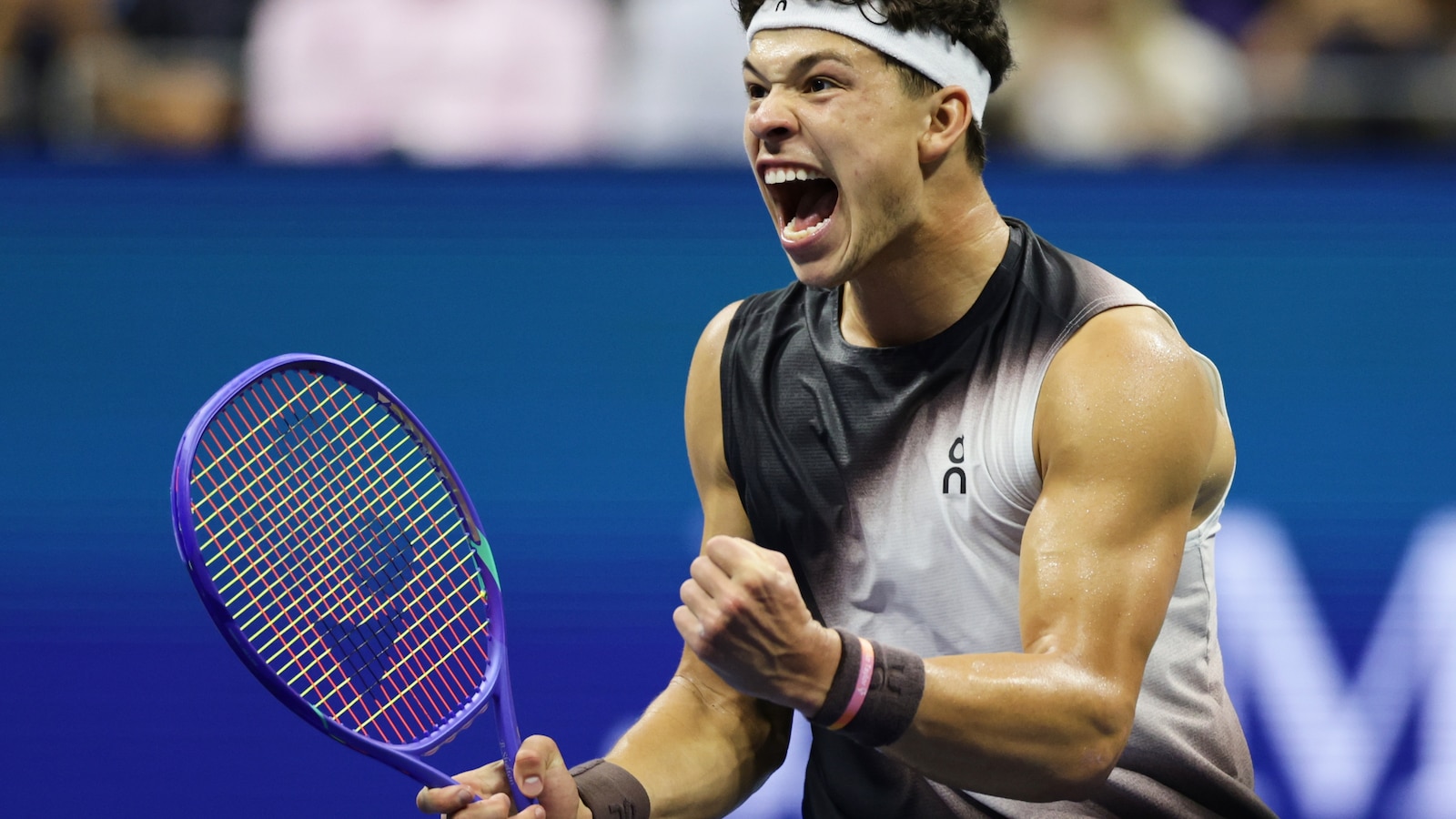
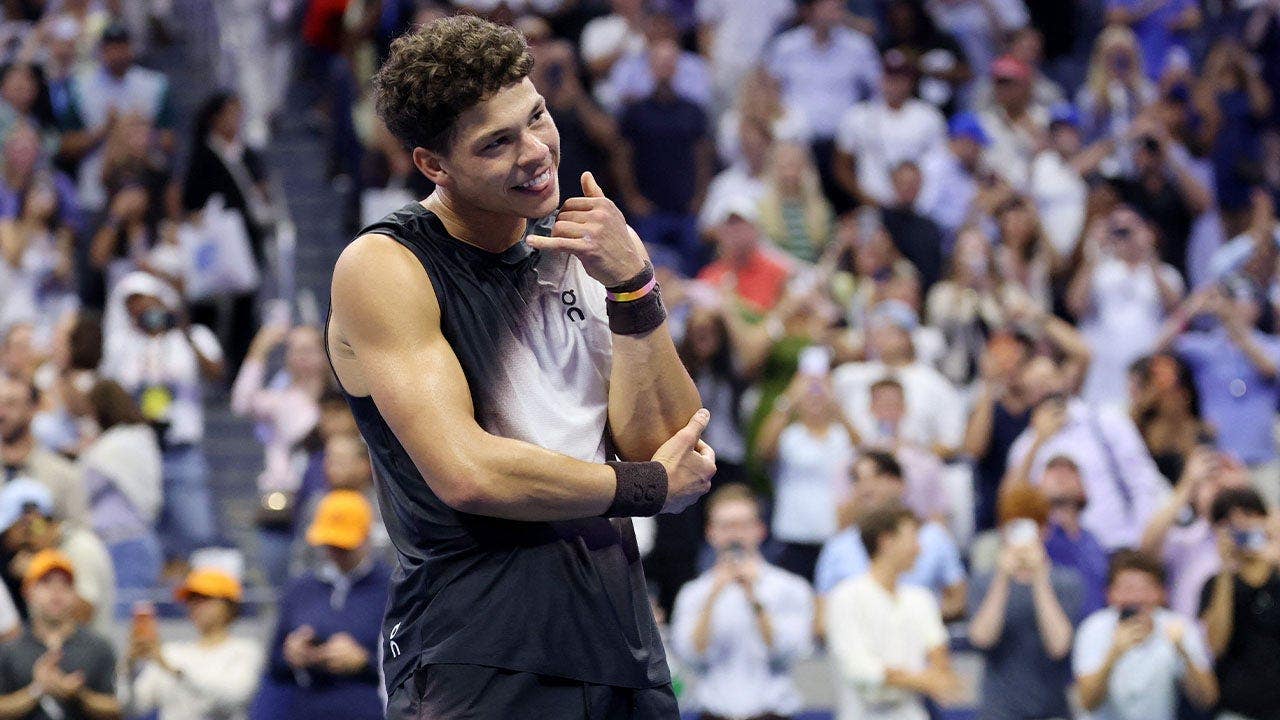
Tuesday night’s quarter-final match between Ben Shelton and Carlos Alcaraz had everything a US Open spectacle could ask for: huge stakes, knife-edge drama, top-shelf competition and an American hero who comes through in the end.
uncertain
who → have → end
The only fault to find was really the matter of time.
asserted
fault → find → time
The first ball wasn’t struck until 11.05 in the evening, and Shelton’s clinching ace didn’t come until 3.33 in the morning – marking, after a total of 4hr 28min on court, the latest-ending US Open match by a whopping 43 minutes.
asserted
ace → strike → minutes
Somewhat predictably, the discourse among media and fans following the late-night match has swiftly moved on from the USTA’s misadventures in scheduling to a referendum on the five-set match and whether it should be put out to pasture.
asserted
it → follow → pasture
They are a badge of honor in the men’s game, confirmation that a player can and did indeed hack it in the big leagues.
asserted
player → hack → leagues
John Isner may not have won a major during his time on tour.
uncertain
Isner → win → tour
But his capacity for grinding out marathon matches – not least the three-day, 11-hour epic he played against Nicholas Mahut at Wimbledon in 2010 – is why he remains highly respected by peers and fans alike.
asserted
he → grind → peers
Best-of-five is the exclusive framing device for the best matches in history and an imprimatur of the sport’s most revered champions.
asserted
Best → revere → champions
Even the losers are celebrated merely for having survived and played on to become part of the tale.
asserted
losers → celebrate → tale
“People still remember this match but he didn’t know if I was the winner,” Mahut said in 2015.
asserted
Mahut → remember → 2015
“So, maybe, in 10 years people will think I won the match.”
asserted
I → think → match
That holds true as much for the men who play as their spectators.
asserted
who → hold → spectators
Much of what makes the experience of following tennis so affirming is the global group-watch sessions that take over social media anytime an Australian Open match goes the distance.
asserted
match → make → distance
Viewers who can’t babysit the full marathon into the night – lest they risk sleeping through their morning alarms or, worse, cheering the exciting points too boisterously and rousing their house and neighbors – get to wake up and find the fifth set still raging as they’re getting ready for work the next day.
asserted
they → babysit → work
A skeptic might point to the Australian Open, perhaps more so than any other slam, as a prime reason to abolish the five-setter.
uncertain
skeptic → point → setter
But true tennis nerds see the Happy Slam for what it is: a rite of passage.
asserted
it → see → passage
In fact, if they don’t seem surprised by the US Open’s Melbourne hours, it’s because Craig Tiley, formerly the CEO of Tennis Australia, is now running the USTA.
asserted
Tiley → seem → USTA
Still, for all the honor and valor there is to be extracted from five-setters, especially as they pile up, there’s no denying the matches exact a physical toll from players that has become harder to ignore as the pressure to maintain a hectic touring calendar puts them at increasing risk of missing tournaments from wear and tear.
asserted
pressure → be → wear
That tension between tradition and evolution has animated an existential debate around five-setters that has been simmering for years.
asserted
that → animate → years
Last month, incoming Tennis Australia CEO Andrew Abdo tossed out ideas for a shorter-form game.
asserted
Abdo → toss → game
“Maybe we’re not playing best of five all the way through,” Abdo said at a Melbourne sports conference.
asserted
Abdo → play → conference
“Maybe the point scoring system changes.
asserted
system → change → ?
Maybe there are different permutations to how we engage and entertain audiences without losing the fabric, and what really makes the sport special.”
asserted
sport → be → fabric
Abdo’s remarks – which come after Tiley, his predecessor, suggested women play five-set matches – might not have resonated if Novak Djokovic, the slam king who built his reputation on five-set matches, hadn’t first proposed changes to the scoring system that would keep the five sets but dilute the number of games to “keep the matches within a two-hour window”.
uncertain
that → come → window
And even though the 24-time major champion was being somewhat facetious – he was specifically asked for an opinion that would inflame fans – it didn’t stop John McEnroe, tennis’ self-righteous conscience, from breaking out his gas canister.
asserted
it → ask → canister
“People’s attention spans are shorter than ever,” said McEnroe – famously, the five-set loser of an epic 1980 Wimbledon final canonized as the War of 18-16.
asserted
McEnroe → say → 18
But those voices, however prominent, have yet to reach a volume that drowns out five-set traditionalists.
asserted
that → have → traditionalists
“Do I love five setters?
asserted
I → love → setters
Absolutely not,” Frances Tiafoe said after hanging on to beat fellow American Alex Michelsen in a five-set quarterfinal he surely would’ve lost if the scoring revolutionists had their way.
asserted
revolutionists → say → way
“When I’m up two sets to love I would love to shake hands and go home.
asserted
I → ’m → hands
But it’s tennis, man.
asserted
it → ’ → ?
I grew up watching incredible tennis, incredible five setters.
asserted
I → grow → tennis
Incredible five setters which go on for hours and hours.
asserted
which → go → hours
The quarter-final between Shelton and Alcaraz wrote another chapter, one that gave Arthur Ashe Stadium the feel of a Queens dive after last call.
asserted
that → write → call
Shelton, still woozy from outlasting the US Open’s defending champion, beseeched his sister’s employer, Morgan Stanley, to give her the day off from work.
asserted
Shelton → outlast → work
As he and Alcaraz contested the final points, with Tuesday having turned into Wednesday, custodial workers could be seen and heard tidying up the stadium and grounds for the horde to come after sunrise.
uncertain
horde → contest → sunrise
On social media, US Open patrons who hung on til the bitter end shared the outrageous surge pricing they encountered for rideshares back home (“I could get a hotel, bro”) and posted videos of exhausted ballkids hustling back into the city before school starts “in three hours”.
uncertain
school → hang → hours
No one’s suggesting the US Open needs a curfew.
asserted
Open → suggest → curfew
(That’s Wimbledon’s turf, after all.)
asserted
That → ’ → ?
There’s a simple fix to the late-night match problem that doesn’t involve fundamentally restructuring the way the men’s game is played.
asserted
game → ’ → way
…and 14 more, not listed.