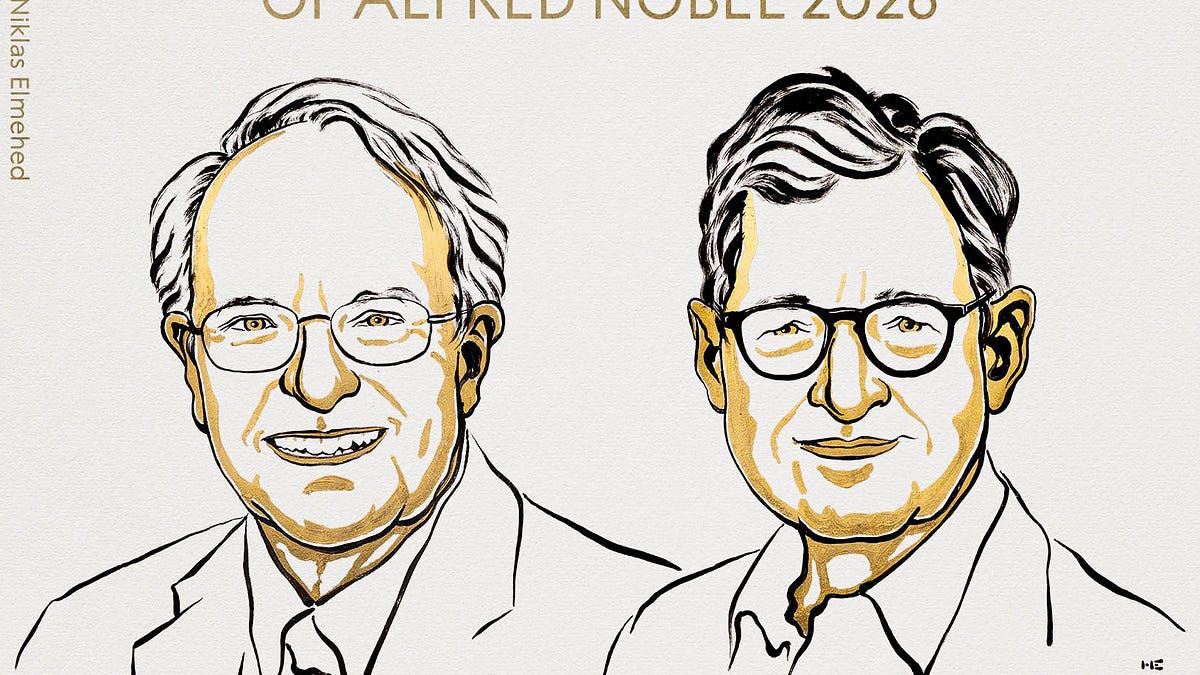
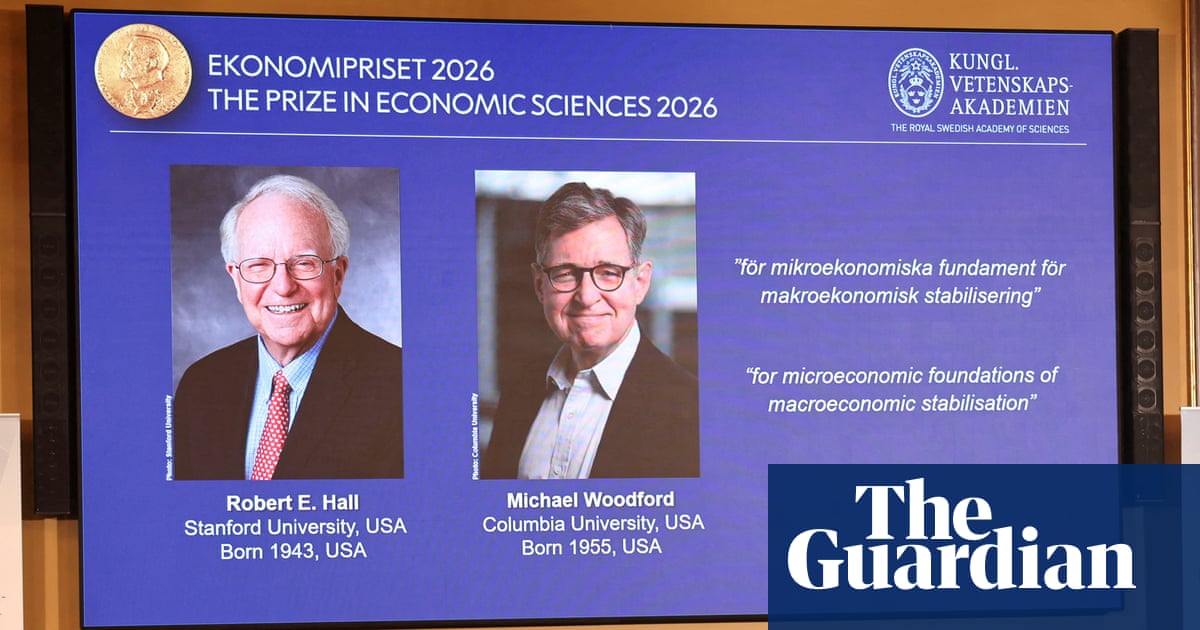
Professors Robert E. Hall and Michael Woodford have been awarded the Nobel Prize in Economics this year “for microeconomic foundations of macroeconomic stabilisation”.
asserted
Hall → award → stabilisation
In this piece, we take a longue durée view of macroeconomics to situate their work within the context of political economy.
asserted
we → take → economy
In many ways, the field has come full circle from the days of John Maynard Keynes and Michal Kalecki (henceforth KK)
Economists are products of their times.
asserted
Economists → come → times
While KK wrote against the backdrop of the Great Depression, the deepest and longest economic crisis faced by capitalism (Chart 1a), this year’s Nobel laureates wrote in the aftermath of the unprecedented inflation of the 1970s (see Chart 1b).
asserted
laureates → write → Chart
The former brought the Keynesian revolution (though a misnomer, as Kalecki had an equal part in it), while the latter are part of a counterrevolution to reestablish pre-Keynesian orthodoxy in many ways.
asserted
latter → bring → ways
Ideas matter a great deal.
asserted
Ideas → matter → ?
The arguments and policy flowing out of the KK framework led to what is considered the golden age of capitalism (1945-1973), a period that recorded the highest sustained growth rates (compare the average growth rates across time in chart 2).
asserted
that → flow → chart
What creates a business cycle?
asserted
What → create → cycle
Like a ship navigating the ocean, a capitalist economy moves through ebbs and flows in economic activity.
asserted
economy → navigate → activity
Just as a ship cruises smoothly when the waters are calm, an economy has an underlying long-term trend rate of growth.
asserted
economy → cruise → growth
Both the cycle and the underlying trend rate of growth have been the subject of intense debates in economics.
asserted
cycle → underlie → economics
Heterodox approaches hold that demand influences both the cycle and the trend, while orthodox approaches believe demand plays a role in the cycle but not the trend, albeit for different reasons.
asserted
demand → hold → reasons
The Nobel laureates work within the latter tradition, while KK did within the former.
asserted
KK → work → former
Why should the readers bother about these esoteric questions?
asserted
readers → bother → questions
Because our livelihoods, jobs, cost of living, and much else depend on which side is steering the ship.
asserted
side → depend → ship
Before KK, it was believed that in the long run, economies move along full-employment paths with cycles arising from external shocks, which did not require policy interventions from the State.
asserted
which → believe → State
These arguments, however, were built on ad hoc assumptions.
asserted
arguments → build → assumptions
In the 1980s, a newer version of this orthodox approach sought to build the framework from the bottom up, moving from micro-foundations to a macroeconomic model.
asserted
version → seek → model
This led to the development of real business cycle (RBC) theory, associated with economists Finn Kydland and Edward Prescott, who won the 2004 Nobel Prize in Economics.
asserted
who → lead → Economics
The economy functions along the full-employment path, with the trend determined by the growth of the labour force and its productivity (Graph 1(a)).
asserted
trend → function → force
For them, output and labour markets clear in the short run, so even the cyclical movements were caused by the supply side, thereby precluding the possibility of any State intervention.
asserted
movements → cause → intervention
Economists such as Hall and Woodford, while keeping the RBC framework intact, argued that economies can fall off the full-employment path if prices do not adjust fast enough to clear the markets.
asserted
prices → keep → markets
The argument they made was that not all firms change their prices at the same time; some do so in one period, while others in another.
asserted
some → make → another
As a result, prices do not fully adjust between these periods.
asserted
prices → adjust → periods
If household demand for goods is less than what firms collectively wish to supply (Graph 1(b)), prices may not fall enough to restore equilibrium.
uncertain
prices → wish → equilibrium
The economy then operates at lower levels of demand (recession).
asserted
economy → operate → demand
The opposite happens if demand is greater than supply (boom with signs of overheating).
asserted
demand → happen → overheating
If you consider a time period long enough (over a business cycle), on average, the prices would have adjusted fully, in which case demand also adjusts fully to what the firms would like to supply.
asserted
firms → consider → what
Demand creates supply in the short run while supply determines the demand in the long run.
asserted
supply → create → run
It is obvious, therefore, that policy is required only for the short run and not the long run.
asserted
policy → require → run
They argued that demand matters not just in determining the cyclical component of growth but also the underlying trend.
asserted
demand → argue → growth
Kalecki had famously said, “the long-run trend is but a slowly changing component of a chain of short-period situations; it has no independent entity”.
asserted
it → say → entity
If the economy is underemployed through the short run, it remains so in the long run as well (see graph 2 (a)).
asserted
it → remain → graph
And if policy changes the short-run equilibrium, it affects the trend rate of growth too.
asserted
it → change → growth
But even more importantly, their analysis of the short term differs as well.
asserted
analysis → differ → term
Economies are stuck at below-capacity output or with unemployed workers not because prices and wages are rigid but because capital investment by the capitalists is not enough to employ all those who seek employment.
asserted
who → stick → employment
Rigidity of investment, not prices, causes unemployment.
asserted
Rigidity → cause → unemployment
In Keynes, prices are not even rigid, let alone being the cause of the business cycle.
asserted
prices → let → cycle
Unless the fall in prices could affect investment, it would have no impact on demand.
uncertain
it → affect → demand
A fall in prices may in fact have a negative impact on investment through debt defaults, etc.
uncertain
fall → have → defaults
…and 18 more, not listed.
 The Aporia