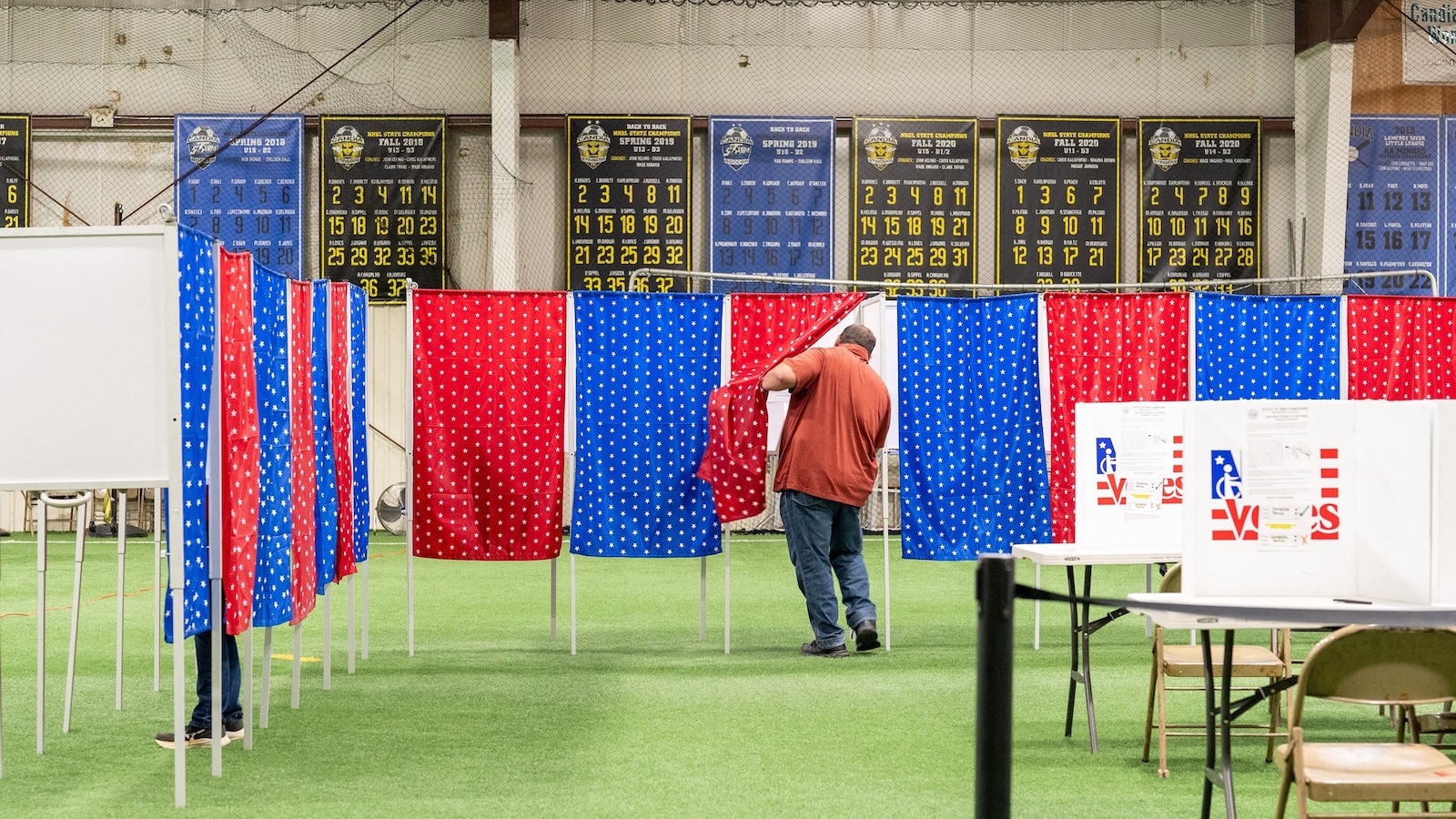
Democratic enthusiasm in the 2026 primaries and what it could mean for midterm elections
ABC News analyzed relative partisan turnout in the primary elections.
uncertain
News → mean → elections
Recent polling suggests that Democrats have momentum as we enter the home stretch ahead of the high-stakes 2026 midterm elections as Democrats say they are more likely to vote and more enthusiastic about casting their ballots.
uncertain
they → suggest → ballots
An ABC News analysis finds that what Democrats are telling pollsters is consistent with their turnout in this year's primaries.
asserted
telling → find → primaries
Specifically, Democratic participation significantly increased from previous levels in primary contests relative to Republicans.
asserted
participation → increase → Republicans
And Democratic levels of primary voting relative to Republicans appear to be greater than any recent midterm election in the states that could determine control of the Senate.
uncertain
that → appear → Senate
ABC News found that the relative turnout of Democratic primary voters to Republican primary voters increased in many states between 2022 and 2026.
asserted
turnout → find → 2022
Relative turnout is the number of Democratic votes divided by the number of Republican votes in an election, in this case, state primaries.
asserted
turnout → divide → case
The change in relative Democratic turnout is calculated by subtracting the 2022 level of relative turnout from the 2026 level.
asserted
change → calculate → level
Democrats’ relative turnout increased in many different states and political environments.
asserted
turnout → increase → states
In some states, the relative size increased when Democrats held a competitive primary in 2026 and Republicans did not.
asserted
Republicans → increase → 2026
For example, in August's Wisconsin gubernatorial primary, David Crowley won a hard-fought and expensive Democratic contest narrowly.
asserted
Crowley → win → contest
On the Republican side, a Trump-endorsed sitting member of Congress, Tom Tiffany, secured a 90-point victory.
asserted
member → endorse → victory
In this instance, the number of Democratic voters increased from 2022 when the party held less competitive statewide primaries.
asserted
party → increase → primaries
At the same time, the number of Republican votes decreased from 2022 when Republicans held a competitive gubernatorial primary.
asserted
Republicans → decrease → primary
In 2022, Democratic primary turnout was only 0.72 times the size of Republican primary turnout, yielding an increase of 0.89 in their relative turnout.
asserted
turnout → yield → turnout
Still, in states where both parties held competitive primaries, Democrats had significant relative turnout gains as well.
asserted
Democrats → hold → gains
For example, in Texas both the Republicans and Democrats held extremely high-profile U.S. Senate primaries.
asserted
Republicans → hold → primaries
Relative Democratic primary turnout increased in Texas from 0.55 times the size of Republican primary turnout in 2022 to 1.07 times the size of Republican primary turnout in 2026.
asserted
turnout → increase → 2026
Even in a red state like Idaho where gubernatorial Republican candidates have out-raised Democratic candidates by nearly a factor of 10, relative Democratic primary turnout increased from its 2022 level.
asserted
turnout → raise → level
All key battleground states for control of the Senate stand out in this analysis as having increases in the relative size of Democratic voters in the primary electorate.
asserted
states → stand → electorate
These states include open seat races in New Hampshire, North Carolina, Minnesota and Iowa.
asserted
states → include → Hampshire
Relative Democratic turnout decreased in only three states: Oklahoma, Kentucky and Oregon.
asserted
turnout → decrease → states
In Oregon, for example, Democratic primary voters still outnumbered Republican primary voters by a factor of 1.15, but this advantage was down from 1.30 in 2022.
asserted
advantage → outnumber → 2022
This shift coincided with a competitive Republican primary and an uncompetitive Democratic primary for governor in 2026, while both parties held competitive gubernatorial primaries in 2022.
asserted
parties → coincide → 2022
Although Kentucky and Oklahoma exhibited decreases in relative Democratic turnout, more people voted in 2026 Democratic primaries than 2022 Democratic primaries in those states.
asserted
people → exhibit → states
The relative Democratic turnout decreased because the increase in Democratic votes this year were eclipsed by greater increases in Republican turnout from 2022, likely due to highly competitive open Republican primary races for U.S. Senate and governor, respectively.
asserted
increase → decrease → Senate
Not only did relative Democratic primary turnout increase from 2022, but the level of relative Democratic primary turnout reached 20-year highs for midterms in several key states.
asserted
level → increase → states
ABC News gathered Democratic and Republican midterm primary voting data in all states dating back to 2006.
asserted
News → gather → 2006
In 16 states in 2026, Democratic primary participation was at its strongest relative to Republican primary participation going back to 2006.
asserted
participation → go → 2006
These states include key battleground states Georgia, Kansas, Maine, Michigan, Nebraska, New Hampshire, North Carolina, Ohio, South Carolina and Texas.
asserted
states → include → states
While this analysis does not predict what will happen in the general election, it found that, in general, the party with the greater average turnout advantage in the previous five midterm elections has won more seats in the House and the Senate.
asserted
party → predict → House
The upcoming midterm elections will determine control of Congress as Republicans hold a slim majority in both the House and the Senate.
asserted
Republicans → determine → House
Methodology:
The analysis was conducted in states where the statewide midterm primary with the most votes was contested by more than one candidate for both parties in 2026 going back to 2006.
asserted
primary → conduct → 2006
Data were gathered from each state’s secretary of state or equivalent website for primary elections from the previous 20 years.
asserted
Data → gather → years
ABC News analysts created a measure of relative Democratic primary turnout by dividing the number of Democratic votes in the statewide primary election with the most votes by the number of Republican votes in the statewide primary election with the most votes.
asserted
analysts → create → votes
Change measures were calculated by subtracting the 2022 relative Democratic primary turnout value from the 2026 relative Democratic primary turnout value.
asserted
measures → calculate → value
States with top two or top four primaries that allow candidates from both parties to compete in the same primary election, such as Alaska, California and Washington, were omitted from this analysis.
asserted
candidates → allow → analysis
 The Aporia