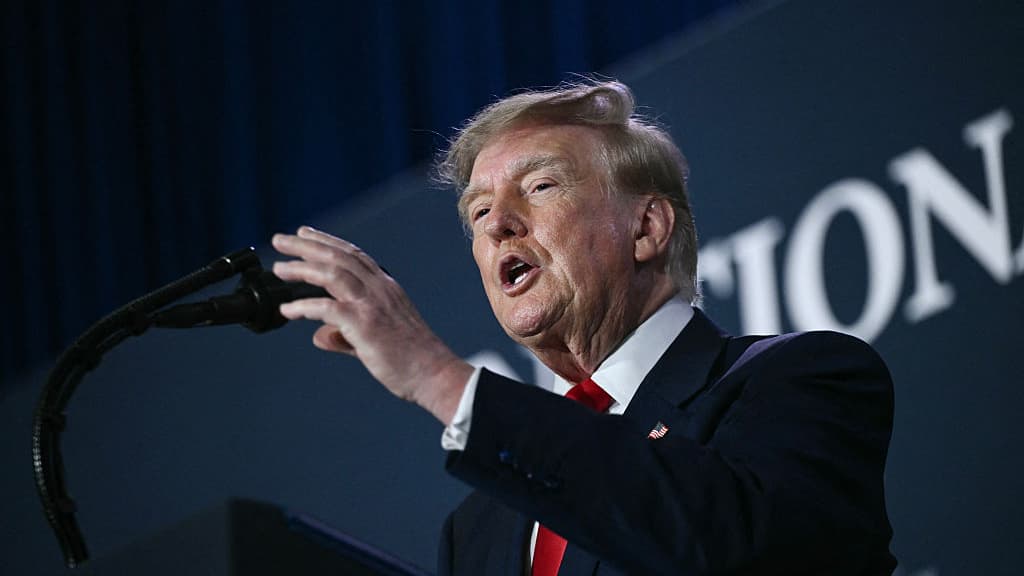
President Donald Trump has said nearly a million Americans are eligible to receive $500 refunds for what he described as “excessive fees” charged to Obamacare enrollees under the Biden Administration.
asserted
he → say → Administration
Trump announced in a video message on Thursday that beginning next month, rebate checks will be issued to enrollees in 30 states that use the federal Healthcare.gov exchange to operate their Affordable Care Act (ACA) health insurance marketplaces.
asserted
that → announce → marketplaces
The White House said that the Biden Administration overcharged ACA enrollees for their insurance coverage by passing on the costs of “user fees” intended to fund the operations of the federal exchange in the form of increased premiums.
asserted
Administration → say → premiums
The money collected through those fees, the White House added, was “far in excess” of what was required to run the federal exchange.
asserted
what → collect → exchange
“Our Administration is doing the right thing and giving the money back to the people who were wrongly ripped off,” Trump said.
asserted
Trump → do → people
Neither the President nor the White House have provided evidence for their claims.
uncertain
President → provide → claims
The announcement comes as ACA premiums have surged after tax credits passed under Biden that helped reduce costs for most enrollees expired at the end of 2025, driving a sharp decline in enrollment.
asserted
that → come → enrollment
The Republican-controlled Congress declined to renew the subsidies last year, a decision the Trump Administration backed.
asserted
Administration → control → decision
Trump previously expressed support for a GOP plan to deposit $1,000-$1,500 rebates into certain Americans' Health Savings Accounts as an alternative to renewing the premium subsidies.
asserted
Trump → express → subsidies
That proposal ultimately failed in the Senate, however.
asserted
proposal → fail → Senate
The President has also floated issuing other refunds directly to Americans that have failed to materialize, including sending out $2,000 dividends funded by his sweeping tariffs and returning 20% of the savings achieved through the now-shuttered Department of Government Efficiency’s cuts to the federal government.
asserted
that → float → government
In an address at the Republican Party’s midterm convention on Wednesday night, Trump separately promised that a $5,000 dividend would be paid to every American adult if the GOP keeps control of both chambers of Congress in the upcoming elections in November.
asserted
GOP → promise → November
The proposal, which would require congressional approval, has drawn questions about where the funds for the dividend payments would come from and whether sending them out would violate federal law that bars paying someone to vote a certain way.
asserted
that → require → someone
One Democratic lawmaker was quick to state on X that “Congress would never do it because it is corrupt and blatantly illegal.”
asserted
it → state → it
It is not clear whether the promised Obamacare refunds will need to be approved by Congress.
asserted
refunds → promise → Congress
Who’s eligible for an Obamacare refund, and how will you get it?
asserted
you → ’ → it
Refunds will be issued to Obamacare enrollees in the states that rely on the federal exchange who didn’t receive premium assistance under the ACA “and therefore paid the full cost of Biden’s premium tax,” according to the White House.
uncertain
who → issue → House
Checks will be sent starting in October to the home addresses of the Americans the Trump Administration has deemed were overcharged, Trump said.
asserted
Trump → send → Americans
He asserted that in many cases the $500 would cover “the entire spike in your insurance caused by Democrats,” but did not clarify how that figure was reached.
asserted
figure → assert → Democrats
The nearly 1 million people set to receive the refunds would represent roughly 5% of the 19.2 million who are estimated to currently be enrolled in ACA plans around the country.
asserted
who → set → country
Which states are included?
asserted
states → include → ?
ACA enrollees will be issued refunds in the 30 states that use Healthcare.gov to handle insurance enrollment under the landmark health care law, rather than setting up their own state-run exchanges.
asserted
that → issue → exchanges
Those states include Alabama, Alaska, Arizona, Arkansas, Delaware, Florida, Hawaii, Indiana, Iowa, Kansas, Louisiana, Michigan, Mississippi, Missouri, Montana, Nebraska, New Hampshire, North Carolina, North Dakota, Ohio, Oklahoma, Oregon, South Carolina, South Dakota, Tennessee, Texas, Utah, West Virginia, Wisconsin, and Wyoming, according to the White House.
uncertain
states → include → House
Rising health care costs are a widespread concern—and could be a political problem for Trump
Trump’s pledge to issue refunds to hundreds of thousands of Obamacare enrollees comes amid a spike in health care costs that is a source of major concern for many Americans, and that threatens to only worsen moving forward as the uninsured population balloons.
uncertain
population → rise → Americans
At the peak of ACA enrollment reached last year, prior to the premium subsidies expiring, more than 24 million Americans were receiving coverage through the marketplace.
asserted
Americans → reach → marketplace
That number has fallen by more than 5 million in 2026 as premium costs have doubled or even tripled for many enrollees in the absence of the tax credits.
asserted
costs → fall → credits
And analysts have warned that the impact of their expiration, alongside cuts included in Trump’s Big Beautiful Bill, could become far broader in the years ahead.
uncertain
impact → warn → years
The surge in the number of uninsured Americans in turn threatens to raise insurance costs for those who do have insurance and to increase the financial burden on hospitals absorbing the costs of treating people without it, raising the risk that they might be forced to cut services or close entirely.
uncertain
they → threaten → services
Nearly three-quarters of American adults surveyed in a Pew Research survey conducted in April said that the affordability of health care is a very big problem for the U.S., an increase of 6% from last February.
asserted
affordability → survey → February
Even before the ACA premium subsidies expired, Gallup found that fewer than half of Americans reported that they could consistently afford healthcare in the final months of 2025—a five-year high.
uncertain
they → expire → 2025
And polling from health care research organization KFF this May showed that more than a third of adults said they had skipped or postponed getting care because of the cost over the past 12 months.
uncertain
they → show → months
The issue also appears to be a vulnerable one for the President, who has faced low approval ratings for months.
asserted
who → appear → months
In April, KFF found that roughly two-thirds of Americans disapproved of the Trump Administration’s handling of the cost of health care.
asserted
thirds → find → care
 The Aporia