Hypercoasters not regulated and ‘more risky’ than ever, warn experts after Six Flags horror death

Read the original at New York Post ↗
Cite

Breslin, K. (2026, October 14). Hypercoasters not regulated and ‘more risky’ than ever, warn experts after Six Flags horror death. New York Post. https://nypost.com/2026/10/14/lifestyle/hypercoasters-not-regulated-and-more-risky-than-ever-warn-experts-after-six-flags-horror-death/

Dated from the outlet's own feed. Check the original for its byline.

New York Post · collected 2026-10-14 · by Kyra Breslin

Quick Summary

Experts warn that hypercoasters at amusement parks like Six Flags are becoming increasingly risky despite their popularity. Following a fatal incident on Monday where a father died from falling off the Goliath hypercoaster in Georgia, concerns about safety have intensified. The ride has been linked to over 100 reported injuries and two cases requiring emergency brain surgery. While these extreme rides attract millions of visitors—47.4 million in 2025—and generate significant revenue, they also pose hidden physical risks such as heart rate spikes, arterial injuries, and neck strain due to rapid acceleration and G-forces.
Written locally by qwen2.5:14b on 2026-10-14, using this article's own text rather than the other coverage of the same event (that is the story summary below).

AI analysis runs on qwen2.5:14b, locally

Story summary

On October 13, Hassan Jihad Ibn Kariem, a 42-year-old father, died after being ejected from the Goliath roller coaster at Six Flags Over Georgia in Austell, Georgia, northwest of Atlanta. The incident left several others injured and led to the temporary closure of nine similar coasters across North America out of an abundance of caution. Witnesses reported seeing Kariem fly out of his seat and collide with other riders before hitting the ground. Videos from social media showed passengers being evacuated from the ride. Six Flags has not released details about the cause or circumstances surrounding the death, citing respect for the family's privacy. The Cobb County Police Department’s major crimes unit is investigating the incident.

Written for “Six Flags Roller Coaster Fatality” on 2026-10-14, grounded in this article and the 35 other(s) covering the same event.
Why this leaning score
The article's own words the score was based on. Each is quoted verbatim and was checked against the article text before being stored, so you can find it in the original.
Reading Leans left (beta estimate) Confidence high
Leaning: leans left for article 79055 (high confidence, 1 verified quote) · logged 2026-10-14

Story

📰 Six Flags Roller Coaster Fatality
Entertainment · 36 article(s) covering the same event. Compare every outlet's account →

Compared with similar articles

This article reads leans left and hedges 14% of its claims. Each row says how that neighbour differs.
Toronto Star
⚖️ leaning not scored 🔴 6% hedged 2 of 36 📰 publisher trust 63
“Both articles describe the death of Hassan Jihad Ibn Kariem on a roller coaster at Six Flags Over Georgia on Monday, involving the Goliath ride.”
Fox News
⚖️ leaning not scored 🔴 39% hedged 9 of 23 📰 publisher trust 70
“Both articles describe a fatal roller coaster incident at Six Flags Over Georgia on Monday, involving the Goliath ride and subsequent safety concerns.”
The Independent
⚖️ leaning not scored 🔴 13% hedged 5 of 38 📰 publisher trust 59
“Both articles describe the death of a man named Hassan Jihad Ibn Kariem, who was thrown from a roller coaster at Six Flags in Georgia on Monday.”
Euronews
⚖️ leaning not scored 🔴 20% hedged 3 of 15 📰 publisher trust 60
“While both articles discuss a fatal incident involving a roller coaster at Six Flags in Georgia, Article B goes beyond reporting on just that specific occurrence and discusses broader criticisms and safety concerns about hypercoasters.”
The Independent
⚖️ leaning not scored 🔴 0% hedged 0 of 15 📰 publisher trust 59
“Article A describes a specific incident where one person died and several were injured on a roller coaster at Six Flags Over Georgia, while Article B provides broader context about hypercoasters and criticizes the park's safety measures following the incident.”
BBC News
⚖️ leaning not scored 🔴 15% hedged 6 of 41 📰 publisher trust 72
“Article A reports on a specific death incident involving Hassan Jihad Ibn Kariem at a Six Flags amusement park, while Article B discusses broader criticism and safety concerns related to hypercoasters following the same general incident but focuses more on context and expert opinions.”
Toronto Star
⚖️ leaning not scored 🔴 18% hedged 3 of 17 📰 publisher trust 63
“While both articles discuss a fatal incident involving a roller coaster at Six Flags in Georgia, Article B includes additional details and criticisms not present in Article A, suggesting it covers more than just the initial event.”
Daily Mail
⚖️ leaning not scored 🔴 13% hedged 5 of 39 📰 publisher trust 64
“While both articles discuss a fatal incident at Six Flags Over Georgia involving a roller coaster, Article B focuses on the broader implications and risks of hypercoasters rather than describing the specific occurrence detailed in Article A.”
Daily Mail
⚖️ leaning not scored 🔴 6% hedged 2 of 36 📰 publisher trust 64
“Article A focuses on the immediate incident and eyewitness accounts of Hassan Kariem's death, while Article B discusses broader criticism and safety concerns regarding Six Flags' hypercoasters in general.”
CBS News
⚖️ leaning not scored 🔴 50% hedged 1 of 2 📰 publisher trust 66
“While both articles discuss the death of a father on a roller coaster at Six Flags in Georgia, Article B also covers broader criticism and safety issues related to hypercoasters, indicating it may not be solely about the same specific incident.”
How this article was measured signals, leaning charts, publisher record, byline, topics and claims

Signals How these are calculated →

Claims extracted
63
sentences that state something as happening or true
Uncertain
14%
9 of 63 hedged ("reportedly", "may", "according to")
Leaning
Leans left
of the writing, not the subject · beta estimate
Publisher signals
67/100
New York Post's corrections and hedging, across everything collected from it. Not a measure of accuracy.
Outlets on this story
36
Entertainment
Same framing elsewhere
1
articles that frame the event the way this one does
Analyzed 2026-10-14 · how these are computed

How this is being covered How these are calculated →

Article leaning vs. publisher reliability
Source leaning vs. consistency

Publisher

New York Post · 10047 article(s) · 30 correction(s) detected
Running correction rate · 30 correction(s)

Who wrote this

Kyra Breslin
10 article(s) here · 1 carrying a prediction
🔮 “They’ve gotten a little more risky, I would say, over the years,” Bertozzi told The Post.
🔮 So, it’s inevitable that travelers would outsource the tedious act of itinerary planning to chatbots.
🔮 Match Group’s dating app Upward is leaning into old-school courtship with a new “Chivalry Mode,” aimed at singles who would rather have a man make the first move than waste time wondering why their matches never message.
🔮 “All locations shut down with no notice,” one customer alerted neighbors on the Upper East Side, claiming staff received an email saying it would be their final day.
🔮 “I personally wouldn’t want to date someone for years because I’m like, ‘okay, I think I know you, and I think I know your hopes and desires, and they line up with mine.
🔮 New York City may have a new state of emergency: There’s no Diet Coke.
🔮 In a different era, he might have been dismissed as a science geek.
🔮 Skaines may have committed a bridal faux pas after turning up to a friend’s wedding in Greece in a plunging lemon-yellow gown — prompting critics to accuse her of one of matrimony’s most controversial offenses.
🔮 Of course, you could still simply Google someone, and sift through pools of scattered links that may also turn up some false user generated information, a company rep told The Post. “Records give you context, not certainty,” PeopleFinders CEO Amber Higgins told The Post.
Also by Kyra Breslin
Nothing else under this byline is closely related to this article, so these are simply their most recent.
All 10 articles by Kyra Breslin →

Topics

CNN Georgia Six Flags Six Flags’ The Post

Subjects

The Post ORG · 4× Bertozzi PERSON · 1× CNN ORG · 1× David Bertozzi PERSON · 1× Georgia GPE · 1× Hassan Jihad Ibn Kariem PERSON · 1× Mark L. Meyer PERSON · 1× Six Flags ORG · 1× Six Flags’ ORG · 1× the National Association of Amusement Ride Safety Officials ORG · 1×

Narrative

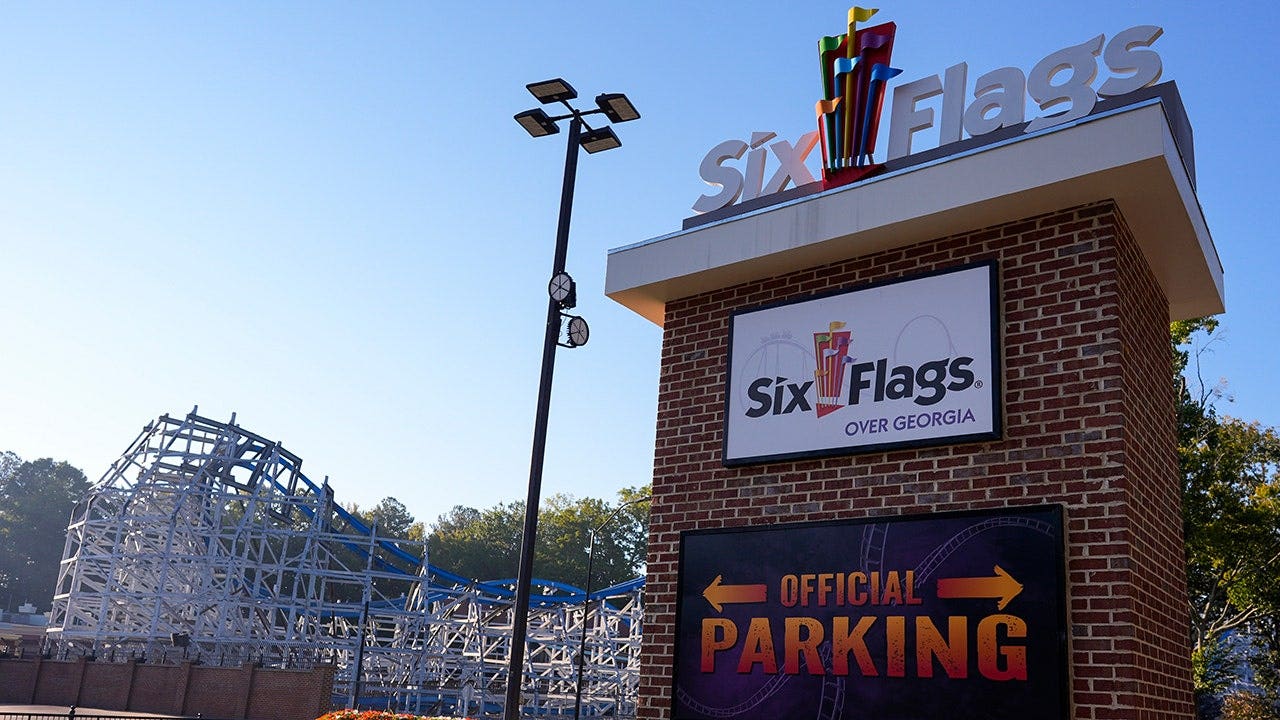
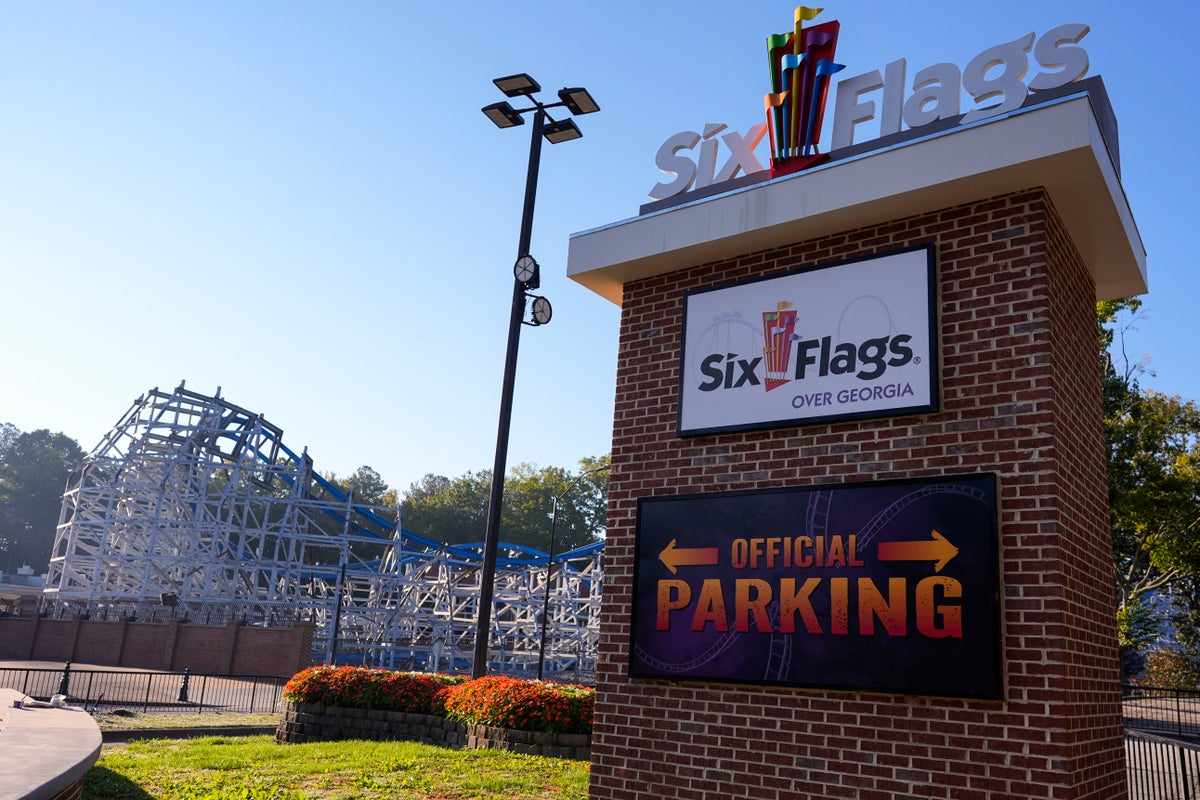
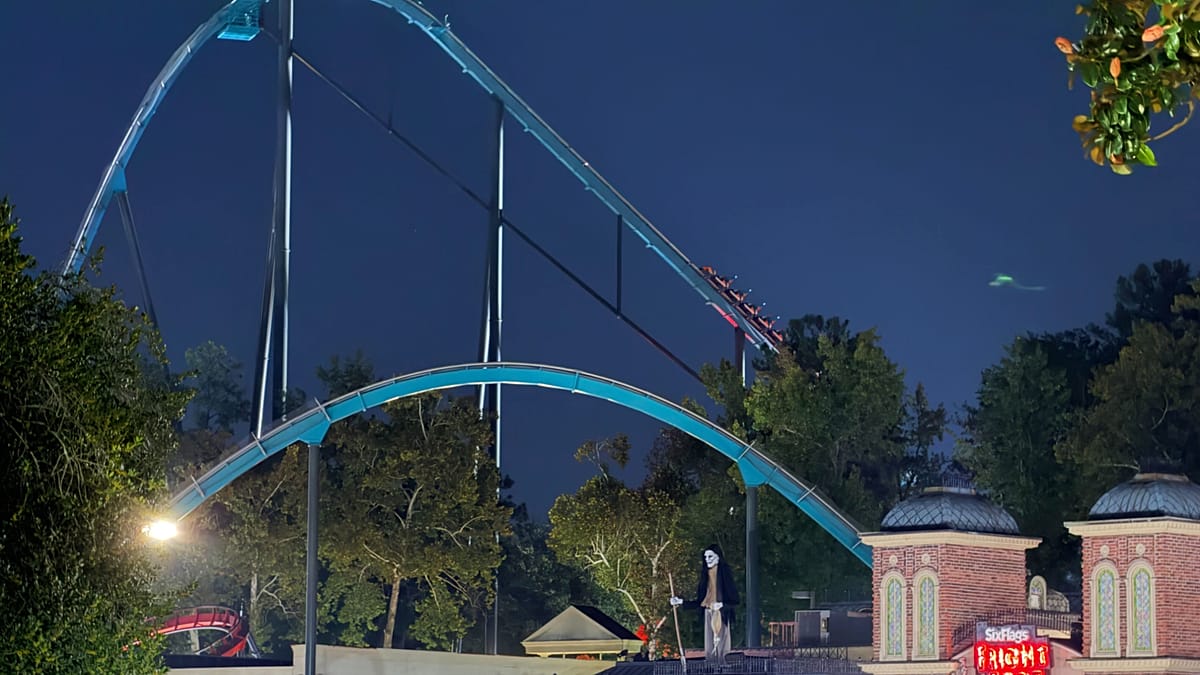
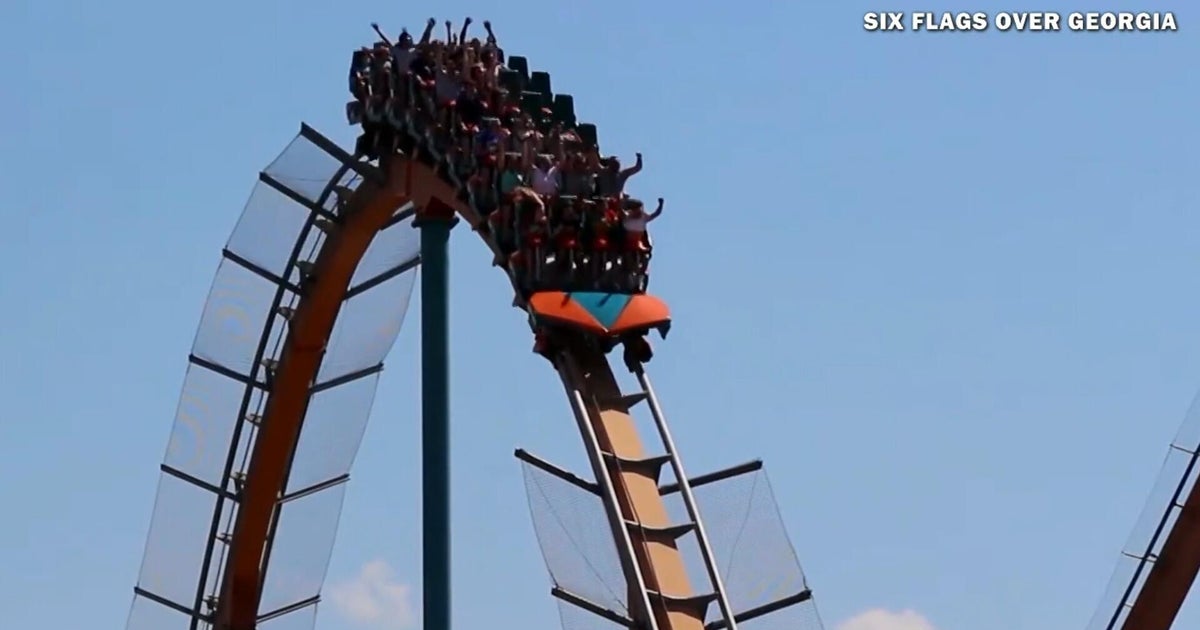
But after Hassan Jihad Ibn Kariem, 42, died after falling from Six Flags’ Goliath hypercoaster on Monday (the ride was shut down along with nine similar attractions across North America), the incidents raise a question: In the pursuit of bigger, faster thrills, are amusement parks pushing the limits of passenger safety?
framing: assertive · carried by 1 article(s) · first seen 2026-10-14
🔮 “They’ve gotten a little more risky, I would say, over the years,” Bertozzi told The Post.

Claims (63 extracted, 9 hedged)

Six Flags is facing mounting criticism for their extreme thrill rides after a father plunged to his death from a roller coaster in Georgia on Monday, while riding with his son. asserted
father → face → son
More than 100 people have come forward claiming harm from the ride, which featured rotating seats that flipped passengers during high-speed drops and turns. asserted
that → come → drops
Two women underwent emergency brain surgery after riding it in July, according to a CNN investigation. uncertain
women → undergo → investigation
The amusement park giant has increasingly embraced extreme, high-speed attractions, including so-called “hypercoasters”—massive rides that can stand up to 300 feet tall and fling passengers through stomach-churning drops and turns. asserted
that → embrace → drops
In 2025, they helped lure 47.4 million visitors to the park and generated billions in revenue. asserted
they → lure → revenue
But after Hassan Jihad Ibn Kariem, 42, died after falling from Six Flags’ Goliath hypercoaster on Monday (the ride was shut down along with nine similar attractions across North America), the incidents raise a question: In the pursuit of bigger, faster thrills, are amusement parks pushing the limits of passenger safety? asserted
parks → die → safety
The hidden physical risks Amusement parks thrive on making riders feel imperiled without causing injury—but experts tell The Post that as thrill seekers demand more adrenaline than ever, safety isn’t guaranteed. asserted
safety → thrive → adrenaline
David Bertozzi, president of the National Association of Amusement Ride Safety Officials, acknowledged that roller coasters aren’t failsafe, and their extreme builds have injured some riders. asserted
builds → acknowledge → riders
“They’ve gotten a little more risky, I would say, over the years,” Bertozzi told The Post. asserted
Bertozzi → get → Post
He recalled an industry push toward making rides “bigger, faster, bigger, faster,” requiring engineers to carefully calculate the G-forces—gravity forces—that passengers experience during steep drops and turns. asserted
passengers → recall → drops
But even when a ride functions as designed, it can put physical stress on passengers—meaning even if a roller coaster’s machinery works perfectly, the body might still be damaged. uncertain
body → function → passengers
Cardiologist Dr. Mark L. Meyer told The Post that rapid acceleration, abrupt head movements, and adrenaline can spike heart rate and blood pressure, while sudden movements can strain the neck and spine. asserted
movements → tell → neck
Rare cases of strokes, arterial injuries and bleeding inside the skull have been reported following amusement rides, though direct causation hasn’t been established. People with underlying cardiovascular, neurological or spinal conditions may be particularly vulnerable. uncertain
People → report → conditions
In 2006, for example, a park-goer with a congenital heart condition died after suffering a heart attack on the same Six Flags Goliath ride. asserted
goer → die → ride
“We should not confuse something that is physiologically stressful with something inherently dangerous. asserted
that → confuse → something
Those are two different things,” Meyer cautioned. asserted
Meyer → caution → ?
Still, industry figures show a rise in roller coaster injuries. asserted
figures → show → injuries
A National Safety Council report for the International Association of Amusement Parks and Attractions estimated 652 roller coaster injuries across North America in 2024, up from 458 in 2023. asserted
report → estimate → 2023
The rate climbed from 0.88 to 1.27 injuries per million coaster rides—roughly 44%—although the odds of serious injury on any fixed-site amusement ride remain about 1 in 15.5 million. asserted
odds → climb → million
But just driving a car, the National Highway Traffic Safety Administration (NHTSA) reported that 7,770 people died during the first three months of 2026. asserted
people → drive → 2026
“All amusement rides, including roller coasters, are remarkably safe in relation to the number of exposures,” Kathryn Woodcock, a Toronto Metropolitan University professor who studies amusement ride safety, told The Post. asserted
who → include → Post
How can a ride pass inspection and still pose risks? asserted
ride → pass → risks
The X2 controversy raises another question: How can a roller coaster repeatedly pass safety inspections while passengers continue reporting serious injuries? asserted
passengers → raise → injuries
Part of the answer lies in what inspectors examine — and how often. asserted
inspectors → lie → what
Woodcock explained that parks conduct daily checks, while more extensive inspections occur at intervals set by manufacturer recommendations and state requirements. asserted
inspections → explain → recommendations
“The specific thing that failed was not necessarily something that is inspected daily,” she said. asserted
she → fail → ?
“Internal cracking of structures, for example, is inspected using specialized technologies, and is scheduled at specific intervals.” But mechanical inspections don’t always determine the safety of individual riders and how a human body experiences the coaster’s twists and drops. asserted
body → inspect → twists
Bertozzi said that at minimum, recurring head injuries associated with a particular attraction should prompt further investigation into its restraints, design and movements. asserted
injuries → say → restraints
“If you have a couple of incidents, then you know it’s something you really should look into,” he said. asserted
he → have → incidents
But repeated complaints don’t automatically mean an attraction is unsafe, according to Professor Woodcock. uncertain
attraction → repeat → Woodcock
Operators must determine whether the injuries share a common cause, whether the ride operated within established safety standards, and why any passengers were injured. asserted
passengers → determine → standards
She cautioned that parks may investigate complaints behind the scenes even while rides remain operational. uncertain
rides → caution → scenes
“Owner/operators do not share their internal safety reports with the public and have varying regulatory obligations for reporting,” she said, which can leave riders with limited insight into previous complaints or safety investigations. asserted
which → share → complaints
A patchwork of state regulations Currently, America lacks a national regulation board for roller coasters. asserted
America → lack → coasters
Instead, individual states oversee permanent amusement park rides, creating a patchwork of safety requirements nationwide. asserted
states → oversee → requirements
While parks conduct daily inspections, independent or state checks may occur only once a year, depending on the jurisdiction. uncertain
checks → conduct → jurisdiction
Some states have no mandatory inspection programs at all. asserted
states → have → programs
Bertozzi praised New York’s inspection program and noted that Georgia also has state oversight, but said some operators elsewhere aren’t required to hire independent inspectors. asserted
operators → praise → inspectors
“I do some work out west, and I’m the inspector. asserted
I → ’m → work
The state doesn’t require anything else,” he said. asserted
he → require → anything
…and 23 more, not listed.

💬Give feedback
🕘History 🎫Support