Marijuana Contracts Are Not Enforceable in Federal Court

Reason · collected 2026-09-11 · by Jonathan H. Adler
Read the original at Reason ↗

Summary

A federal appeals court has ruled that a contract related to marijuana distribution is unenforceable in federal court due to its illegal subject matter under federal law. The case, Hello Farms Marketing MI v. GR Vending MI, involves a Michigan marijuana grower who sued for breach of contract after the defendant failed to pay $31.8 million as agreed upon. The Sixth Circuit Court of Appeals overturned a lower court's ruling that had allowed the lawsuit to proceed, citing federal law that prohibits marijuana distribution and possession. This decision underscores the ongoing tension between state laws legalizing marijuana and federal prohibition.
Written by the local model on 2026-09-11, using this article's own text rather than the other coverage of the same event (that is the story summary below).

Signals How these are calculated →

Claims extracted
16
claim-shaped sentences
Uncertain
6%
1 of 16 hedged
Leaning
withheld
no quote in the article backed the model's score
Publisher trust
91.2
red-flag proxy, not a credibility rating
Outlets on this story
1
Politics
Narrative spread
1
articles carrying this framing
Analyzed 2026-09-11 · how these are computed

AI analysis (generated at analysis time, not now)

Story summary

In a recent decision, the U.S. Court of Appeals for the Sixth Circuit ruled that a contract between two companies related to marijuana distribution is not enforceable in federal court because marijuana remains illegal under federal law. This case, Hello Farms Marketing MI v. GR Vending MI, involves Hello Farms, a Michigan-based marijuana grower, and GR Vending. The court's decision reverses a previous ruling by a district court and highlights the ongoing tension between state and federal laws regarding marijuana. Despite 16 states having legalized adult possession of marijuana under state law, it remains illegal under federal law, which can still have significant consequences. This case demonstrates that even though the federal government may not aggressively enforce federal marijuana prohibition, the fact that it is still prohibited under federal law can impact business dealings and contracts related to marijuana. The ruling will be an important precedent in cases where federal and state laws conflict on issues like marijuana distribution.

Written for “Federal Laws vs State Pot Policies” on 2026-09-12, grounded in this article and the 0 other(s) covering the same event.
Why this leaning score
The model judged this article politically coded and scored it +0.85, but none of the 2 quote(s) it offered could be found in the article text, so the score is not published.
Written under an earlier scoring contract, which gave a paragraph rather than checkable quotes. Re-analysing this article replaces it.
Leaning score withheld for article 7891: no verified evidence · logged 2026-09-11

Story

📰 Federal Laws vs State Pot Policies
Politics · 1 article(s) covering the same event. This is the one the site leads with.

How this is being covered How these are calculated →

Article leaning vs. publisher reliability
Source leaning vs. consistency

Compared with similar articles

Nothing to compare against. No article is close enough to this one for the pipeline to have linked or judged the pair.

Publisher

Reason · 100 article(s) · 1 correction(s) detected
Running correction rate · 1 correction(s)
2026-09-05
Lawyers' Responsibility for Hallucinations in Briefs That They Sign

Who wrote this

Jonathan H. Adler
2 article(s) here · 1 carrying a prediction
🔮 So it is understandable why some may find the postliberal critique engaging, and perhaps even refreshingly transgressive.
2026-09-11 · assertive framing · Why Postliberalism Failed--And Is Likely to Fail Again
🔮 The federal government may not devote significant resources toward enforcing federal marijuana prohibition, but the fact that marijuana is illegal under federal law can still have meaningful consequences (though fewer for gun owners than before, thanks to the Supreme Court's decision in United States v. Hemani).
Also by Jonathan H. Adler
Nothing else under this byline is closely related to this article, so these are simply their most recent.

Topics

GR Vending Hello Farms Michigan United States the Supreme Court's

Subjects

Hello Farms ORG · 3× Michigan GPE · 3× GR Vending ORG · 2× GR Vending MI ORG · 1× Hello Farms Marketing MI ORG · 1× Hemani PERSON · 1× United States GPE · 1× the Sixth Circuit ORG · 1× the Supreme Court's ORG · 1× the U.S. Court of Appeals ORG · 1×

Narrative

A case in point that federal marijuana prohibition can have legal significance is today's decision by the U.S. Court of Appeals for the Sixth Circuit in Hello Farms Marketing MI v. GR Vending MI, holding that a marijuana contract is unenforceable in federal court given the illegal subject matter and throwing out a contrary district court ruling.
framing: assertive · carried by 1 article(s) · first seen 2026-09-11
🔮 The federal government may not devote significant resources toward enforcing federal marijuana prohibition, but the fact that marijuana is illegal under federal law can still have meaningful consequences (though fewer for gun owners than before, thanks to the Supreme Court's decision in United States v. Hemani).
2026-09-11 · Reason
Marijuana Contracts Are Not Enforceable in Federal Court · assertive framing

Claims (16 extracted, 1 hedged)

Mostly law professors | Sometimes contrarian | Often libertarian | Always independent Two-dozen states have legalized the adult possession of marijuana under state law. asserted
states → legalize → law
Many more have legalized the possession and use of marijuana for medicinal purposes. asserted
more → legalize → purposes
Yet marijuana distribution and possession remain illegal under federal law. asserted
distribution → remain → law
The federal government may not devote significant resources toward enforcing federal marijuana prohibition, but the fact that marijuana is illegal under federal law can still have meaningful consequences (though fewer for gun owners than before, thanks to the Supreme Court's decision in United States v. Hemani). uncertain
marijuana → devote → Hemani
A case in point that federal marijuana prohibition can have legal significance is today's decision by the U.S. Court of Appeals for the Sixth Circuit in Hello Farms Marketing MI v. GR Vending MI, holding that a marijuana contract is unenforceable in federal court given the illegal subject matter and throwing out a contrary district court ruling. asserted
contract → hold → ruling
Judge Nalbandian summarizes the case in his opinion for the court: asserted
Nalbandian → summarize → court
Hello Farms, a Michigan marijuana grower, entered a contract to supply marijuana to Defendants GR Vending and CURA MI. asserted
Farms → enter → Vending
When GR Vending breached, Hello Farms sued. asserted
Farms → breach → ?
And a jury awarded Hello Farms $31.8 million. asserted
jury → award → million
Defendants argue that because the contract was illegal under federal law, the district court erred by not granting them judgment as a matter of law on their illegality defense. asserted
court → argue → defense
When the parties contracted, federal law made the growth, distribution, and possession of marijuana a crime. asserted
growth → contract → marijuana
Michigan, like many other states, made it a business. asserted
it → make → states
But despite the legalization of marijuana in Michigan, federal courts cannot enforce agreements to commit federal crimes. asserted
courts → enforce → crimes
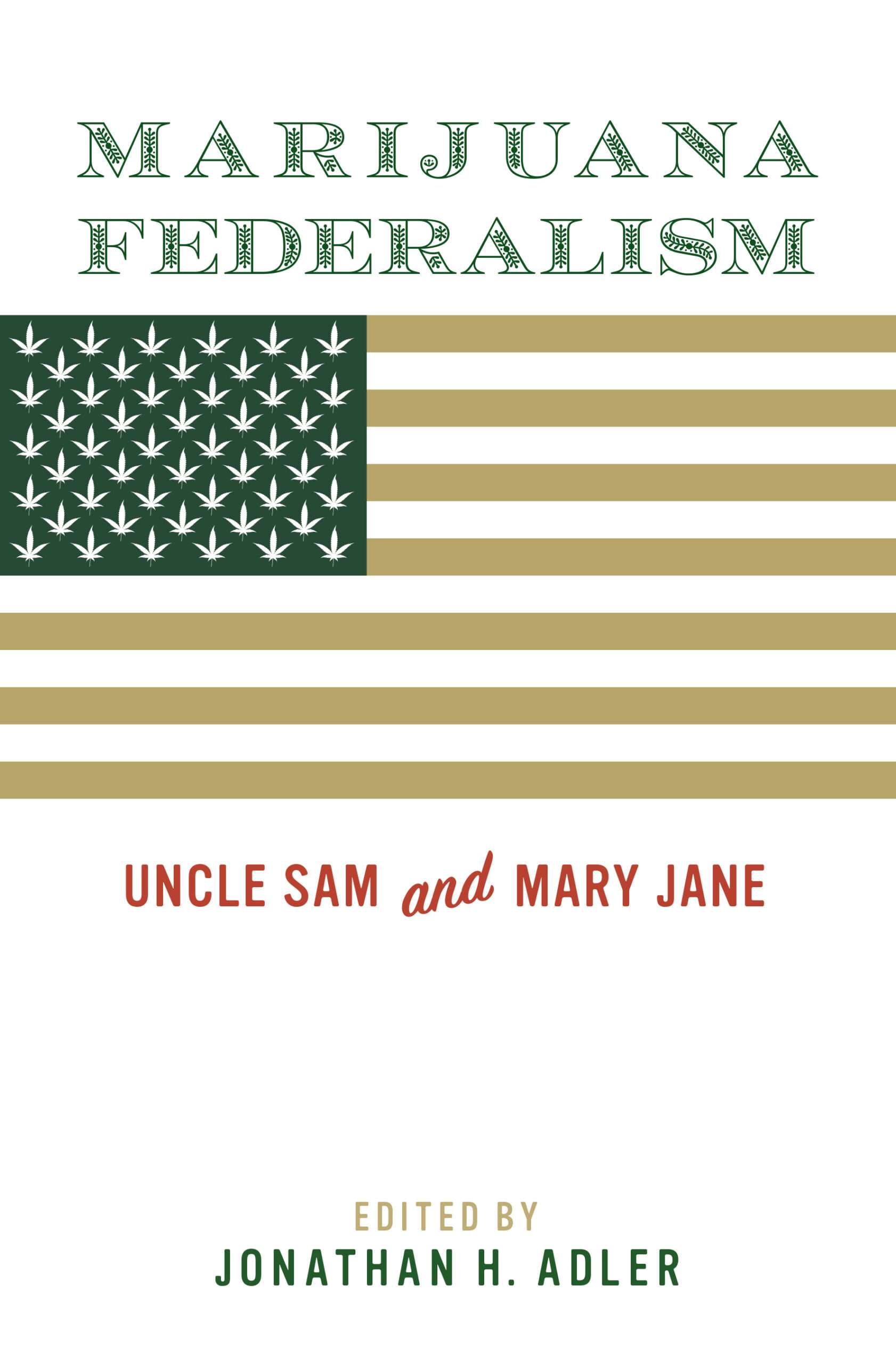
This case underscores a point I have tried to make in my work on this subject (including in my book Marijuana Federalism: Uncle Sam and Mary Jane): If we want to have real marijuana federalism, in which states can experiment productively with different approaches to marijuana, it is not enough for the federal government to do nothing. asserted
government → underscore → nothing
It must make state experimentation legal, such as by ending the criminalization of conduct that is legal under applicable state law (while continuing to prohibit conduct that is illegal under applicable state law, including interstate trafficking in violation of the such laws). asserted
that → make → laws
This was the federal government's approach to alcohol at the end of prohibition, and it is the only way to have a marijuana federalism that is free of the distorting effects of federal prohibition. asserted
that → have → prohibition

💬 Give feedback
🕘 History 🎫 Support