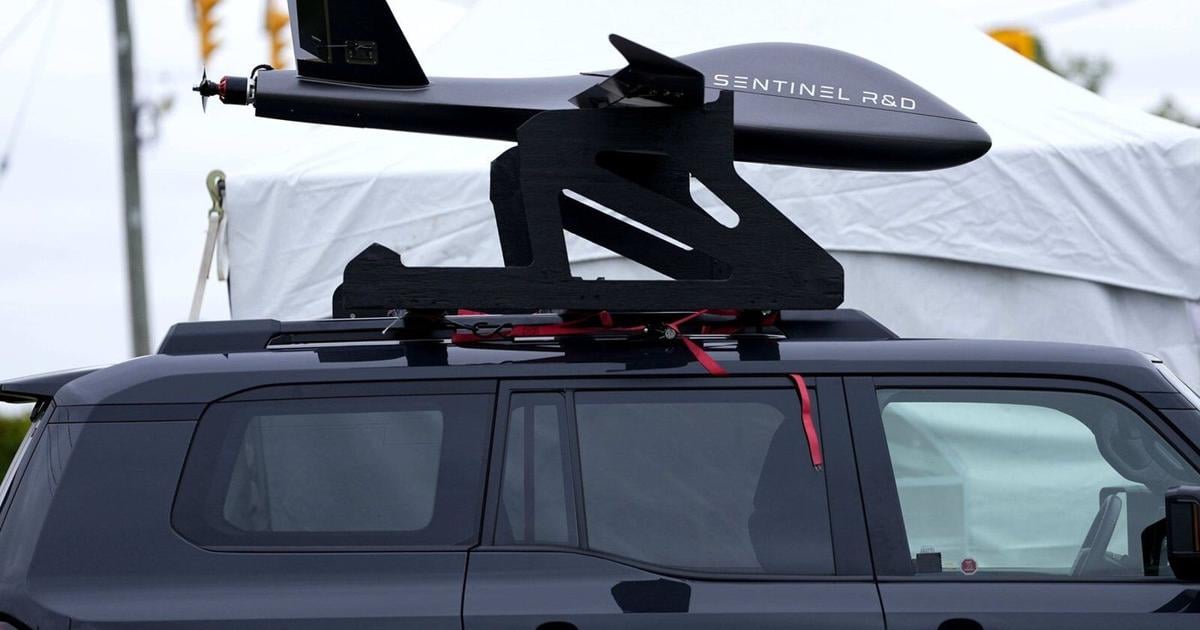
As drone-fuelled warfare rages on half a world away in Ukraine, the Canadian Army’s program for rapidly acquiring basic drones is just ramping up.
asserted
program → fuel → drones
And the pressure is on for the Canadian Armed Forces to speed up its adoption of drones as the technology changes the nature of modern warfare.
asserted
technology → speed → warfare
Lt.-Col. Jonathan Penney is a reservist who previously worked in defence manufacturing and now co-ordinates the forces’ Minerva drone program.
asserted
who → work → program
He said that while the army feels pressure to pick up the pace, it’s focused both on finding the right mix of tech for its current needs and on building up the domestic drone industry.
asserted
it → say → industry
“The army is really good at adapting and evolving,” he said in an interview with The Canadian Press.
asserted
he → adapt → Press
The Minerva program launched a batch of tenders in recent months for a range of new drones — everything from low-cost Arctic surveillance drones for the Canadian Rangers to ground and aerial drones that can conduct cargo supply runs.
asserted
that → launch → runs
“We are figuring out what ‘right’ looks like,” Penney said.
asserted
Penney → figure → what
“Instead of just jumping in, buying a whole bunch of things that we don’t need, we buy things that can use today and then let the system evolve so that it’s integrated in how we conduct operations.”
asserted
we → jump → operations
The Minerva program operates unlike a typical procurement, which sees the military draft a list of requirements.
asserted
military → operate → requirements
Instead, Minerva launches what it calls “industry challenges” — ongoing projects which task companies with creating prototypes for specific uses.
asserted
which → launch → uses
Army personnel will be testing those prototypes until roughly next summer or fall.
asserted
personnel → test → summer
Another item the army is currently searching for is a low-cost targeting drone — an aerial spotter that allows artillery crews to hit targets they can’t see.
asserted
they → search → targets
Penney said it’s safer to rely on an aerial drone for targeting instead of sending a soldier into the field with a set of binoculars and a laser rangefinder.
asserted
it → say → binoculars
“If the drone gets shot down, we’ll just send up another one,” he said.
asserted
he → shoot → one
That kind of equipment is easy enough to buy off the shelf — but part of the goal of the Canadian Armed Forces drone program is to build up the domestic drone sector and ensure the tech can be easily absorbed by Canadian military units.
asserted
tech → buy → units
“Does it integrate with our systems and does it exist as-is produced in Canada?” Penney said.
asserted
Penney → integrate → Canada
“That’s what we’re driving for.
asserted
we → ’ → what
The army is expected to complete a new wish-list of drones for design and purchase over the next three to four months — including a breaching drone for dealing with ground-based obstacles such as mines.
asserted
army → expect → mines
The Minerva initiative launched roughly a year ago with the goal of quickly scaling up drone use in the army, rather than limiting it to ordering from the U.S. Defence Department’s approved list of drone manufacturers.
asserted
initiative → launch → manufacturers
Army Commander Lt.-Gen. Michael Wright has said he wants to “flood” Canada’s land forces with drones.
asserted
he → say → drones
Winning a drone prototype challenge is different from winning a large military production order, however.
asserted
Winning → win → order
The prototype challenge approach allows National Defence to cover research and development costs early in the process — which should encourage drone makers to take the risk of building prototypes with no guaranteed purchaser.
asserted
which → allow → purchaser
The 15-month Arctic aerial drone challenge, for instance, has a $500,000 maximum funding award.
asserted
challenge → have → award
“Canadian companies, especially those small mid-sized companies that can offer some solutions, don’t really know how the military operates.
asserted
military → offer → solutions
So when they create a product, it’s not necessarily focused towards some of the things that we need,” Penney said.
asserted
Penney → create → that
“They actually understand things better.
asserted
They → understand → things
So if you’re working in the Arctic, you have big gloves on, it’s understood that you can’t operate with fine motor controls.”
asserted
you → work → controls
Lt.-Gen. Darcy Molstad has been tasked with overseeing the integration of drones across the entire armed forces.
asserted
Molstad → task → forces
He said in a previous interview the military is starting to approach uncrewed systems more like munitions, rather than traditional equipment or expensive vehicles.
asserted
military → say → equipment
“We have to treat it almost like an expendable commodity versus something that we have to keep in inventory and capitalize the cost over 20 years,” Molstad said.
asserted
Molstad → have → years
“These things just last a short amount of time.”
asserted
things → last → time
Penney said that’s particularly true for drones used by land forces.
asserted
that → say → forces
“Especially from an army perspective, which will be different from the Air Force perspective, we are looking at … consumables, things that we’re going to use, and if it gets destroyed, fine, we’ll just send in another one,” he said.
asserted
he → look → one
As Russia tests NATO allies in Europe with repeated drone incursions, Canada’s military is looking for ways to counter the emerging threat.
asserted
military → test → threat
The Canadian Armed Forces recently put out a separate tender for a counter-aerial drone system that could be deployed at military installations across the country.
uncertain
that → put → country
This report by The Canadian Press was first published Oct. 13, 2026.
asserted
report → publish → Press
 The Aporia