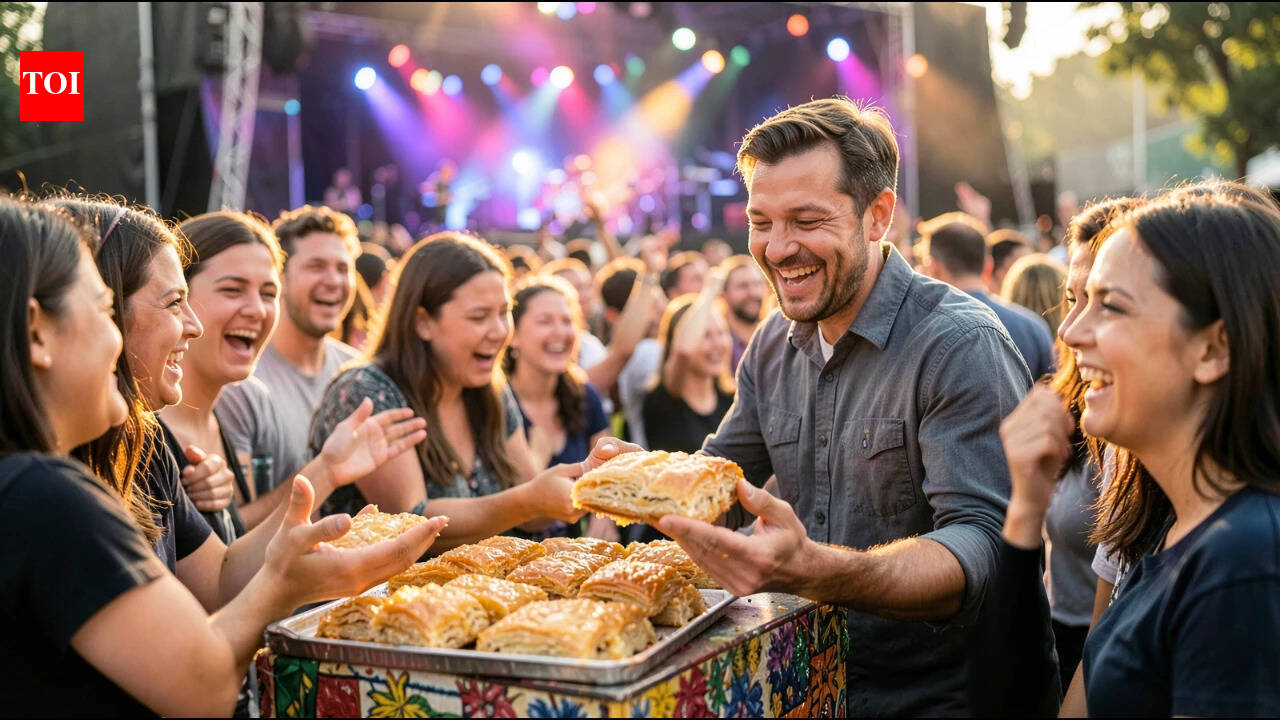
In September 2021, Jacob Komarow impulsively bought 3 trays of baklava on his way to a Phish concert in California, intending to resell them to fellow fans.
asserted
Komarow → buy → fans
When a friend doubted he could sell all 3 trays, Komarow bet that he could.
uncertain
he → doubt → trays
The experiment became the starting point for Good Baklava, a business that now sells Turkish pastries through street sales, pop-ups, wholesale orders and online purchases.
asserted
that → become → sales
Komarow, who uses the name Roy Donk, has become known in New York City as the “Baklava Guy”.
asserted
who → use → Guy
According to CNBC, Good Baklava averaged just over $20,000 in monthly sales over a recent 9-month period.
uncertain
Baklava → accord → period
Entrepreneur reported that sales came close to $70,000 in December 2025, the business’s best month to date.
asserted
sales → report → date
These figures represent sales, not profit, and do not establish how much the business earns after expenses.
asserted
business → represent → expenses
Jacob Komarow, known as Roy Donk: how a concert-side experiment became Good Baklava
Komarow’s first attempt to sell baklava began as a challenge involving a Phish concert in 2021.
asserted
attempt → know → 2021
As reported by Entrepreneur, he bought 3 trays from a Middle Eastern grocery store and set out to sell them to concertgoers.
asserted
he → report → concertgoers
He ultimately sold the trays at a profit, tripling his initial investment.
asserted
He → sell → investment
For almost 3 years, he treated baklava sales as a concert side hustle before expanding to other outdoor events and pursuing the business full-time.
asserted
he → treat → business
Komarow operates under the name Roy Donk, a reference to the comedy series I Think You Should Leave.
asserted
You → operate → series
Reporting by Resident has connected the name to the character, while coverage by The New York Times has featured the street-selling phenomenon around New York City.
asserted
coverage → report → City
In June 2026, Komarow handed out free baklava to Knicks fans outside Madison Square Garden, an appearance that helped his videos gain attention online, according to Entrepreneur.
uncertain
videos → hand → Entrepreneur
CNBC has also reported on his sales to strangers in local parks and his distribution of free pastries after Knicks games.
asserted
CNBC → report → games
These activities have contributed to his public profile, but the available reporting does not establish how much each appearance contributed to the company’s revenue.
asserted
appearance → contribute → revenue
A June 2026 profile in The New York Times brought further attention to the business.
asserted
profile → bring → business
Entrepreneur reported that Good Baklava had worked with US Mobile, Acme Smoked Fish and local and national restaurants.
asserted
Baklava → report → Mobile
The available information does not establish that these partnerships began as a result of the newspaper profile.
asserted
partnerships → establish → profile
The account of the partnerships is based on the founder’s comments and media reporting rather than an independently measured assessment of the profile’s commercial impact.
asserted
account → base → impact
Turkish baklava, pop-ups, wholesale orders and online sales
Good Baklava sources its pastries from a supplier in Gaziantep, Turkey, according to Entrepreneur.
uncertain
Baklava → source → Entrepreneur
The company’s website describes the product as sourced in Türkiye and explains that its trays are frozen for transport before being baked in New Jersey.
asserted
trays → describe → Jersey
The website also identifies Turkish pistachios among the product’s ingredients.
asserted
website → identify → ingredients
The business sells through several channels, including street sales, temporary stands, pop-ups, wholesale orders and its online shop.
asserted
business → sell → sales
CNBC’s reported monthly average covers multiple sales channels rather than online and in-person purchases alone.
asserted
average → cover → purchases
Good Baklava’s website offers several pack sizes, Turkish delights and branded merchandise.
asserted
website → offer → sizes
It also advertises group-gifting options and free shipping on orders above $100.
asserted
It → advertise → 100
At the time of checking, the company listed its 12-piece pack for $29.99, its 20-piece pack for $44, its 36-piece pack for $69.99 and its 72-piece pack for $136.
asserted
company → list → 136
These are the prices displayed on the company’s website and may change.
uncertain
These → display → website
Entrepreneur, citing CNBC, reported that 3 pieces sold in person for $10 to $15.
asserted
pieces → cite → 15
What the $70,000 peak and $20,000 monthly average reveal about sales
Good Baklava’s reported sales have varied considerably from month to month.
asserted
sales → report → month
Entrepreneur reported that the business generated close to $70,000 in sales in December 2025, its best month to date, helped by holiday orders.
asserted
business → report → orders
Sales fell to less than $10,000 the following month.
asserted
Sales → fall → 10,000
CNBC reported average monthly sales of just over $20,000 across a recent 9-month period.
asserted
CNBC → report → period
The average and the December peak describe different aspects of the business: one reflects sales across several months, while the other represents an unusually strong month.
asserted
other → describe → month
Neither figure should be interpreted as the founder’s personal income or the company’s profit.
asserted
figure → interpret → income
Revenue also does not account for the costs of running the business.
asserted
Revenue → account → business
These may include production, ingredients, transport, packaging, labour and expenses associated with selling at events.
uncertain
These → include → events
Without verified figures for costs and net earnings, the reported sales figures cannot establish the company’s profitability.
asserted
figures → verify → profitability
Good Baklava began with a small experiment selling pastries to concertgoers and developed into a business with multiple sales channels and a growing public profile.
asserted
Baklava → begin → channels
…and 2 more, not listed.
 The Aporia