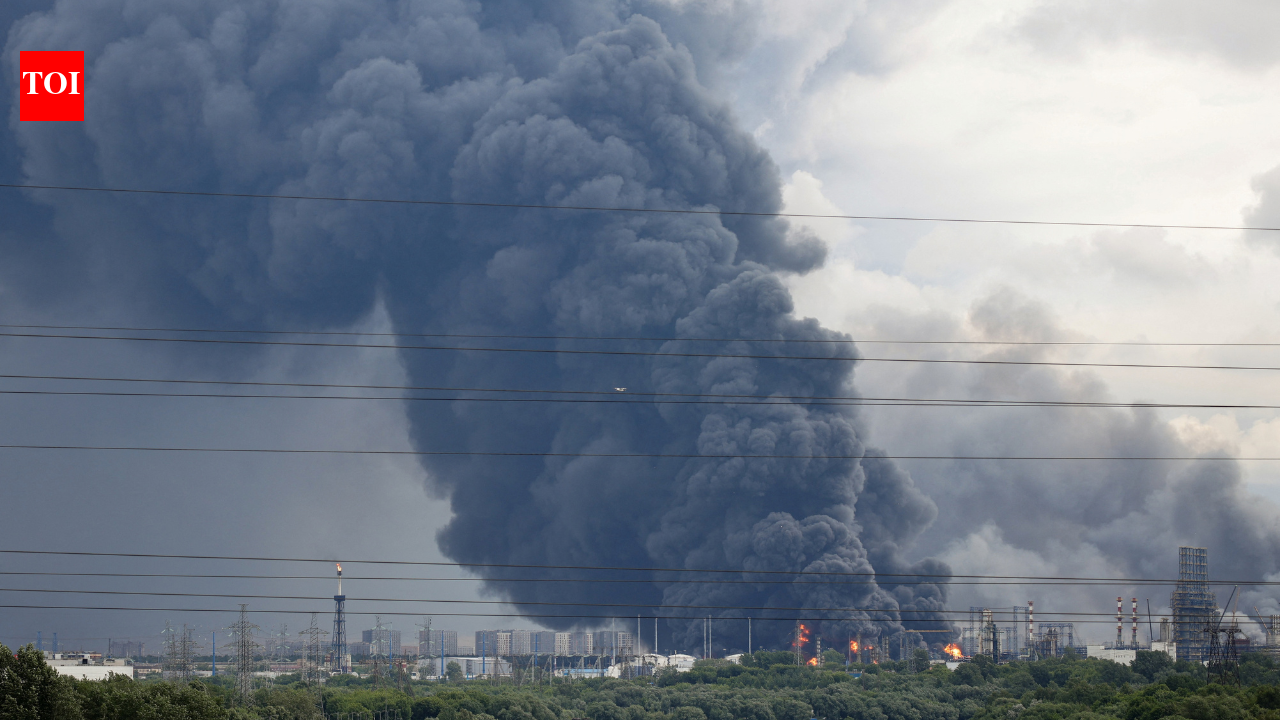
Why Zelenskyy's claims that Ukraine drone attack halted Russian bot traffic don't hold up

Read the original at CBC News ↗
Cite

Gollom, M. (2025, January 12). Why Zelenskyy's claims that Ukraine drone attack halted Russian bot traffic don't hold up. CBC News. https://www.cbc.ca/news/world/yankex-russia-ukraine-bots-9.7379086?cmp=rss

Dated from the outlet's own feed. Check the original for its byline.

CBC News · collected 2026-10-14 · by Mark Gollom

Quick Summary

Ukrainian President Volodymyr Zelenskyy claimed that drone attacks on Yandex data centers in Russia reduced pro-Russia bot activity on social media platforms. However, experts like Lukasz Olejnik and Samuel Woolley dispute these claims, arguing that the observed decrease in bot traffic is likely a misinterpretation of internet usage data rather than an actual reduction in Russian disinformation efforts. The article challenges Zelenskyy's assertions by emphasizing that while Yandex services experienced outages after the strikes, there is no concrete evidence to support the idea that propaganda bots were significantly diminished or silenced as a result.
Written locally by qwen2.5:14b on 2026-10-14, using this article's own text rather than the other coverage of the same event (that is the story summary below).

AI analysis runs on qwen2.5:14b, locally

Story summary

As of October 13, 2026, Ukrainian President Volodymyr Zelenskyy claimed that drone strikes on Yandex data centers in Russia had significantly reduced pro-Russia bot activity online. However, experts have since cast doubt on these claims. Zelenskyy stated at the Warsaw Security Forum that there was a noticeable decrease in hate speech and division on social media platforms after the attacks. Despite initial support for this narrative, research groups like Antibot4Navalny argue that no significant drop occurred in traffic from Kremlin-aligned human trolls targeting Russian domestic users. The misconception was widely shared online, with some social media posts suggesting declines of up to 56% in bot activity supporting German far-right parties and British political movements.

Written for “Russian Bot Farm Claims Debunked” on 2026-10-14, grounded in this article and the 1 other(s) covering the same event.
Why this leaning score
The model judged this article politically coded and scored it -0.45, but 1 quote(s) could not be found in the article and the other 1 are attributed speech rather than the article's own narration, so the score is not published.
Written under an earlier scoring contract, which gave a paragraph rather than checkable quotes. Re-analysing this article replaces it.
Leaning score withheld for article 78700: no verified evidence · logged 2026-10-14

Story

📰 Russian Bot Farm Claims Debunked
Politics · 2 article(s) covering the same event. See how they differ ↓

Compared with similar articles

This article reads unscored and hedges 13% of its claims. Each row says how that neighbour differs.
Mother Jones · 0.87 cosine similarity
⚖️ leaning not scored 🔴 21% hedged 8 of 38 📰 publisher trust 95
“Both articles refer to Ukrainian President Zelenskyy's claims about a decrease in pro-Russia bot activity on social media platforms following Ukraine's drone strikes on Yandex data centers, specifically mentioning the Warsaw Security Forum speech.”
Toronto Star
⚖️ leaning not scored 🔴 12% hedged 7 of 58 📰 publisher trust 63
“Article A discusses Ukraine's dependency on Chinese technology for its drones, while Article B addresses President Zelenskyy's claims about a drone attack on Yandex data centers and its impact on social media bots.”
The Straits Times
⚖️ leaning not scored 🔴 0% hedged 0 of 12 📰 publisher trust 59
“Article A discusses an attack on Sberbank's data center in Saratov, while Article B focuses on Zelenskyy's claims regarding attacks on Yandex data centers and their impact on social media bot activity.”
The Hindu
⚖️ leaning not scored 🔴 9% hedged 2 of 23 📰 publisher trust 95
“The articles describe different aspects and outcomes of related events, one focusing on Zelenskyy's response to Trump and a drone attack, while the other critiques Zelenskyy's claims about the impact of that same attack on social media activity.”
Al Jazeera
⚖️ leaning not scored 🔴 7% hedged 1 of 14 📰 publisher trust 60
“Article A describes a drone attack on Yandex's data center in Vladimir, while Article B discusses Zelenskyy's claims about Ukraine's attacks on multiple Yandex data centers affecting bot traffic. These are different specific events.”
Al Jazeera
⚖️ leaning not scored 🔴 8% hedged 2 of 24 📰 publisher trust 60
“While both articles discuss Ukrainian drone strikes on Yandex data centers, Article A describes the initial attack and its broader implications for Ukraine's military strategy, while Article B focuses on President Zelenskyy's claims about the impact of these attacks on social media bot activity, which appears to be a later development or interpretation of the event.”
BBC News
⚖️ leaning not scored 🔴 17% hedged 4 of 23 📰 publisher trust 72
“The articles describe related events but focus on different aspects: one on Yandex's struggle due to data centre strikes, and the other on Zelensky's claims about a decrease in pro-Russia bot activity.”
Global News
⚖️ Leans strongly left 🔴 11% hedged 3 of 28 📰 publisher trust 64
“The articles cover related events but different aspects: one describes the drone attack and criticism from Trump, while the other focuses on Zelenskyy's claims about the impact of the attacks on bot traffic.”
Times of India
⚖️ Leans left 🔴 12% hedged 3 of 25 📰 publisher trust 59
“Article A describes the immediate impact and details of a Ukrainian drone attack on Yandex data centers, while Article B focuses on President Zelenskyy's claims about the bot traffic aftermath, discussing it in context with subsequent analysis.”
Semafor
⚖️ Leans right 🔴 0% hedged 0 of 4 📰 publisher trust 95
“Article A describes a general trend and incident involving Ukrainian drone attacks on Russian data centers, while Article B focuses specifically on President Zelenskyy's claims regarding a drop in pro-Russia bot activity following specific strikes on Yandex data centers.”
How this article was measured signals, leaning charts, publisher record, byline, topics and claims

Signals How these are calculated →

Claims extracted
30
sentences that state something as happening or true
Uncertain
13%
4 of 30 hedged ("reportedly", "may", "according to")
Leaning
withheld
no quote in the article backed the model's score
Publisher signals
77/100
CBC News's corrections and hedging, across everything collected from it. Not a measure of accuracy.
Outlets on this story
2
Politics
Same framing elsewhere
1
articles that frame the event the way this one does
Analyzed 2026-10-14 · how these are computed

How this is being covered How these are calculated →

Article leaning vs. publisher reliability
Source leaning vs. consistency

Publisher

CBC News · 1208 article(s) · 4 correction(s) detected
Running correction rate · 4 correction(s)

Who wrote this

Mark Gollom
5 article(s) here · 1 carrying a prediction
🔮 "So it makes total sense if you attack Yandex, that automated traffic online would go down," he said.
🔮 Why Elon Musk waded into the separatism debate Prime minister, premiers rejected Musk's calls for provinces to separate from Canada When Elon Musk called for Quebec, Alberta and Saskatchewan to separate from Canada earlier this week, it may have been nothing more than the trillionaire engaging in some anti-Canadian trolling.
🔮 How AI could usher in a 'new scientific golden age' — if it doesn't kill us all first Some scientists express concern government regulation could hamper important progress
🔮 "If we try to look at the new defence agreement compared to the old defence agreement, I would characterize it as a moderate improvement for the U.S.," Mikkel Runge Olesen, a senior researcher at the Danish Institute of International Studies, told CBC News.
🔮 This story refers to sexual assault allegations and may affect those who have experienced sexual violence or know someone affected by it.
Also by Mark Gollom
Nothing else under this byline is closely related to this article, so these are simply their most recent.

Topics

Russian Ukraine Ukrainian Yandex pro-Russia

Subjects

Yandex ORG · 10× Russian NORP · 9× Ukrainian NORP · 4× Russia GPE · 3× Ukraine GPE · 3× CBC News ORG · 2× Google ORG · 2× Video ORG · 2× Zelenskyy PERSON · 2× pro-Russia NORP · 2×

Narrative

Trump announces Russia-Ukraine 'energy ceasefire,' which Zelenskyy says he hasn't seen but supports Zelenskyy says Russia violating Trump's 'energy ceasefire' as attacks on Ukraine continue Olejnik says Russian influence operations involve thousands of accounts across various platforms, and that "taking down a few data centres" won't solve the whole problem.
framing: assertive · carried by 1 article(s) · first seen 2026-10-14
🔮 "So it makes total sense if you attack Yandex, that automated traffic online would go down," he said.

Claims (30 extracted, 4 hedged)

Why Zelenskyy's claims that Ukraine drone attack halted Russian bot traffic don't hold up uncertain
attack → halt → traffic
Ukrainian president credited drop in pro-Russia bot activity on social media to strike on Yandex data centres When Ukraine struck three data centres owned by the Russian technology and AI company Yandex over the weekend, Ukrainian President Volodymyr Zelenskyy initially said the attacks had resulted in a sudden drop in pro-Russia bot activity. asserted
attacks → credit → activity
"It suddenly became a little easier to breathe on many social media platforms," Zelenskyy told the Warsaw Security Forum Monday via video link. asserted
Zelenskyy → become → link
"A lot of people noticed it. asserted
lot → notice → it
"And it's pretty clear where those bots were coming from — if they disappeared when Yandex went offline." The Ukrainian president's assertions that the strikes had curtailed the spread of pro-Russia disinformation were also repeated and spread on various social media forums. asserted
strikes → come → forums
But some experts are casting doubt on his claims and instead suggest that people are misinterpreting data collected about bot traffic following the drone attacks. uncertain
people → cast → attacks
"It's a dangerous misconception," Lukasz Olejnik, a visiting senior research fellow at the Department of War Studies at Kings College London, posted on X. "The 'bots went silent' story is misinformation," he wrote. asserted
he → visit → X.
"Believing it is plainly dangerous. asserted
it → believe → ?
It tells people the threat is gone while influence operations keep going." Yandex, often described as Russia's Google, runs the country's most popular search engine and a wide range of digital services, and is heavily involved in the development of Russian artificial intelligence. The airstrikes on the data centres caused outages across Yandex's services, leaving users in dozens of Russian cities as well as those in Kazakhstan, Belarus and Armenia, unable to order taxis or access banking services, according to Russian independent news outlet Astra. uncertain
airstrikes → tell → Astra
In an interview with CBC News, Samuel Woolley, who studies disinformation at the University of Pittsburgh, agreed it was an "an overstatement" to suggest propaganda bot traffic declined following Ukrainian attacks on Russian data centres. asserted
traffic → study → centres
Video Facebook is paying people overseas promoting Alberta separatism - asserted
Facebook → pay → separatism
Video Russian propaganda networks add fuel to Alberta separatism debate, researchers warn "I haven't seen any research or data that tracks all of the propaganda bots," he said. asserted
he → add → bots
"It's a misconception to say that all the Russian propaganda bots went down because of this." asserted
bots → say → this
Russia is alleged to have created a vast network or army of bots — automated software programs on the internet — to spread disinformation, particularly about Ukraine and the war. asserted
Russia → allege → Ukraine
Flawed interpretation of data Following the strikes on the data centres, some on social media were quick to cite a chart from Cloudflare, a U.S. company that monitors global internet traffic, claiming that it showed Russian bot activity had dropped to nearly zero. asserted
activity → follow → zero
Olejnik said in an email to CBC News that while the data from Cloudflare is reliable, it just showed a decline in automated traffic activity from Yandex's search engine crawler, which he explained is different from automated bots used to spread disinformation by posting on social media sites. asserted
he → say → sites
"The problem is how these figures were interpreted," Olejnik said, noting the Cloudflare data does not measure propaganda infrastructure activity on social networks. asserted
data → interpret → networks
"The strikes disrupted Yandex's infrastructure, but no significant general decline in pro-Kremlin activity is confirmed," he told CBC via email. asserted
he → disrupt → email
Woolley says most people associate the word "bot" with fake accounts online, however, it's a generic term to describe any kind of software that completes automated tasks on the internet. Including the kind Yandex uses to scour the web. asserted
Yandex → say → web
"So it makes total sense if you attack Yandex, that automated traffic online would go down," he said. asserted
he → make → Yandex
Yandex, often described as Russia’s Google, runs the country’s most popular search engine and a wide range of digital services, and is heavily involved in Russia’s artificial intelligence development. asserted
Yandex → describe → development
"Basically, bot traffic generally dropped, but everyone is so focused on the internet being so rife with disinformation and propaganda, people relate the word bot to a manipulative social media account." asserted
people → drop → account
Woolley says it's estimated that over half of online traffic is automated, but "that doesn't mean that half of online traffic is malicious bots." asserted
half → say → traffic
He also says it's unlikely that Russian propaganda networks were entirely reliant on the Yandex data centres hit in the strikes. asserted
networks → say → strikes
Trump announces Russia-Ukraine 'energy ceasefire,' which Zelenskyy says he hasn't seen but supports Zelenskyy says Russia violating Trump's 'energy ceasefire' as attacks on Ukraine continue Olejnik says Russian influence operations involve thousands of accounts across various platforms, and that "taking down a few data centres" won't solve the whole problem. asserted
taking → announce → problem
"Troll farms hide behind proxies, hijacked devices and Western clouds," he wrote on X. " asserted
he → hide → X.
They're still operating." asserted
They → operate → ?
Meanwhile, Zelenskyy appeared to be backtracking a bit on his initial claim. uncertain
Zelenskyy → appear → claim
The Ukrainian president's office told BBC he was "talking about the atmosphere on social media" rather than a decline in bot activity. asserted
he → tell → activity
The office noted that it had seen "reports of fewer provocative and hateful comments" from many social media users. asserted
it → note → users

💬Give feedback
🕘History 🎫Support