Businesses could be barred from non-essential water use amid supply threat

Read the original at The Guardian ↗
The Guardian · collected 2026-10-14 · by Sandra Laville

Quick Summary

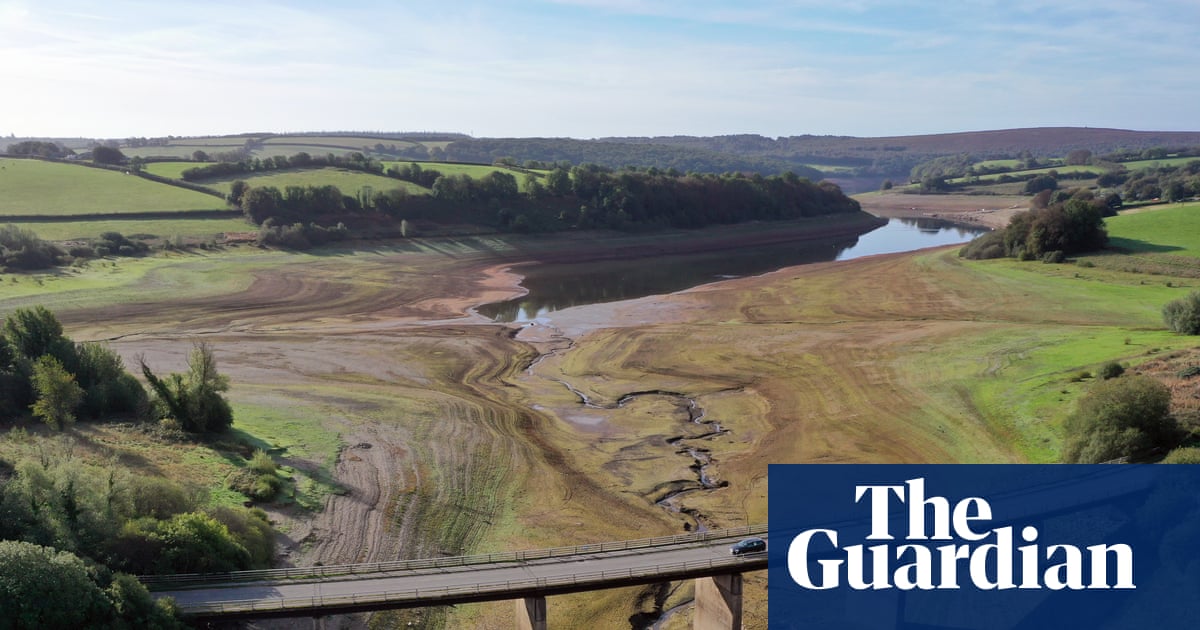
Three English water companies are requesting severe restrictions on non-essential water use by businesses due to ongoing drought conditions affecting eleven regions in England. This includes prohibiting golf clubs and private schools from irrigating their grounds and stopping commercial car washes, which can consume up to 25 liters of water per minute. Reservoir levels across England and Wales are at 54%, with some reservoirs below 50% capacity. The Department for Environment, Food and Rural Affairs (Defra) must approve these restrictions, but it has yet to respond to the companies' requests.
Written locally by qwen2.5:14b on 2026-10-14, using this article's own text rather than the other coverage of the same event (that is the story summary below).

AI analysis runs on qwen2.5:14b, locally

Story summary

Three water companies are seeking severe restrictions on non-essential water use for businesses across eleven drought-stricken areas in England as of October 9, following Yorkshire's declaration of a drought status. Golf clubs and private schools could be barred from using mains water to irrigate playing fields and courses, while commercial car washes might cease operations under these new bans. Rivers are suffering low flows, groundwater levels are declining, and reservoirs are at only 54%, with some as low as 21% below expected autumn levels. In England, nineteen reservoirs or groups of reservoirs are less than 50% full, and eight are exceptionally low. The Met Office predicts that above-average rainfall over a seven-month period is needed to alleviate the drought conditions.

Written for “Water Use Restrictions Imposed” on 2026-10-14, grounded in this article and the 0 other(s) covering the same event.
Why this leaning score
The article's own words the score was based on. Each is quoted verbatim and was checked against the article text before being stored, so you can find it in the original.
Reading Leans left (beta estimate) Confidence high
Leaning: leans left for article 78532 (high confidence, 1 verified quote) · logged 2026-10-14

Story

📰 Water Use Restrictions Imposed
Environment · 1 article(s) covering the same event.

Compared with similar articles

This article reads leans left and hedges 6% of its claims. Each row says how that neighbour differs.
BBC News
⚖️ leaning not scored 🔴 8% hedged 1 of 12 📰 publisher trust 72
“The articles discuss different aspects of water management and weather preparation in the UK, with one focusing on a flood taskforce and the other on drought-related restrictions for businesses.”
Evening Standard
⚖️ leaning not scored 🔴 0% hedged 0 of 18 📰 publisher trust 67
“While both articles discuss drought conditions in Yorkshire, Article A describes the declaration of a drought, while Article B discusses potential severe restrictions on water use as a result of the ongoing drought.”
Evening Standard
⚖️ leaning not scored 🔴 0% hedged 0 of 18 📰 publisher trust 67
“Article A reports on the declaration of drought in Yorkshire, while Article B discusses potential restrictions for businesses due to ongoing drought conditions across most of England.”
Evening Standard
⚖️ Leans left 🔴 0% hedged 0 of 22 📰 publisher trust 67
“Article A reports on the initial declaration of drought in Yorkshire, while Article B discusses potential water restrictions for businesses due to an ongoing drought situation across England. These are different stages or aspects of a broader drought issue.”
Daily Mail
⚖️ leaning not scored 🔴 29% hedged 4 of 14 📰 publisher trust 64
“The articles discuss different aspects of a broader drought situation, with Article A focusing on residential water supply shortages and potential standpipes, while Article B discusses restrictions for businesses.”
Evening Standard
⚖️ leaning not scored 🔴 0% hedged 0 of 16 📰 publisher trust 67
“While both articles discuss drought conditions in Yorkshire, Article A reports on the declaration of drought status, while Article B discusses potential severe restrictions due to an ongoing drought. These describe different stages and measures related to the same broader situation but are not describing a single specific incident.”
BBC News
⚖️ leaning not scored 🔴 0% hedged 0 of 8 📰 publisher trust 72
“While both articles discuss drought conditions affecting Yorkshire, Article A reports on the initial declaration of drought, while Article B describes potential severe restrictions imposed as a result of ongoing drought conditions.”

Cite this article

Laville, S. (2026, October 14). Businesses could be barred from non-essential water use amid supply threat. The Guardian. https://www.theguardian.com/environment/2026/oct/14/businesses-barred-water-use-drought-england-supply-threat

Dated from the outlet's own feed. Check the original for its byline.

How this article was measured signals, leaning charts, publisher record, byline, topics and claims

Signals How these are calculated →

Claims extracted
31
sentences that state something as happening or true
Uncertain
6%
2 of 31 hedged ("reportedly", "may", "according to")
Leaning
Leans left
of the writing, not the subject · beta estimate
Publisher signals
67/100
The Guardian's corrections and hedging, across everything collected from it. Not a measure of accuracy.
Outlets on this story
1
Environment
Same framing elsewhere
1
articles that frame the event the way this one does
Analyzed 2026-10-14 · how these are computed

How this is being covered How these are calculated →

Article leaning vs. publisher reliability
Source leaning vs. consistency

Publisher

The Guardian · 1793 article(s) · 5 correction(s) detected
Running correction rate · 5 correction(s)

Who wrote this

Sandra Laville
3 article(s) here · 1 carrying a prediction
🔮 Golf clubs and private schools could be barred from using mains water to irrigate playing fields and courses, and commercial car washes stopped from operating, under “non-essential use bans” being sought by the companies.
🔮 The published plan, which is open for consultation for 28 days, states that the developer will pay £2,675 per house – £42m in total – into the nature restoration fund to cover compensatory actions including fenland creation and restoration, a change in use of agricultural land to semi-natural habitat, catch-dyke restoration and deer management. But a previous draft of the EDP, seen by the Guardian, set the levy much higher.
Also by Sandra Laville
Nothing else under this byline is closely related to this article, so these are simply their most recent.

Topics

Defra England Wales Yorkshire the Angling Trust

Subjects

England GPE · 7× Defra ORG · 2× Hampshire GPE · 2× Wales GPE · 2× the Angling Trust ORG · 2× Mark Owen PERSON · 1× South East ORG · 1× The Met Office ORG · 1× Yorkshire GPE · 1× the Department for Environment, Food and Rural Affairs ORG · 1×

Narrative

Mark Owen, the head of fisheries at the Angling Trust, said: “When rivers and fish are suffering from the ongoing effects of a severe drought, the Angling Trust supports further restrictions on non-essential water use, alongside urgent action to reduce huge leakage from water companies and unsustainable abstraction from rivers.
framing: assertive · carried by 1 article(s) · first seen 2026-10-14
🔮 Golf clubs and private schools could be barred from using mains water to irrigate playing fields and courses, and commercial car washes stopped from operating, under “non-essential use bans” being sought by the companies.
2026-10-14 · The Guardian
Businesses could be barred from non-essential water use amid supply threat · assertive framing

Claims (31 extracted, 2 hedged)

Three water companies are seeking to impose severe restrictions on businesses as the drought continues across most of England, putting rivers and wildlife under huge pressure. asserted
drought → seek → pressure
Golf clubs and private schools could be barred from using mains water to irrigate playing fields and courses, and commercial car washes stopped from operating, under “non-essential use bans” being sought by the companies. uncertain
washes → bar → companies
Eleven areas of England are still in drought, rivers are suffering from low flows, groundwater levels are declining and reservoir levels are at 54% – 21% below what is expected in the autumn. asserted
what → suffer → autumn
Yorkshire was the latest area to move into drought status on 9 October. asserted
Yorkshire → move → October
Parts of Wales are experiencing the first signs of drought recovery after the whole country was declared in drought in July. asserted
country → experience → July
The Met Office says above-average rainfall is needed over a sustained seven-month period to bring all areas out of drought. asserted
rainfall → say → drought
But last month England received about 65% of its typical September rainfall, with eastern and southern areas experiencing the greatest deficit. asserted
areas → receive → deficit
Businesses in drought-hit areas have been excluded from the hosepipe restrictions imposed on the public for the past three months. asserted
Businesses → hit → months
But South East, Southern and South West Water have applied to extend restrictions on water use to businesses via non-essential use bans in parts of their regions. asserted
Water → apply → regions
If granted, water restrictions can be placed on golf clubs, private schools and commercial car washes to cut water use. asserted
restrictions → grant → use
Power hoses in car washes can use up to 25 litres of water per minute. asserted
hoses → use → minute
Permission from the Department for Environment, Food and Rural Affairs (Defra) is required, but the government has yet to respond to the water companies’ requests. asserted
government → require → requests
Pressure on wildlife and the environment from the drought is continuing. asserted
Pressure → continue → drought
River flows in seven areas in England are exceptionally low, according to the latest Defra figures, affecting habitats, fish and wildlife. uncertain
flows → accord → habitats
They include the River Derwent in the north-east, the rivers Yare and Ely Ouse in east England, and the River Tone and the Hampshire Avon catchments in south-west England. asserted
They → include → England
When river flows fall to low flow levels they can take years to recover, with potentially severe effects on fish spawning and river health. asserted
they → fall → spawning
Mark Owen, the head of fisheries at the Angling Trust, said: “When rivers and fish are suffering from the ongoing effects of a severe drought, the Angling Trust supports further restrictions on non-essential water use, alongside urgent action to reduce huge leakage from water companies and unsustainable abstraction from rivers. asserted
Trust → say → rivers
“We must continue to reduce unnecessary demand for water. asserted
We → continue → water
It makes little sense to ban people from washing cars at home while commercial car washes can continue operating.” asserted
washes → make → home
In Hampshire, where the chalk aquifer is exceptionally low, Southern Water is seeking a drought order that would allow it to draw water from an internationally prized chalk stream and rare salmon habitat, even at levels below what is deemed ecologically safe. asserted
what → seek → levels
Southern said it was applying for the permit for the River Test owing to “a clear threat to supplies” in Hampshire and the Isle of Wight. asserted
it → say → Wight
The company is seeking a non-essential use ban on commercial premises and businesses to reduce demand as it seeks to draw more water from the Test. asserted
it → seek → Test
As they seek permission to put restrictions on businesses’ water use, South East Water and South West Water have been allowed to alter the amount of water they draw from rivers to try to conserve water in their reservoirs. asserted
they → seek → reservoirs
The Ardingly reservoir, near Haywards Heath in West Sussex, which serves 280,000 people, is exceptionally low, holding 1.05bn litres of water. asserted
which → serve → water
In the south-west, Colliford reservoir on Bodmin Moor, which serves 255,000 households in Cornwall, is 37% full, holding 10.68bn litres against a total capacity of 28.5bn litres. asserted
which → serve → litres
Wimbleball in Somerset, which provides water for 390,000 people, is 18% full, with 3.8bn litres against a total capacity of 21.3bn litres. asserted
which → provide → litres
Sam Bottomley, South West Water’s director for drinking water services, said the region was entering a critical phase of an exceptionally prolonged drought. asserted
region → say → drought
“Every day we continue to draw on our reservoirs to keep water flowing to homes, businesses and communities while river flows remain below the levels needed to support public water supply,” he said. asserted
he → continue → supply
“Many people understandably think a drought is over once it starts raining. asserted
it → think → ?
In reality, recovery takes much longer. asserted
recovery → take → reality
“Some rivers still remain at their lowest levels and with no significant rain forecast for the coming weeks, the immediate challenge is reducing demand and preserving enough stored water to maintain supplies until river flows and reservoir levels recover.” asserted
flows → remain → supplies

💬Give feedback
🕘History 🎫Support