Barriers facing black and south Asian music events ‘cost London up to £141m a year’

Read the original at The Guardian ↗
The Guardian · collected 2026-10-14 · by Aamna Mohdin Community affairs correspondent

Quick Summary

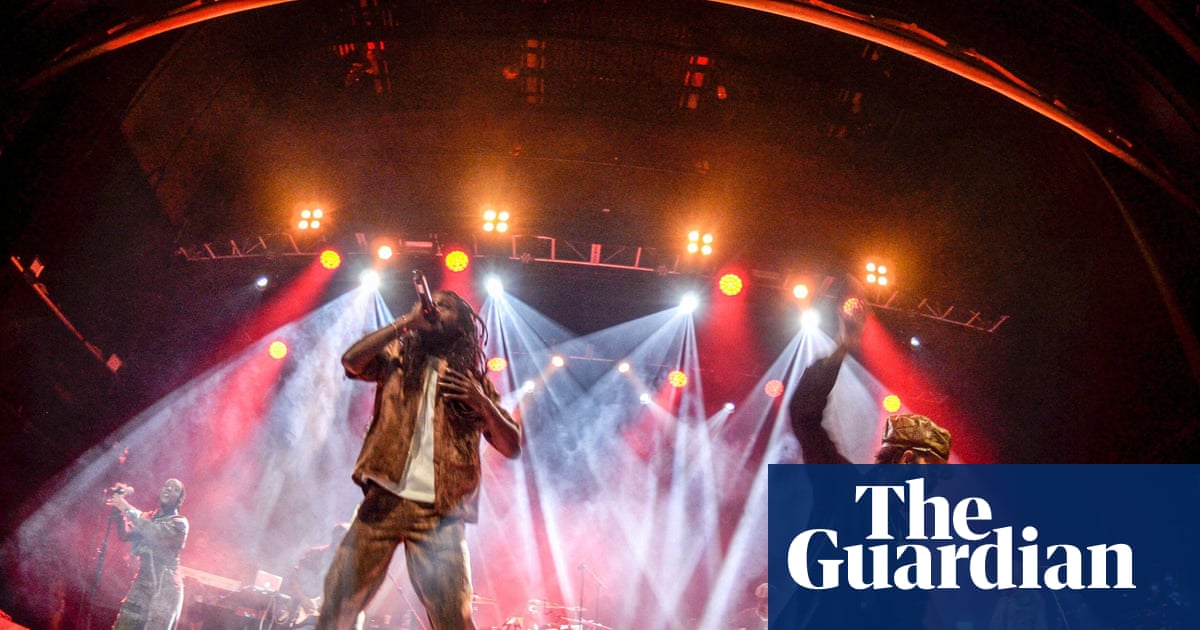
A two-year investigation by Black Lives in Music reveals racial disparities in London’s live music industry licensing processes, costing the city between £127m and £141m annually due to cancellations and restrictions on black and south Asian events. The study found that genres like Afrobeats and drill are disproportionately labeled as high risk without credible evidence, leading to financial losses projected at over £650 million over five years. Charisse Beaumont of Black Lives in Music notes that similar issues exist nationally beyond just London’s music scene.
Written locally by qwen2.5:14b on 2026-10-14, using this article's own text rather than the other coverage of the same event (that is the story summary below).

AI analysis runs on qwen2.5:14b, locally

Story summary

A two-year investigation led by Black Lives in Music and involving multiple organizations, including the Greater London Authority (GLA) and the Metropolitan Police Service, has found that black and south Asian music events in London face disproportionate cancellations and restrictions compared to white-led events. The Race Equality In Music Event Licensing (REMEL) report estimates these barriers cost London between £127m and £141m annually, with projected losses exceeding £650m over five years. The study highlights that genres like Afrobeats, drill, and dancehall are often labeled "high risk" despite a lack of credible evidence, while indie, pop, and rock events face less scrutiny. Promoters reported cancellations based on unverified police intelligence or unrelated incidents. Charisse Beaumont, chief executive of Black Lives in Music, emphasized the national scope of these issues.

Written for “Barriers Facing Black Music Events” on 2026-10-14, grounded in this article and the 1 other(s) covering the same event.
Why this leaning score
The article's own words the score was based on. Each is quoted verbatim and was checked against the article text before being stored, so you can find it in the original.
Reading Leans strongly left (beta estimate) Confidence medium 4 quote(s) discarded as not found in the article
Leaning: leans strongly left for article 78456 (medium confidence, 1 verified quote) · logged 2026-10-14

Story

📰 Barriers Facing Black Music Events
Entertainment · 2 article(s) covering the same event. See how they differ ↓

Compared with similar articles

This article reads leans strongly left and hedges 19% of its claims. Each row says how that neighbour differs.
Evening Standard
⚖️ Leans left further right than this 🔴 0% hedged 0 of 52 📰 publisher trust 67
“The articles discuss different topics: one focuses on Michael Howell and a classical music festival, while the other covers a report about racial inequality in London's live music industry.”
The Guardian
⚖️ Leans left further right than this 🔴 0% hedged 0 of 21 📰 publisher trust 67
“The articles discuss different topics related to racial inequality in arts and music but describe distinct events.”
Evening Standard · 0.95 cosine similarity
⚖️ Leans strongly left 🔴 0% hedged 0 of 17 📰 publisher trust 67
“Both articles describe the same detailed findings from the REMEL report released on October 14, 2026, regarding racial disparities in London's live music industry licensing and economic impacts.”

Cite this article

correspondent, A. M. C. a. (2026, October 14). Barriers facing black and south Asian music events ‘cost London up to £141m a year’. The Guardian. https://www.theguardian.com/music/2026/oct/14/barriers-black-south-asian-music-events-london-racial-inequality

Dated from the outlet's own feed. Check the original for its byline.

How this article was measured signals, leaning charts, publisher record, byline, topics and claims

Signals How these are calculated →

Claims extracted
32
sentences that state something as happening or true
Uncertain
19%
6 of 32 hedged ("reportedly", "may", "according to")
Leaning
Leans strongly left
of the writing, not the subject · beta estimate
Publisher signals
67/100
The Guardian's corrections and hedging, across everything collected from it. Not a measure of accuracy.
Outlets on this story
2
Entertainment
Same framing elsewhere
1
articles that frame the event the way this one does
Analyzed 2026-10-14 · how these are computed

How this is being covered How these are calculated →

Article leaning vs. publisher reliability
Source leaning vs. consistency

Publisher

The Guardian · 1793 article(s) · 5 correction(s) detected
Running correction rate · 5 correction(s)

Who wrote this

Aamna Mohdin Community affairs correspondent
4 article(s) here · 1 carrying a prediction
🔮 The Race Equality in Music Event Licensing (REMEL) report, led by Black Lives in Music, estimates that cancellations, displacement and events prevented from taking place cost London £127m to £141m annually, with projected losses exceeding £650m over five years.
🔮 More than half of Britons surveyed (55%) said they would be unhappy if their local church closed and became a mosque, including 37% who would be very unhappy.
🔮 Aimee Shalan, who will take over as director of the Palestine Solidarity Campaign (PSC) in November, joins the organisation as demonstrations against Israel’s war in Gaza have snowballed into what organisers describe as one of the most sustained protest movements in modern British history.
🔮 Instead of needing to know how to navigate registers held at the National Archives in London, Sewell-Smith said, descendants would be able to search the collection simply by entering a name.
Also by Aamna Mohdin Community affairs correspondent
Nothing else under this byline is closely related to this article, so these are simply their most recent.

Topics

Beaumont Black Lives in Music London south Asian the Greater London Authority

Subjects

London GPE · 4× Beaumont GPE · 2× Black Lives in Music ORG · 2× Charisse Beaumont PERSON · 1× GLA ORG · 1× LIVE ORG · 1× UK Music ORG · 1× south Asian NORP · 1× the Greater London Authority ORG · 1× the Metropolitan Police Service ORG · 1×

Narrative

The two-year study was commissioned by the mayor’s office and included collaboration by the Greater London Authority (GLA), the Metropolitan Police Service, UK Music, LIVE, the Musicians’ Union and a wide network of promoters, artists, venue operators and community representatives.
framing: assertive · carried by 1 article(s) · first seen 2026-10-14
🔮 The Race Equality in Music Event Licensing (REMEL) report, led by Black Lives in Music, estimates that cancellations, displacement and events prevented from taking place cost London £127m to £141m annually, with projected losses exceeding £650m over five years.

Claims (32 extracted, 6 hedged)

Black and south Asian music events in London face disproportionate cancellations, restrictions and licensing barriers compared with white events, according to a two-year investigation into racial inequality in the capital’s live music industry. uncertain
events → face → industry
The Race Equality in Music Event Licensing (REMEL) report, led by Black Lives in Music, estimates that cancellations, displacement and events prevented from taking place cost London £127m to £141m annually, with projected losses exceeding £650m over five years. asserted
cancellations → lead → years
The report found that genres including Afrobeats, drill and dancehall are routinely labelled “high risk” despite a lack of credible evidence, while indie, pop and rock events face comparatively little scrutiny. asserted
events → find → scrutiny
Other events facing stringent restrictions included reggae gatherings aimed at older audiences, jazz nights and community events. asserted
events → face → audiences
The research raised concerns over the use of unverified police intelligence, with promoters describing events being cancelled based on undisclosed information, online searches or unrelated incidents. uncertain
research → raise → information
Charisse Beaumont, chief executive of Black Lives in Music, said that although the investigation focused on London, the problems it uncovered exist nationwide. asserted
it → say → London
“As soon as we put the report out there, the call for our survey, people were upset that they couldn’t complete the survey because they were outside of London,” she said. asserted
she → put → London
For Beaumont, the discrimination extended far beyond specific music genres. asserted
discrimination → extend → genres
“It’s about race. asserted
It → ’ → race
And that’s what’s so deeply sad about it.” asserted
what → ’ → it
The two-year study was commissioned by the mayor’s office and included collaboration by the Greater London Authority (GLA), the Metropolitan Police Service, UK Music, LIVE, the Musicians’ Union and a wide network of promoters, artists, venue operators and community representatives. asserted
study → commission → promoters
The findings suggest that the legacy of the Metropolitan police’s controversial Form 696 persists. asserted
legacy → suggest → Form
Introduced in 2005 as a risk assessment tool, it was scrapped in 2017 after criticism that it discriminated against black music events. asserted
it → introduce → events
Hakeem Stevens, the report’s lead researcher, said police scrutiny had become harder to document. asserted
scrutiny → say → ?
“Back in the day when emails were sent and faxes were sent, we had documented evidence. asserted
we → send → evidence
Now what’s happening is it’s whispers, it’s phone calls, it’s conversations, verbal conversations that can’t be recorded.” asserted
that → happen → ?
He said black and Asian performers faced disproportionate scrutiny, adding: “You’ve got white artists that perform black music, and they don’t get given that level of scrutiny.” asserted
they → say → scrutiny
Researchers found that promoters received little explanation for cancellations, faced substantial security costs and had limited opportunities to challenge decisions. asserted
promoters → find → decisions
Stevens said the financial and reputational consequences could severely affect mental health. uncertain
consequences → say → health
Beaumont highlighted the case of the Colour Factory, a black-owned venue whose licence was suspended after an incident outside its premises that was reportedly unrelated to the venue. uncertain
that → highlight → venue
She said the owner successfully challenged the decision but faced significant financial losses, including legal costs and staff redundancies. asserted
owner → say → costs
“In the end, they won, but they didn’t get their money back,” she said. asserted
she → win → money
The report also found that when incidents occur, many white-owned venues are supported back into business after incidents, while black-owned venues are forced to close for prolonged periods. asserted
venues → find → periods
Kwame Otiende, a venue owner, promoter and Green councillor, said the additional scrutiny discouraged venues from hosting certain events. asserted
scrutiny → say → events
“Venues will have known that they get a lot more grief from whatever relevant authorities they need to go through to get a temporary event notice,” he said. asserted
he → know → notice
Instead, he suggested, venues may opt for safer commercial choices: “I could just put your very sort of middle-of-the-road chart music … and I’ll still make the same amount of money.” uncertain
I → suggest → money
The report sets out 19 recommendations, including calls for more transparent, evidence-based licensing decisions, alongside an independent review, clearer evidence standards, better reporting of licensing outcomes and stronger accountability. asserted
report → set → outcomes
Beaumont said: “Success would be for me, the ability for any artist from any background, particularly Black and south Asian, to be able to perform and put on events at any venue without barriers, so they too can make money “ asserted
they → say → money
They’ve got an album out, they do a tour, they might be able to do a 1,000-capacity venue, but can they progress from 2,000 to 5,000 to 20,000 to stadium? uncertain
they → get → stadium
That doesn’t happen for us.” asserted
That → happen → us
The Met police commander Neerav Patel said the force would carefully consider the reports finding. asserted
force → say → finding
“Our focus will remain on making fair, evidence-based contributions to the licensing process which balance the interests of venues, promoters, artists and local communities while never compromising on our ultimate priority which is to keep Londoners safe” said Patel. asserted
Patel → remain → Londoners

💬Give feedback
🕘History 🎫Support