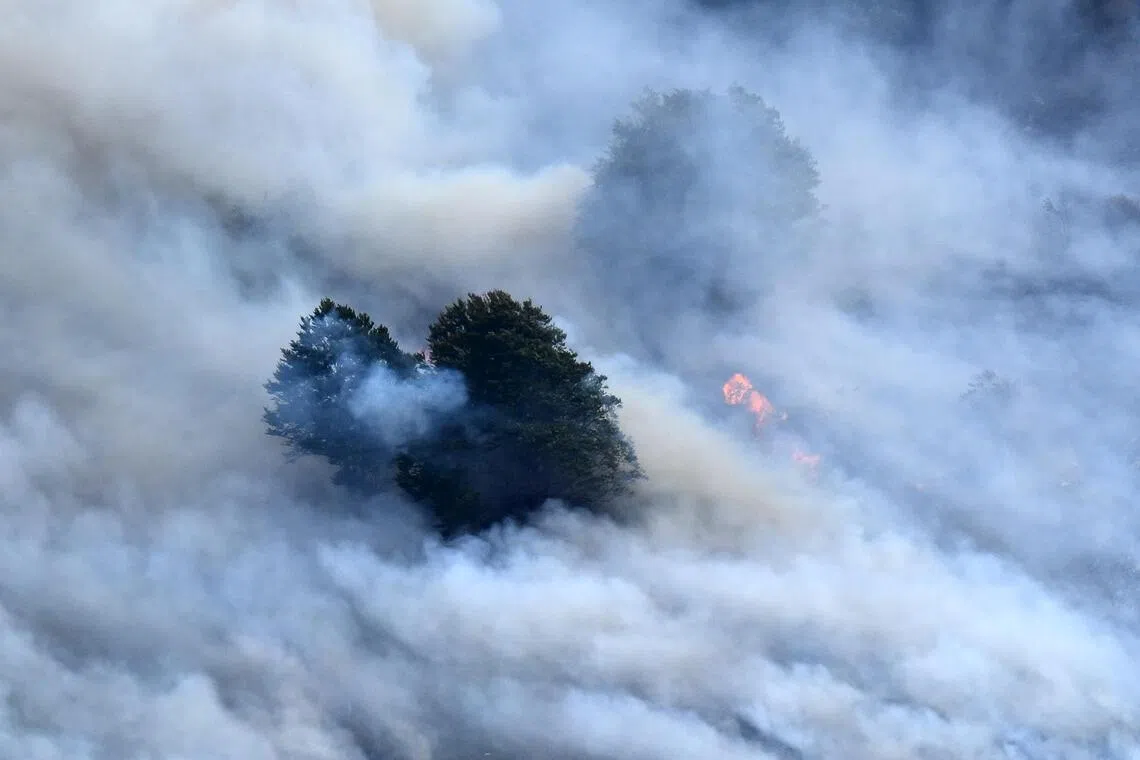
Wildfires, permafrost melt in Canada causing even more climate change, new study shows
New research says current climate models don’t account for warming-induced emissions
We know that global warming has made wildfires worse, and melted permafrost that's been frozen for years.
asserted
that → cause → years
Now, a new study is detailing how the fires, permafrost thaw and other changes are adding even more greenhouse gases into the atmosphere, and speeding up climate change at a scale not currently reflected in global estimates.
asserted
fires → detail → estimates
These climate "feedback loops," where climate change triggers more carbon emissions that in turn feed into even more climate change, could add 20 to 30 per cent more warming over current estimates for this century, according to a new study by researchers at U.S. institutions, including Stanford University and the non-profits Environmental Defense Fund and Spark Climate Solutions.
uncertain
that → trigger → University
"Our remaining carbon budget is most likely ... much smaller than what we think it is," said Ben Poulter, program director with Spark Climate Solutions and co-author of the paper.
asserted
Poulter → remain → paper
“If you don't include these additional feedbacks, we're going to have a disconnect between the policy targets and how the Earth system is responding to climate change.”
asserted
system → include → change
The paper, published on Thursday in the journal Environmental Research Letters, is one of the most comprehensive reviews to date of these warming-induced emissions and their impact on global temperature rise.
asserted
paper → publish → rise
Current climate models mostly track emissions from anthropogenic sources — the burning of fossil fuels for energy, food production and cattle rearing, decomposing waste and other human activities that release greenhouse gases.
asserted
that → track → gases
The findings have particular significance for Canada, which is home to a large chunk of these warming-induced emissions.
asserted
which → have → emissions
Happening here
As a northern country, Canada is already warming faster than the rest of the world.
asserted
Canada → happen → world
This September, the federal government released its landmark Canada’s Changing Climate assessment, which said that the country could be heading to a whopping five degrees of warming in this century, bringing with it profound changes to people, ecosystems and landscapes.
uncertain
country → release → people
Canadians should prepare for a 5 C hotter future, report warns
Wildfires send Canada's carbon emissions soaring.
asserted
emissions → prepare → future
And our peatlands emit even more
- Video
asserted
peatlands → emit → Video
University of Alberta researchers looking to quantify climate change impact of carbon released from permafrost
asserted
researchers → look → permafrost
The new paper brings into view how the changes in Canada won’t just be felt locally, but feed into climate change globally.
asserted
changes → bring → change
It draws on previous research already highlighting the impacts of specific extreme weather events.
asserted
It → draw → events
For example, during Canada's worst wildfire season on record in 2023, the flames released one billion tonnes of carbon.
asserted
flames → release → carbon
“Canada is a large northern country, so these feedbacks is going to occur within Canada to a large degree,” said David Olefeldt, professor at the University of Alberta and a leading permafrost researcher.
asserted
Olefeldt → go → Alberta
“Therefore we have a responsibility to make sure we have studies that are focusing on it.”
asserted
that → have → it
Rising temperatures from global warming are heating up the Arctic at two or three times the global average, and that’s leading to the permafrost thawing.
asserted
that → rise → thawing
But while previously permafrost thaw was seen as a gradual process happening throughout the region, Poulter said the new paper included emissions from the process of "abrupt" thawing.
asserted
paper → see → thawing
The abrupt thawing, also triggered by warming as well as extreme weather like wildfires and rain, happens much more locally and causes the land to cave or slump suddenly.
asserted
land → trigger → wildfires
Olefeldt said that while these abrupt thaws happen over smaller areas, usually at the edges of wetlands and lakes, they have the potential to release much more carbon.
asserted
they → say → carbon
The abrupt thaw exposes the soil, and the ancient organic material that was previously locked up in it, to microbes that feed on that soil and produce methane and carbon dioxide.
asserted
that → expose → methane
“You're creating new lakes or new wetlands, for example, or warming the soil quite a lot faster in those locations,” he said.
asserted
he → create → locations
But coming up with exact estimates of how much carbon is being released is tough.
asserted
carbon → come → estimates
“We have very sparse measurement networks in the high latitudes just because of the remoteness of the sites, the challenges for doing research in these areas,” Poulter said, pointing to a need, especially in Canada, for more field studies to monitor this process.
asserted
Poulter → have → process
The wetland methane puzzle
Another major source of warming-induced emissions are wetlands, which cover large parts of Canada.
asserted
which → induce → Canada
Scientists have grown increasingly worried about methane emissions from wetlands because of a major spike in the growth of methane in the atmosphere starting around 2020, Poulter said.
asserted
Poulter → grow → 2020
The emissions growth could not be fully explained by direct human activities like oil and gas production and agriculture, which produce methane, and attention turned toward wetlands.
uncertain
attention → explain → wetlands
Lisa Stein, a professor and microbiologist at the University of Alberta, said she hopes the new paper will push institutions to include freshwater wetlands in their climate models.
asserted
paper → say → models
When microbes break down organic matter in wetlands, methane is created as a byproduct of that biological process and emitted into the atmosphere.
asserted
methane → break → atmosphere
Warmer temperatures increase that microbial metabolism and therefore create more methane, Stein said.
asserted
Stein → increase → methane
“When scientists have looked at methane increase in the atmosphere over the last five years, they've noted that almost all of it has the signature of biology,” Stein said, meaning that rising methane emissions can't fully be explained by human activities and are also being driven by this rise in microbial activity.
asserted
emissions → look → activity
Warmer winters, where lakes don't freeze as long, matter too, Poulter said.
asserted
Poulter → freeze → ?
“As we see the frozen season get shorter and shorter, we're seeing sort of an increasing duration of these persistent methane emissions coming out of Canada's wetlands,” he said.
asserted
he → see → wetlands
 The Aporia