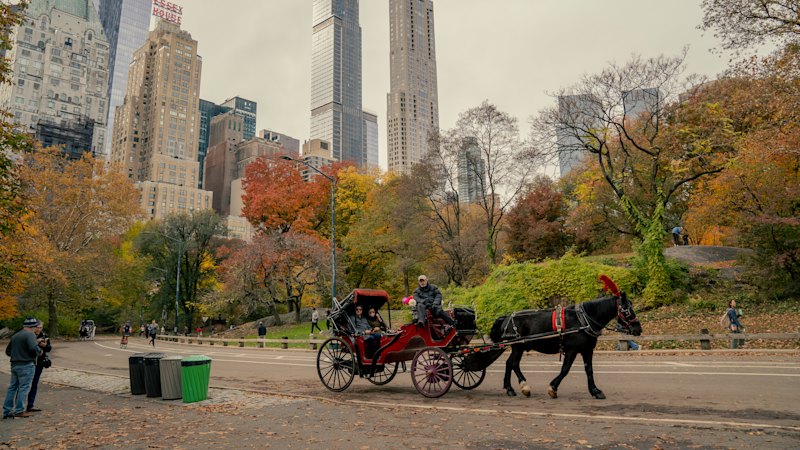
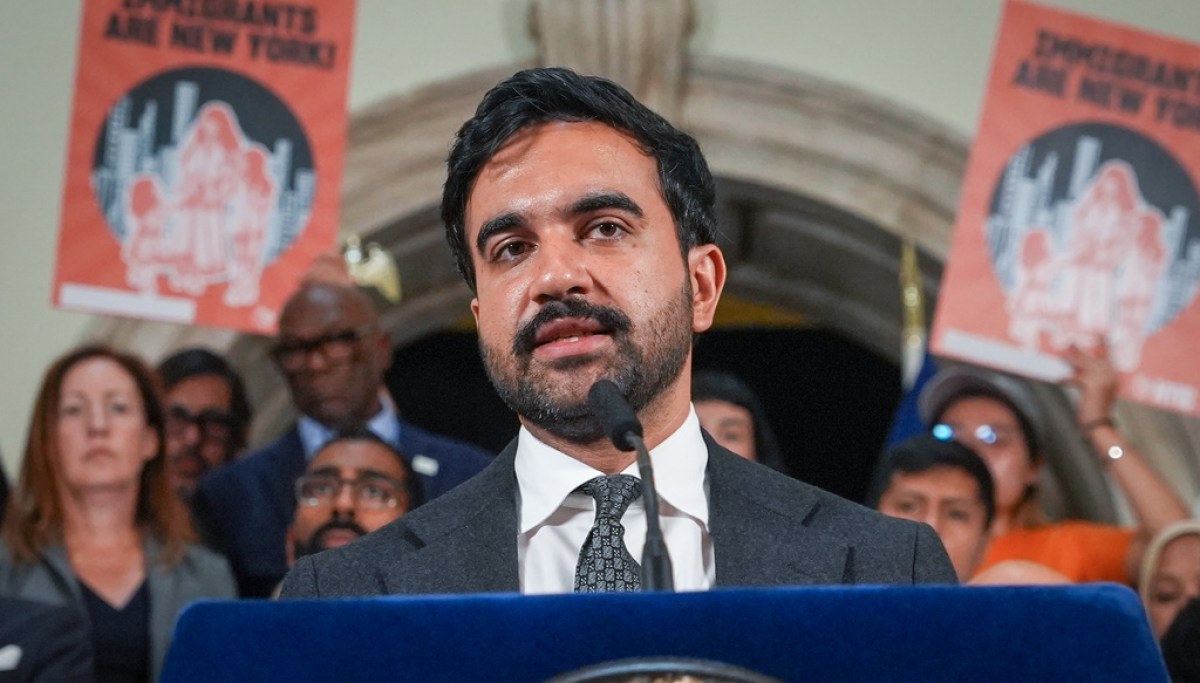
Mayor Zohran Mamdani and the New York City Council speaker reached a deal on legislation to ban horse-drawn carriages, potentially putting an end to a Central Park staple and tourist magnet that began operating more than 150 years ago.
asserted
that → reach → staple
The legislation is set for a vote on October 22 and, if passed, the ban would take effect June 1, 2028.
asserted
ban → set → effect
It would require “humane disposition” of the animals, forbidding the horses’ sale for slaughter or transfer to other carriage companies.
asserted
It → require → companies
Sixty-eight horse cabs currently operate in Central Park, employing roughly 150 drivers and more than 180 horses, according to industry spokesperson Christina Hansen.
uncertain
cabs → operate → Hansen
The new legislation lists 29 sponsors in the City Council, which is enough support for the measure to pass the 51-member body.
asserted
measure → list → body
The agreement was confirmed by council speaker Julie Menin’s office.
asserted
agreement → confirm → office
Horse-drawn carriages in the city have long-faced opposition from animal rights activists who argue that forcing the animals to work in urban conditions undermines their long-term health and is unsafe.
asserted
forcing → draw → health
While on the campaign trail in 2013, former Mayor Bill de Blasio promised to shut down the industry on his first day in office, though he ultimately failed after his plan did not secure support from City Council.
asserted
plan → promise → Council
But after a recent carriage-related death, concerns over the industry proved impossible to ignore.
asserted
concerns → relate → industry
On June 17, 18-year-old Romanch Mahajan fell off a runaway carriage and died while on a family trip to the city.
asserted
Mahajan → fall → city
His death prompted carriage services to shut down for six days while drivers reviewed safety protocols.
asserted
drivers → prompt → protocols
A poll from the Central Park Conservancy, which advocated for the ban, found that 68 per cent of New Yorkers supported prohibiting the carriages after Mahajan’s death.
asserted
cent → advocate → death
“This is fundamentally about public safety,” said David Saltonstall, the CPC’s vice president for government relations.
asserted
Saltonstall → say → relations
“It’s about mitigating a known and growing risk that we have watched build for years, which very sadly culminated in the death of Romanch Mahajan.”
asserted
which → ’ → Mahajan
Saltonstall cited a growing list of carriage-related incidents.
asserted
Saltonstall → cite → incidents
At least seven people – including drivers and tourists – have been injured since May 2025, according to the conservancy.
uncertain
people → include → conservancy
Mahajan’s death is believed to be the first fatality resulting from a carriage accident in Central Park’s history.
asserted
death → believe → history
Carriage operators say the rate of horse-related injuries was still much lower than other permitted park activities, such as riding e-bikes or scooters.
asserted
rate → say → bikes
They also say that without carriage revenue, they’ll struggle to care for their horses and pay fees to relocate them after the ban goes into effect.
asserted
ban → say → effect
The amended bill would require agencies chosen by the mayor to deliver a plan to support carriage drivers, owners and stable workers by April 1, 2027.
asserted
bill → amend → April
That support could include financial compensation, but the legislation requires only that the city consider compensating carriage owners, and does not promise payments.
Transport Workers Union International President John Samuelsen pushed back against the bill in a statement, calling it “political opportunism”.
uncertain
Samuelsen → include → it
He said it provided “no meaningful economic relief for workers”.
asserted
it → say → workers
Hansen, the industry spokesperson, said taking care of her horse, Sherman, cost about $US10,000 ($14,000) a year.
asserted
taking → say → US10,000
“There is no pool of money set aside for the future, the next 20 years of Sherman’s life,” she said.
asserted
she → be → life
The bill also includes what Menin’s office described as stronger protections for horses – barring owners from selling or transferring licensed horses for slaughter or to other carriage businesses.
asserted
office → include → businesses
Owners would have to notify the Health Department and the Mayor’s Office of Animal Welfare at least 10 business days before getting rid of a horse, and anyone caught running a horse-drawn carriage after the ban takes effect could face civil penalties of $US10,000.
uncertain
ban → have → US10,000
“The tragic and preventable death of 18-year-old Romanch Mahajan made clear that the status quo is no longer acceptable,” Menin said in a statement about the deal.
asserted
Menin → make → deal
There are about140 carriage horses in the city at any given time, according to Conor McHugh, who manages the Clinton Park Stables, one of the three locations where most of the animals are housed.
uncertain
most → be → animals
He has said that if a ban passes, the stable – which has been open for more than 150 years – would be forced to shut down.
asserted
which → say → years
Get a note directly from our foreign correspondents on what’s making headlines around the world.
asserted
what → get → world
 The Aporia