Battle lines shift in House races as Republicans retreat from front-line districts
asserted
Republicans → shift → districts
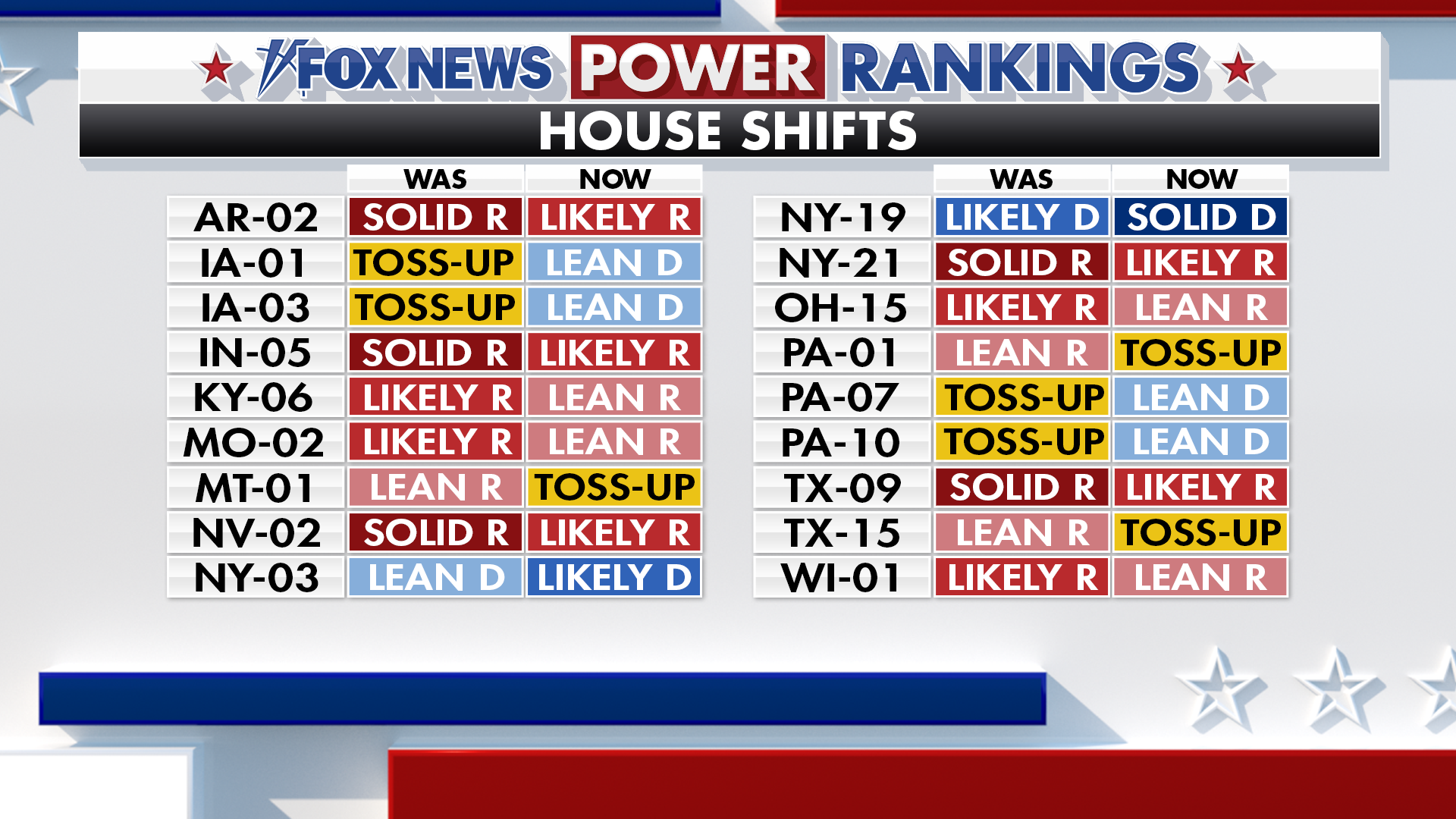
Republicans are retreating from several key U.S. House races, while Democrats are racing to raise funds for candidates who seemed unlikely to win earlier this year
DES MOINES, Iowa --
asserted
who → retreat → candidates
Republicans were retreating Tuesday from a handful of battleground U.S. House races while Democrats were racing to raise money to boost candidates who seemed like long shots earlier this year.
asserted
who → retreat → shots
The Congressional Leadership Fund, the leading House Republican super PAC, canceled spending in four races from the Midwest to the East Coast and increased its investment in 16 other races from Texas to Pennsylvania.
asserted
Fund → lead → Pennsylvania
Meanwhile, Democrats' House campaign committee is eyeing openings in Republican-held districts and hoping to raise millions of dollars in the next week to fuel a late round of advertising that they say could net at least a half dozen more seats.
uncertain
they → eye → seats
The shifting money in the final three weeks of midterm campaigns points to an increasingly defensive posture by Republicans, who have already trimmed their expectations in U.S. Senate races, and new aggression from Democrats, who are trying to capitalize on President Donald Trump's weak approval ratings.
asserted
who → shift → ratings
“A lot of seats are in the competitive range, and only really two are — maybe three — are possible Republican pickups," said David McIntosh, president of the conservative Club For Growth, noting voter dissatisfaction with the economy and Republican dissatisfaction with Congress' inability to pass Trump's SAVE Act regarding voter registration.
asserted
McIntosh → say → registration
"It looked like Republicans were weak, and so you’ve seen a lot of drop-off in enthusiasm.”
asserted
you → look → enthusiasm
“You can tell now where people are competing based on where they’re putting the money,” said Stu Sandler, a Republican strategist working on House and statewide races this year.
asserted
Sandler → tell → races
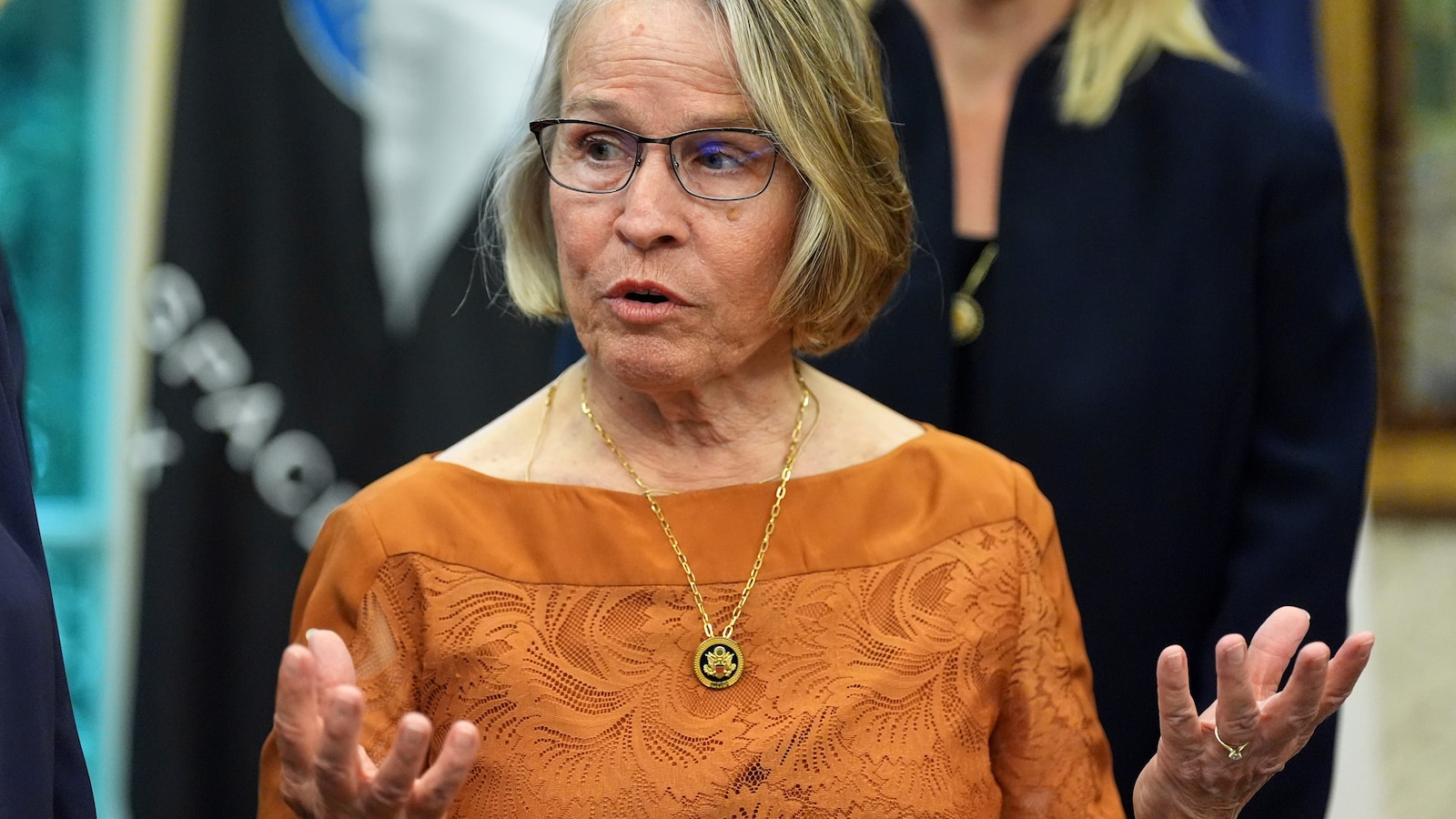
The Congressional Leadership Fund is no longer spending on advertising in Iowa's 1st District, where three-term Republican Rep. Mariannette Miller-Meeks is defending her seat against Democrat Christina Bohannan, according to two Republican campaign officials familiar with the group's plans.
uncertain
Meeks → spend → plans
The officials spoke on condition of anonymity to share private strategy conversations.
asserted
officials → speak → conversations
Bohannan is running for her third time against Miller-Meeks.
asserted
Bohannan → run → Meeks
Last time, the race was decided by only 799 votes, making it the second-closest in the country.
asserted
it → decide → country
It's an eastern Iowa district where congressional cuts to Medicaid have been linked to hospital service closures and high diesel prices have been a challenge for farmers.
asserted
prices → link → farmers
Likewise, the officials said the group won't keep spending in New Jersey's 7th District, where second-term Republican Rep. Tom Kean is facing off against Democrat Rebecca Bennett.
asserted
Kean → say → Bennett
Kean has been under scrutiny for his four-month absence from Congress, which he left unexplained until disclosing a mental health crisis upon his return.
asserted
he → leave → return
Kean, who won by 5.4 percentage points two years ago, has also faced questions over his support for Trump’s tariffs and the Iran war.
asserted
who → win → tariffs
These races, as well as one in the Cincinnati, Ohio, area and one in east-central Michigan, have accounted for $13.3 million in Congressional Leadership Fund spending, more than 12% of its total through Oct. 13.
asserted
races → account → Oct.
The group is reinforcing its spending in a series of districts where Trump beat Democrat Kamala Harris by narrow margins in 2024.
asserted
Trump → reinforce → 2024
Sandler said his party needs to turn out voters who usually participate in presidential elections but often stay home in the midterms.
asserted
who → say → midterms
“One thing you can’t say is that they’ve been under-resourced,” he said.
asserted
he → say → ?
They’ve never been this well-funded in the midterm.”
asserted
They → fund → midterm
As House Republicans have retrenched, the Democratic Congressional Campaign Committee believes at least a dozen more races could be within striking distance.
uncertain
races → retrench → distance
However, they need more money to take advantage.
asserted
they → need → advantage
The committee launched a $17 million fundraising drive, with a deadline of Oct. 22, to pump advertising onto the air in districts that were once seen as out of reach.
asserted
that → launch → reach
“It’s not that we need the money to win in the districts where we have been running to get to 218 seats,” said Courtney Rice, the committee’s communication director.
asserted
Rice → ’ → seats
“We’re talking about the next level.”
asserted
We → talk → level
One is Ohio's 10th, a Dayton-area district represented by 12-term Republican Rep. Mike Turner.
asserted
One → represent → Turner
Democrats see Turner as beatable despite the former Dayton mayor's durability and 18 percentage-point victory two years ago.
asserted
Democrats → see → durability
Trump carried the district by six percentage points in 2024.
asserted
Trump → carry → 2024
Turner didn't begin advertising until late September, according to AdImpact, later than most competitive House incumbents, and the National Republican Congressional Committee started spending there this week.
uncertain
Committee → begin → incumbents
If the Democratic committee reaches its goal, it would also start spending in the Miami area, suburban St. Louis, Missouri and the Little Rock, Arkansas, area.
asserted
it → reach → area
They would be able to buy ads in coordination with the campaigns at the lower rate available to candidates, due to a June Supreme Court decision, squeezing more ad time from those dollars.
asserted
They → buy → dollars
Senate Republicans are pouring millions more into Nebraska to protect Sen. Pete Ricketts, the latest sign of how dramatically their spending priorities have shifted from battleground states toward defending seats they once expected to hold comfortably.
asserted
they → pour → seats
Ricketts is facing a challenge from independent Dan Osborn, who is backed by Democrats.
asserted
who → face → Democrats
Trump won Nebraska by more than 20 percentage points in 2024.
asserted
Trump → win → 2024
The Senate Leadership Fund, the super PAC aligned with Senate GOP leadership, said Tuesday it was behind a $15 million investment in the state.
asserted
it → align → state
Other groups are also pumping money into the race, with the cryptocurrency-backed super PAC Fairshake launching a $7 million advertising campaign, according to AdImpact data.
The group has also increased its investment in Ohio’s Senate race, bringing its total spending there to $45 million in support of Republican Sen. Jon Husted, who is up against Democratic former Sen. Sherrod Brown.
uncertain
who → pump → Brown
The Nebraska investment follows new spending by the Senate Leadership Fund in Kansas and South Carolina, two other states Trump won by double digits in 2024.
asserted
Trump → follow → 2024
All three were absent from the group’s initial $342 million advertising plan in April, which has since been reshaped as Republicans pulled back from Georgia and North Carolina, two states that were central to their original strategy.
asserted
that → reshape → strategy
…and 5 more, not listed.
 The Aporia